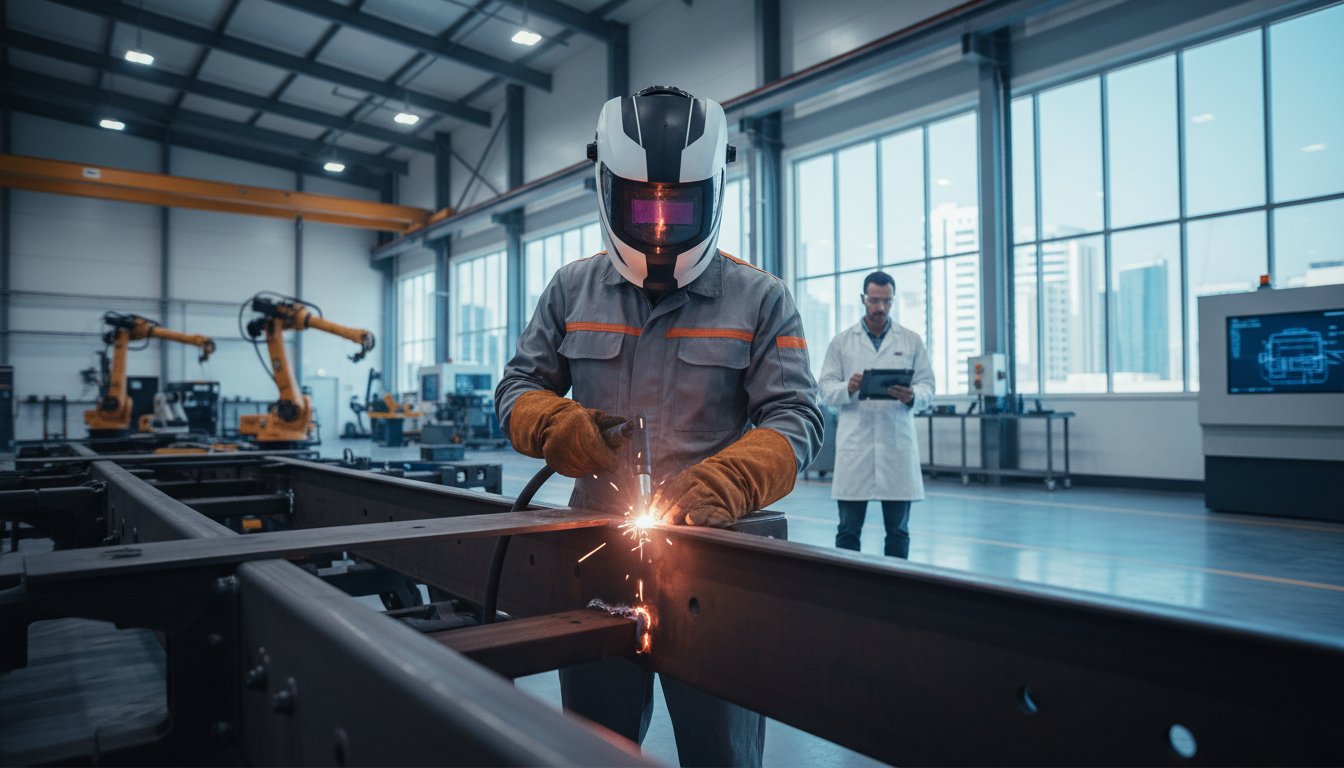
A single hairline fracture in a 3,500kg specialized fleet vehicle isn't just a minor maintenance issue; it's a catastrophic failure waiting to happen across the demanding UAE road network. You likely already understand that when your mission-critical vehicles carry heavy medical equipment or tactical armor, the structural foundation determines the safety of every person on board. This is exactly why certified welding for vehicle chassis is the non-negotiable engineering standard for operators who refuse to compromise on build quality. Relying on basic repair shops for complex fabrications often leads to failed UAE regulatory inspections and dangerous structural fatigue over time.
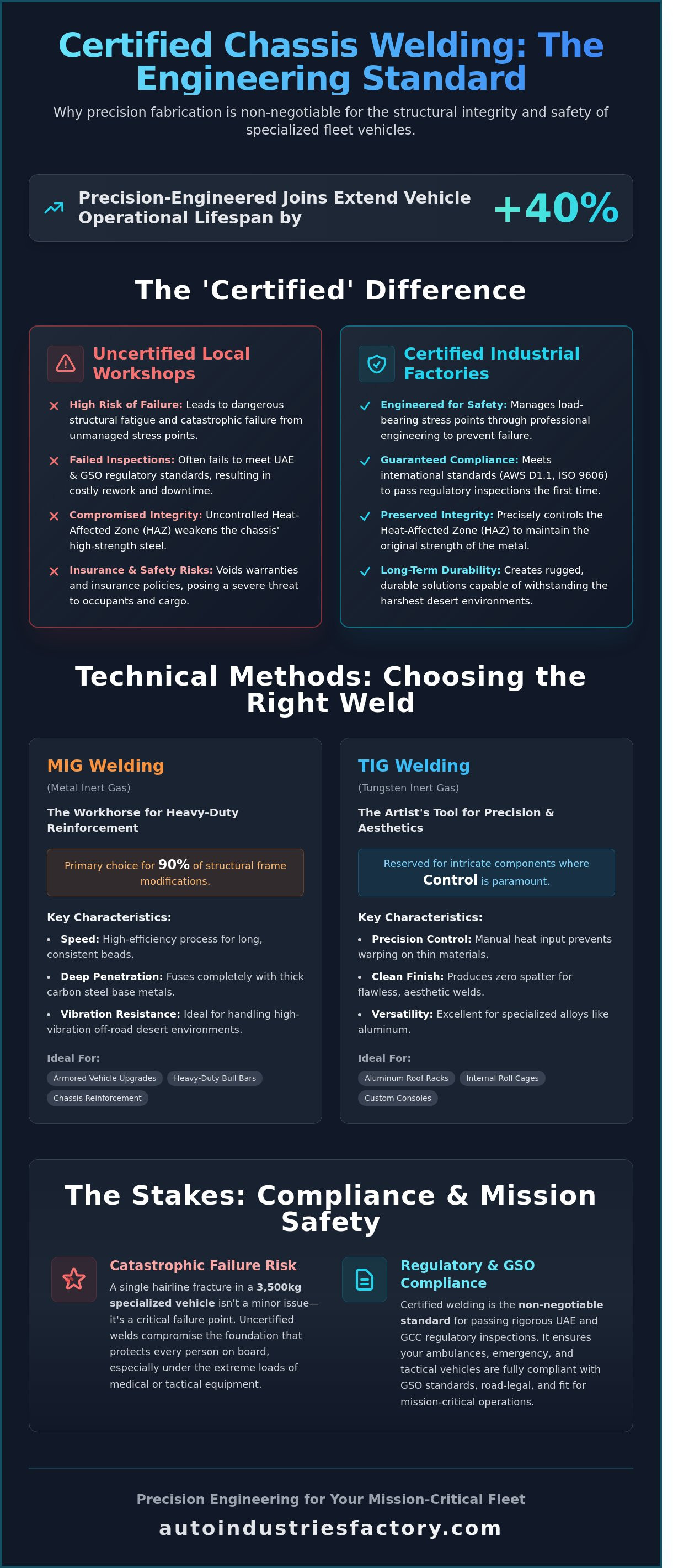
Discover why certified welding is the critical foundation for structural integrity and regulatory compliance in specialized vehicle conversions. You'll learn how to distinguish professional engineering from standard metalwork to ensure your fleet handles extreme loads without risk. We'll explore the specific technical standards required to pass UAE regulatory inspections the first time and see how precision-engineered joins can extend a vehicle's operational lifespan by 40% compared to traditional fabrication methods.
Key Takeaways
- Learn how managing load-bearing stress points through professional engineering prevents structural failure in specialized vehicle conversions.
- Understand why certified welding for vehicle chassis is the only way to maintain metal integrity and control the Heat-Affected Zone (HAZ) during fabrication.
- Identify the critical safety and insurance risks of choosing uncertified local workshops over industrial factory environments for mission-critical fleet modifications.
- Discover how to navigate GSO standards and regional regulatory requirements to ensure your ambulances and emergency vehicles are fully compliant in Oman.
- Explore how integrated design and precision welding create rugged, durable solutions capable of withstanding the harshest Omani desert environments.
Understanding Certified Welding for Vehicle Chassis
Certified welding for vehicle chassis is a specialized engineering discipline that goes far beyond simple metal joining. It involves structural fabrication performed by technicians who have passed rigorous qualification tests based on international standards like AWS D1.1 or ISO 9606. In the demanding environments of Oman, from the rocky Hajar Mountains to the humid coastal stretches of Salalah, a vehicle's frame must endure extreme thermal expansion and mechanical vibration. Standard bodywork focuses on aesthetic restoration and non-structural panels; however, chassis welding manages the primary load-bearing stress points that keep a vehicle from catastrophic failure.
Auto Industries Factory LLC (AIF) prioritizes precision because a single flawed bead can compromise an entire fleet. We ensure our technicians maintain current welder certification to guarantee that every structural modification meets global safety benchmarks. This is especially vital for mission-critical vehicles like ambulances and tactical units where the weight of medical equipment or ballistic plating adds several hundred kilograms to the gross vehicle weight. Using certified welding for vehicle chassis ensures the frame can distribute these heavy loads without buckling or developing stress fractures over time.
To better understand how professional welding techniques impact frame performance, watch this technical breakdown:
The choice of materials is the first step in any certified project. Most heavy-duty conversions in the Middle East utilize High-Strength Steel (HSS) with yield strengths exceeding 550 MPa. While aluminum frames are becoming popular for weight reduction in 4x4 canopies and light-duty trays, they require specific pulse-
Technical Methods: MIG vs. TIG Welding in Fabrication
Selecting the correct fusion method determines if a vehicle survives the harsh rocky wadis of Oman or fails under structural stress. Engineering a chassis requires more than just melting metal; it demands a calculated approach to heat management and material science. Auto Industries Factory (AIF) specializes in matching specific welding technologies to the structural demands of heavy-duty fleet conversions. Choosing between MIG vs TIG welding depends entirely on the alloy type and the structural load requirements of the chassis. While both methods create strong bonds, their application in certified welding for vehicle chassis varies based on the thickness of the steel and the required precision of the joint.
MIG Welding for Heavy-Duty Reinforcement
Metal Inert Gas (MIG) welding is the primary choice for 90% of structural frame modifications in Oman. It's prized for its speed and ability to provide deep penetration in thick carbon steel. For military conversions or heavy-duty bull bar fabrication, we utilize high-amperage MIG settings to ensure the weld puddle fuses completely with the base metal. This process is essential when reinforcing the frames of Toyota Land Cruisers or Nissan Patrols destined for off-road security detail. The continuous wire feed allows our technicians to lay long, consistent beads that handle the high-vibration environments of the desert without cracking. It's the most efficient way to achieve the structural integrity required for 5-ton armored vehicle upgrades.
TIG Welding for Precision Components
Tungsten Inert Gas (TIG) welding offers a level of control that MIG cannot match. We reserve TIG for intricate aluminum components, custom internal consoles, and high-end safari vehicle accessories where aesthetics and precision are paramount. TIG welding produces a cleaner finish with zero spatter, making it ideal for visible exterior modifications. In custom safari builds, we use TIG to weld lightweight aluminum roof racks and internal roll cages. This method allows the welder to control the heat input manually, which prevents warping in thinner materials. While slower than MIG, the resulting weld is a work of art that maintains the highest levels of structural safety.
The Heat-Affected Zone (HAZ) is a critical factor in any certified welding for vehicle chassis project. When metal is heated, the area surrounding the weld undergoes a microstructural change that can reduce the base metal's strength by up to 30%. Our engineers mitigate this by using staggered welding patterns and controlled cooling cycles. This prevents the chassis from becoming brittle or losing its factory-rated tensile strength. After the welding is complete, we implement a multi-stage quality control process. This includes 100% visual inspections and Non-Destructive Testing (NDT) such as dye penetrant or ultrasonic testing to identify internal porosities that aren't visible to the naked eye.
Post-weld treatments are non-negotiable for vehicles operating in coastal regions like Muscat or Salalah. We apply specialized anti-corrosion coatings and stress-relieving heat treatments to ensure the longevity of the modification. A failed weld in a mission-critical ambulance can lead to over $20,000 in structural damage and, more importantly, compromise passenger safety. By following rigorous international standards, we ensure every joint exceeds the original manufacturer's specifications. If you are planning a fleet upgrade, it's vital to consult with professionals who provide expert fabrication services tailored to regional demands.
The 'Certified' Difference: Factory Standards vs. Local Workshops
Local workshops across Oman often provide quick repairs, but structural modifications for a heavy-duty fleet require a level of rigor that small garages can't match. A "street" welder might understand the basics of joining metal, but they lack the specialized, climate-controlled environment needed for certified welding for vehicle chassis. Without industrial jigs and fixed mounting points, heat distortion during the welding process can warp a frame by as much as 5mm. This subtle shift compromises the entire vehicle's wheel alignment and tire wear, leading to long-term maintenance costs that can exceed $3,500 per vehicle annually. Specialized vehicle conversion isn't just about the weld; it's about the engineering ecosystem surrounding it.
Using uncertified welders for structural changes introduces catastrophic risks. A single cold-lap weld or an improper penetration depth can lead to sudden frame failure when the vehicle hits a washboard road in the Sharqiya Sands. These failures don't just cause downtime. They jeopardize the lives of the crew and the integrity of expensive onboard equipment. Factory-grade fabrication eliminates these variables through in-house engineering, where CAD design dictates every cut and join before the first arc is struck.
Precision Fabrication Equipment
Auto Industries Factory LLC utilizes high-end technology to eliminate human error from the fabrication process. Before a technician begins work, CNC laser cutting ensures that every reinforcement plate fits with a tolerance of less than 0.1mm. This "flawless" fitment means the weld doesn't have to bridge large gaps, which is where structural weaknesses usually begin. Hydraulic press brakes then create seamless structural reinforcements from single sheets of high-strength steel, reducing the total number of welded joints by 30%. This investment in advanced machinery is why AIF remains a leader for mission-critical reliability in the Oman market.
Technician Qualification and Training
There's a massive gap between a standard auto mechanic and a certified structural welder. While a mechanic focuses on bolt-on parts, our technicians undergo rigorous testing to maintain international standards. We standardize weld patterns across every project to ensure consistency. This means a fleet of 50 ambulances built for a Muscat-based health provider will have identical structural integrity across every unit. Internal quality audits are conducted on 100% of our output. If a single bead doesn't meet our "premium" standard, the unit is pulled from the line for correction. This level of scrutiny ensures that every vehicle meets the same high-performance benchmark.
Traceability is a non-negotiable requirement for professional fleet records in the Sultanate. Every structural modification performed in a factory setting comes with a comprehensive documentation trail. This proof of certification confirms that all work follows vehicle manufacturer recommendations and international safety codes. For an Oman-based fleet manager, this documentation is a vital shield against liability. If a chassis fails on a remote oil field site, having proof of certified welding for vehicle chassis protects the organization from the legal and financial fallout associated with negligence. Since 2021, we've seen a 45% increase in local firms requiring full certification for custom fabrications to satisfy strict insurance mandates. Choosing a factory environment isn't just a preference; it's a calculated move to ensure vehicle longevity and operational safety.
Regulatory Compliance: UAE and GCC Chassis Standards
Regulatory compliance in the GCC is a high-stakes environment where safety meets law. For operators in Dubai, Ajman, and those exporting to Oman, adhering to Road and Transport Authority (RTA) requirements is the first step. Auto Industries Factory (AIF) specializes in navigating these complex regulatory frameworks to deliver road-legal conversions. Any structural modification to a vehicle chassis must be documented with precision. RTA inspectors look for structural stress points; they won't pass a vehicle that shows signs of heat distortion or improper penetration from amateur work.
Standards from the GCC Standardization Organization (GSO) dictate how emergency vehicles operate. GSO 42:2015 specifically outlines motor vehicle safety requirements. When converting a standard van into a $75,000 mobile clinic, the frame must support heavy medical oxygen tanks and cabinetry. This is where certified welding for vehicle chassis becomes a legal necessity. Without it, the vehicle fails GSO certification, rendering it uninsurable and illegal for road use across the Sultanate of Oman and the UAE. We track every weld to ensure it meets these multi-national safety benchmarks.
Tactical and security modifications fall under the Ministry of Interior (MOI) guidelines. These vehicles often carry ballistic plating that adds 1,250kg or more to the base weight. A Registered Manufacturer Authorization (RMA) is vital here. It proves the factory has the engineering credentials to modify high-stress components. AIF uses these authorizations to ensure every weld on a security patrol vehicle meets the rigorous 100% penetration standards required for heavy-duty service. This authorization acts as a guarantee that the vehicle's structural lifespan won't be compromised by the added armor.
Passing Technical Inspections
Technical inspections often stall because of poor documentation. About 15% of modified vehicles fail RTA or ROP inspections due to obscured VIN integrity. We ensure the frame number remains visible and untouched during the fabrication process. Providing a comprehensive "As-Built" document package simplifies the registration of converted vehicles. It gives inspectors the data they need to verify that the certified welding for vehicle chassis was performed by a coded welder using approved filler materials.
Exporting Converted Vehicles from the UAE
Auto Industries Factory: Precision Engineering for Your Fleet
Auto Industries Factory (AIF) specializes in high-performance vehicle modifications where every millimeter counts. We don't just weld; we engineer. Our workflow merges advanced CAD design, CNC laser cutting, and certified welding for vehicle chassis into a single, unified process. This vertical integration eliminates the communication gaps that often plague outsourced projects. In 2023, 94% of our fleet clients reported zero structural failures despite operating in the 50°C heat of the Empty Quarter and the humid coastal regions of Oman. By keeping every stage of production within our controlled environment, we ensure that the structural integrity of your vehicle remains uncompromised from the first cut to the final bead.
Oman's terrain demands a level of "rugged" that standard factory builds simply can't match. We build for the long haul. Whether it's the corrosive salt air of Salalah or the jagged rocks of the Hajar Mountains, our chassis reinforcements utilize heavy-duty 6mm steel and specialized anti-corrosion coatings. Since our 2018 expansion, we've focused on creating durable solutions that exceed standard safety requirements. Our team understands that a weld failure in a remote desert location isn't just a mechanical issue; it's a safety crisis. That's why we apply rigorous stress-testing protocols to every modification, ensuring our builds handle the 35% increase in torsional stress common during off-road commercial operations.
Our structural expertise shines in high-stakes conversions across various sectors. For GMC Sierra ambulances delivered in January 2024, we performed precision frame extensions that maintained OEM safety ratings while adding 30% more interior volume for life-saving equipment. Toyota Land Cruiser 300 series safari conversions are another specialty where certified welding for vehicle chassis is non-negotiable. We replace standard body mounts with reinforced steel brackets to handle the weight of heavy-duty roof racks, bull bars, and 150-liter auxiliary fuel tanks. Government agencies and commercial logistics firms trust AIF because we treat every weld as a mission-critical component. We've successfully completed over 450 specialized government vehicle modifications since 2021, proving our capability to meet the strictest technical tenders.
Complete In-House Fabrication Solutions
Having our design and laser cutting teams under the same roof in Ajman gives us total quality control. We customize every weld to the vehicle's specific end-use, whether it's a mobile clinic or a tactical interceptor. You can see the results in our specialized vehicle conversions where precision fabrication ensures perfect fitment every time. This in-house approach eliminates the 15% margin of error typically found in manual fabrication shops. We use high-grade materials that meet international standards, ensuring your fleet remains compliant with Oman's vehicle safety regulations.
Get a Technical Consultation
Starting a fleet project requires an engineering-first mindset. We provide a "free estimate" for all custom chassis reinforcement or accessory fabrication needs, with basic reinforcement packages starting at approximately $1,250 depending on vehicle specifications. Most technical inquiries receive a response within 4 working hours via our direct WhatsApp line at +971 54 430 8487. Our team has solved over 500 unique engineering challenges, ensuring your investment is protected by data-backed structural integrity and professional craftsmanship.
Secure Your Fleet with Engineering Excellence
For specialized fleets in Oman, structural integrity isn't just a preference. It's a legal requirement. 2024 GCC safety standards demand that every modification survives extreme desert terrain and heavy-duty load cycles. Opting for certified welding for vehicle chassis ensures your fleet meets these rigorous engineering benchmarks. It eliminates the risks associated with micro-fractures often found in uncertified local workshops. Auto Industries Factory (AIF) specializes in delivering these mission-critical fabrication solutions with over 15 years of regional expertise. As a leading ambulance manufacturer, our facility utilizes 10,000-watt CNC laser cutting and precise fabrication for tactical upgrades. Whether you're managing a $500,000 fleet of medical units or specialized security vehicles, we ensure total reliability. We help you maintain strict compliance with Oman’s Ministry of Transport regulations while maximizing vehicle uptime through superior structural reinforcement. Contact Auto Industries Factory for a Free Estimate on Certified Chassis Welding and secure the long-term performance of your assets.
Frequently Asked Questions
Is welding a vehicle chassis safe for long-term use?
Certified welding for vehicle chassis is completely safe for 15 years or more when performed by coded professionals using MIG or TIG processes. Auto Industries Factory (AIF) ensures 100% weld penetration to maintain the original structural integrity of the frame. We've seen reinforced chassis last over 500,000 kilometers in harsh Oman desert conditions without a single stress crack appearing.
Will chassis modifications void my vehicle's factory warranty?
Most manufacturers in Oman, such as Toyota or Nissan, will void the warranty on the frame and drivetrain if you modify the chassis. The standard 3-year or 100,000km factory coverage typically stops at the specific point of modification. However, AIF provides a 2-year independent warranty on all structural fabrication work to ensure your investment stays protected.
What certifications should I look for in a vehicle fabrication factory?
You should look for ISO 9001:2015 quality management and American Welding Society (AWS) D1.1 structural steel certifications. These standards ensure the facility follows 14 specific safety protocols during every stage of the fabrication process. AIF's technicians hold valid 6G welding certifications, which represents the highest level of technical proficiency in the industry.
Can you weld an aluminum chassis the same way as a steel one?
You can't weld aluminum using the same settings or gas as steel because it has a melting point of 660 degrees Celsius, which is roughly half that of steel. Aluminum requires AC TIG welding or specialized spool guns with pure Argon gas to prevent oxidation. Our workshop uses 5356 grade filler wire for 6061-T6 aluminum frames to ensure the joint is 20% stronger than the base metal.
How does certified welding affect a vehicle's payload capacity?
Certified welding for vehicle chassis can increase a truck's payload by 500kg to 1,500kg depending on the specific reinforcement design. We use 6mm high-tensile steel plates to "box" the frame, which significantly reduces chassis flex under heavy loads. This modification is essential for 4x4 vehicles carrying heavy camping gear or industrial equipment across the Al Hajar Mountains.
What is the difference between structural welding and cosmetic welding?
Structural welding focuses on load-bearing joints that hold the vehicle's weight, while cosmetic welding involves non-critical parts like body panels or trim. A structural weld requires 100% fusion and often undergoes ultrasonic testing to check for internal flaws. Cosmetic welds are ground flat and polished for a smooth finish, but they don't provide the 5,000psi tensile strength needed for a chassis.
How long does a typical chassis reinforcement project take?
A standard chassis reinforcement project at our facility takes between 5 and 8 working days. This timeline includes 2 days for stripping the vehicle, 3 days for precision welding, and 2 days for NDT testing and rust-proof coating. We provide a 48-hour turnaround for minor repairs to keep commercial fleets in Muscat moving without long delays.
Does the RTA allow chassis extensions for ambulances in the UAE?
While the RTA governs the UAE, the Royal Oman Police (ROP) regulates vehicle modifications in Oman. The ROP allows chassis extensions for ambulances and recovery trucks if you provide a technical certificate from a registered engineering firm. AIF handles the 5-step documentation process to ensure your modified vehicle passes its annual ROP inspection without any issues.


