In high-stakes security, defense, and tactical operations, vehicle mobility is a non-negotiable component of mission success and personnel safety. The term "bulletproof tires" often brings to mind images of complete invulnerability, but the reality is a sophisticated feat of engineering designed not to deflect projectiles, but to guarantee movement even after catastrophic failure. This guide explains the science, materials, and critical differences behind the technology that keeps armored vehicles moving: the run-flat tire system.
Debunking the Myth: The Reality of 'Bulletproof' Tires
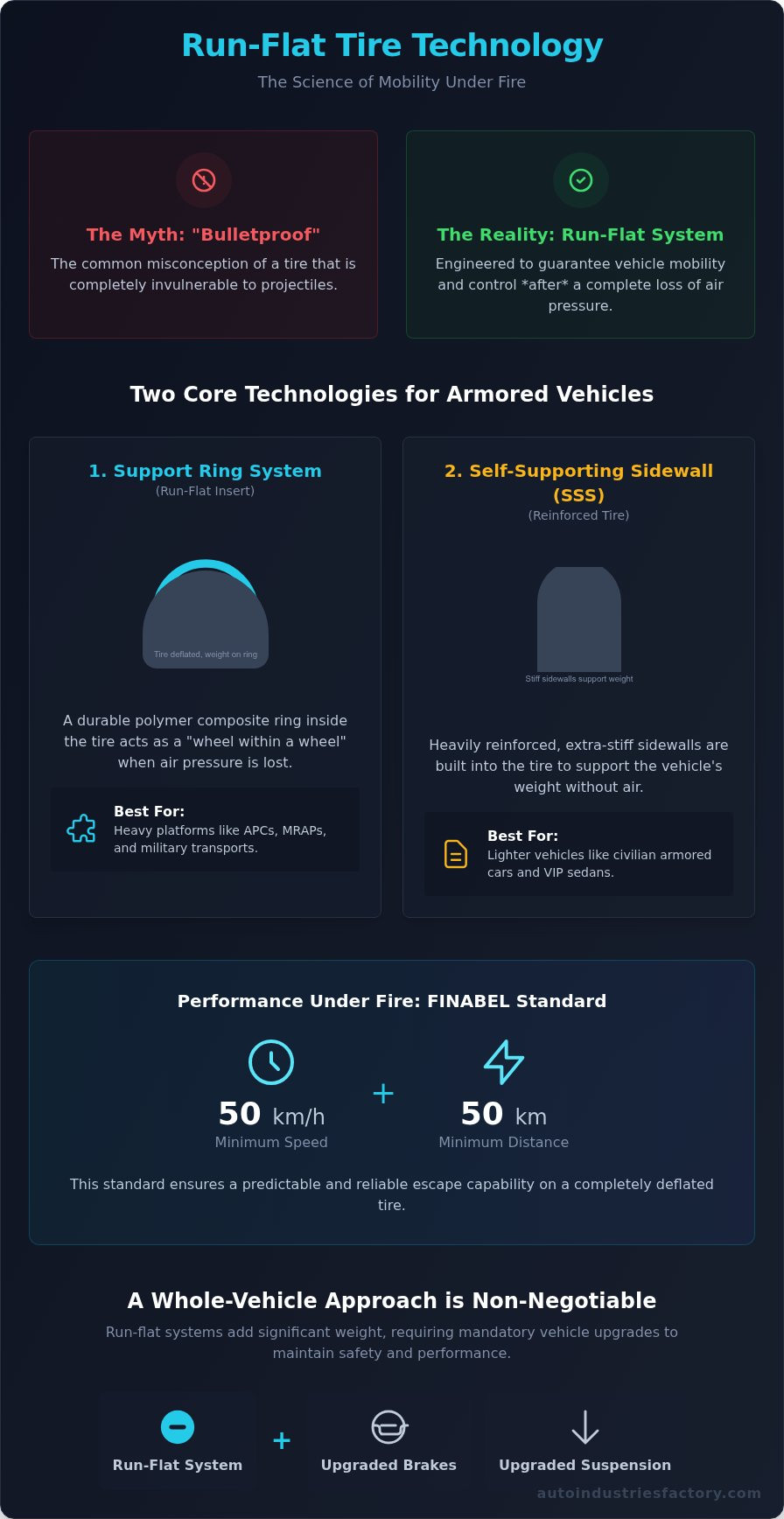
First, it is essential to clarify a common misconception: no tire is completely impervious to all ballistic or explosive threats. The industry-correct term for this technology is a Run-Flat Tire (RFT) system. The primary objective is not to stop a bullet from penetrating the rubber, but to ensure the vehicle remains controllable and can continue to travel for a significant distance after a complete loss of air pressure. This capability to escape a dangerous area or complete a mission on damaged tires is the true purpose of this critical technology in any tactical or security scenario.
The Core Engineering: How Run-Flat Systems Maintain Mobility
The fundamental principle behind any run-flat system is its ability to support the full weight of a vehicle without relying on air pressure. While some consumer-grade tires use self-sealing compounds for minor punctures, these are inadequate for the large-scale damage caused by ballistic impacts. For armored vehicles, two primary technologies dominate the field, each engineered for specific applications and vehicle weights.
Technology 1: Support Ring Systems (Run-Flat Inserts)
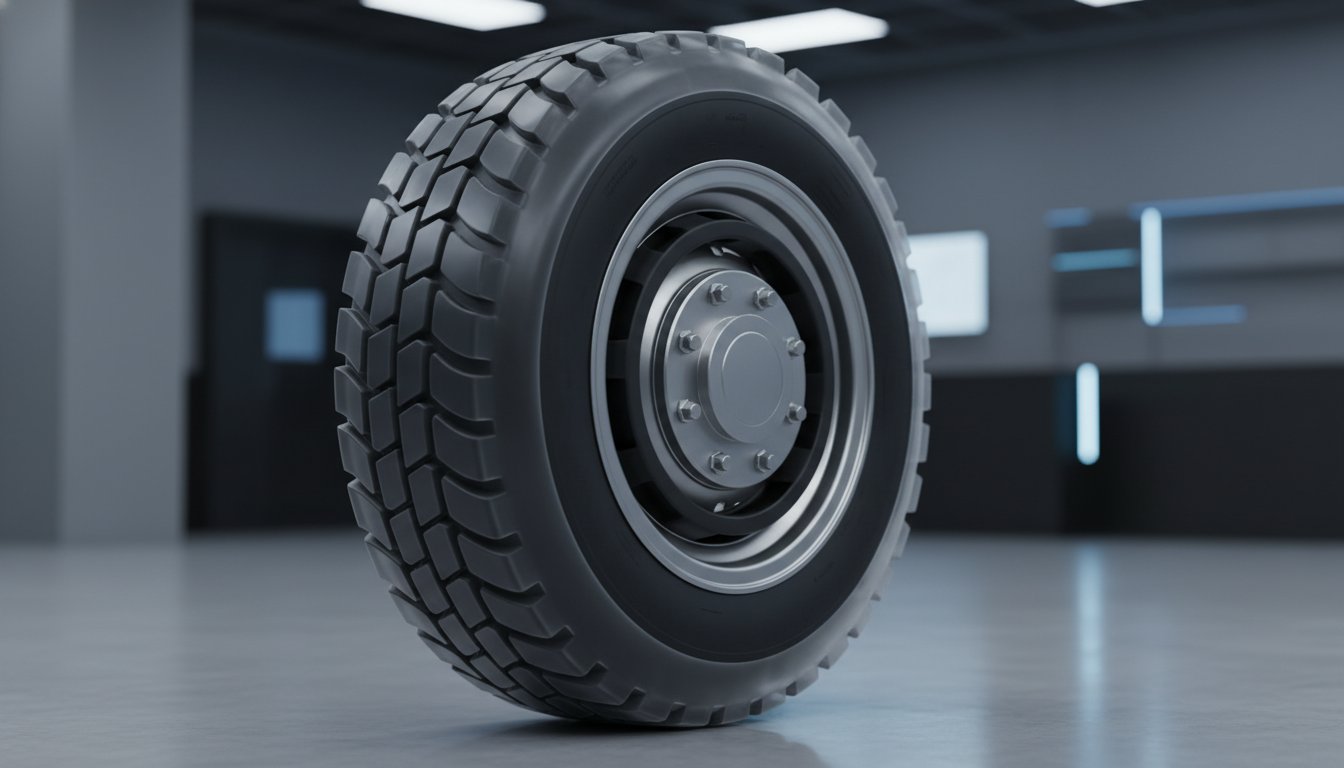
The most robust and widely used solution for heavy armored vehicles is the support ring system, often called a run-flat insert. This system consists of an extremely durable polymer or composite ring that is mounted directly to the wheel, inside the tire. If the tire is shot out or deflates, the vehicle's weight settles onto this hard internal ring. This effectively creates a "wheel within a wheel," allowing the vehicle to continue driving on a solid internal structure. Because of their immense strength and durability under extreme conditions, support ring systems are the preferred and essential solution for heavy platforms like Armoured Personnel Carriers (APCs), Mine-Resistant Ambush Protected (MRAP) vehicles, and military transports.
Technology 2: Self-Supporting Sidewall (SSS) Tires
An alternative technology, common in civilian armored cars and VIP sedans, is the self-supporting sidewall (SSS) tire. These tires are constructed with heavily reinforced, extra-stiff sidewalls that are capable of supporting the vehicle's weight without any air. When the tire deflates, the rigid sidewalls prevent it from collapsing, allowing the driver to continue to a safe location. While effective for lighter vehicles, this technology involves a trade-off: the stiff construction can lead to a harsher ride quality compared to conventional tires, and it may not be suitable for the extreme weight of military-grade armored vehicles.
Run-Flat Systems in Action: Applications and Performance Standards
Understanding the engineering is only part of the picture. The true value of run-flat technology is demonstrated in its real-world applications, where the ability to maintain mobility is a critical, life-saving feature. From military convoys to executive protection details, these systems are a cornerstone of modern vehicle armoring.
Military, Police, and Tactical Vehicle Requirements
In a hostile environment, a stationary vehicle is a vulnerable target. The primary requirement for military and police vehicles is the guaranteed ability to escape an ambush zone, traverse hazardous terrain, or extract personnel under fire. For heavy, mission-critical platforms, support ring systems are essential. They provide the rugged performance needed to handle extreme loads and maintain off-road capability even with multiple deflated tires, ensuring the mission can continue without compromise.
Performance Under Fire: Understanding FINABEL Standards
To ensure reliable and predictable performance, run-flat systems are often tested against established industry benchmarks, such as the FINABEL standard. This widely recognized standard dictates a minimum performance capability after the tire is deflated. A common rating requires the system to allow the vehicle to travel for 50 kilometers at a speed of 50 km/h on a completely flat tire. This standardized metric provides procurement officers and fleet managers with a clear understanding of a vehicle's escape capability, ensuring that the chosen system meets the operational requirements for safety and performance.
Integrating Run-Flats: A Whole-Vehicle Approach
Simply installing run-flat tires is not enough. These systems add significant weight to each wheel assembly, which drastically alters a vehicle's handling dynamics, braking distance, and suspension load. A successful integration requires a holistic engineering approach. Upgrading the vehicle's suspension and brake systems is non-negotiable to safely manage the increased unsprung mass and ensure reliable performance. A true vehicle conversion specialist understands that run-flat tires are one component in a complete, interdependent armoring solution designed for maximum durability and reliability. Ensure your vehicle is mission-ready. Consult our engineers.
Frequently Asked Questions
How far can you drive on a damaged run-flat tire?
Performance varies by system and vehicle weight, but high-quality systems for armored vehicles are typically rated to FINABEL standards, allowing travel for 50 km at 50 km/h after deflation.
What are run-flat inserts made from?
They are typically manufactured from advanced, high-strength composite polymers that are designed to be incredibly durable, heat-resistant, and capable of supporting immense weight without failing.
Can you repair a bullet-damaged run-flat tire?
Generally, no. The tire casing is severely compromised by a ballistic impact. The entire tire must be replaced. The internal run-flat insert, however, is often reusable if it has not sustained direct, critical damage.
How much weight do run-flat systems add to a vehicle?
The added weight can be substantial, varying based on the size of the wheel and the system's load rating. This is why comprehensive suspension and brake upgrades are a mandatory part of any professional armored vehicle conversion.
Do run-flat tires require special wheels?
Most run-flat insert systems are designed to be compatible with standard heavy-duty wheels. However, the wheel must be strong enough to handle the increased loads and stresses of operating in run-flat mode.
Are all run-flat tires the same?
No. There is a significant difference in capability between consumer-grade self-supporting tires for passenger cars and military-grade support ring systems designed for heavy armored vehicles. The choice depends entirely on the vehicle's weight and intended mission profile.
The selection and integration of a run-flat tire system is a critical decision that directly impacts the safety, reliability, and operational capability of any armored or specialized vehicle. It requires a deep understanding of vehicle dynamics, material science, and mission requirements. For a solution engineered for performance and built to protect what matters, it is vital to work with experts who can deliver a fully integrated mobility platform. Discuss Your Armoured Vehicle Requirements with Our Engineers to learn how our comprehensive conversion solutions can meet your specific needs.


