Choosing the right material for vehicle fabrication is a critical decision. You're constantly weighing strength against weight, cost against long-term performance, and formability against durability. Selecting the correct alloy for a heavy-duty bull bar versus a lightweight canopy can feel like navigating a complex technical maze, leaving you concerned about making a costly mistake or compromising the vehicle's integrity.
For fabricators and fleet managers across the UAE, these decisions directly impact mission-critical reliability. While steel has long been the traditional choice, modern aluminum alloys now offer a superior combination of strength, corrosion resistance, and lightweight efficiency. This isn't just about saving fuel; it's about engineering smarter, more capable vehicles built to withstand demanding operational environments throughout the Emirates.
At Auto Industries Factory LLC, we understand these challenges. This guide provides the definitive answers. We will explore the key properties that make aluminum a premium choice, demystify the different alloys and their ideal applications, and clarify the performance trade-offs. You'll gain the confidence to justify your material choice, plan for flawless fabrication, and ensure your final product delivers unmatched durability and performance.
Fundamental Properties of Aluminum: A Game-Changer in Automotive Fabrication
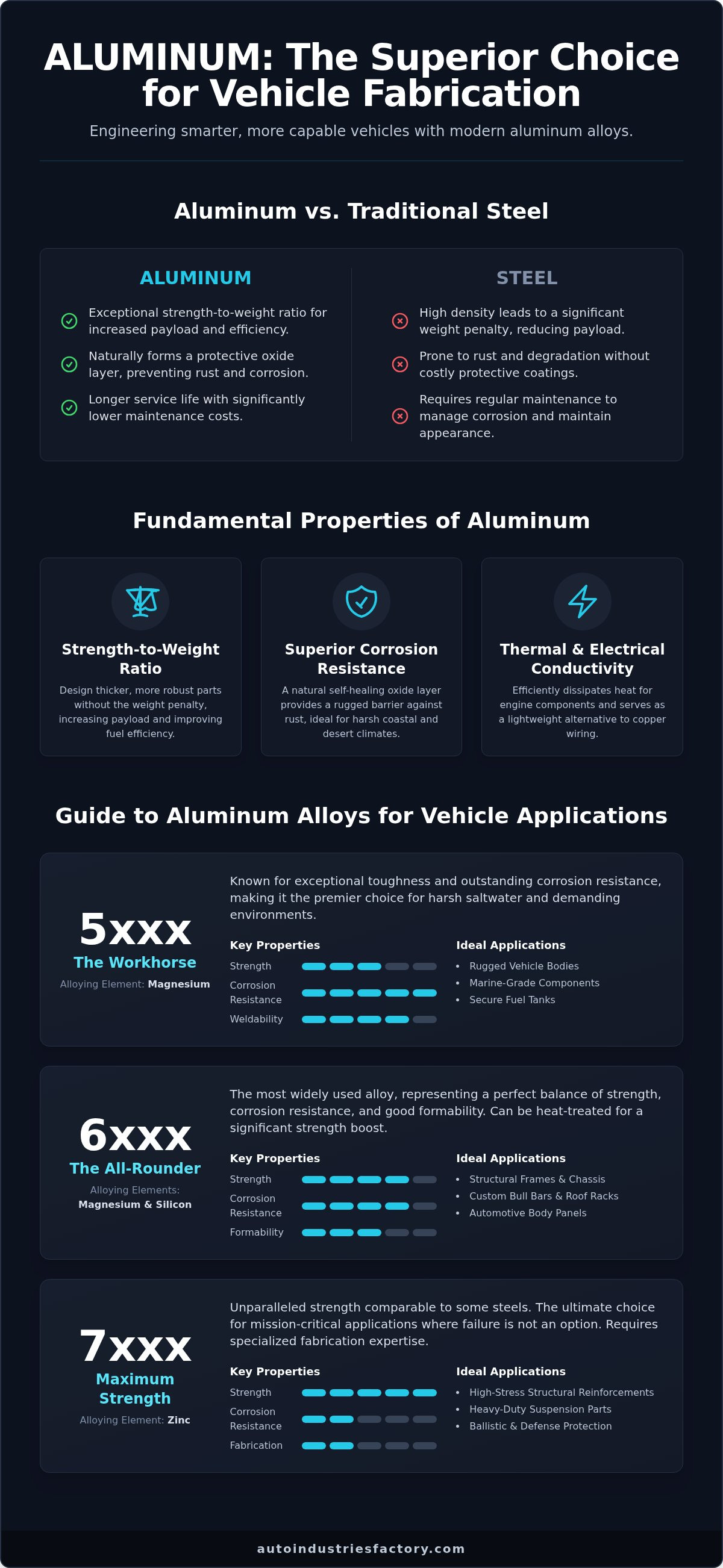
In modern vehicle engineering, aluminum is not just a lightweight alternative; it is a strategic choice for enhancing performance, durability, and mission capability. While its low density is a well-known advantage, the true value of this material lies in a combination of core properties that make it indispensable for custom conversions and heavy-duty accessories. These characteristics directly translate into superior vehicle performance, providing a critical edge for security, emergency, and commercial fleets.
Understanding how these fundamental properties are leveraged in advanced fabrication is key. This short video demonstrates the use of aluminum honeycomb structures, a perfect example of engineering for maximum strength with minimal weight.
Unmatched Strength-to-Weight Ratio
The strength-to-weight ratio measures a material's strength compared to its mass. Aluminum excels here, allowing our engineers to design and fabricate parts that are thicker and more robust than steel counterparts without the associated weight penalty. By using specific metal compositions, a topic detailed in Understanding Aluminum Alloys, we can achieve exceptional durability. For vehicle operators, this translates directly to two major benefits: increased payload capacity and improved fuel efficiency. It is also a critical factor in armored vehicles, where every kilogram saved on structure can be reallocated to life-saving protective materials.
Superior Corrosion Resistance
Unlike steel, which rusts and degrades when exposed to moisture and oxygen, aluminum naturally forms a protective, passive oxide layer on its surface. This microscopic layer acts as a rugged barrier, preventing further corrosion. This property is a significant advantage for vehicles operating in the harsh coastal humidity and arid desert conditions found across Oman. The result is a longer service life for accessories like bull bars and roof racks, with significantly lower long-term maintenance costs and a consistently professional appearance.
Excellent Thermal & Electrical Conductivity
Aluminum’s ability to dissipate heat efficiently makes it a premium material for components near the engine, such as protective housings, brackets, and heat shields. This thermal conductivity helps maintain optimal operating temperatures for critical systems. Furthermore, its excellent electrical conductivity allows it to be used in wiring and electrical components, offering significant weight savings over traditional copper wiring without compromising performance-a key consideration in complex vehicle conversions like ambulances and mobile command centers.
Understanding Aluminum Alloys: Choosing the Right Grade for Vehicle Applications
When we discuss using aluminum for vehicle conversions, we are almost always referring to its advanced alloys. Pure aluminum is relatively soft; its true industrial potential is unlocked by adding other elements like magnesium, silicon, and zinc. This alloying process creates a spectrum of materials, each with distinct, engineered properties. Choosing the right alloy is the single most critical engineering decision, dictating the final product's strength, durability, and performance in the field.
At Auto Industries Factory LLC, our expertise lies in selecting the precise grade for each application, ensuring every component we fabricate is optimized for its mission. Here is a breakdown of the key alloy series we utilize.
5Xxx Series (Aluminum-Magnesium): The Workhorse for Durability
Known for its exceptional toughness, the 5xxx series is a staple in heavy-duty fabrication. Its primary alloying element, magnesium, provides outstanding corrosion resistance, making it the premier choice for applications in harsh saltwater environments common in Oman. This resilience, combined with its excellent formability and weldability, makes it ideal for rugged vehicle bodies, marine-grade components, and secure fuel tanks. Common grades include the versatile 5052 and the high-strength 5083.
6Xxx Series (Aluminum-Magnesium-Silicon): The All-Rounder
The 6xxx series represents the perfect balance of performance and versatility, making it the most widely used alloy for automotive extrusions and body panels. By combining magnesium and silicon, these alloys offer a strong mix of strength, corrosion resistance, and good formability. A key advantage is their ability to be heat-treated, significantly increasing their strength after fabrication. As a result, alloys like 6061-T6 are the industry standard for structural components such as custom frames, bull bars, and roof racks, often at the center of the Aluminum vs. Steel for Vehicle Bodies debate due to their impressive strength-to-weight ratio.
7Xxx Series (Aluminum-Zinc): For Maximum Strength
For applications demanding the absolute highest strength, the 7xxx series is unparalleled. With zinc as the primary alloying agent, these materials deliver strength comparable to some steels, making them essential in aerospace, defense, and high-performance motorsports. In vehicle conversions, 7xxx alloys are specified for mission-critical components such as high-stress structural reinforcements, heavy-duty suspension parts, and ballistic protection. While their strength is a major asset, they require specialized expertise and techniques for welding and fabrication.
Key Fabrication Techniques for Aluminum in Vehicle Conversions
Transforming a stock vehicle into a specialized machine requires more than just bolting on parts. It demands a deep understanding of materials and the mastery of advanced fabrication processes. While steel is forgiving, working with aluminum is a science that requires specialized equipment and a higher level of skill. Step inside our workshop to see how raw aluminum is precisely shaped into the durable, lightweight components that define a high-performance vehicle conversion.
Precision Cutting: Laser, Plasma, and Waterjet
The foundation of any quality build is a perfect cut. For intricate designs on aluminum sheets, such as custom grilles or interior panels, CNC laser cutting delivers flawless edges and unparalleled detail. For thick plates used in structural supports or heavy-duty bumpers, waterjet cutting is our method of choice. It slices through the metal using a high-pressure stream of water and abrasive, eliminating the risk of heat distortion that can compromise the material's integrity. This CNC-driven technology ensures every component is identical, guaranteeing perfect fitment across entire fleet orders.
Forming and Bending: Press Brakes and Stamping
Shaping aluminum requires a nuanced approach. Due to its lower modulus of elasticity, it has a greater tendency to spring back after being bent. Our technicians account for this property with precise calculations, using advanced CNC press brakes to create complex, multi-angle forms for custom bumpers, skid plates, and body panels. Using the correct tooling is critical; improper dies can cause micro-fractures, weakening the final product. Mastery here means creating strong, seamless forms without compromising durability.
Welding: The Art and Science of TIG & MIG
Welding aluminum presents a unique challenge: a tough, transparent oxide layer that melts at a much higher temperature than the metal itself. Overcoming this requires meticulous preparation and expert technique.
- TIG (Tungsten Inert Gas) Welding: This is the go-to method for high-strength, visually pristine welds. It offers superior control, making it ideal for visible components like roof racks and bull bars where aesthetics are as important as strength.
- MIG (Metal Inert Gas) Welding: For structural applications where speed and efficiency are key, MIG welding provides strong, reliable bonds quickly. It's perfect for assembling framework and mounting systems.
Harnessing these techniques to their full potential is what separates standard accessories from mission-ready equipment. Auto Industries Factory provides expert fabrication services for any project, ensuring every component is built to perform.
Aluminum vs. Steel: A Comparison for Vehicle Bodies and Accessories
In the world of vehicle conversion and custom fabrication, the debate between aluminum and steel is constant. However, the question isn't "which is better?" but rather "which is the superior choice for a specific application?" Understanding the distinct advantages of each material is key to engineering a vehicle that is safe, efficient, and purpose-built to perform under demanding conditions. At Auto Industries Factory, we leverage the unique properties of each to deliver solutions built for maximum performance and longevity.
| Feature | Aluminum | Steel |
|---|---|---|
| Weight | Significantly Lighter | Heavier |
| Strength-to-Weight Ratio | Very High | Good |
| Corrosion Resistance | Excellent (Naturally Oxide-Coated) | Prone to Rust Without Treatment |
| Initial Cost | Higher | Lower |
| Repairability | Requires Specialized Skills & Tools | Widely Repairable |
Strength, Durability & Safety
A common misconception is that aluminum is weak. In reality, modern alloys boast an exceptional strength-to-weight ratio, allowing them to absorb up to twice the crash energy of mild steel in an impact. This makes it a formidable material for safety structures and vehicle bodies. While steel offers greater surface hardness and resistance to minor dents, the strategic use of high-grade aluminum provides superior structural integrity per kilogram, enhancing occupant safety without adding unnecessary mass.
Weight, Performance & Efficiency
The most significant advantage of aluminum is substantial weight reduction. A lighter vehicle accelerates faster, handles more responsively, and achieves better fuel efficiency-critical factors for fleet operators in Oman managing operational costs. For commercial conversions like ambulances or utility vehicles, this weight saving directly translates into a higher legal payload capacity, allowing you to carry more essential equipment or cargo on every single trip.
Cost, Repairability & Lifecycle
While the initial material and fabrication costs for aluminum are typically higher, the long-term value proposition is compelling. Its natural resistance to corrosion eliminates the need for costly rust repairs, a major advantage in Oman's coastal climate. Over the vehicle's lifecycle, this durability, combined with consistent fuel savings, often outweighs the higher upfront investment. While repairs require specialized expertise and equipment, they are readily performed by qualified workshops like Auto Industries Factory.
Real-World Applications: Where Aluminum Shines in Specialized Vehicles
The technical advantages of strength, low weight, and corrosion resistance are not just data points on a spec sheet; they are critical factors that determine the success of a mission. At Auto Industries Factory, we don't just choose materials-we engineer solutions. Our deep understanding of how to leverage the unique properties of high-grade aluminum translates directly into superior performance and reliability in the most demanding vehicle applications across Oman and the wider region.
Ambulances and Emergency Vehicles
In a life-or-death situation, every second counts. By using aluminum for interior cabinetry, equipment mounts, and structural components, we reduce the overall vehicle weight. This directly improves acceleration and handling for faster response times. Furthermore, its natural resistance to corrosion and smooth surface make it exceptionally easy to clean and sanitize, ensuring a hygienic environment and a long, low-maintenance service life for mission-critical fleets.
Military, Police & Armored Vehicles
The core challenge in tactical vehicle design is balancing protection with mobility. The superior strength-to-weight ratio of specialized aluminum alloys provides a distinct tactical advantage. It allows for the integration of thicker, more effective armor packages without the severe weight penalty of steel. This results in a vehicle that is not only better protected but also faster, more agile, and less prone to mechanical wear, maximizing operational readiness and effectiveness in the field.
Off-Road, Safari & 4x4 Vehicles
For conquering the rugged wadis and dunes of Oman, reducing weight is paramount. Lighter accessories like our custom-fabricated bull bars, roof racks, and canopies improve suspension performance and vehicle stability on difficult terrain. This material is inherently durable and highly resistant to corrosion from sand, water, and mud, ensuring your gear withstands the harshest adventures. Less weight means better fuel efficiency and a more capable off-road machine. Explore our gallery of custom vehicle conversions to see the results.
Your Partner in Advanced Aluminum Fabrication
The shift towards advanced materials in vehicle fabrication is undeniable. As we've explored, the strategic use of aluminum offers an unparalleled combination of low weight, high strength, and superior corrosion resistance, making it a game-changer for everything from rugged accessories to complete vehicle bodies. Success, however, depends on two critical factors: selecting the correct alloy for the application and employing precision fabrication techniques to unlock its full potential.
At Auto Industries Factory, we transform this potential into reality. As a leading vehicle conversion factory based in Ajman, UAE, we are the trusted partner for demanding projects across Oman and the wider region. Our specialists have extensive, hands-on experience with 5xxx, 6xxx, and 7xxx series alloys, utilizing state-of-the-art CNC laser cutting, press brake forming, and TIG/MIG welding to deliver flawless, heavy-duty components. Don't leave your build to chance. Consult our fabrication experts for your next vehicle project.
Let's build a vehicle that is engineered to perform and built to last.
Frequently Asked Questions About Aluminum Fabrication
How do you prevent galvanic corrosion when joining aluminum to steel?
Preventing galvanic corrosion is a critical engineering step. We ensure long-term durability by physically isolating the two metals using non-conductive materials like high-density polymer gaskets, specialized washers, and sleeves for fasteners. We also apply robust, dielectric coatings to the steel surface before assembly. These precision methods create a durable barrier, stopping the electrochemical reaction that causes corrosion and ensuring the integrity of your vehicle conversion for years to come in demanding environments.
Is it possible to repair a damaged aluminum vehicle body?
Yes, repairing a damaged aluminum body is entirely possible, but it demands specialized expertise and equipment. Our highly trained technicians utilize advanced techniques like TIG (Tungsten Inert Gas) welding and structural adhesives for panel bonding. We use dedicated tools for dent removal designed specifically for aluminum's unique properties. This ensures all repairs meet or exceed original factory strength and safety standards, restoring both the performance and the protective integrity of the vehicle.
What is the best aluminum alloy for a heavy-duty bull bar or roof rack?
For heavy-duty applications like bull bars and roof racks, we exclusively use high-strength alloys such as 6061-T6. This grade offers an exceptional strength-to-weight ratio, excellent corrosion resistance, and superior weldability, making it ideal for rugged, off-road conditions found across Oman. Another premium option is the 5000-series, like 5052, known for its outstanding formability and durability in harsh marine or coastal environments. We select the precise alloy based on the accessory's design and mission requirements.
How does the total cost of an aluminum vehicle body compare to a steel one?
Initially, the material and fabrication costs for an aluminum body are typically 20-30% higher than a comparable steel one. For example, a custom conversion that might cost $10,000 in steel could be around $12,500 in aluminum. However, the total cost of ownership is often lower. The significant weight savings lead to improved fuel efficiency and increased payload capacity, translating directly to operational savings over the vehicle's lifespan-a strategic investment for any commercial fleet.
What does 'anodized aluminum' mean and is it useful for vehicle parts?
Anodizing is an electrochemical process that creates a thick, durable, and corrosion-resistant oxide layer on the surface of the metal. This protective layer is integrated into the aluminum itself, making it incredibly hard and resistant to scratches, UV degradation, and harsh weather. It is extremely useful for vehicle accessories like roof racks, side steps, and trim pieces, providing a premium, long-lasting finish that withstands the demanding Omani climate without chipping, peeling, or fading.
Is aluminum fabrication more environmentally friendly than steel?
While primary aluminum production is energy-intensive, its lifecycle benefits are significant. Aluminum is infinitely recyclable without losing its properties, and the recycling process uses only 5% of the energy required for new production. Furthermore, the weight reduction in vehicles fabricated with aluminum directly contributes to lower fuel consumption and reduced emissions during the vehicle's operational life. This makes it a responsible choice for building lighter, more efficient, and ultimately more sustainable vehicle solutions.


