
What if the very surfaces designed to save lives are actually harboring the pathogens that threaten them? You understand the high stakes of emergency medical transport, where porous materials and hidden seams quickly become breeding grounds for cross-contamination. It’s a relentless challenge to keep a fleet compliant with the CAAS GVS V4.0 standards when harsh chemical disinfectants are constantly eating away at your vehicle’s interior. High-performance anti-bacterial interiors for ambulances represent the only viable solution for operators who demand rugged reliability and absolute hygiene in the field.
This guide demonstrates how advanced antimicrobial materials and precision-engineered, seamless fabrication significantly reduce pathogen transmission. You’ll learn how integrating silver-ion technologies and nonporous polymers into your vehicle conversion creates a fortress against bacteria, mold, and fungi. We’ll preview the latest engineering techniques that eliminate microbial hiding spots, reduce vehicle downtime for deep cleaning, and ensure your fleet meets the newest 2026 international safety standards. We will also examine how these advanced surfaces protect your investment from the degradation caused by industrial-grade decontaminants.
Key Takeaways
- Learn why antimicrobial-infused materials like ABS are superior to traditional plywood or metal for long-term durability and infection control.
- Discover the "Zero-Seam" philosophy, which uses precision CNC machining to eliminate the joints where pathogens typically accumulate.
- Explore how anti-bacterial interiors for ambulances reduce the transmission of Healthcare-Associated Infections (HAIs) in mobile medical environments.
- Identify the maintenance protocols and decontamination systems, such as Hydrogen Peroxide Vapor, that maximize the lifespan of your vehicle’s interior.
- See how technical expertise in custom fabrication allows for the seamless integration of antimicrobial technology into diverse ambulance types and configurations.
The Science of Infection Control in Emergency Medical Vehicles
Anti-bacterial interiors for ambulances are specialized environments engineered to actively inhibit the growth and spread of harmful microorganisms. Unlike standard vehicle cabins, these interiors utilize advanced material science to create a hostile environment for bacteria. In the demanding field of emergency medicine, The Science of Infection Control is the foundation of patient and crew safety. Mobile medical units are particularly susceptible to Healthcare-Associated Infections (HAIs) due to the high volume of critical patients and the confined nature of the treatment space.
Dangerous pathogens such as MRSA and VRE are frequently introduced into these spaces during emergency calls. While standard cleaning is essential, it has clear limitations in high-pressure scenarios. Paramedics often lack the time for the meticulous, multi-step disinfection required to clear every crevice. Porous surfaces or seams in traditional builds can trap biological fluids, making them nearly impossible to decontaminate thoroughly during a shift change. This reality makes the choice of interior materials the first line of defense.
To better understand the practical challenges of maintaining these environments, watch this demonstration of deep cleaning techniques:
The Role of Surface Persistence in Pathogen Transmission
Microbes don't simply disappear once a patient leaves the vehicle. Many bacteria can survive on untreated surfaces for days or even weeks, waiting for a new host. Environmental factors like high humidity and varying temperatures inside the ambulance cabin can trigger rapid colonial growth. Biofilm formation is the process where microbial communities attach to porous surfaces and secrete a matrix that shields them from traditional cleaning agents. Engineering out these porous materials is the only way to break the cycle of transmission.
International Standards for Ambulance Hygiene
Compliance with global regulations is a benchmark for quality and safety. The EN 1789:2026 standard mandates that all interior surfaces must be easy to clean, disinfect, and resist the absorption of liquids. Modern anti-bacterial interiors for ambulances are designed specifically to surpass these requirements. This shift represents a transition from reactive cleaning, which relies solely on human effort, to proactive material-based protection. By integrating antimicrobial properties directly into the vehicle's core components, manufacturers provide a permanent layer of security that doesn't rely on the clock or the crew's availability.
Advanced Materials: Beyond Standard Ambulance Surfaces
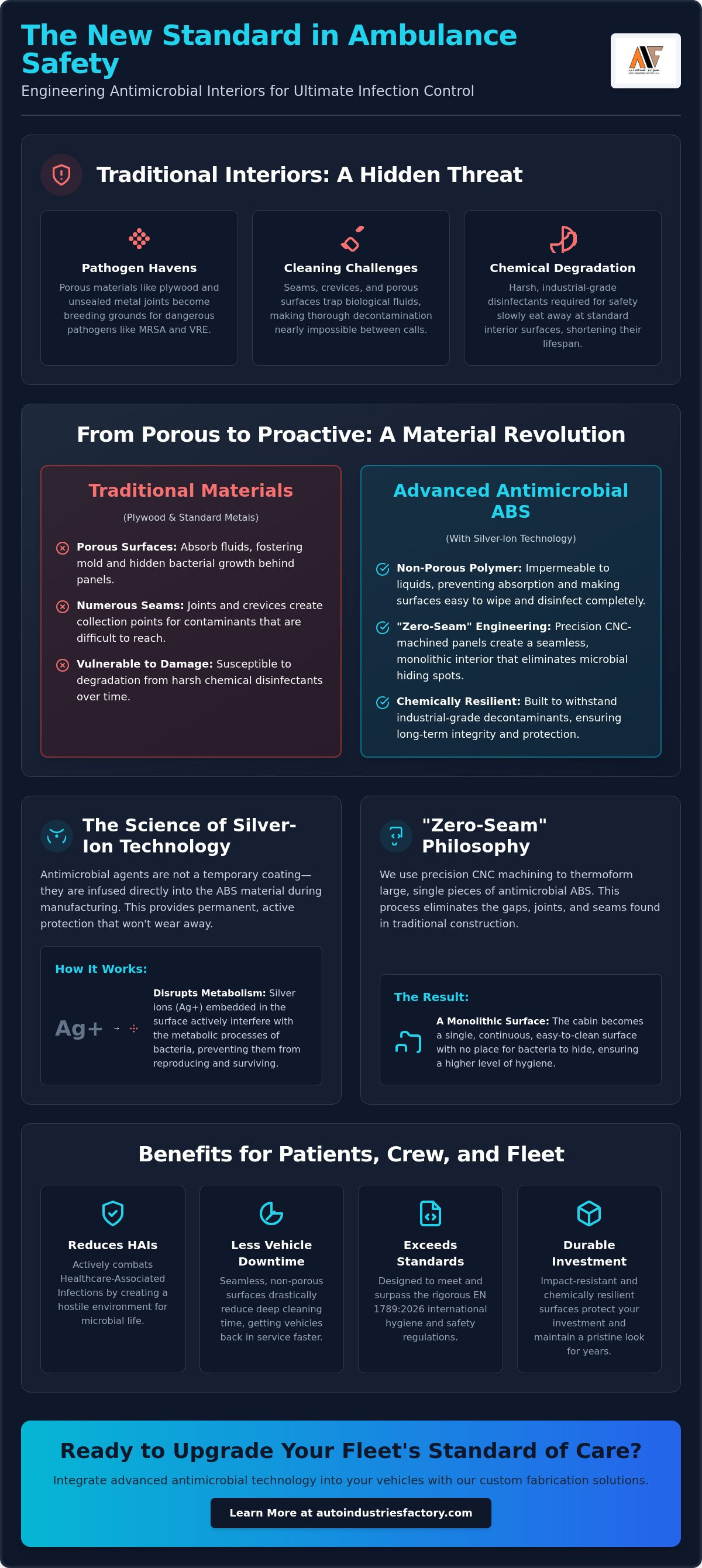
Traditional ambulance interiors often relied on marine-grade plywood or basic aluminum sheeting. While these materials provided structural support, they failed the modern hygiene test. Plywood is inherently porous, absorbing fluids and fostering mold growth behind the panels. Aluminum, though non-porous, creates sharp edges and cold surfaces that are difficult to seal effectively. Engineering superior anti-bacterial interiors for ambulances requires a move toward advanced composites like antimicrobial-infused ABS (Acrylonitrile Butadiene Styrene). This material is lightweight, impact-resistant, and can be thermoformed into complex shapes that eliminate the need for traditional joints.
The integration of silver-ion technology directly into the ABS substrate represents a massive leap in infection control. These ions disrupt the metabolic processes of bacteria, preventing reproduction on the surface. Because the antimicrobial agent is part of the material itself, it remains active even if the surface is scratched or worn. High-touch areas, such as grab rails and cabinet handles, often utilize reinforced plastics with these same properties to ensure a continuous chain of protection throughout the vehicle. Our specialized ambulance conversions utilize these high-performance materials to ensure maximum vehicle longevity and safety.
Antimicrobial Coatings vs. Infused Materials
Topical sprays and antimicrobial paints are common in the industry, but they have a significant flaw: they wear down. Constant friction from equipment and the use of abrasive cleaners eventually strip away these surface treatments. Infused materials provide permanent protection because the biocidal properties are baked into the polymer matrix. Durability testing shows that these materials maintain their efficacy even after years of heavy use and exposure to UV light. This ensures that the anti-bacterial interiors for ambulances don't lose their protective capabilities over time, regardless of the cleaning frequency.
Flooring Solutions for Maximum Decontamination
The floor is the most contaminated surface in any emergency vehicle. We use medical-grade, slip-resistant vinyl that is specifically formulated to resist blood, urine, and aggressive chemical agents. A critical engineering detail is the use of coving techniques. By curving the flooring up the side of the wall, we eliminate the 90-degree angles where dirt and pathogens typically accumulate. This creates a "bathtub" effect, allowing for rapid and thorough wash-downs without the risk of liquid seeping into the vehicle's sub-structure. This seamless transition is a hallmark of precision engineering in high-risk environments.
Engineering "Zero-Seam" Interiors for Maximum Hygiene
The "Zero-Seam" philosophy isn't merely a design preference. It's a calculated engineering strategy to eliminate the microscopic gaps where pathogens thrive. In a traditional build, every joint, seam, and fastener represents a potential bio-hazard. These areas trap biological fluids and resist standard disinfection protocols. By prioritizing a seamless environment, we ensure that anti-bacterial interiors for ambulances provide a continuous, unbroken shield against contamination. Precision is the ultimate tool in infection control.
Achieving this level of hygiene requires advanced fabrication technology. We utilize high-precision CNC machining to ensure that every cabinet component fits with airtight accuracy. This eliminates the need for thick sealant beads, which can degrade and peel over time. Additionally, laser cutting provides smooth, burr-free edges on all metal and composite parts. This prevents the formation of "nicks" or "pitted" surfaces where bacteria can settle and multiply. By removing visible fasteners and screws, we eliminate the primary dirt traps found in standard vehicle conversions.
Thermoforming and Monolithic Interior Shells
We create large, single-piece interior panels through advanced thermoforming processes. This technique allows us to manufacture monolithic shells that cover entire walls or ceilings without a single joint. These panels feature radiused edges (curved corners) that facilitate significantly faster wipe-down procedures. Beyond hygiene, these monolithic structures offer superior structural integrity. They resist the cracking and rattling common in high-vibration environments, ensuring the ambulance remains a quiet and stable treatment space for years.
Integrated Cabinetry and Recessed Equipment Mounting
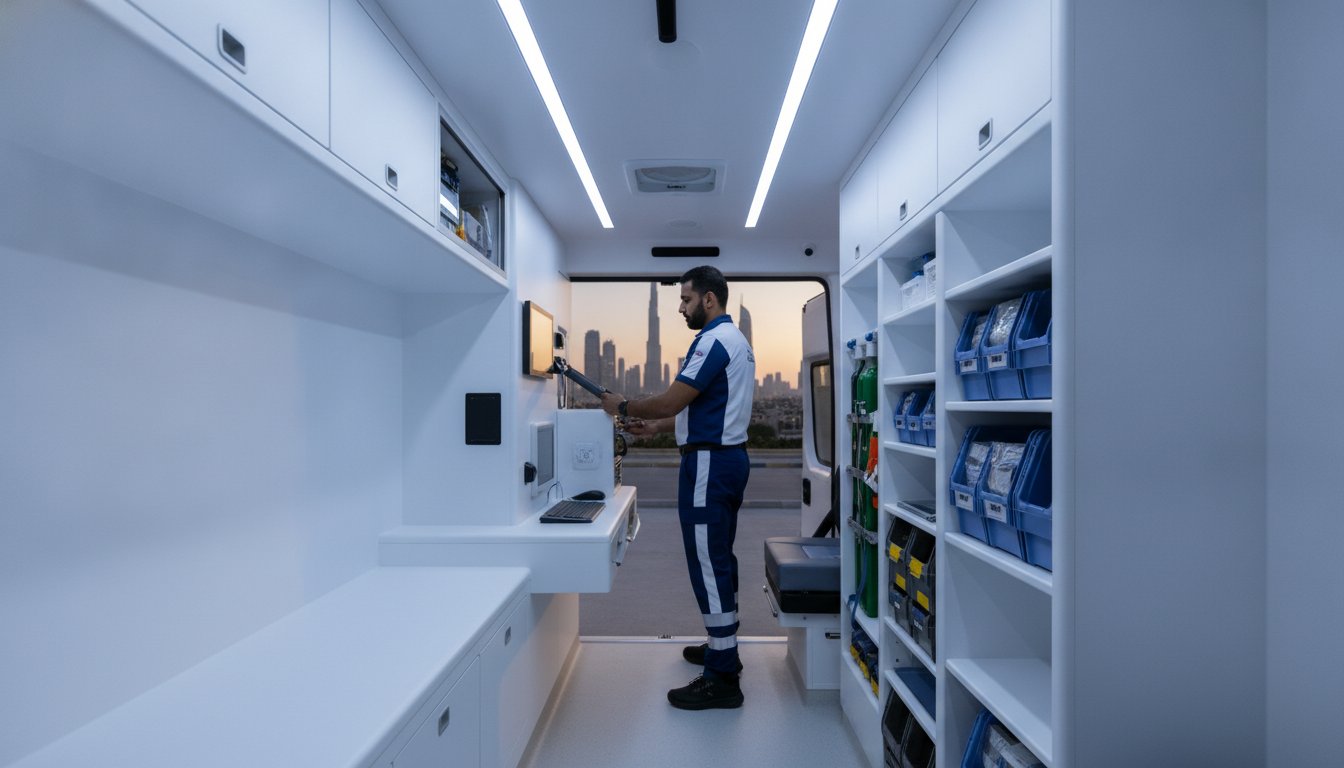
Storage units are designed as flush-mounted components to prevent dust and aerosolized pathogens from accumulating on top of ledges. We integrate antimicrobial gaskets around medical gas outlets and electrical sockets to maintain a sealed environment. This meticulous attention to detail extends to ergonomic design. By placing equipment in recessed mounts, we create a streamlined interior that paramedics can clean in minutes rather than hours. Our specialized vehicle modifications focus on these high-performance engineering solutions to maximize operational efficiency. This focus on integrated engineering is what separates standard builds from high-performance anti-bacterial interiors for ambulances.
Maintenance and Longevity of Antimicrobial Surfaces
Engineering a high-performance interior is only half the battle; maintaining its efficacy over years of service requires a technical approach to decontamination. Standardized cleaning protocols for anti-bacterial interiors for ambulances must go beyond simple surface wiping. Because these materials are designed with active antimicrobial properties, they interact differently with modern sanitation technologies. Managers should implement a schedule that balances daily mechanical cleaning with periodic deep-level sterilization to ensure the vehicle remains a sterile environment throughout its operational life.
Modern fleets are increasingly moving toward Hydrogen Peroxide Vapor (HPV) and UV-C light systems for rapid decontamination. Our interior components are engineered for total compatibility with these technologies. While standard plastics might yellow or become brittle under intense UV-C exposure, antimicrobial-infused ABS and medical-grade composites are stabilized to resist UV degradation. Similarly, the non-porous nature of the "Zero-Seam" build ensures that HPV can penetrate every corner without being absorbed into the substrate. This prevents the chemical "off-gassing" that can occur with traditional plywood or fabric-lined interiors.
If you're looking to upgrade your fleet's safety standards, you can request a quote for custom ambulance conversions that prioritize long-term material integrity. Monitoring the efficacy of these surfaces involves regular ATP bioluminescence testing to verify that the antimicrobial agents are still actively disrupting pathogen growth.
Chemical Resistance and Material Integrity
We subject our materials to rigorous testing against the industry's harshest disinfectants, including 10% bleach solutions, 70% isopropyl alcohol, and quaternary ammonium compounds. Traditional materials often suffer from environmental stress cracking when exposed to these chemicals under tension. Our engineered composites maintain their structural bonds even with frequent chemical exposure. The smoother the surface, the more uniform the disinfectant contact time, ensuring total microbial neutralization across the entire cabin.
Training Staff for Enhanced Decontamination
Crew education is vital for the success of any infection control strategy. Paramedics must understand that while the interior is "self-sanitizing" against many bacteria, it isn't a substitute for removing gross bio-contamination. Staff should be trained on visual inspection checklists to identify any physical damage that could compromise the antimicrobial barrier. If a panel is deeply gouged or the structural coving is cracked, it can create a new hiding spot for pathogens. In these cases, professional panel replacement is necessary to restore the vehicle's "Zero-Seam" integrity and protect both patients and paramedics from cross-contamination risks.
Custom Ambulance Conversion Solutions by Auto Industries Factory LLC
Auto Industries Factory LLC delivers comprehensive engineering solutions for the most demanding medical transport environments. We integrate advanced anti-bacterial interiors for ambulances into every project, ensuring that your fleet is ready for mission-critical applications. Our expertise spans across Type A, B, and C conversions, including specialized box type ambulances and extended roof modifications for GMC and Toyota platforms. We don't provide off-the-shelf products; we engineer custom solutions that address the specific cross-contamination risks faced by your crew.
Our manufacturing facility in Ajman, AE, serves as a hub for precision engineering and national fleet support. This local presence allows us to maintain a direct line of communication with our clients, ensuring that every vehicle modification meets the highest standards of safety and durability. By grounding our identity in regional expertise and global standards, we've become a trusted partner for organizations that cannot afford to compromise on hygiene. Our commitment to safety is backed by rigorous testing and a master-craftsman approach to vehicle fabrication.
Our In-House Fabrication Advantage
We maintain total oversight of the production cycle to ensure that no detail is overlooked. By utilizing advanced CNC machining and laser cutting, we produce bespoke medical interiors with unprecedented accuracy. These technologies allow us to create the smooth, burr-free edges and airtight fits discussed earlier in this guide, which are essential for effective infection control. Our Specialized Vehicle Conversions involve a multi-stage quality control process, from the initial structural welding to the application of antimicrobial materials. This integrated approach ensures that every surface is optimized for rapid decontamination and long-term resilience.
Get a Quote for Your Hygienic Fleet Upgrade
The design of a high-performance ambulance requires more than just mechanical skill; it requires a deep understanding of medical workflows. We consult with medical professionals to develop layouts that reduce dust accumulation and improve cleaning speed. These scalable solutions are ideal for both private healthcare providers and national emergency services looking to modernize their equipment. Our engineering team is available for technical consultations to help you navigate the complexities of antimicrobial integration. Contact us today to receive a tailored estimate for your next fleet upgrade and ensure your vehicles provide the maximum protection your patients and paramedics deserve.
Secure Your Mission-Critical Medical Fleet
Precision engineering is the ultimate defense against the invisible threats found in emergency transport. Transitioning to anti-bacterial interiors for ambulances isn't just about surface-level hygiene; it's a structural commitment to patient and paramedic safety. By combining "Zero-Seam" fabrication with advanced antimicrobial-infused materials, you eliminate the bio-hazards that traditional builds ignore. This proactive approach ensures your fleet remains compliant with EN 1789 standards while significantly reducing vehicle downtime for deep cleaning.
Our facility provides full-service fabrication from initial design to final painting. We utilize high-precision in-house laser cutting and CNC machining to guarantee that every component meets rigorous medical specifications. This technical expertise allows us to deliver conversions that are as robust as they are hygienic. Don't leave your infection control to chance when you can rely on master-crafted engineering solutions designed for the toughest environments.
Ready to modernize your emergency vehicles? Request a Technical Consultation for Your Ambulance Fleet today. We're here to help you build a safer, more reliable future for your medical services.
Frequently Asked Questions
What is the difference between an anti-bacterial and a standard ambulance interior?
Anti-bacterial interiors for ambulances utilize non-porous, antimicrobial-infused materials like ABS, while standard interiors often rely on plywood or basic aluminum that lack active pathogen-fighting properties. Standard builds depend entirely on the thoroughness of manual cleaning. In contrast, an anti-bacterial build provides a continuous layer of protection that actively inhibits microbial growth between cleaning cycles, addressing the high risk of cross-contamination in mobile medical units.
How long do the antimicrobial properties of the interior surfaces last?
Antimicrobial properties last for the entire operational life of the vehicle because the active agents are infused directly into the material substrate. Unlike topical coatings or sprays that can be scratched off or worn away by equipment friction, infused silver-ion technology remains active regardless of surface wear. This ensures permanent, long-term protection without the need for periodic re-application or specialized maintenance to restore the biocidal effect.
Are anti-bacterial materials resistant to harsh chemical disinfectants?
Yes, these engineered composites are specifically designed to withstand industrial-grade disinfectants like 10% bleach, 70% isopropyl alcohol, and quaternary ammonium compounds. Standard plastics often suffer from environmental stress cracking or discoloration when exposed to these aggressive agents. Our materials are chemically stabilized to maintain their structural integrity and appearance even under the rigorous daily decontamination protocols required for high-volume emergency medical services.
Does a "Zero-Seam" design really make a difference in infection rates?
A "Zero-Seam" design is critical because it eliminates the microscopic gaps where biological fluids and aerosolized pathogens accumulate. Traditional joints and visible fasteners act as dirt traps that are nearly impossible to sterilize during high-pressure emergency shifts. By removing these hiding spots through monolithic panels and radiused edges, you ensure that disinfectants reach every square inch of the cabin, significantly reducing the risk of persistent bacterial colonies.
Can existing ambulances be retrofitted with anti-bacterial interiors?
Yes, we can perform comprehensive retrofits by removing existing porous panels and replacing them with custom-engineered, antimicrobial components. This process involves a full-service fabrication approach where we use CNC machining to ensure the new interior fits the exact dimensions of your current vehicle platform. It's a highly effective way to upgrade an older fleet to modern hygiene standards without the cost of purchasing entirely new vehicles.
Are these materials compliant with EN 1789 ambulance standards?
Our anti-bacterial interiors for ambulances are fully compliant with EN 1789:2026 requirements, which mandate non-absorbent surfaces that are easy to clean and disinfect. We focus on precision engineering to meet and exceed these global health safety benchmarks. This compliance ensures that your vehicle is technically equipped for international emergency medical operations, providing a verified level of safety for both patients and paramedics during transport.
Do antimicrobial surfaces replace the need for regular cleaning?
No, antimicrobial surfaces are a secondary line of defense that works in conjunction with standardized cleaning protocols. While the material actively inhibits microbial reproduction, mechanical cleaning is still required to remove gross bio-contamination and visible debris. These surfaces make the cleaning process significantly faster and more effective by preventing the formation of resilient biofilms that are often resistant to standard chemical disinfectants.
How does silver-ion technology work in ambulance plastics?
Silver-ion technology works by releasing ions that disrupt the cell membrane and metabolic processes of bacteria on contact. These ions prevent microbes from producing energy and reproducing, effectively neutralizing them. Because these ions are integrated into the polymer matrix of the ambulance plastics, they provide a constant, low-level biocidal effect. This technology is safe for human contact but lethal to common pathogens like MRSA and VRE.


