
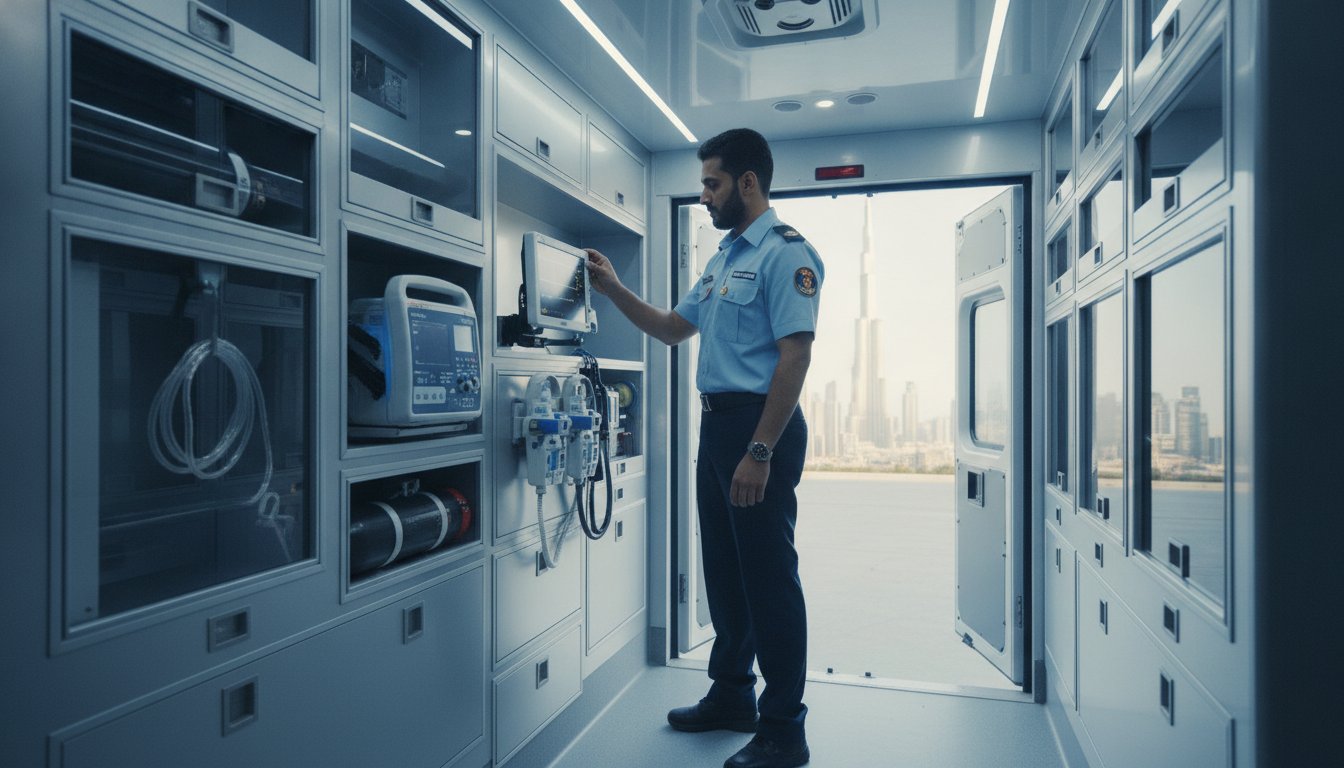
What good is a high tech BLS ambulance equipment list if the gear itself fails during high speed transit? You shouldn't have to choose between meeting the June 2026 regulatory updates and maintaining a functional, organized workspace. Whether you're navigating the Massachusetts AR 5-400 requirements or San Diego's latest protocols, the challenge isn't just buying the gear. It's ensuring your vehicle fabrication actually supports the medical mission without equipment shifting or breaking during critical maneuvers.
We understand that space optimization in platforms like the Toyota Hiace or Ford Transit is a constant battle for fleet managers. You need a definitive breakdown of every essential piece of gear, from AEDs to 5 point patient restraint systems, integrated into a build that meets EN 1789 compliance. This guide provides a complete 2026 procurement checklist and explains how expert engineering turns a standard chassis into a life saving environment. We'll explore the mandatory medications, airway adjuncts, and heavy duty storage solutions that keep your crew focused on the patient rather than the cargo.
Key Takeaways
- Master the critical differences between BLS and ALS standards to ensure your fleet meets the latest 2026 EN 1789 compliance requirements.
- Identify the mandatory diagnostic tools and resuscitation systems required for a complete BLS ambulance equipment list to maintain mission readiness.
- Learn how to select and secure high-performance patient transport and immobilization systems that withstand the physical stresses of emergency transit.
- Discover how precision CNC-machined cabinetry and custom electrical systems integrate medical gear into specialized platforms like the Toyota Hiace or GMC.
- Understand the engineering principles behind professional vehicle conversions that prevent equipment failure and maximize workspace in compact ambulance builds.
Defining the BLS Ambulance: Standards and Core Framework
A Basic Life Support (BLS) unit serves as the primary frontline of pre-hospital care. It handles everything from routine inter-facility transfers to high-priority trauma response. Understanding the Ambulance Types and Functions is critical for any fleet manager or procurement officer. The 2026 BLS ambulance equipment list is no longer just a suggestion. It's a precisely engineered inventory designed to stabilize patients during the "Golden Hour" while maintaining crew safety.
To better understand this concept, watch this helpful video:
International standards like EN 1789 categorize vehicles based on their medical mission. For BLS operations, Type B (Emergency Ambulance) is the global benchmark. This classification dictates everything from the siren's decibel level to the crash-test rating of the interior cabinetry. These units are the backbone of emergency fleets because they balance clinical capability with operational cost-efficiency. They provide the essential framework for diagnostics, trauma management, airway support, and infection control without the extreme complexity of a mobile ICU.
BLS vs. ALS: Understanding the Equipment Gap
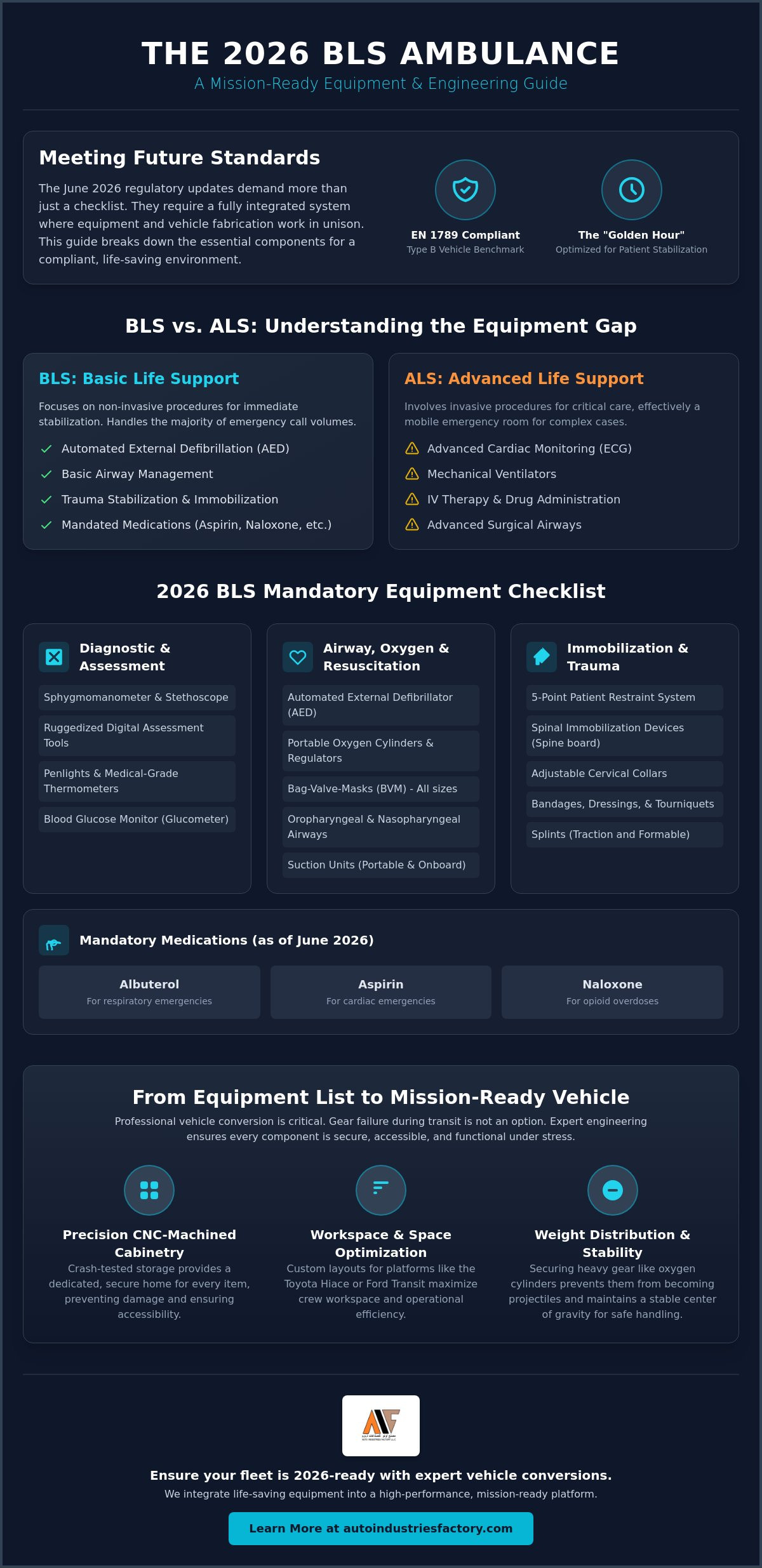
The primary distinction lies in the complexity of interventions. BLS crews focus on non-invasive procedures. This includes automated defibrillation, basic airway management, and trauma stabilization. In contrast, Advanced Life Support (ALS) units carry ventilators, cardiac monitors, and a vast array of intravenous medications. While ALS is for critical care, BLS fleets handle the majority of call volumes. Effective June 1, 2026, regulations like Massachusetts Administrative Requirement 5-400 mandate that BLS units carry specific medications including Albuterol, Aspirin, and Naloxone. This ensures they can handle respiratory and cardiac emergencies without the overhead of an ALS build.
Regulatory Compliance for Specialized Vehicle Conversions
A mission-ready vehicle requires more than just throwing gear in the back. Compliance involves meeting federal standards for high-visibility clothing and ensuring the vehicle's center of gravity remains stable. Heavy diagnostic gear and oxygen cylinders must be secured to prevent them from becoming projectiles in a collision. Every modification, from a Toyota Hiace conversion to a GMC extended roof build, must account for weight distribution to ensure safe handling. Regulatory adherence also includes the protection of the crew. For instance, the April 2026 West Virginia guidelines require specific PPE compliant with the Federal Highway Worker Visibility Act. For a deeper look at the fabrication process, see our Ambulance Conversion: The Complete Guide. We integrate these storage requirements into the vehicle's framework, using CNC-cut cabinetry to ensure every item on your BLS ambulance equipment list has a dedicated, crash-tested home.
Diagnostic and Patient Assessment Equipment
Effective diagnostic intervention starts with precision instruments that survive the rigors of the road. The 2026 BLS ambulance equipment list mandates a balance between traditional manual tools and high precision digital monitoring. Every tool in the assessment kit must be secured within the vehicle to prevent calibration drift or physical damage caused by vibration. While competitors often overlook the housing of these instruments, professional vehicle fabrication ensures that sensitive electronics like glucometers and AEDs are protected in climate-controlled, vibration-dampened compartments.
To manage the digital data generated by these instruments, fleet managers often look for cost-effective ways to equip their administrative offices with reliable hardware, such as the refurbished systems available through Macroless.
Assessment begins with the basics. Sphygmomanometers and stethoscopes remain critical for establishing a baseline. However, the shift toward digital integration is accelerating. Modern fleets now prioritize ruggedized digital assessment tools that can sync data in real time. Beyond blood pressure, neurological assessments require reliable penlights and medical-grade thermometry to evaluate patient status accurately. When planning your interior layout, consider specialized vehicle modification services to ensure these diagnostic tools remain calibrated and accessible during high-speed response.
Vital Signs Monitoring Tools
Manual blood pressure cuffs are still required for backup, but digital monitors are becoming the standard for efficiency in moving vehicles. San Diego County Protocol S-103, effective July 1, 2026, explicitly requires a blood glucose monitoring device for all BLS units. This addition allows crews to identify metabolic emergencies earlier in the care cycle. A pulse oximeter provides an immediate, non-invasive measurement of a patient's arterial oxygen saturation and pulse rate during the initial assessment. To accommodate all patients, your inventory must include a full range of cuff sizes, from neonatal and pediatric to large adult and thigh-sized options. Using CNC-machined storage prevents these cuffs from tangling and ensures rapid deployment.
Automated External Defibrillators (AED)
The AED is perhaps the most critical component of the BLS ambulance equipment list for cardiac arrest management. Regulatory bodies, including San Diego County EMS, mandate at least one functional AED per transport unit. These devices must be mounted in a high-visibility, rapid-access cradle that includes integrated charging. This prevents the common failure point of depleted batteries during a call. Fleet managers should implement a daily maintenance protocol to check battery levels and electrode expiration dates. By integrating these units into the vehicle's primary electrical system, you ensure the device is always at peak charge. Our engineering approach focuses on creating robust mounting solutions that allow for one-handed release while keeping the unit immobile during transit.
Patient Immobilization and Trauma Management Gear
Patient stabilization is where fabrication meets clinical necessity. The 2026 BLS ambulance equipment list demands more than just a collection of boards and straps; it requires an integrated system designed to withstand the physical forces of high-speed transport. Unlike standard passenger vehicles, an ambulance must maintain its structural integrity while carrying heavy, mobile medical platforms. Every piece of trauma gear must be secured with precision to ensure it doesn't become a hazard during tactical driving or off-road navigation. Professional vehicle modification ensures these heavy components are anchored to the chassis, not just the interior skin.
Stretcher and Loading Systems
The primary stretcher is the most utilized piece of mechanical equipment in your fleet. West Virginia’s April 2026 protocols mandate a wheeled stretcher equipped with a 5-point patient restraint system. This is a critical safety requirement for high-impact scenarios. Standard vehicle floors often fail under the repeated stress of loading and unloading heavy patients. We address this through custom floor reinforcement and crash-tested locking mechanisms. These mounts are engineered to absorb the mechanical vibrations common in rugged environments. This prevents the mechanical fatigue or lock failure that often occurs in lower-quality conversions where the stretcher is not properly coupled to the vehicle frame.
Splinting and Bleeding Control
Trauma management requires specialized tools for rapid hemorrhage control and fracture stabilization. Your inventory should include a mix of traction splints for femur fractures and vacuum splints for multi-angle joint stabilization. For bleeding control, 2026 standards prioritize windlass-style tourniquets, pressure bandages, and hemostatic agents. These items must be housed in rapid-access trauma bags secured within reach of the primary medic seat. We utilize CNC-machined cabinetry to create dedicated trauma bays. This ensures that burn kits and sterile dressings are protected from environmental contamination while remaining instantly available. When seconds count, the layout of your ambulance conversion determines how quickly a crew can transition from assessment to life-saving intervention.
Effective trauma management also includes spinal protection. Long spine boards and cervical collars (C-collars) must be stored in vertical or ceiling-mounted racks to maximize floor space. For vehicle accident responses, a Kendrick Extrication Device (KED) is essential for stabilizing patients before they are moved from the wreckage. By organizing these tools according to their frequency of use, we minimize the physical strain on your medical staff and ensure the vehicle remains a high-performance workspace in any terrain.
Airway, Oxygen, and Resuscitation Systems
Respiratory failure represents the most immediate threat to patient survival. A 2026 BLS ambulance equipment list must prioritize high-flow oxygen delivery and advanced airway management tools to meet evolving clinical standards. While traditional lists focus on the hardware alone, the true measure of a vehicle's capability is how these systems are integrated into the cabin. A poorly secured oxygen cylinder is a projectile; a poorly placed suction unit is a clinical bottleneck. We engineer these systems to ensure that life-saving gas and suction are available at the exact moment they are required, even in high-vibration environments.
Modern protocols, such as San Diego County’s Protocol S-103 effective July 1, 2026, now include supraglottic airways like the i-gel for BLS crews. This trend toward more advanced airway management requires dedicated, organized storage within the medic’s reach. Pulse oximetry also plays a vital role here, providing real-time feedback on the efficacy of your respiratory interventions. By housing these digital monitors alongside your BVMs and oral/nasal airways, you create a centralized "Airway Station" that minimizes crew movement and maximizes patient care efficiency.
Integrated Oxygen Delivery
Precision fabrication is essential for managing high-pressure oxygen systems. We don't just provide a strap for a tank; we build secure, crash-tested housings for both large fixed M-cylinders and portable D-cylinders. Our 2026 builds utilize heavy-duty copper manifolds and reinforced high-pressure hoses to deliver oxygen to multiple outlets throughout the patient compartment. This allows for simultaneous treatment of multiple patients if necessary. Proper placement of flowmeters and pressure regulators is determined by ergonomic analysis to ensure the medic can adjust flow rates without breaking their line of sight with the patient. For a look at how we integrate these complex systems, explore Our Professional Conversion Services.
Suction and Resuscitation Tools
Reliable suction is a non-negotiable requirement for maintaining a clear airway. Your vehicle should feature a primary, vehicle-integrated suction unit capable of meeting standard vacuum pressure requirements, supplemented by a battery-powered portable unit for extrication scenarios. Resuscitation efforts also depend on Bag Valve Masks (BVMs) available in a full range of sizes, from neonatal and pediatric to adult. Maintaining redundant airway management tools is a non-negotiable requirement because mechanical failure during a resuscitation effort can have fatal consequences. We ensure these tools are stored in CNC-machined, transparent-faced cabinets so that inventory levels are visible at a glance during restocking. If you are ready to upgrade your fleet with these advanced systems, request an estimate for specialized ambulance modification today.
Engineering the Integration: From Equipment List to Mission-Ready Vehicle
A comprehensive BLS ambulance equipment list is only the starting point for a high-performance fleet. The true challenge lies in the engineering required to house this gear safely and efficiently. We don't just build boxes; we engineer survival platforms where every millimeter of space serves a clinical purpose. A mission-ready vehicle requires structural reinforcement and precision metalwork to ensure that diagnostic tools, oxygen manifolds, and trauma gear remain operational under the extreme stress of emergency response. This integration process turns a standard chassis into a rugged, dependable medical environment.
Precision Fabrication for Medical Storage
We utilize advanced laser cutting and CNC machining to create rattle-free equipment housing. This level of precision is vital for maintaining the calibration of sensitive electronic instruments. When designing the interior, we balance rapid access with absolute security. Open shelving is engineered for the immediate retrieval of primary trauma bags, while secure, vibration-dampened drawers protect delicate diagnostic electronics. This approach prevents equipment from shifting or sustaining damage during high-speed transit. You can learn more About Auto Industries Factory and our commitment to master-level engineering precision in every build.
Electrical Engineering and Power Management
Modern BLS units function as rolling power plants. Our engineers install high-capacity inverters and dedicated auxiliary battery banks to ensure that your AEDs, pulse oximeters, and suction units are always at peak charge. We design interior lighting specifically for high-visibility medical procedures, utilizing shadow-reducing LED arrays that provide clear illumination without blinding the crew. Furthermore, we integrate communication and GPS systems directly into the vehicle dashboard. This ensures the driver stays focused on the road while the medical staff has full control over the patient compartment's environment.
Durability in Extreme Conditions
Infection control begins at the material level. We select easy-clean, anti-microbial surfaces that withstand frequent chemical disinfection without degrading or staining. Structural integrity is equally critical when the vehicle is fully loaded. For our custom GMC and Toyota extended roof ambulances, we reinforce the suspension systems to handle the significant weight of a complete BLS ambulance equipment list along with the crew and patient. This reinforcement ensures predictable handling and safety during tactical maneuvers. Our fabrication process involves heavy-duty welding and structural bracing to protect the patient compartment in the event of an impact.
Don't settle for a generic conversion that fails when the mission gets critical. Our engineering team specializes in solving complex modification challenges for the world's most demanding industries. Contact our engineers for a custom ambulance conversion quote to build a fleet that is truly mission-ready.
Building for the Future of Emergency Response
Building a mission-ready fleet requires more than just checking items off a checklist. It's about ensuring that every tool on your BLS ambulance equipment list is housed in a platform engineered for absolute dependability. You've seen how 2026 regulatory compliance intersects with advanced vehicle fabrication, from crash-tested stretcher mounts to integrated oxygen manifolds. The difference between a standard conversion and a high-performance medical unit lies in the precision of the build and the durability of the materials used.
As specialists in Toyota and GMC ambulance conversions, we utilize expert in-house CNC machining and laser cutting to create rugged builds designed for mission-critical reliability. Our engineering team focuses on structural reinforcement to protect your crew and patients in extreme conditions. Don't leave your fleet's performance to chance when precision engineering is within reach. We provide the technical capability to turn complex medical requirements into seamless operational solutions.
Take the next step in upgrading your emergency response capabilities today. Request a Custom Quote for Your BLS Ambulance Fleet and partner with master craftsmen who understand the high stakes of your mission. Your team deserves a vehicle as resilient as the professionals who operate it.
Frequently Asked Questions
What is the difference between a BLS and ALS equipment list?
BLS units prioritize non-invasive stabilization tools such as AEDs, basic airway adjuncts, and splinting gear. ALS units carry every item found on a BLS ambulance equipment list plus advanced equipment for invasive procedures. This includes cardiac monitors, ventilators, and a wider range of intravenous medications. The distinction dictates both the vehicle's storage configuration and its electrical load requirements.
Are there specific international standards for ambulance equipment?
EN 1789 is the primary international standard governing the design, testing, and equipment of emergency ambulances. It defines vehicle classes, such as Type B for emergency care, and specifies rigorous crash-test requirements for all interior fittings. Adhering to these standards ensures that medical gear remains functional and the patient compartment stays structurally sound during high-impact scenarios.
How often should ambulance medical equipment be inspected?
Critical life-saving gear requires a formal inspection at the start of every shift. Crew members must check battery levels on AEDs and suction units while verifying oxygen cylinder pressures. More comprehensive audits of the entire inventory should occur monthly to manage medication expiration dates and ensure that all trauma supplies remain sterile and ready for use.
Can standard vans be converted to carry all BLS equipment?
High-performance platforms like the Toyota Hiace, Ford Transit, and GMC Savana are ideal for professional medical conversion. These vehicles require specific structural reinforcement to support the weight of heavy medical gear and oxygen manifolds. When engineered correctly, these platforms offer excellent urban maneuverability while meeting all mandatory 2026 equipment and safety requirements.
What are the most critical items in a BLS trauma kit?
Hemorrhage control and airway management tools are the most vital components of any trauma response. This includes windlass-style tourniquets, hemostatic dressings, and pressure bandages to stop life-threatening bleeding. Additionally, bag valve masks and cervical collars are essential for stabilizing patients before and during transit to a definitive care facility.
How do conversion specialists ensure equipment stays secure during transit?
We use precision CNC machining to fabricate custom medical cabinets with integrated locking mechanisms. Every piece of gear is secured using crash-tested mounts and heavy-duty latches that prevent movement during high-speed maneuvers. This engineering approach eliminates rattles and ensures that heavy equipment like oxygen tanks cannot become dangerous projectiles during an impact.
Does the vehicle's electrical system need upgrades for BLS gear?
Upgrading the electrical system is essential to power modern diagnostic tools and high-intensity medical lighting. We install high-output alternators and secondary battery banks with dedicated inverters to provide a stable power supply. This ensures that critical devices like suction units and AEDs remain fully charged without compromising the vehicle's primary starting battery.
Can I customize the interior layout of my BLS ambulance?
Customization is a core part of the fabrication process to ensure the vehicle fits your specific operational needs. We design ergonomic layouts that optimize the medic's workflow and maximize storage for your BLS ambulance equipment list. From the placement of oxygen outlets to the configuration of medic seating, every detail is tailored to meet regional protocols and mission requirements.


