Commissioning a professional ambulance conversion in Oman is a high-stakes process where every decision directly impacts patient care. From navigating complex regulatory standards like EN 1789 to selecting the right base vehicle for demanding local terrain, the path is filled with critical choices. Ensuring the final build quality is exceptionally reliable and fit-for-purpose is not just a goal-it's a necessity. Any oversight can lead to non-compliant vehicles, operational delays, and compromised performance when every second counts.
This definitive guide is your blueprint for success. We cut through the complexity to provide a clear, authoritative roadmap, walking you through every stage of the conversion. You will learn how to specify a tender with confidence, understand the key components for a durable and effective medical vehicle, and ensure your final fleet is built for life-saving reliability. Consider this your essential resource for commissioning a premium ambulance fleet that is perfectly suited for the demands of emergency services in Oman.
What is a Professional Ambulance Conversion?
A professional ambulance conversion is a highly specialized engineering process that transforms a standard vehicle chassis into a mission-critical medical transport unit. It is crucial to distinguish this from the popular trend of converting retired ambulances into campervans; our focus is on the precision-driven task of building a vehicle to life-saving standards, not stripping it down. The ultimate objective is to create a safe, reliable, and clinically efficient mobile environment that meets the stringent regulations set by authorities like the Oman Ministry of Health, ensuring patient safety and paramedic effectiveness in every situation.
The entire process is governed by the need for durability and functionality. From structural reinforcement and electrical systems to the installation of medical-grade cabinetry and life-support equipment, every component is integrated to withstand the rigors of emergency response. The final vehicle must perform flawlessly as a mobile extension of a hospital's emergency room.
Common Base Vehicles for Conversion in Oman
Selecting the right base vehicle is the foundation of a successful ambulance conversion. The choice is dictated by the intended operational environment, from dense urban centers to Oman's challenging remote terrains. Each chassis offers distinct advantages for specific missions.
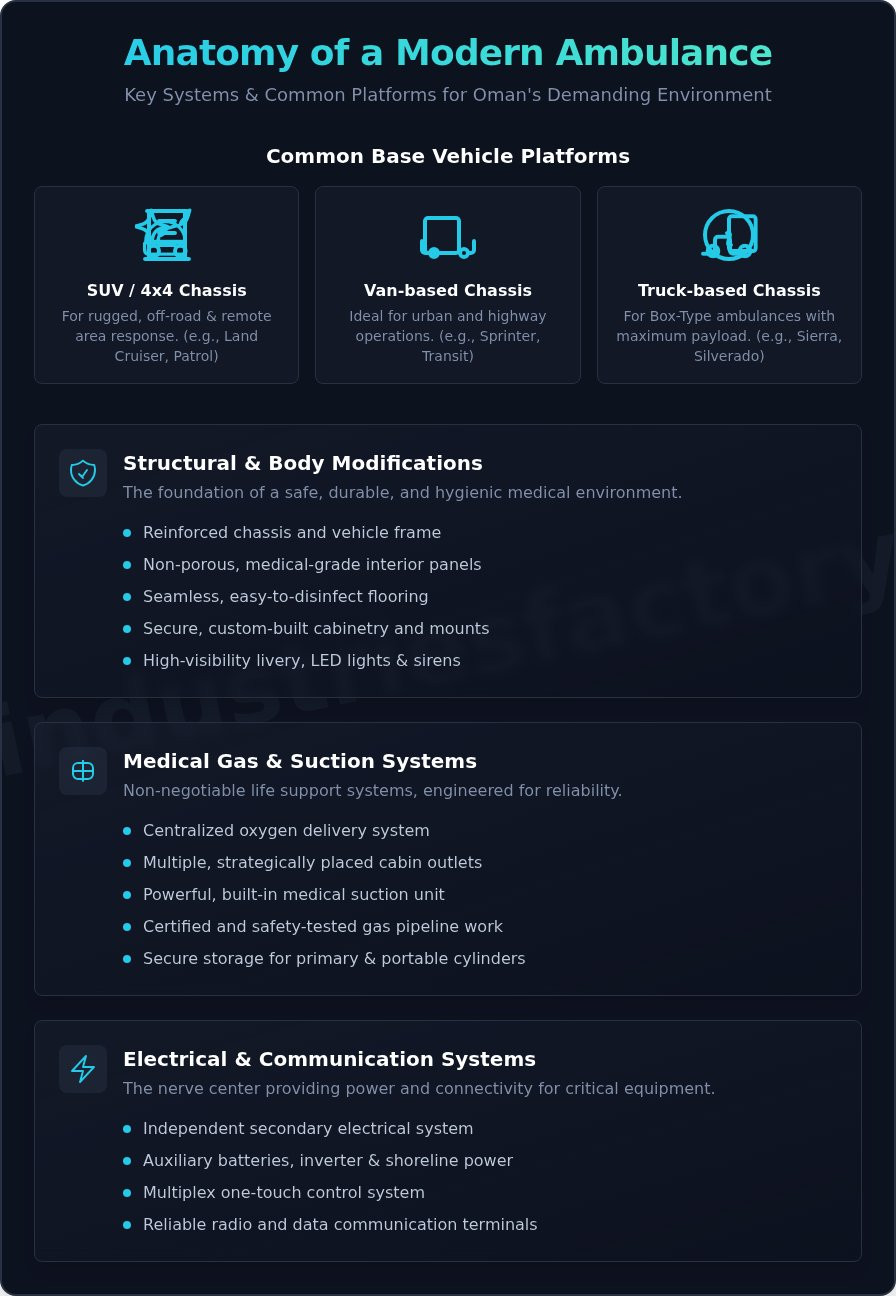
- SUV/4x4 Chassis: Rugged and indispensable for Oman's diverse landscape, vehicles like the Toyota Land Cruiser and Nissan Patrol are converted for off-road and remote area response, capable of navigating wadis and desert tracks.
- Van-based Chassis: Models such as the Mercedes Sprinter and Ford Transit are ideal for urban and highway operations, offering a balance of interior space and maneuverability for rapid patient transport.
- Truck-based Chassis: Heavy-duty platforms like the GMC Sierra and Chevrolet Silverado are used for larger Box-Type ambulances, providing maximum payload capacity for advanced life support (ALS) equipment.
Types of Ambulance Conversions
Not all emergencies are the same, and different ambulance types are designed to meet specific medical needs. The ultimate goal of any conversion is to optimize the vehicle for its specific mission, a principle central to modern Ambulance design and function. Common configurations include:
- Box-Type Ambulances: Built on a truck chassis with a separate, modular patient compartment. These offer the most space for advanced care, equipment, and crew.
- Extended Roof Ambulances: Typically based on a van chassis, this conversion adds significant headroom, allowing medical personnel to stand upright while treating patients.
- Standard Van Ambulances: The most common type for basic patient transport (BLS) and inter-facility transfers, offering a compact and efficient solution.
- Specialized Units: Custom-built vehicles for specific purposes, such as neonatal intensive care, bariatric transport, or mobile cardiac care units.
Core Components of a Modern Ambulance
A professional ambulance is far more than a transport vehicle; it is a mission-critical, pre-hospital clinical environment engineered for life-saving reliability. The success of an ambulance conversion hinges on the seamless integration of specialized systems designed for durability, hygiene, and accessibility. Every component must meet rigorous standards, such as those promoted by leading industry bodies like the Ambulance Manufacturers Division (AMD), to ensure it enhances patient safety and paramedic efficiency under the most demanding conditions.
Structural and Body Modifications
The foundation of a safe ambulance is a reinforced chassis and body. We strengthen the vehicle's frame to manage the substantial weight of medical equipment and crew. The patient cabin is fabricated with non-porous, medical-grade interior panels and seamless flooring for easy disinfection. Custom cabinetry and equipment mounts are installed to secure all gear, while exterior modifications-including high-visibility livery, advanced LED warning lights, and sirens-ensure the vehicle is seen and heard.
Medical Gas and Suction Systems
Reliable life support is non-negotiable. A core part of the ambulance conversion process involves installing a centralized oxygen delivery system, with multiple outlets strategically placed within the patient cabin for easy access. This is complemented by a powerful, built-in medical suction unit. All gas pipeline work is meticulously tested and certified for safety, and we engineer secure, heavy-duty storage solutions for both primary and portable oxygen cylinders, guaranteeing readiness for any emergency.
Electrical and Communication Systems
Modern medical equipment demands a robust, independent power supply. We install a secondary electrical system with auxiliary batteries, an inverter, and a shoreline power connection to keep equipment charged and ready. An advanced multiplex control system provides paramedics with centralized, one-touch control over lighting, climate, and warning systems. Finally, we integrate reliable radio communication and data terminals to ensure a clear, constant link between the field and the hospital.
The Ambulance Conversion Process: Step-by-Step
Transforming a robust base chassis into a fully commissioned, life-saving medical vehicle is a meticulous, engineering-led process. A successful ambulance conversion is not merely an assembly job; it is a synthesis of client collaboration, precision fabrication, and unwavering adherence to quality and compliance standards. From the initial concept to the final handover, every stage is structured to ensure the final product is reliable, durable, and perfectly suited for the demanding operational environments found across Oman.
Phase 1: Consultation, Design, and Engineering
This foundational phase ensures the vehicle is built for its specific purpose. We work directly with your team to establish a clear mission profile and operational requirements. This collaborative process involves:
- Defining Needs: Determining the vehicle's primary role, whether for urban emergency response, rugged desert patient transport, or as an on-site industrial clinic.
- 3D CAD Modeling: Creating detailed, interactive 3D models of the proposed interior and exterior. This allows clients to visualize layouts, equipment placement, and workflow before fabrication begins.
- Material & Equipment Selection: Choosing high-grade, lightweight, and durable materials. All medical equipment is specified to meet your needs, budget, and the stringent standards of the Omani Ministry of Health.
- Engineering Finalization: Finalizing all technical drawings and blueprints, which serve as the master guide for our fabrication team.
Phase 2: Fabrication and Assembly
With engineering plans approved, our master craftsmen begin the physical build. The base vehicle is systematically stripped down to its core frame. Using advanced CNC machinery, we precision-cut and form all structural components for the patient cabin, ensuring a flawless fit and maximum structural integrity. This module is then expertly welded and integrated with the vehicle chassis. The process concludes with the application of durable, multi-layer paint, protective coatings, and the official exterior livery mandated by Omani authorities.
Phase 3: Systems Integration and Final Fit-out
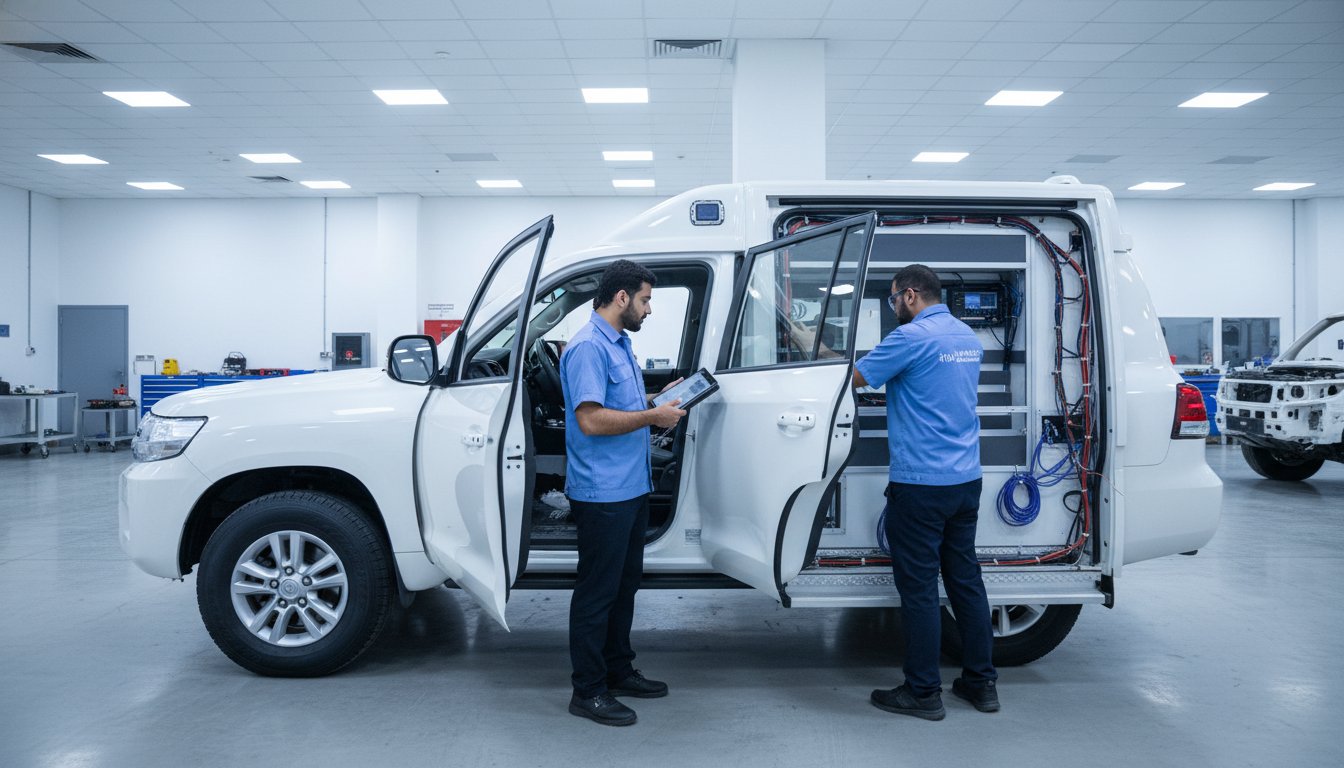
In the final phase, the vehicle becomes a fully functional mobile medical unit. Our certified technicians meticulously install all critical systems, from the complex electrical wiring that powers life-support devices and emergency lighting to the oxygen plumbing and high-output HVAC systems engineered to perform in Oman's climate. Medical equipment, stretchers, and custom cabinetry are then securely fitted for optimal ergonomics and safety. After installing hygienic, hard-wearing flooring and upholstery, the vehicle undergoes a rigorous multi-point inspection to guarantee every component of the ambulance conversion is flawless and mission-ready. See our fabrication process in action.
Critical Standards and Regulations for Ambulances
In the world of professional medical vehicles, compliance with established standards is non-negotiable. These regulations are not merely guidelines; they are rigorously enforced codes that dictate every facet of an ambulance's design, construction, and outfitting. From the structural integrity of the patient cabin to the secure mounting of life-saving equipment, these standards ensure the safety of both patients and medical crews in high-stress environments. Choosing a partner for your ambulance conversion who possesses deep, practical knowledge of these codes is the first and most critical step toward building a reliable, safe, and legally operable fleet.
European Standard: EN 1789 - The Global Benchmark
Widely regarded as the gold standard for ambulance manufacturing worldwide, EN 1789 provides a comprehensive framework for medical vehicle safety and performance. Adherence to this standard signifies a commitment to superior quality. Its mandates cover critical areas including:
- Vehicle Performance: Specifies requirements for braking, suspension, and overall handling to ensure stability under emergency conditions.
- Patient Compartment: Defines minimum dimensions for ergonomic workspace, patient access, and the secure layout of medical equipment.
- Structural Integrity: Requires rigorous 10G crash testing for all equipment mounts and cabinetry, ensuring that in the event of a collision, heavy items remain secured and do not become dangerous projectiles.
Even in regions where it is not a legal requirement, building to the EN 1789 standard demonstrates an unparalleled dedication to safety and durability.
Oman & GCC Standards: GSO Compliance
For operation within Oman and the wider GCC region, compliance with Gulf Standardization Organization (GSO) standards is mandatory. The key regulation, GSO 1794/2004, outlines the specific requirements for ambulances and their equipment. This standard ensures that all vehicles meet the harmonized safety and operational criteria of the region. Critically, a vehicle must pass inspection based on these GSO standards to gain approval from Omani authorities, including the Royal Oman Police (ROP) for registration and the Ministry of Health for operational deployment. Navigating these local requirements demands specialized expertise. A converter with proven experience in the Omani market can prevent costly delays, guarantee compliance, and deliver a vehicle that is mission-ready from day one.
Ultimately, a successful ambulance conversion hinges on meticulous engineering and an unwavering commitment to these life-saving standards. It requires a partner who not only understands the codes but builds them into the very foundation of the vehicle. To ensure your fleet is built for life-saving reliability and meets all regulatory demands, work with the experts at Auto Industries Factory.
Why Partner with a Specialist Vehicle Converter?
Selecting a partner for your ambulance conversion is a decision that directly impacts operational readiness and patient safety. While a lower initial price from a general fabricator may seem attractive, the risks associated with inexperience are significant, from critical equipment failures to non-compliance with regional standards. A specialist converter is not merely a vendor; they are a strategic partner invested in delivering a mission-critical asset designed for longevity and unwavering performance.
In-House Engineering and Fabrication
A true specialist maintains complete control over the entire manufacturing process, from initial CAD design to final systems integration. This single-source approach guarantees precision and accountability. By utilizing advanced technology like CNC machinery and laser cutters, every component is fabricated to exact specifications. This in-house capability means we can engineer truly custom solutions, modifying layouts and systems to meet the unique demands of your medical service, rather than forcing a standard model to fit your needs.
Experience and Proven Track Record
An established converter brings a deep understanding of the unique operational challenges within Oman. This expertise is critical for building vehicles that can withstand the region's extreme climate and demanding terrain. A proven partner will have:
- A comprehensive portfolio of successful projects on various chassis, including popular models from Toyota and GMC.
- Deep knowledge of integrating robust HVAC systems and durable components required for reliable operation in high temperatures.
- A collection of client testimonials and case studies that demonstrate their capability and commitment to quality.
Ensuring Mission-Critical Reliability
In emergency services, vehicle failure is not an option. The cost of downtime goes far beyond repairs; it compromises the ability to save lives. This is why a specialist focuses on long-term value over a low initial price. A professional ambulance conversion uses heavy-duty, durable materials and subjects every vehicle to rigorous quality control and testing before delivery. This commitment to reliability, backed by comprehensive warranties and after-sales support, ensures your investment provides peace of mind and maximum operational uptime for years to come.
Choosing the right partner ensures your vehicle is a dependable asset, not a recurring liability. For expert consultation on building a fleet that delivers on every call, explore the advanced solutions at autoindustriesfactory.com.
Your Partner in Mission-Critical Ambulance Conversions
Transforming a standard vehicle into a life-saving medical asset is a process defined by precision, compliance, and expertise. As this guide has shown, a professional ambulance conversion hinges on integrating durable core components and navigating the critical safety regulations specific to regions like Oman. Choosing a specialist isn't just about acquiring a vehicle; it's about investing in reliability and safety when every second is critical.
At Auto Industries Factory, we are specialists in converting rugged GMC and Toyota chassis into advanced medical vehicles. With proven experience supporting military, police, and emergency fleets, our in-house design, fabrication, and assembly in the UAE ensures uncompromising quality control from start to finish. We build vehicles that are durable, compliant, and ready for the most demanding missions.
Equip your organization with a fleet built for performance and life-saving reliability. Request a Free Consultation for Your Ambulance Fleet today to discuss your specific requirements with our expert team.
Frequently Asked Questions About Ambulance Conversion
How long does a typical ambulance conversion take?
The timeline for a professional ambulance conversion depends on the project's complexity and the specific medical equipment required. A standard conversion of a common base vehicle like a Toyota HiAce or Nissan Urvan can typically be completed in 4 to 6 weeks. More advanced projects, such as those requiring custom fabrication or specialized life-support systems, may extend the timeline to 8 weeks or more. We provide a precise schedule after finalizing the project specifications and requirements.
What is the approximate cost range for a professional ambulance conversion?
The cost of a professional ambulance conversion in Oman varies significantly based on the level of medical outfitting and customization. A basic patient transport or Basic Life Support (BLS) conversion can range from $15,000 to $25,000. For an Advanced Life Support (ALS) or mobile ICU unit with premium medical equipment, the cost can be $30,000 to $50,000 or more. These figures are for the conversion only and do not include the price of the base vehicle.
Can you convert any type of van or truck into an ambulance?
While many high-roof vans and light-duty trucks can be converted, not all are suitable. The ideal base vehicle must have sufficient interior space, payload capacity, and structural integrity to safely accommodate medical equipment and personnel. In Oman, vehicles like the Toyota Land Cruiser, Nissan Patrol, Toyota HiAce, and Mercedes-Benz Sprinter are excellent candidates. We assess each vehicle to ensure it meets the rigorous standards required for a reliable emergency medical vehicle and adheres to local regulations.
What is the main difference between a Type I, Type II, and Type III ambulance?
The ambulance types are defined by their chassis and body configuration. A Type I ambulance uses a heavy-duty truck chassis with a separate, modular patient compartment. A Type II is a van-based conversion, where the original vehicle body is outfitted as the patient cabin. A Type III ambulance is built on a cutaway van chassis, combining the van's cab with a separate, integrated modular patient compartment, offering a blend of space and maneuverability for various operational needs.
What information do I need to provide to get an accurate quote?
To provide a precise and comprehensive quote, we require several key details. Please specify the make and model of the base vehicle, the desired level of care (e.g., patient transport, BLS, or ALS), and a list of essential medical equipment you need installed. Additionally, let us know about any requirements for custom cabinetry, exterior markings, sirens, or lighting packages. The more detailed your information, the more accurate our initial estimate will be.
Do you handle the export of converted vehicles to other countries?
Yes, Auto Industries Factory specializes in the international export of our converted vehicles. While our primary operations are based in the UAE, we have extensive experience managing the logistics and documentation required for shipping to clients across the GCC, Africa, and beyond. We ensure each vehicle is prepared for transit and meets the import regulations of the destination country, providing a seamless end-to-end service for our international partners and governmental clients.


