
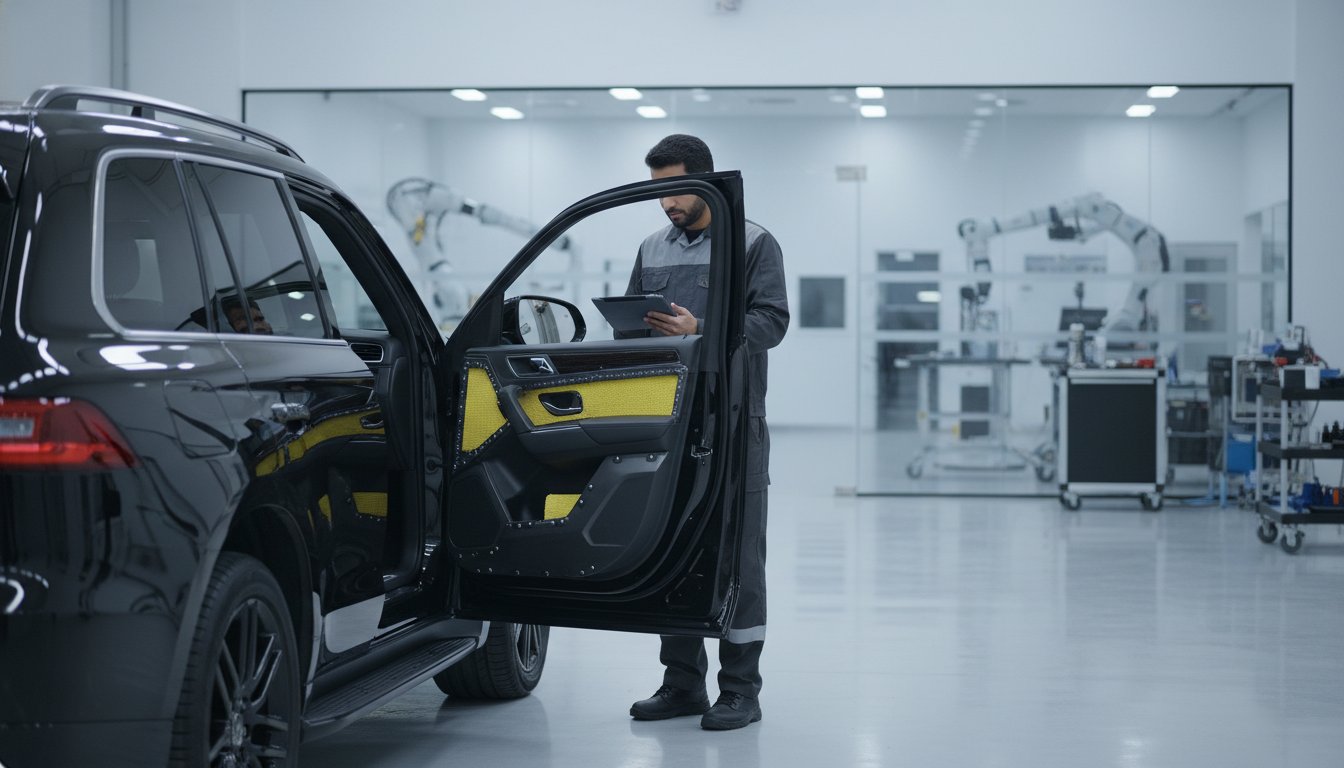
In a world where security is paramount, car armouring provides a critical layer of defense for individuals, corporate executives, and government agencies. This process transforms a standard vehicle into a protective capsule, engineered to withstand specific threats without compromising its primary function. This guide offers a comprehensive overview of vehicle ballistic protection, from the fundamental principles and materials used to the detailed fabrication process, helping you make informed decisions for your security needs.
What is Car Armouring?
At its core, car armouring is a highly specialized engineering process of reinforcing a vehicle to protect its occupants from ballistic threats, such as bullets and shrapnel. It involves the meticulous integration of ballistic-resistant materials into the vehicle's body and windows. The primary goal is to defeat specific projectile threats based on established international standards. This process goes far beyond simply adding steel plates; it is a complete system overhaul that balances protection, performance, and, often, discretion.
The Core Principles of Vehicle Protection
Effective vehicle protection is built on several foundational principles. First is the creation of a complete, seamless protective shell, or "capsule," around the passenger cabin. This ensures there are no gaps in the ballistic protection, particularly at seams, doors, and windows. Second, all critical vehicle systems must be reinforced to handle the significant added weight of the armour. This includes upgrading the suspension, brakes, and door hinges. Finally, a successful conversion achieves a precise balance between the required level of protection and the vehicle's original performance and handling characteristics.
Discreet vs. Overt Armouring
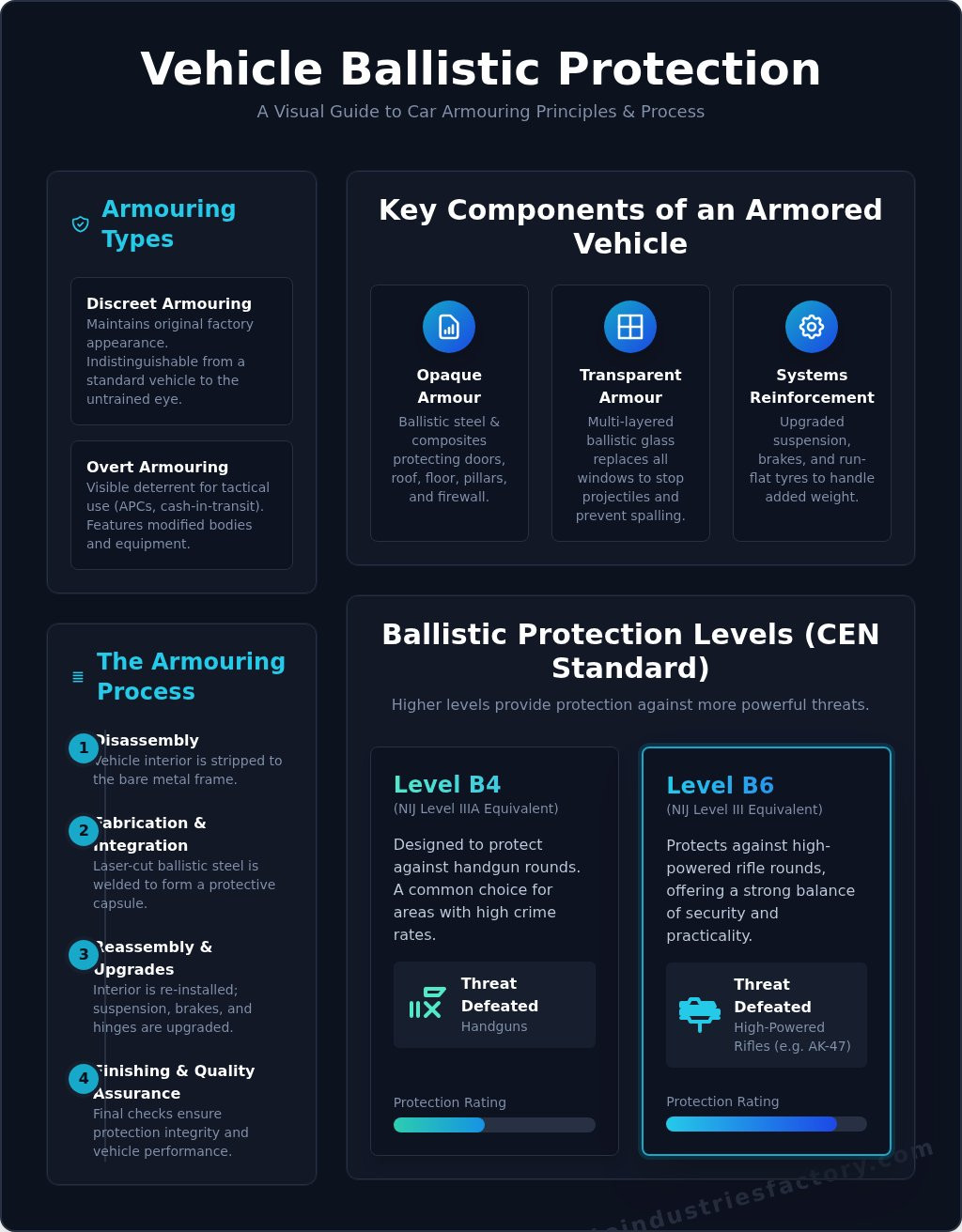
Armouring solutions are typically categorized as either discreet or overt. Discreet armouring, the most common choice for civilian and executive protection, is designed to maintain the vehicle's original factory appearance. To an untrained eye, the car is indistinguishable from its standard counterpart. Overt armouring, on the other hand, is used for tactical vehicles like Armoured Personnel Carriers (APCs) and cash-in-transit trucks, where a visible deterrent is part of the security strategy. These vehicles often feature modified bodies, gun ports, and other tactical equipment.
Key Components of an Armored Vehicle
A truly secure armored vehicle relies on a multi-faceted approach to protection. Effective armouring covers all potential vulnerabilities, including both visible and hidden areas, and reinforces the mechanical systems that support the vehicle's function.
Opaque Armour: Protecting the Vehicle Body
The main body of the passenger compartment is protected by opaque armour. This involves integrating high-hardness, certified ballistic steel into the doors, roof, floor, firewall, and structural pillars (A, B, and C). In some applications, lightweight composite materials like Aramid fiber (Kevlar) are used to supplement the steel, offering excellent protection with less weight. Every panel is carefully shaped and welded to create a complete, impenetrable barrier.
Transparent Armour: Ballistic Glass
A vehicle's windows are its most vulnerable points. To secure them, standard glass is replaced with transparent armour, commonly known as ballistic glass. This is a multi-layered composite of glass and polycarbonate, precisely laminated in a way that absorbs and dissipates the energy of a projectile. The thickness of the glass varies depending on the required protection level, but its purpose remains the same: to stop bullets without shattering and prevent spalling (the ejection of glass fragments into the cabin).
Critical Systems Reinforcement
The significant weight added by steel and ballistic glass necessitates a complete overhaul of the vehicle's key mechanical systems. The suspension is upgraded with heavy-duty springs and shock absorbers to manage the load and maintain ride quality. The braking system is enhanced with larger calipers, pads, and rotors for safe, reliable stopping power. Other critical components, such as the vehicle's battery, Electronic Control Unit (ECU), and fuel tank, are encased in protective armour. Finally, run-flat tyres are installed to ensure the vehicle remains mobile and can escape a dangerous situation even after the tyres have been punctured.
Understanding Ballistic Protection Levels
Not all armour is created equal. To ensure consistency and reliability, ballistic materials are tested and certified according to internationally recognized standards. These protection levels define the specific types of ammunition a piece of armour can defeat, allowing clients to choose a solution that matches their specific threat environment.
Introduction to Ballistic Standards (NIJ & CEN)
The two most widely recognized ballistic standards are the NIJ (National Institute of Justice) standard from the United States and the CEN (European Committee for Standardization) standard. Both classify protection into different levels. For example, CEN Level B4 (equivalent to NIJ Level IIIA) is designed to protect against handgun rounds, making it a common choice for areas with high crime rates. For environments with higher threats, CEN Level B6 (equivalent to NIJ Level III) provides protection against high-powered rifle rounds, such as those from an AK-47 or M16.
How to Choose the Right Protection Level
Selecting the appropriate protection level begins with a professional threat assessment. This analysis considers the most likely weapon types that may be encountered in a specific region or operational environment. It is essential to balance daily usability with the required protection; higher levels of armour add more weight, which can impact vehicle handling and increase costs. A B6-level vehicle offers robust protection against common assault rifles, representing a strong balance of security and practicality for many clients.
The Car Armouring Process: A Step-by-Step Overview
Transforming a standard vehicle into a certified armored car is a meticulous engineering process that demands precision and expertise at every stage. A disciplined workflow is crucial for ensuring the final product is safe, reliable, and performs as expected.
Step 1: Base Vehicle Selection and Disassembly
The process starts with choosing a suitable base vehicle. Models with a robust chassis and a powerful engine, such as the Toyota Land Cruiser or Lexus LX, are popular choices. Once selected, the vehicle is carefully stripped of all interior components, including seats, carpets, dashboard, and door panels, exposing the bare metal frame. Every component is documented to ensure precise reassembly.
Step 2: Armour Fabrication and Integration
Using detailed CAD designs, ballistic steel plates are cut with high-precision lasers to fit every contour of the vehicle's cabin. These plates are then expertly welded into place to form the protective capsule, ensuring a complete overlap at all seams and door joints to eliminate ballistic gaps. The firewall and floor are also reinforced to protect against projectiles and explosive fragments.
Step 3: Reassembly and System Upgrades
With the armour shell fully integrated, the vehicle begins its reassembly phase. The original interior is carefully re-installed over the new armour, preserving the factory look and feel. During this stage, the upgraded components are fitted, including the heavy-duty suspension system, reinforced brakes, and heavy-duty door hinges to support the weight of the armored doors. Any special systems, such as communication equipment or fire suppression systems, are also integrated.
Step 4: Finishing and Quality Assurance
In the final stage, the vehicle undergoes finishing touches, including any necessary paintwork and detailing. It is then subjected to a rigorous quality assurance protocol, which includes extensive road tests to check braking, acceleration, and handling. All systems are checked to ensure they are functioning flawlessly. A final, detailed inspection confirms that the vehicle meets the highest standards of quality and ballistic integrity before it is delivered to the client.
Expert Car Armouring Solutions in the UAE
Auto Industries Factory provides comprehensive car armouring services for a wide range of clients. We specialize in developing customized protection solutions for private individuals, corporations, and government fleets. Our complete in-house engineering and fabrication capabilities ensure that every vehicle we modify meets the highest international quality standards. From discreetly armored executive SUVs to fully equipped patrol cars, we deliver mission reliability and peace of mind. To learn more about how we can address your security requirements, request a consultation for your vehicle protection needs.
Frequently Asked Questions About Car Armouring
How much weight does car armouring add to a vehicle?
The added weight depends on the base vehicle and the level of protection. A B6 level of protection on a large SUV can add between 500 to 1,200 kg. This is why suspension and brake upgrades are a non-negotiable part of the process.
Can any car be armored?
While many vehicles can be armored, the best candidates are those with a strong body-on-frame chassis and a powerful engine that can handle the additional weight without significant performance loss. SUVs and heavy-duty trucks are ideal platforms.
Will an armored car look different from a standard one?
For discreet armouring, the goal is to make the vehicle visually indistinguishable from its factory counterpart. From the outside, there are typically no obvious signs that the vehicle has been modified, ensuring a low profile for occupants.
How does armouring affect the car's performance and handling?
The added weight will change the vehicle's dynamics. However, professional armouring companies mitigate this by upgrading the suspension, brakes, and sometimes the engine. While a slight difference in handling is inevitable, the vehicle remains safe and reliable to operate.
What is the typical cost of armoring a car?
The cost varies widely based on the vehicle model, the chosen level of protection (B4, B6, etc.), and any additional custom features. It is a significant investment in security, with prices reflecting the high cost of certified materials and the thousands of man-hours required for fabrication.
How long does the vehicle armouring process take?
A high-quality conversion is a detailed and labor-intensive process. Depending on the complexity of the build and the protection level, the entire process can take anywhere from 30 to 60 days from start to finish.
Choosing to armor a vehicle is a critical security decision that demands trust and expertise. With complete in-house fabrication and engineering capabilities, Auto Industries Factory leverages extensive experience with military, police, and private fleets to deliver unparalleled protection. Based in Ajman and serving the entire UAE and surrounding region, our team is committed to providing solutions that are built to perform and engineered to protect. Discuss Your Armoured Vehicle Project With Our Experts to design a solution tailored to your specific threat environment and operational requirements.


