

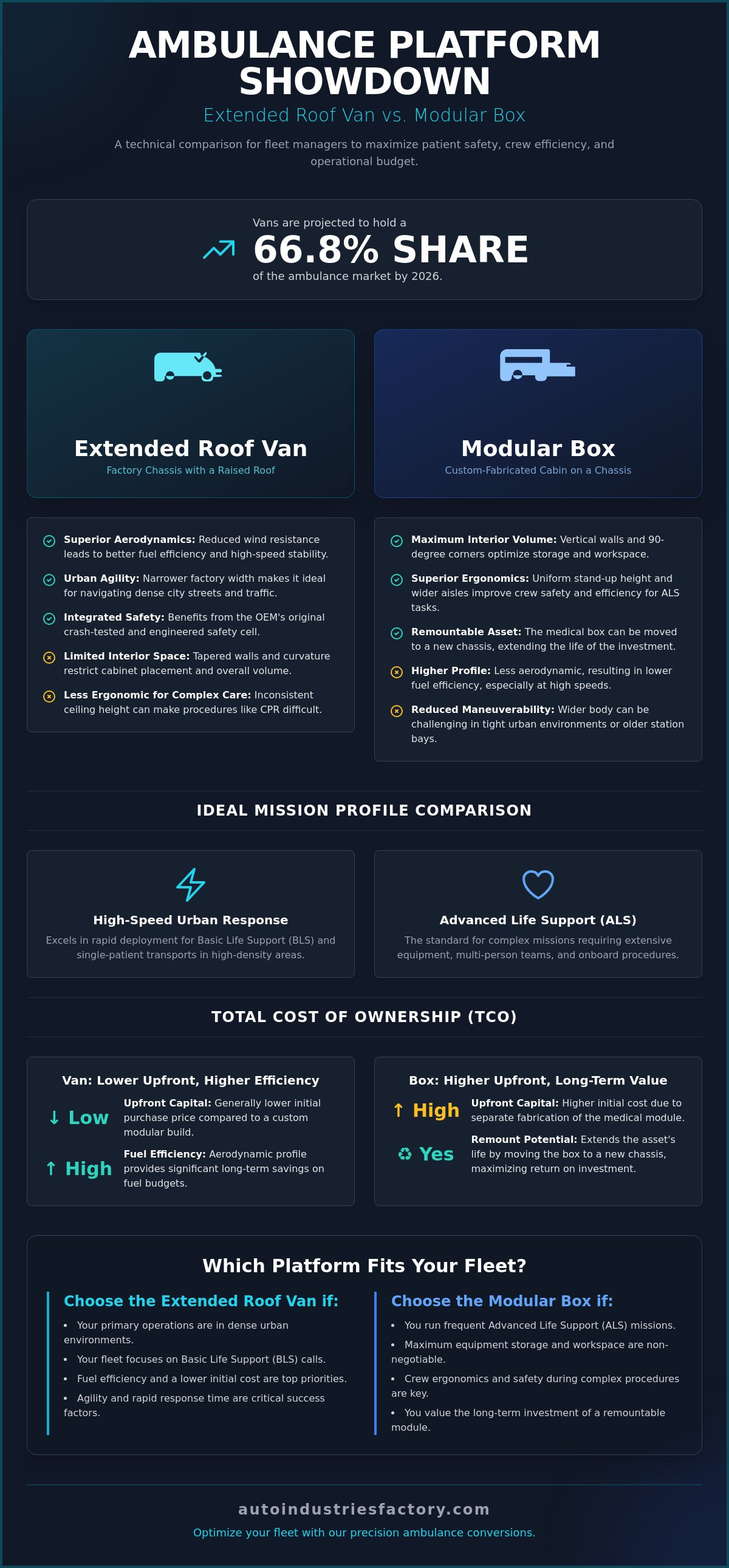
The standard modular box might look like the ultimate ALS solution, but for many high-speed urban fleets, the aerodynamic extended roof van is actually the superior platform. You know that balancing interior volume with vehicle maneuverability is a constant struggle for fleet managers. Choosing the wrong chassis leads to cramped workspaces for paramedics or bloated fuel budgets that drain your operational resources. With vans estimated to hold a 66.8% share of the ambulance market by 2026, the pressure to select the right conversion type has never been higher.
We've analyzed the extended roof vs box type ambulance pros and cons to help you select a vehicle that maximizes patient safety and crew efficiency. This breakdown provides a technical comparison of structural integrity, medical storage capacity, and long-term maintenance costs for GMC and Toyota platforms. You'll gain a clear understanding of which build fits your specific medical tier, whether you're running Basic Life Support or complex Advanced Life Support missions. We focus on the engineering precision required to protect patients during high-speed transit while keeping your fleet agile and cost-effective.
Key Takeaways
- Identify the structural distinctions between factory-reinforced high-top chassis and custom-fabricated aluminum modular cabins.
- Assess how interior geometry and stand-up height impact paramedic ergonomics during high-stakes medical procedures like CPR and intubation.
- Analyze the extended roof vs box type ambulance pros and cons to optimize your fleet for either urban maneuverability or maximum storage capacity.
- Determine the total cost of ownership by weighing upfront capital expenditure against long-term maintenance and aerodynamic fuel efficiency.
- Select the ideal platform for your specific mission profile to ensure your fleet is perfectly scaled for BLS or ALS service tiers.
Understanding the Architectures: Extended Roof vs. Box Type Ambulances
Selecting the right emergency vehicle requires a deep understanding of vehicle architecture. The primary distinction lies in how the patient compartment integrates with the chassis. An extended roof ambulance utilizes a factory van chassis, such as a Toyota Hiace or GMC Savana, where the original roof is replaced with a raised, reinforced fiberglass or steel extension. A box type or modular ambulance features a separate medical cabin fabricated from aluminum or composite panels and mounted onto a cutaway or chassis cab. Evaluating the extended roof vs box type ambulance pros and cons starts with these fundamental structural choices.
To better understand this concept, watch this helpful video:
Structural integrity varies significantly between these two builds. Extended roof models benefit from the factory-integrated safety cell of the original van, which is engineered for crash protection and rollover resistance from the ground up. Modular boxes rely on custom-engineered frames that offer high-strength protection for the medical crew and patients. These Ambulance Types are categorized as Type I (truck chassis) or Type III (cutaway van chassis) depending on the connection between the driver's cab and the rear module.
The Van-Based Extended Roof Design
This configuration maintains the original van width, offering superior aerodynamic performance. When we perform these conversions on Toyota or GMC platforms, we implement structural reinforcement to compensate for the removed factory roof, ensuring the vehicle remains rigid. These units excel in Basic Life Support (BLS) missions and rapid urban response where agility is paramount. The streamlined profile reduces wind resistance, which is a key factor in high-speed emergency transit.
The Modular Box (Type I & III) Design
Modular designs utilize a heavy-duty aluminum or composite sandwich-panel box to maximize interior volume. This allows for specialized "walk-through" configurations where the crew can move freely between the cab and the patient area, or "crawl-through" setups for added privacy. Remounting is the process of moving a modular box to a new chassis after the original engine or chassis expires, which extends the life of your initial investment. This build is the standard for Advanced Life Support (ALS) where equipment storage is a priority.
Interior Workspace and Medical Capability Comparison
Interior volume is where the extended roof vs box type ambulance pros and cons become most apparent to medical crews. Box type ambulances provide vertical walls and 90-degree corners. This geometry maximizes cabinet storage and allows for larger, standardized equipment mounting. In contrast, extended roof vans follow the vehicle's natural taper. This curvature can limit the placement of bulky ALS monitors or ventilators along the upper walls where space is at a premium.
Paramedic ergonomics depend heavily on consistent stand-up height. Being able to perform CPR or intubation without hunching is critical for patient outcomes during long transits. Box types typically offer more uniform ceiling height across the entire floor plan. Crew safety also involves seating configurations. Modular units often allow for more flexible seatbelt accessibility and wider aisles for movement. If you're looking to optimize your fleet layout, exploring custom ambulance conversions ensures every square inch serves a mission-critical medical purpose.
Workflow Efficiency in Extended Roof Units
The extended roof design creates a focused cockpit environment. Most essential supplies are within arm's reach of the primary attendant seat. This setup is highly efficient for single-patient transport or BLS missions in high-density urban areas. It's built for speed and accessibility. However, the limited interior width makes dual-patient transport or complex, multi-person procedures difficult to manage safely.
Advanced Life Support (ALS) in Box Type Ambulances
Wide-body modular designs are the baseline for ALS. They provide enough floor space for multi-person medical teams to work simultaneously. Paramedics can access the patient from multiple sides without obstructing each other. This architecture is the only viable choice for specialized missions. It supports Neonatal (NICU) units or Bariatric transport where heavy, oversized equipment is mandatory.
Performance, Maneuverability, and Operational Logistics
Operational efficiency depends on how a vehicle handles its environment. When comparing extended roof vs box type ambulance pros and cons, the physical footprint is a deciding factor. Extended roof units, particularly those on Toyota platforms, maintain a narrower profile. This allows drivers to navigate narrow streets and low-clearance tunnels that would stop a modular box. The tighter turning radius of a van-based conversion is essential for reaching patients in high-traffic urban zones where every second counts.
Aerodynamic drag is a major concern for long-range logistics. The boxy shape of a modular unit creates significant wind resistance, which increases fuel consumption during highway speeds. Extended roof vans cut through the air more efficiently, reducing long-term operational costs for non-emergency transfers. Weight distribution also affects safety. A heavy modular cabin shifts the center of gravity higher, requiring more aggressive braking and increasing wear on the suspension system. For rugged terrain, we often utilize the Toyota Land Cruiser with an extended roof because it maintains superior off-road capability and stability compared to a top-heavy box type.
Urban Response vs. Long-Distance Transfer
City centers demand agility. The shorter wheelbase and tighter turning radius of an extended roof van make it the superior urban response vehicle. It's easier to park and maneuver through gridlock. Conversely, modular boxes offer better stability during steady-state highway transport due to their wider track. The added weight provides a smoother, more planted ride for patients during long-distance transfers between medical facilities.
Chassis Stress and Maintenance Requirements
Payload management is vital for vehicle longevity. A GMC chassis carrying a heavy modular box often operates near its maximum gross vehicle weight rating. This puts constant stress on the engine and transmission. Factory van bodies with extended roofs are generally easier to service. They use standard components and don't require the specialized structural inspections necessary for a separate cabin mounting system. For specialized fleet needs, request a technical consultation on our custom vehicle modifications.
Total Cost of Ownership and Long-Term Value
Financial planning for emergency fleets requires looking beyond the sticker price. A thorough analysis of the extended roof vs box type ambulance pros and cons reveals that initial capital expenditure (CAPEX) is only one part of the equation. Modular box units typically demand a higher upfront investment because of the complex fabrication of the aluminum medical cabin and its specialized mounting systems. In contrast, extended roof van conversions on Toyota or GMC platforms offer a lower entry cost, making them ideal for agencies with tighter immediate budgets or those focusing on rapid, high-volume deployment.
Resale value and market demand also fluctuate based on configuration. Standardized van-based units often find a ready second-life market for non-emergency transport. However, the durability of a custom-fabricated aluminum box provides a different type of long-term asset protection. While the factory body of an extended roof van is tied to the lifespan of the chassis, a modular box remains a separate, high-value asset that can be utilized long after the original vehicle's mechanical components have reached their limit.
The ROI of Remounting Modular Boxes
The primary financial advantage of the box type design is the ability to remount the medical cabin onto a new chassis. This process allows fleet managers to reuse a high-quality medical interior for 15 to 20 years across multiple vehicle cycles. A well-fabricated modular box can outlast three separate chassis engines. This strategy significantly reduces the long-term CAPEX for agencies that perform high-mileage operations, as they only need to purchase a new cab and chassis rather than a completely new medical unit.
Standardization and Fleet Uniformity
Maintaining a uniform fleet of extended roof vans offers hidden cost-savings through parts interchangeability and simplified technician training. When your vehicles share the same factory body components, maintenance becomes faster and more predictable. It's also easier to ensure consistent compliance with national standards for ambulance conversion when working with standardized platforms. To determine the most cost-effective solution for your specific operational tier, consult with a vehicle conversion specialist to review your mission-critical requirements and long-term fleet goals.
Optimizing Your Fleet for Mission Success
Selecting the right platform is a technical decision that dictates the operational lifespan and medical capability of your fleet. You've seen that the choice between an integrated van body and a modular cabin isn't just about size. It's about balancing urban agility with the specialized equipment requirements of Advanced Life Support. Evaluating the extended roof vs box type ambulance pros and cons ensures your investment aligns perfectly with your specific patient care demands and geographic challenges.
Our engineering team utilizes in-house CNC and laser cutting for precision fabrication on every unit. We specialize in Toyota and GMC ambulance platforms, delivering mission-ready designs for both ALS and BLS tiers. Whether you require the aerodynamic efficiency of an extended roof or the long-term ROI of a remountable box, we provide rugged, reliable solutions built to protect both crew and patients. Request a Technical Consultation for Your Ambulance Fleet to begin your next conversion project. Build a fleet that stands as a benchmark for dependability and precision engineering.
Frequently Asked Questions
Is a box type ambulance safer than an extended roof van in a crash?
Both architectures provide high levels of protection when engineered correctly. Extended roof vans utilize the factory-integrated safety cell of the original chassis, which is optimized for rollover resistance and structural rigidity. Box type ambulances rely on a custom-fabricated aluminum or composite cage designed to absorb impact and protect the medical cabin. Safety often depends on the specific reinforcement used during the conversion process rather than the vehicle shape alone.
Which ambulance type is better for narrow city streets?
Extended roof ambulances are the superior choice for congested urban environments and narrow streets. They maintain the original factory width of the van, which allows for a tighter turning radius and easier navigation through gridlock. Box type units are significantly wider and taller. This extra bulk can create clearance issues in historic districts or tight alleys where rapid response is critical for patient outcomes.
Can an extended roof ambulance be used for Advanced Life Support (ALS)?
Yes, an extended roof ambulance can be fully equipped for Advanced Life Support missions. These units are excellent for rapid urban ALS response where speed and agility are prioritized over interior square footage. While they offer less storage for bulky equipment than modular units, clever interior engineering ensures that all necessary monitors, ventilators, and medications are within reach for the paramedic team.
How much headroom does an extended roof ambulance typically provide?
An extended roof ambulance typically provides between 60 to 75 inches of interior stand-up height. This height is sufficient for most paramedics to perform procedures like CPR or intubation comfortably. When analyzing the extended roof vs box type ambulance pros and cons, remember that modular boxes often provide more uniform ceiling height, whereas extended roofs may taper slightly toward the front of the vehicle.
What is the lifespan of a modular box compared to a van-based ambulance?
A modular box generally offers a longer operational lifespan because the medical cabin can be remounted onto a new chassis. A well-fabricated aluminum box can serve a fleet for 15 to 20 years across multiple vehicle cycles. Van-based extended roof ambulances are typically retired once the original chassis reaches its mechanical limit. This makes the modular box a more durable long-term asset for agencies managing high-mileage fleets.


