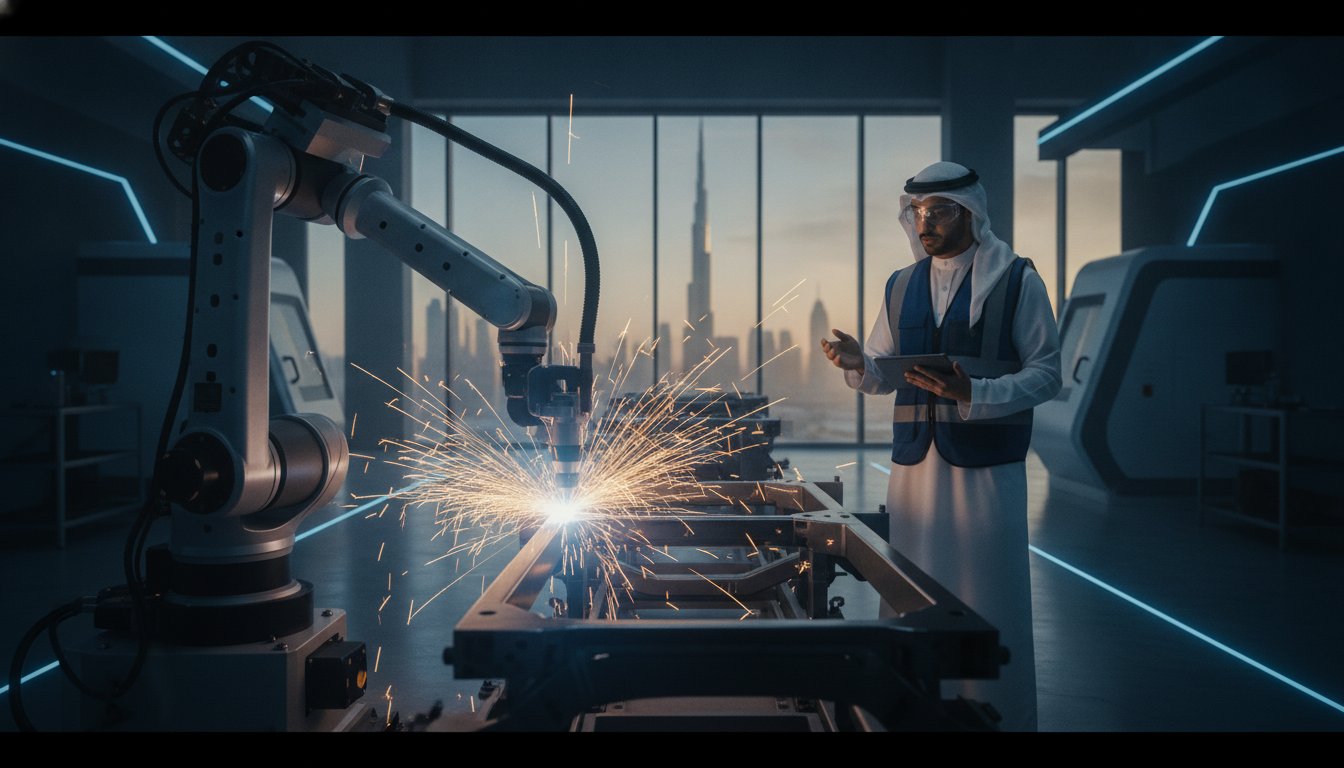
A single flawed weld can be the difference between a successful deployment and a catastrophic structural failure in the field. When you're managing specialized fleets, you can't afford the risks associated with generalist steelwork or fragmented service providers. You likely understand that standard components aren't built for the extreme demands of tactical or medical service. Finding a reliable partner for automotive metal fabrication UAE often feels like a gamble between safety and speed, especially when you need in-house design and painting to ensure total structural integrity.
This article reveals the precision engineering and advanced fabrication techniques required to transform standard vehicles into high-performance specialized units. You'll discover how to secure a mission-ready vehicle that meets the UAE's strict 2026 safety regulations and Euro 6B emission standards. We'll also examine the integrated workflows, from laser cutting to final assembly, that produce high-durability accessories like bull bars and medical equipment mounts. By the end, you'll know exactly how to identify a fabrication partner capable of delivering durability that outlasts the harshest off-road conditions.
Key Takeaways
- Understand how specialized engineering converts standard chassis into mission-ready vehicles for medical, tactical, and off-road environments.
- Discover the critical role of laser cutting and CNC machining in automotive metal fabrication UAE for producing high-precision, safety-compliant components.
- Learn the technical requirements for custom-engineered accessories like heavy-duty bull bars and metal canopies that outlast extreme desert use.
- Identify the material standards and weight management strategies necessary to maintain vehicle payload capacity without compromising structural safety.
- Explore the operational benefits of an integrated fabrication partner that handles design, structural welding, and painting in a single facility.
The Landscape of Automotive Metal Fabrication in the UAE
Automotive metal fabrication UAE isn't merely about bending steel; it's a rigorous engineering discipline. It involves the modification and reinforcement of vehicle chassis and the creation of mission-critical accessories. Unlike standard industrial work, this field demands extreme precision because a single structural failure can compromise vehicle safety in high-speed or tactical scenarios. Every cut and weld must account for the specific stresses a vehicle faces during operation.
Metal fabrication serves as the base process, but automotive applications require specialized knowledge of metallurgy and vehicle dynamics. In the UAE, the demand for specialized fleet vehicles continues to grow as industries diversify. Organizations require everything from rugged safari trucks to high-roof ambulances that can withstand the region's unique environmental challenges. To better understand this concept, watch this helpful video:
The shift toward in-house, full-service fabrication has become the industry standard for high-stakes projects. When a single partner handles the design, structural welding, and painting, the risk of communication errors between subcontractors disappears. This integration allows for tighter quality control over every weld and bend. It also provides fleet managers with transparent timelines, ensuring mission-ready vehicles are delivered exactly when needed for critical operations.
The Rise of Specialized Vehicle Conversions
The regional need for mission-specific units like police and military vehicles has accelerated the growth of the industry. Professionals don't just add parts; they transform standard platforms like Toyota Land Cruisers into specialized tools. This goes beyond bolting on a rack. It involves structural modifications like roof extensions for box-type ambulances or reinforced chassis for tactical units. These changes ensure the vehicle remains balanced under heavy loads. Whether it's a safari vehicle conversion or an armored unit, the engineering must be flawless.
Why General Metalwork Isn't Enough for Vehicles
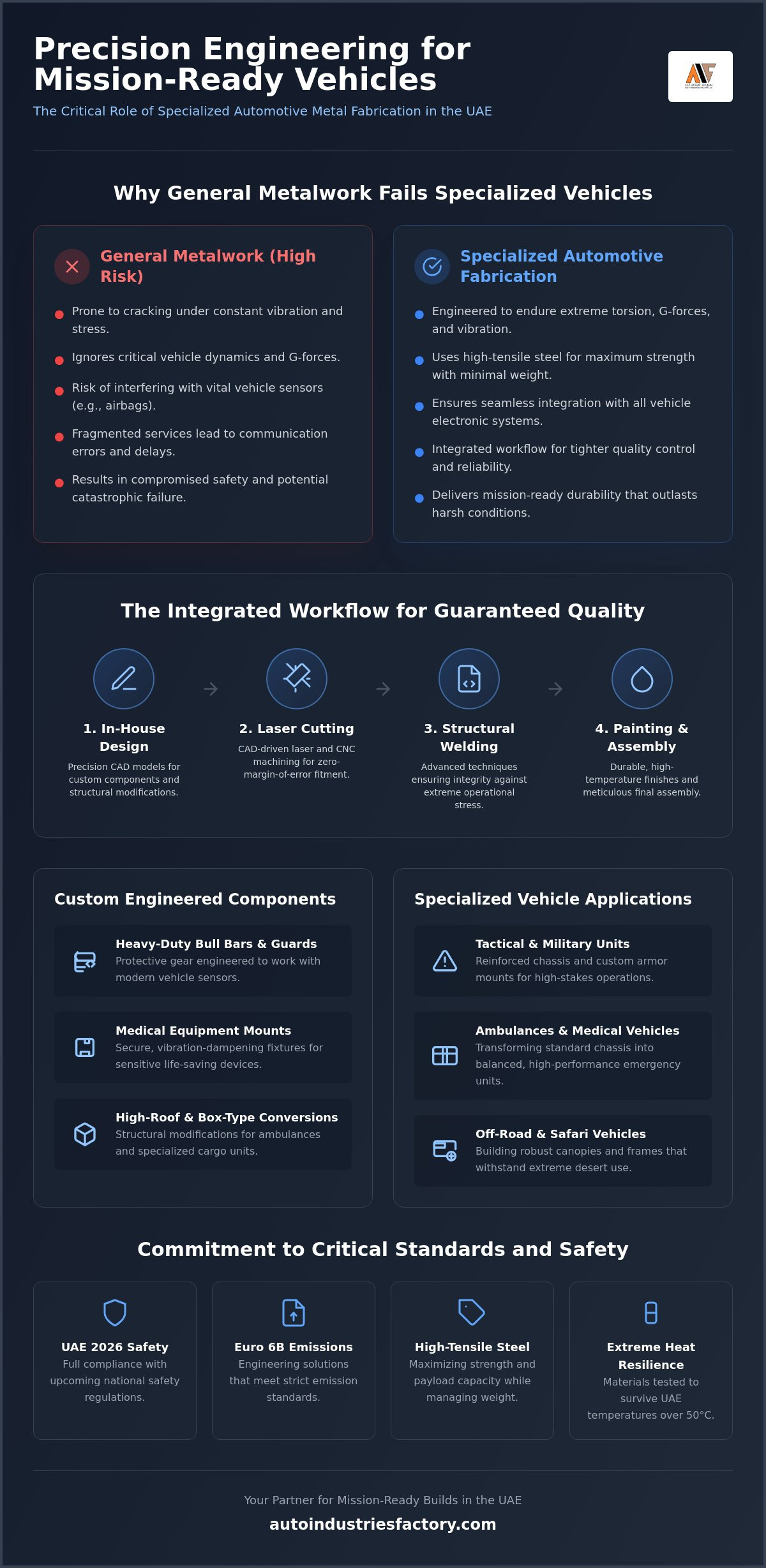
General metalwork doesn't account for the constant vibration of a moving vehicle. Automotive components must endure high-frequency stress that would crack standard welds. High-tensile steel is required to maintain strength while minimizing weight. Materials must also survive UAE temperatures exceeding 50 degrees Celsius. Modern vehicles use complex sensors; a poorly designed bull bar can interfere with airbag deployment. Expert engineering ensures seamless integration with the vehicle's electronic architecture.
Many fleet operators are moving away from fragmented service providers. They now seek comprehensive services that include in-house design, laser cutting, and professional painting. This shift ensures total quality control and eliminates the vague timelines associated with generalist shops. By managing the entire lifecycle of the build, from CAD drawings to final assembly, specialists in automotive metal fabrication UAE provide a level of reliability that generalist fabricators simply cannot match.
Core Technologies in High-Precision Vehicle Fabrication
High-precision automotive metal fabrication UAE relies on advanced machinery to handle the unique stresses of the road. Unlike stationary buildings, vehicles are subject to constant G-forces and torsional twisting. General construction metalwork doesn't account for the harmonic vibrations that occur at 120 km/h. If a bracket isn't engineered for those specific frequencies, it'll fatigue and snap within months. This requires a tech stack that prioritizes structural integrity over mere appearance.
Laser Cutting and CNC Machining for Exact Fitment
CAD-driven laser cutting provides the foundation for zero-margin-of-error vehicle panels. When you're modifying a chassis, every millimeter counts. CNC machining allows for the creation of custom brackets and mounting points specifically for medical or tactical gear. These components must hold steady under heavy use without shifting. CNC precision prevents structural rattling in off-road safari vehicles by ensuring every bolt hole and interlocking tab aligns perfectly with the factory frame. This level of accuracy is what separates a professional build from a basic modification.
Advanced Welding and Structural Reinforcement
We've implemented TIG welding for high-strength, aesthetic finishes on visible accessories like bull bars and roof racks. It's the preferred method for components where the weld bead is exposed. For heavy structural work, MIG welding provides the necessary penetration for troop carriers and armored units. Weld integrity is paramount in mission-critical applications like ambulance conversions, where the interior medical framing must remain rigid even during high-speed emergency maneuvers. Structural reinforcement ensures that the vehicle's safety cage remains intact under the added weight of specialized equipment.
Precision bending also plays a vital role in automotive metal fabrication UAE. By using CNC-controlled press brakes, we achieve consistent angles for metal canopies and aerodynamic body panels. This eliminates the need for excessive filler or heavy welding that adds unnecessary weight. Once the structural work is finished, the focus shifts to longevity. Professional painting and specialized anti-corrosion coatings protect the metal from the high humidity of the coast and abrasive desert sand. If you're looking for a partner that understands these technical requirements, you can explore our specialized fabrication services to see how we engineer for durability.
Custom Component Engineering: Beyond Standard Accessories
Mission-ready vehicles aren't built in a showroom. They're forged in specialized workshops where engineering takes precedence over aesthetics. Standard off-the-shelf accessories often fail under the mechanical stress of desert operations or heavy fleet use. That's why professional automotive metal fabrication UAE focuses on custom component engineering. Every part is designed to solve a specific operational challenge, from frontal impact protection to secure equipment storage.
Heavy-Duty Bull Bars and Frontal Protection
Frontal protection is the first line of defense for any specialized unit. Engineering custom bull bars and bumpers requires a deep understanding of kinetic energy transfer. If a bumper is too rigid, it transfers the impact energy directly to the vehicle's chassis, potentially causing frame damage. If it's too soft, it fails to protect the engine and cooling system. We balance these factors by selecting materials based on the vehicle's mission. Steel remains the industry standard for maximum impact absorption in tactical environments. Aluminum serves as a high-strength, lightweight alternative for vehicles where maintaining payload capacity is critical. Our fabrication process integrates winch mounts and high-output lighting systems directly into the structure, ensuring these additions don't vibrate loose on corrugated tracks.
Specialized Canopies and Fleet Storage Solutions
Utility and safari platforms like the Toyota Hilux or Land Cruiser 70 Series require storage solutions that can survive extreme environments. We fabricate metal canopies that transform standard pickups into mobile workshops or expedition hubs. These aren't generic boxes; they're engineered structures with custom internal shelving and tool storage systems designed for rapid equipment access. In the UAE, dust-proofing is a non-negotiable requirement. Every door and hatch uses automotive-grade bulb seals and heavy-duty compression latches to prevent fine desert sand from infiltrating sensitive electronics or medical gear. This level of sealing also protects against the high humidity found in coastal regions, preventing internal corrosion of the storage system.
High-capacity roof racks and protective plating complete the build. Our racks use low-profile designs to minimize wind noise and drag while maximizing load-bearing surfaces for expedition gear. For the vehicle's underbody, custom protective plating shields the transmission, oil pan, and fuel tank from jagged rocks. These rear bumpers and plates are fabricated using the same high-precision bending and welding techniques discussed earlier. This ensures they outlast the vehicle's service life, providing a level of durability that mass-produced accessories simply can't match. When you invest in automotive metal fabrication UAE, you're investing in a vehicle that's truly prepared for the mission at hand.
Critical Standards and Safety in Automotive Metalwork
Engineering for specialized fleets requires strict adherence to international safety protocols. In automotive metal fabrication UAE, structural safety isn't a secondary concern. We utilize high-tensile steel grades specifically designed to absorb energy during impact while maintaining the integrity of the vehicle's passenger cell. This is vital for high-risk environments where standard automotive steel would simply buckle. Beyond material strength, we must manage the critical balance between protection and vehicle payload capacity. Overloading a chassis with excessive metal reduces braking efficiency and compromises suspension performance, making weight management a core engineering priority.
Compliance with specific industry standards like EN 1789 is mandatory for medical vehicles. This European standard dictates how the patient compartment must behave during a crash, ensuring medical equipment remains securely mounted and doesn't become a projectile. For military and security builds, the focus shifts to ballistic protection levels. You can learn more about how we integrate these defensive layers in our complete guide to car armouring. These standards ensure that every modification enhances, rather than hinders, the vehicle’s primary mission.
Material Selection for Durability and Performance
We select specific alloys based on their strength-to-weight ratio to maximize vehicle agility. For example, specialized aluminum alloys are often used for marine-grade durability in coastal areas where salt-heavy humidity accelerates corrosion. To further extend vehicle life, we apply advanced anti-corrosive coatings that withstand the UAE's abrasive desert conditions and extreme heat. Stress-testing metal components is essential to verify they can handle the G-forces experienced during high-speed emergency response maneuvers.
Regulatory Compliance and Testing Protocols
Custom builds must pass rigorous testing to meet national safety regulations and the UAE's 2026 vehicle maintenance laws. This is particularly true for police vehicle modifications, where sirens, lighting, and prisoner transport cages must be securely integrated without interfering with factory safety systems or sensors. Our fabrication process includes comprehensive documentation and certification for every specialized unit. This ensures that fleet managers have a clear audit trail of the engineering work performed. If you need a partner that prioritizes these safety benchmarks, contact us today for a technical consultation on your fleet requirements.
Partnering with Auto Industries Factory LLC for Mission-Ready Builds
Selecting an engineering partner for high-stakes vehicle modifications requires a focus on technical accountability. Auto Industries Factory LLC has defined itself as a leader in automotive metal fabrication UAE by refusing to outsource critical production stages. We understand that fleet managers need more than just a vendor; they need a partner capable of solving complex structural challenges. By keeping every discipline under our direct supervision, we eliminate the risks of component failure and communication errors that occur with fragmented service providers. We don't just assemble; we engineer.
Integrated In-House Fabrication Solutions
Our facility operates as a centralized hub for design, engineering, and finishing. This single-roof approach allows our vehicle conversion specialist team to work in lockstep with our fabricators. When a CAD drawing is finalized, it moves directly to our laser cutting and CNC stations without leaving the premises. This continuity ensures that the original engineering intent is preserved throughout the build. We also maintain dedicated in-house painting booths to provide a factory-grade finish. This final step is critical for protecting the structural integrity of custom metalwork against the UAE’s extreme heat and humidity. You won't find the vague timelines here that are common in shops that rely on third-party painters or welders.
Specialized Solutions for National Fleets
We've developed specialized expertise in transforming high-performance platforms like the Toyota Land Cruiser and GMC into mission-specific tools. These vehicles are engineered to meet the rigorous demands of national fleets, including emergency services and military units. Our experience includes everything from box-type ambulance conversions to the fabrication of bulk-quantity bull bars for security sectors. We don't just add accessories; we enhance the vehicle's operational capability through precision engineering. Every modification is designed to be robust, reliable, and compliant with international safety standards. If you're ready to upgrade your fleet with units that are truly mission-ready, contact Auto Industries Factory LLC today for a technical consultation on your specialized requirements.
Engineering the Future of Your Fleet
Mission-ready vehicles require more than just standard modifications; they demand a foundation of precision engineering that protects lives in the field. You've seen how advanced technologies like laser cutting and CNC machining are vital for ensuring total structural integrity. By choosing a partner that manages everything from design to final painting in-house, you eliminate the risks associated with fragmented fabrication. This integrated approach is the only way to guarantee compliance with strict EN 1789 medical standards and ballistic protection requirements.
The landscape of automotive metal fabrication UAE is evolving toward higher safety benchmarks and more rugged, specialized applications. Whether you're managing emergency services or tactical military units, your fleet needs components that outlast the harshest desert conditions. We're trusted by high-stakes sectors across the region to deliver these robust, master-crafted solutions. To further support operational readiness, you can explore Hydraulic Cylinder Rebuilds to see how specialized maintenance keeps heavy-duty systems performing at their peak.
Take the first step toward a more reliable and secure fleet. Request a Technical Consultation for Your Fleet today to discuss your specific engineering requirements. Let's build a vehicle that's truly prepared for the mission ahead.
Frequently Asked Questions
What materials are best for automotive metal fabrication in the UAE?
High-tensile steel and specialized aluminum alloys are the industry standards for the region's harsh conditions. Steel provides the necessary impact absorption for heavy-duty bull bars and structural reinforcements. Aluminum is preferred for weight-sensitive applications like roof racks and canopies to maintain payload capacity. Both materials must be treated with anti-corrosive coatings to withstand the high humidity and abrasive sand common in coastal and desert environments.
How does custom fabrication affect a vehicle's safety rating?
Professionally engineered fabrication maintains or enhances a vehicle's safety by respecting factory crumple zones and sensor placements. When you invest in automotive metal fabrication UAE, the components are designed to integrate with airbag deployment systems. Poorly manufactured accessories can interfere with these critical safety features. Expert engineering ensures that every addition, from bumpers to medical frames, handles kinetic energy transfer without compromising the vehicle's original safety rating.
Can you fabricate accessories for any vehicle model?
Custom fabrication is highly adaptable to most commercial and high-performance platforms used in the UAE. While we specialize in platforms like the Toyota Land Cruiser, Hilux, and GMC, our CAD-driven design process allows for precise fitment on various chassis types. We create bespoke mounting points and brackets that align perfectly with the factory frame. This flexibility ensures that specialized gear is securely integrated regardless of the specific vehicle model or manufacturer.
What is the difference between general welding and automotive-grade welding?
Automotive-grade welding is specifically engineered to resist harmonic vibrations and constant G-forces. General welding for stationary construction doesn't account for the torsional twisting a vehicle faces off-road. We use advanced TIG and MIG welding techniques to ensure joints are as strong as the parent metal. This prevents the weld fatigue and cracking that often occur when generalist fabricators attempt complex vehicle modifications without understanding automotive dynamics.
How long does a typical specialized vehicle conversion take?
Project timelines depend on the complexity of the build, but our integrated in-house process ensures maximum efficiency. Simple accessory installations are completed quickly, while full ambulance or tactical conversions require more detailed engineering and assembly. Because we handle design, laser cutting, and painting under one roof, we eliminate the delays associated with subcontracting. This allows us to provide fleet managers with reliable schedules and faster delivery than generalist workshops.
Do custom bull bars and bumpers require special maintenance in the desert?
High-quality powder coatings and anti-corrosive treatments significantly reduce the maintenance required for custom accessories. Desert sand is highly abrasive and can chip standard finishes over time. Regular inspections are recommended to identify any surface damage that could lead to rust. Professional automotive metal fabrication UAE utilizes durable, multi-stage finishes specifically designed to survive extreme heat and sandblasting without losing structural integrity or aesthetic appeal.
Is laser cutting necessary for all automotive metal components?
Laser cutting is essential for any component that requires zero-margin-of-error fitment and structural reliability. It allows for the creation of interlocking tabs and precise bolt holes that align perfectly with the vehicle's factory mounting points. This level of accuracy prevents the rattling and eventual structural failure common with manually cut parts. For mission-critical applications, the precision of a laser ensures the component performs exactly as intended under stress.
How do you ensure custom canopies are dust and waterproof?
We utilize automotive-grade bulb seals and heavy-duty compression latches to create a secure, weather-tight environment. Every door and hatch is engineered with precise tolerances to maintain this seal even when the vehicle's chassis twists off-road. This prevents fine desert sand and coastal humidity from infiltrating the storage area. Our design process also includes internal drainage channels to manage water runoff, ensuring that sensitive equipment remains protected in all weather conditions.


