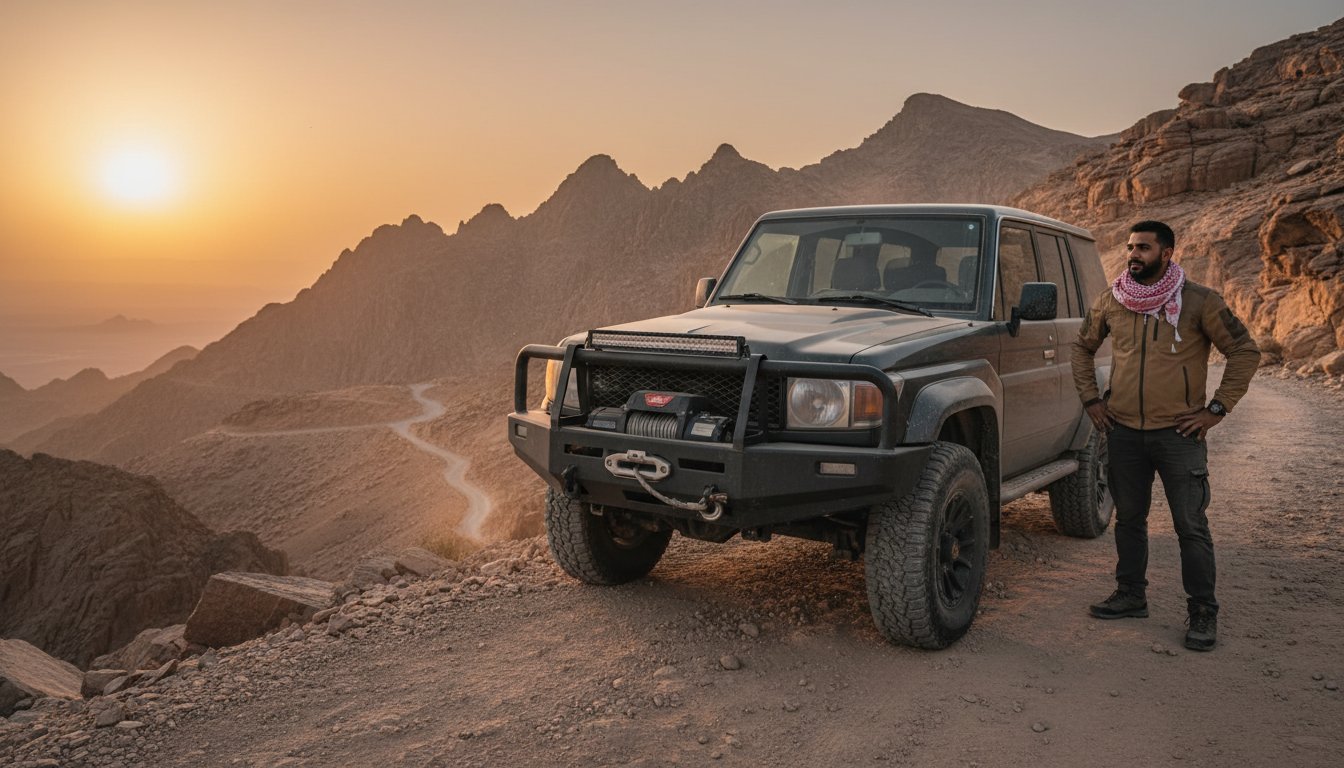
Navigating the rugged mountain tracks and unpredictable dunes of Oman demands more than just skill-it requires robust preparation. The decision to install a bull bar is simple, but choosing the right one is complex. Steel or aluminum? Full bumper replacement or a simple hoop design? And the most critical question: will it compromise my vehicle's airbag system in a real-world impact? These are not just technical details; they are crucial factors for your safety and the protection of your investment against trail obstacles or a sudden animal strike.
This is where uncertainty ends. As specialists in heavy-duty vehicle solutions, we have engineered this definitive guide to off-road bull bars. We cut through the confusion to deliver clear, actionable intelligence on materials, key features, and ensuring flawless airbag compatibility. By the end of this guide, you will have the expert knowledge to select a durable bar that perfectly fits your vehicle, enhances its utility with mounts for winches and lights, and make a confident investment in your 4x4’s capability and protection.
What is an Off-Road Bull Bar & Why Is It Essential?
In the demanding terrains of Oman, from the rocky wadis of Jebel Shams to the vast dunes of the Sharqiya Sands, your vehicle's front end is constantly exposed to risk. An off-road bull bar is not a mere cosmetic accessory; it is a critical piece of engineered protection. Its primary function is to absorb and deflect impacts, safeguarding your vehicle and its occupants from hazards like animal strikes, rock collisions, and challenging recovery situations. This robust shield is the first line of defense, ensuring that a preventable impact doesn't end your expedition prematurely.
The Core Benefits of a Properly Engineered Bull Bar
A heavy-duty, chassis-mounted bull bar provides a multi-faceted advantage for any serious off-road enthusiast. It transforms your vehicle from a standard 4x4 into a mission-ready machine capable of handling extreme conditions with confidence. Key benefits include:
- Mission-Critical Component Protection: It shields your radiator, engine, cooling systems, and headlights from direct impacts that could otherwise leave you stranded miles from assistance.
- Accessory Mounting Platform: It offers a solid, vibration-free foundation for essential gear such as electric winches, high-intensity LED light bars, and communication antennas.
- Improved Approach Angles: Many custom off-road bull bars are designed to be higher and tighter to the vehicle's body than the factory bumper, significantly improving your ability to tackle steep inclines without damage.
- Secure Recovery Points: Integrated and rated recovery points provide a safe and reliable anchor for winching operations, far exceeding the capability of standard factory tow hooks.
Bull Bar vs. Grille Guard vs. Nudge Bar
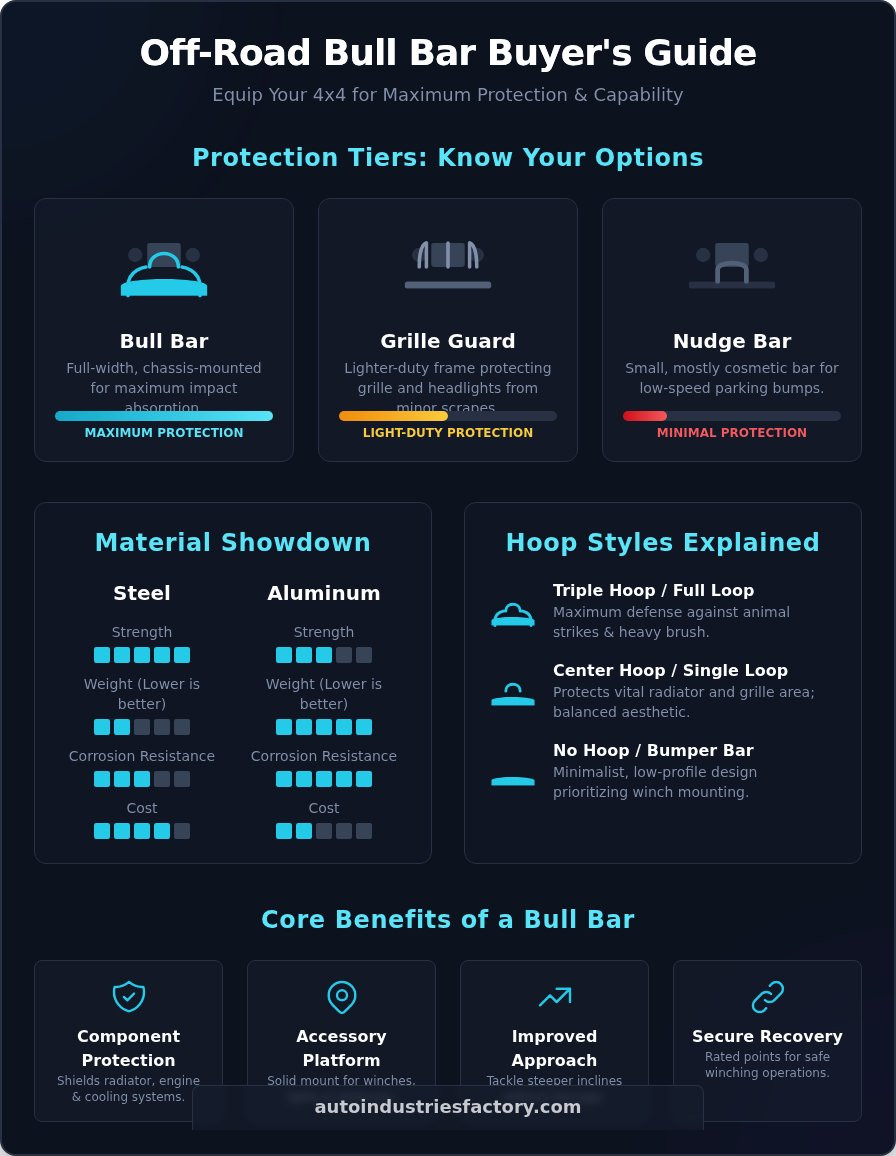
Understanding the difference in front-end protection is crucial. A true Bull Bar is a full-width, heavy-duty structure mounted directly to the vehicle's chassis for maximum strength and impact absorption. For a comprehensive technical breakdown, you can explore this resource on What is a Bull Bar?. In contrast, a Grille Guard is a lighter-duty addition that primarily protects only the grille and headlights from minor scrapes. A Nudge Bar is smaller still and largely cosmetic, offering minimal protection against low-speed parking bumps and is unsuitable for genuine off-road hazards.
Types of Off-Road Bull Bars: Matching Design to Your Mission
Not all frontal protection systems are created equal. Selecting from the various types of off-road bull bars is a critical decision that depends entirely on your vehicle's mission. The ideal choice balances rugged protection against impacts, added vehicle weight, and improved approach angles. Understanding the core designs is the first step to equipping your vehicle for the demanding terrains found across Oman, from rocky wadis to expansive desert dunes.
Full Bumper Replacement Bars
For maximum durability and capability, nothing surpasses a full bumper replacement. These heavy-duty systems are engineered to integrate directly into the vehicle's chassis, offering unparalleled strength and integrity. By completely removing the factory bumper, they drastically improve approach angles, which is essential for serious off-roading. They are the definitive choice for dedicated safari vehicles, military applications, and work fleets, providing seamless, purpose-built mounting points for winches and recovery gear.
Hoop and Loop Styles Explained
The "hoop" or "loop" refers to the upper tubing that extends over the grille and headlights. This configuration directly dictates the level of protection provided for critical components:
- Triple Hoop / Full Loop: Offers maximum defense against animal strikes and heavy brush, safeguarding the entire front end including the grille and headlights. Essential for remote exploration where component damage is not an option.
- Center Hoop / Single Loop: A popular, balanced solution. This style protects the vital radiator and grille area while leaving the headlights exposed for a cleaner, less aggressive aesthetic.
- No Hoop / Bumper Bar: This sleek, minimalist design prioritizes winch mounting and a low profile. It provides robust frontal impact protection without the upper loops, making it ideal for vehicles that primarily travel on open tracks.
Tube-Style vs. Plate-Style Bars
The construction method also defines a bull bar's character and performance. Classic tube-style bars offer a traditional, rugged look and are often lighter, making them a versatile choice. In contrast, modern plate-style bars, fabricated from precisely cut and folded steel or aluminum, provide exceptional strength with aggressive, angular aesthetics. Many premium designs now feature a hybrid construction, combining a plate center section with tubular wings to optimize both strength and weight. Regardless of the style, it is crucial that the design complies with established Bull Bar Safety Standards to ensure it performs correctly without compromising vehicle safety systems like airbags.
Material Matters: Heavy-Duty Steel vs. Lightweight Aluminum
Selecting the right material for your off-road bull bar is a foundational decision that directly impacts your vehicle's protection, performance, and long-term durability. This choice isn't merely about aesthetics; it's a critical balance of strength, weight, corrosion resistance, and cost. The material you choose will affect everything from your front suspension and handling dynamics to your vehicle's compliance with official safety guidelines on bull bars, which often consider factors like airbag compatibility and pedestrian safety. Let's break down the two primary contenders: heavy-duty steel and advanced aluminum.
The Case for Steel Bull Bars
When absolute strength and rugged durability are non-negotiable, steel is the undisputed champion. Engineered for extreme impacts, a steel bull bar provides maximum protection against animal strikes and challenging terrain, making it the ideal choice for heavy-duty commercial fleets, dedicated rock crawlers, and anyone navigating the demanding wadis and mountain tracks of Oman. Steel is also more resistant to metal fatigue from constant vibration on corrugated roads. Furthermore, in the event of damage in a remote area, steel is often easier and more affordable to weld and repair than aluminum, ensuring mission reliability.
The Advantages of Aluminum Bull Bars
For the modern adventurer focused on overlanding or desert touring, aluminum presents a compelling, premium alternative. The most significant benefit is substantial weight savings. A lighter front end reduces the strain on your vehicle's suspension components, potentially improving handling, braking, and even fuel efficiency. Aluminum is also naturally resistant to rust and corrosion, a crucial advantage for vehicles frequently exposed to the coastal humidity around Muscat and Salalah. While the initial investment is higher, the performance benefits make aluminum off-road bull bars an excellent choice for well-equipped touring vehicles.
Finishes and Coatings: Powder Coating vs. Polishing
The final finish protects your investment and defines its look. Understanding the options is key to long-term satisfaction and performance.
- Powder Coating: This is the industry standard for durability. A thick, baked-on finish provides superior resistance to chipping, scratching, and corrosion. It's available in various colors and textures, and minor damage is relatively easy to touch up.
- Polished Finish: A polished aluminum or stainless steel bar offers a classic, bright look. However, it requires regular maintenance and polishing to prevent dulling and oxidation, especially in harsh climates.
- Color Matching: For a seamless, factory-grade appearance, many bull bars can be professionally painted to match your vehicle's exact body color, offering a fully integrated and custom aesthetic.
Essential Features of a High-Performance Bull Bar
While aesthetics are a factor, the true measure of a premium bull bar lies in its engineering and functional capabilities. A purely cosmetic bar offers minimal protection, whereas a purpose-built system is an investment in safety and utility. The foundational principle of any heavy-duty design is a chassis-mounted system. This ensures that impact and recovery forces are transferred directly to the vehicle's frame-its strongest point-rather than to fragile body panels.
For any serious off-road build in Oman's demanding deserts and wadis, the following features are non-negotiable.
Winch Compatibility and Mounting
A self-recovery winch is an essential tool, and your bull bar must be designed to accommodate it properly. Look for an integrated, reinforced winch cradle built directly into the bar's structure. This provides the immense strength needed to handle high-stress pulls. Crucially, the design must also allow for adequate airflow to both the winch motor and the vehicle's radiator to prevent overheating during slow, high-load situations.
Rated Recovery Points
Never attempt a vehicle recovery using factory tie-down loops or non-rated points on a bull bar; they are not designed for shock loads and can fail catastrophically. True recovery points are 'rated'-meaning they have been engineered and tested to a specific load capacity (e.g., 5,000 kg). Insist on closed-loop points made from thick steel, which are either welded or secured with high-tensile bolts directly to the bull bar's chassis mounts.
Accessory and Lighting Mounts
High-performance off-road bull bars serve as a central hub for essential accessories. Key features to look for include:
- Lighting and Antenna Tabs: Pre-drilled, welded tabs provide secure mounting points for driving lights, LED light bars, and communication antennas without requiring you to drill into the bar yourself.
- High-Lift Jacking Points: These reinforced slots are designed to safely accept a high-lift jack, providing a stable and secure point for lifting the vehicle for recovery or tyre changes on uneven terrain.
- Sensor Integration: Modern designs must account for factory parking sensors and Advanced Driver-Assistance Systems (ADAS) to maintain full vehicle functionality.
Investing in a bull bar with these integrated features ensures maximum capability and safety. For custom fabrication solutions that meet these exacting standards, explore the options at Auto Industries Factory.
Custom Fabrication: The Ultimate in Strength and Precision
While off-the-shelf products offer a convenient solution for many, they are built on compromise. For operators of specialized fleets, security details, and serious off-road enthusiasts in Oman, standard options often fall short. Custom fabrication is the definitive answer for those who require uncompromising strength, perfect integration, and mission-specific design. It moves beyond a one-size-fits-all approach to deliver a solution engineered precisely for your vehicle and its intended purpose.
When to Choose a Custom Bull Bar
A custom bull bar becomes essential when your needs are unique. Consider a bespoke solution if your vehicle has significant chassis or body modifications, requires the integration of non-standard equipment like specialized winches or communication arrays, or if you manage a fleet that demands a consistent, heavy-duty specification for maximum durability. Crucially, if mass-produced products simply don't meet your strength requirements for extreme terrain like the Wahiba Sands, custom engineering is the only path forward.
The Custom Fabrication Process at AIF
At Auto Industries Factory (AIF), we transform your requirements into a heavy-duty reality through a meticulous, four-stage process:
- Step 1: Consultation & Design: We begin with a detailed consultation to understand your mission, followed by precise 3D modeling to visualize the final product.
- Step 2: Precision Manufacturing: High-strength steel is cut with CNC laser accuracy and shaped using advanced press brake forming technology.
- Step 3: Expert Assembly: Our certified welders skillfully assemble each component, ensuring maximum structural integrity at every joint.
- Step 4: Durable Finishing: The completed bull bar is finished with a rugged powder coating, providing superior protection against corrosion and abrasion.
The AIF Advantage: Beyond the Product
Choosing AIF means investing in a comprehensive engineering solution, not just a product. Our custom off-road bull bars are built using materials specifically selected to withstand the demanding conditions of the GCC region. We have extensive experience optimizing designs for the most popular vehicles in Oman, including the Toyota Land Cruiser and Nissan Patrol. Our capability extends beyond a single component; we can engineer a complete, integrated vehicle protection system tailored to your operational needs. Commission a bull bar built for your mission. Contact our engineers.
Your Vehicle's Ultimate Defense Starts Here
Selecting the right frontal protection is a critical decision for any serious off-roader in Oman. As we've covered, the choice between heavy-duty steel and lightweight aluminum, along with the specific design, dictates your vehicle's resilience against impacts. While off-the-shelf options exist, nothing compares to the precision and strength of a custom-fabricated solution engineered for your exact mission.
When it comes to purpose-built off-road bull bars, precision engineering is non-negotiable. At Auto Industries Factory, we leverage our specialist expertise in military, police, and safari vehicle conversions to deliver unparalleled strength. With proven performance in the demanding off-road conditions of the region, our in-house CNC laser cutting, fabrication, and powder coating facilities guarantee a flawless, heavy-duty result. Don't settle for standard protection.
Equip your vehicle with a custom-fabricated, heavy-duty bull bar. Get your free estimate today.
Drive with the confidence that your vehicle is protected by the best.
Frequently Asked Questions
Are off-road bull bars legal in Oman?
Vehicle modifications in Oman are regulated by the Royal Oman Police (ROP) to ensure road safety. While generic, non-compliant bull bars are generally prohibited, professionally fabricated and properly installed units designed for specific vehicle models may be permissible. It is critical to use bull bars that are engineered not to pose a risk to pedestrians or interfere with vehicle safety systems. We strongly advise consulting with the ROP and a professional fabricator to ensure full compliance before installation.
Do bull bars interfere with vehicle airbags and safety sensors?
Modern, premium bull bars are precision-engineered to be fully compatible with your vehicle’s safety systems. These units are designed with specific crumple zones and mounting points that allow airbags and advanced driver-assistance sensors to function correctly during a collision. However, a poorly designed or improperly installed bar can dangerously obstruct these systems. Choosing a high-quality, vehicle-specific bull bar from a reputable manufacturer is essential for maintaining the integrity of your vehicle's safety features.
How much weight does a typical steel or aluminum bull bar add to a vehicle?
The added weight depends on the material and design. A heavy-duty steel bull bar for a popular 4x4 like a Toyota Land Cruiser or Nissan Patrol typically weighs between 50 and 85 kilograms, especially with an integrated winch mount. A comparable aluminum model offers significant weight savings, usually falling in the 30 to 50-kilogram range. The final weight is determined by the bar’s complexity, thickness of materials, and any integrated accessories like light mounts or recovery points.
Will I need to upgrade my vehicle's suspension after installing a bull bar?
For heavy-duty steel off-road bull bars, a front suspension upgrade is highly recommended. The significant added weight can cause the front end to sag, negatively impacting handling, braking, and headlight alignment. Upgrading to stiffer front coil springs and matched shock absorbers will restore the proper ride height and ensure optimal performance, particularly over rough terrain. For lighter aluminum bars, an upgrade may not be immediately necessary but is still beneficial for serious off-roading.
Can I install an off-road bull bar myself?
We strongly recommend professional installation. Mounting a bull bar correctly is a safety-critical task that involves securing it to the vehicle's chassis, often requiring specialized tools and precise torque specifications. An improper installation can compromise the bar's effectiveness in an impact and, more importantly, interfere with airbag sensor operation. Entrusting the job to experienced technicians ensures the bar is fitted safely and securely, guaranteeing both protection and peace of mind.
How does a bull bar affect my vehicle's cooling system?
A professionally designed bull bar will have no negative impact on your vehicle's cooling system. Reputable manufacturers engineer their products with strategically placed vents and an open design that maintains or even improves airflow to the radiator and intercooler. This is especially crucial in Oman's hot climate. In contrast, a poorly designed, generic bar can obstruct the grille, restricting airflow and increasing the risk of engine overheating under load or in heavy traffic.


