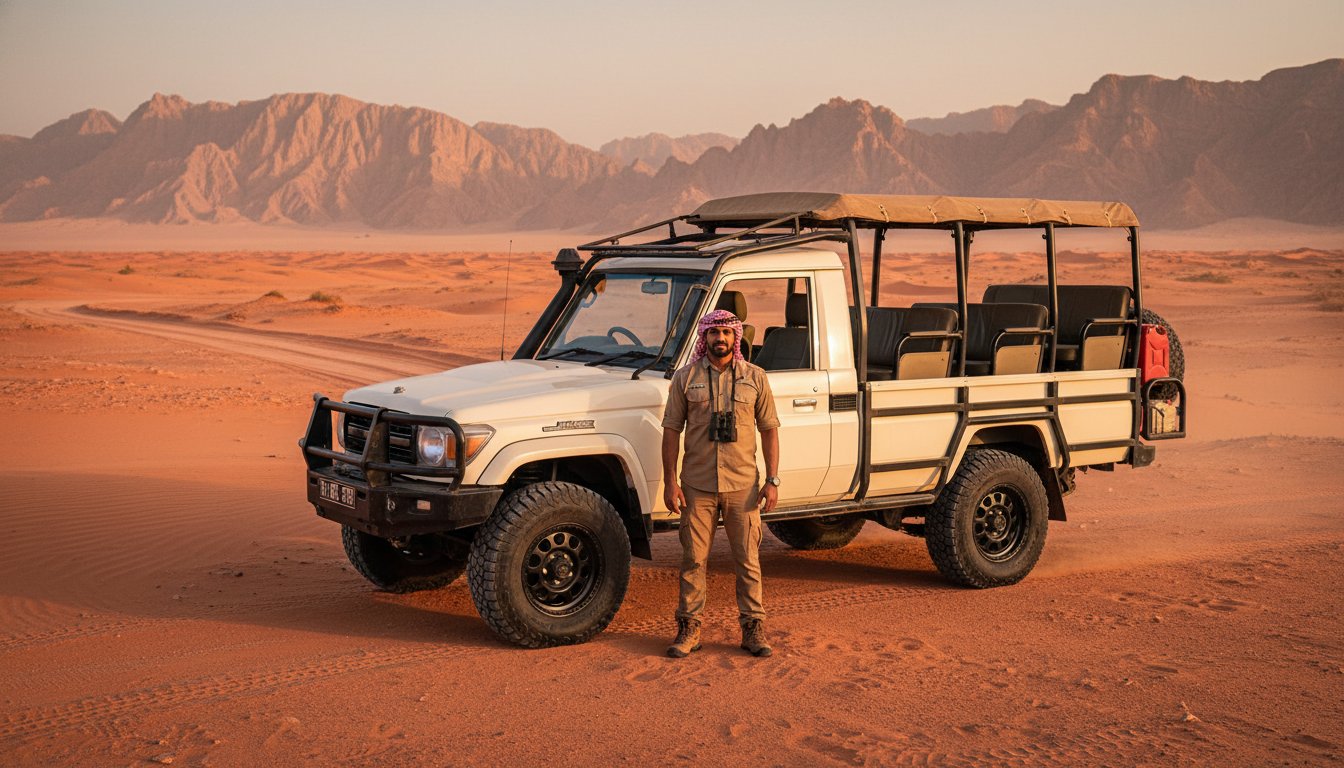
For any safari tour operator in Oman, a vehicle breakdown is the ultimate nightmare. It jeopardizes guest safety, damages your reputation, and turns a dream excursion into a logistical disaster. Standard 4x4s, while capable, are not engineered to withstand the relentless daily strain of traversing the Sultanate's rugged mountains and vast deserts. This is where the engineering expertise behind professional safari vehicle conversions becomes not just an advantage, but a necessity for long-term success and reliability.
Distinguishing between mission-critical upgrades and optional luxuries is key to maximizing your investment. This definitive guide cuts through the confusion. We will detail the essential modifications-from heavy-duty chassis and suspension reinforcement to crucial safety features and guest comfort enhancements-needed to build a tour vehicle that is supremely reliable, exceptionally safe, and perfectly suited for Oman's demanding environment. Prepare to confidently specify your next fleet vehicle and partner with experts who understand durability.
Why a Standard 4x4 Isn't Enough for Professional Safaris
While a showroom-floor Toyota Land Cruiser or Nissan Patrol is a legend of off-road capability, its factory design is intended for private use, not the punishing demands of daily commercial safari operations. The immense and relentless stress of navigating Oman's rugged wadis, corrugated desert tracks, and steep mountain roads with a full load of passengers goes far beyond standard engineering limits. A stock vehicle's chassis, suspension, and braking systems are simply not built to withstand this mission profile day after day.
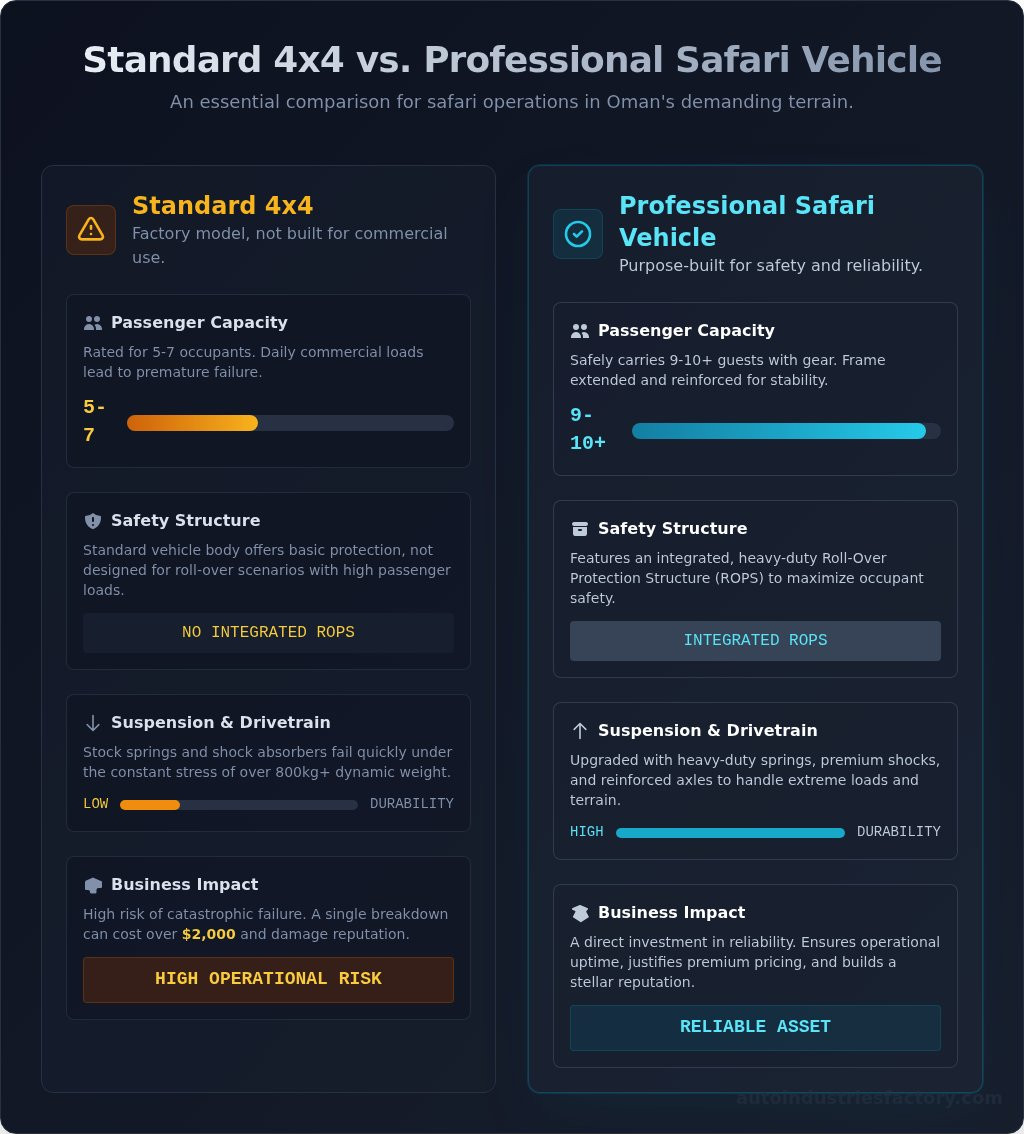
The core issue lies in load and endurance. A standard 4x4 is rated for 5-7 occupants. A professional safari vehicle must safely carry 9-10 guests plus gear, adding over 800 kilograms of dynamic weight. This constant overload causes premature failure of springs, shock absorbers, and drivetrain components. Furthermore, a purpose-built vehicle directly enhances the guest experience-a critical factor for success. Standard window heights and seating arrangements offer limited visibility, whereas professional safari vehicle conversions introduce tiered seating, open sides, and elevated viewing platforms. This transforms the trip from a simple drive into an immersive wildlife viewing experience, directly impacting customer satisfaction and your brand's reputation.
The Business Case for Purpose-Built Conversion
Viewing a conversion as an expense is a critical mistake; it is a direct investment in your primary business asset. The cost of downtime in the tourism industry is catastrophic. A single vehicle breakdown in a remote location like the Wahiba Sands can easily cost an operator over $2,000 in recovery fees, guest refunds, and accommodation costs. This doesn't account for the lasting damage from negative online reviews. A purpose-built, reliable vehicle ensures operational uptime, builds a reputation for quality, and justifies premium tour pricing.
Safety, Liability, and Compliance
Beyond performance, safety is the non-negotiable foundation of any tour operation. Modifying a vehicle to carry more passengers requires a fundamental re-engineering of its structure to maintain integrity. A key element in professional safari vehicle conversions is the integration of a robust Roll-Over Protection Structure (ROPS), designed to protect occupants in the worst-case scenario. These specialized vehicles, often known as game viewers, are built to meet higher safety standards required by tourism authorities and insurance providers in Oman, protecting your guests, your staff, and your business from significant liability.
Anatomy of a World-Class Safari Vehicle: Core Modifications
A true safari vehicle is not merely a standard 4x4 with a few accessories. It is a complete re-engineering of a base platform, like a Toyota Land Cruiser or Nissan Patrol, from the frame up. Professional safari vehicle conversions involve a meticulous process of disassembly, fabrication, and reinforcement to create a purpose-built machine that prioritizes safety, durability, and an unparalleled guest experience. The quality of this transformation is defined by precision engineering, from the integrity of the welds to the resilience of the final finish, ensuring the vehicle can withstand the punishing demands of Oman's diverse terrain.
Structural Reinforcement and Bodywork
The foundation of any elite safari vehicle is its strengthened chassis. The frame is often professionally extended to increase passenger capacity and improve stability. Upon this reinforced base, a custom-fabricated body is constructed, featuring tiered seating for unobstructed views. Critically, a heavy-duty safety roll cage is not just added but fully integrated into this new structure, providing maximum occupant protection whether navigating rocky wadis or sandy dunes. Custom doors and wide access points are engineered for guest convenience and swift entry or exit.
Suspension and Drivetrain Upgrades
Stock vehicle suspension is the first system to fail under the extreme weight and constant stress of safari operations. To solve this, we implement comprehensive upgrades:
- Heavy-Duty Leaf or Coil Springs: Engineered to manage a significantly higher gross vehicle weight without compromising performance.
- Premium Shock Absorbers: Provide superior damping for a smoother ride over corrugated tracks and rough terrain, enhancing guest comfort.
- Durable Polyurethane Bushings: Replace standard rubber to offer greater longevity and resistance to wear.
This robust suspension system is paired with upgraded brakes and reinforced axles to safely manage the increased load. As technology advances, drivetrain modifications are also evolving, with many operators now exploring the rise of electric safari vehicles for their silent operation and reduced environmental impact.
Guest Cabin Design and Outfitting
The cabin is engineered for functionality and comfort. Tiered seating guarantees that every guest has a front-row view of the wildlife. All materials are selected for extreme durability; upholstery is typically a marine-grade vinyl or heavy-duty canvas that resists sun, dust, and moisture, while flooring is a non-slip, washable surface. A custom canvas roof provides essential shade and weather protection, and clever integrated storage compartments for cameras, water coolers, and field guides ensure the cabin remains uncluttered and organized.
Choosing the Right Base Vehicle: Land Cruiser, Patrol & Beyond
The foundation of any durable and effective safari vehicle conversion is the base chassis you start with. An unreliable vehicle compromises guest safety, operational efficiency, and your business's reputation. In Oman and across the wider region, the choice often comes down to a few battle-tested platforms, each selected for its unique blend of power, durability, and, most critically, parts availability in remote locations like the Sharqiya Sands or the rugged tracks of the Al Hajar Mountains.
The Toyota Land Cruiser (79 Series): The Industry Standard
The Land Cruiser 79 Series is the undisputed global benchmark for a reason. Its legendary reliability stems from a simple, robust mechanical design that prioritizes function over complexity. This makes it easier to maintain and repair in the field, a non-negotiable requirement for serious tour operators. The vast global network for parts and service expertise means you are never far from support. The process of transforming this workhorse is well-documented; this Guide to Converting a Pick-up to a Safari Vehicle details the essential chassis and suspension modifications required for professional use. Its heavy-duty leaf-spring suspension provides an exceptional load-carrying capacity, making it the ideal platform for extended-body conversions designed for 7-9 passengers.
The Nissan Patrol (Y61): A Powerful Regional Contender
A formidable contender, the Nissan Patrol Y61 (Super Safari) holds a powerful reputation throughout the GCC. Renowned for its potent TB48 engine and rugged drivetrain, the Patrol is a favourite for its performance on challenging terrain. Its standard coil-spring suspension can offer a more comfortable ride for passengers, which can be a significant advantage on less-demanding routes. Within Oman and the UAE, parts are widespread and mechanical knowledge is extensive, ensuring operational uptime. While its modification potential is slightly different from the Land Cruiser, it remains a top-tier choice for high-performance safari vehicle conversions.
Other Platforms: Hilux, Ford Ranger, and Custom Chassis
While the Land Cruiser and Patrol dominate the heavy-duty tour market, other platforms serve specific niches. Smaller, more agile vehicles like the Toyota Hilux or Ford Ranger are excellent choices for private VIP tours, photographic expeditions, or operations with smaller group sizes. They offer a more car-like driving experience and can be more economical to operate. For highly specialized requirements, such as scientific research or luxury "sky-bed" vehicles, a fully custom-fabricated chassis may be the only solution. The ultimate choice depends on a clear analysis of your target tour capacity, typical terrain, and operational budget.
How to Choose Your Safari Vehicle Conversion Partner
After defining your operational needs, selecting the right fabrication partner is the most critical decision you will make. The quality, durability, and safety of your fleet depend entirely on the expertise of the company you choose. This choice goes beyond finding a simple workshop; it’s about finding an engineering partner who understands the extreme demands of Oman’s terrain, from the Wahiba Sands to the rugged wadis of the Hajar Mountains.
A common mistake is confusing an assembler with a true engineering fabricator. An assembler simply bolts on pre-made parts, often resulting in a vehicle that is not truly integrated or optimized for local conditions. A professional fabricator, however, designs, engineers, and manufactures custom solutions. They control the entire process, ensuring every component is built for purpose and to the highest standard.
To ensure you partner with a capable expert, use this checklist during your evaluation:
- In-house Engineering: Do they have a dedicated design and engineering team, or do they outsource critical thinking?
- Advanced Fabrication: Can you verify they have equipment like CNC cutters, press brakes, and a professional paint booth?
- Certified Technicians: Are their welders and technicians certified to international standards?
- Regional Expertise: Can they provide specific examples of vehicles built to withstand extreme heat, dust, and sand?
- Verifiable Portfolio: Do they have a strong portfolio of completed safari vehicle conversions and are they willing to provide references from other tour operators in Oman or the GCC?
Verify In-House Engineering and Fabrication
A partner with end-to-end capabilities offers a single point of accountability for design, manufacturing, and after-sales support. Look for a company that proudly showcases its facilities. In-house control over processes like precision CNC cutting, metal forming, and certified welding guarantees superior quality control and eliminates the delays and miscommunications common with outsourcing. This integrated approach ensures every bracket, roll cage, and modification is built flawlessly. Explore our advanced fabrication facility.
Assess Their Regional Expertise
A fabricator from a different climate cannot fully grasp the challenges your vehicles will face. An expert based in the region understands that standard cooling systems are inadequate for summer in the Sharqiya region and that ordinary air filters will fail against fine desert dust. Ask potential partners how they modify engine cooling, upgrade air filtration systems, and what type of durable, heat-resistant finishes they use to protect the vehicle’s body and chassis from corrosion and abrasion.
Review Their Portfolio and Client Testimonials
A proven track record is your best guarantee of future success. Request to see a detailed portfolio of their previous safari vehicle conversions. A confident fabricator will be eager to share their work and connect you with past clients. Speaking with other tour operators who have used their services provides invaluable, real-world insight into the build quality, project management, and long-term reliability of their vehicles. A strong portfolio is not just a gallery; it is evidence of consistent, high-quality execution.
Engineer Your Fleet for the Ultimate Safari Experience
Creating a world-class safari experience begins where the capabilities of a standard 4x4 end. As this guide has shown, success hinges on purpose-built modifications for safety and guest comfort, and the crucial selection of a robust base vehicle. Ultimately, the quality of your safari vehicle conversions depends entirely on the expertise of your fabrication partner.
Auto Industries Factory is your strategic partner in this mission. With complete in-house fabrication capabilities-from precision CNC and heavy-duty welding to durable painting-we control every aspect of quality. Our specialization in heavy-duty Toyota and Nissan platforms is proven in the most demanding environments across the region, ensuring your fleet is built for durability and peak performance in the unique Omani terrain.
Take the next step towards building a superior safari fleet. Engineer Your Ultimate Safari Fleet with Auto Industries Factory. Get a Quote. Your journey to creating unforgettable adventures starts here.
Frequently Asked Questions About Safari Vehicle Conversions
How long does a complete safari vehicle conversion take?
The project timeline directly depends on the conversion's complexity. A basic modification package, including a roof canopy and seating upgrades, can be completed in 2-3 weeks. A comprehensive build involving structural changes like a pop-top roof, custom interior fabrication, and advanced suspension systems typically requires 6-8 weeks or more. We provide a detailed project schedule after the initial design consultation to ensure full transparency and timely delivery.
What is the typical cost range for a professional safari vehicle conversion?
The investment for a safari vehicle conversion varies based on the scope of work. Foundational conversions for vehicles like a Toyota Land Cruiser, including essential modifications for tour operations, generally range from $8,000 to $15,000. For comprehensive, custom-built safari vehicle conversions featuring premium interiors, specialized equipment, and heavy-duty structural work, costs can exceed $30,000. We provide a detailed, itemized quote after a thorough assessment of your requirements.
Can my existing 4x4 vehicle be converted for safari use?
Yes, most robust 4x4 platforms are ideal candidates. Vehicles such as the Toyota Land Cruiser, Nissan Patrol, and Land Rover Defender are preferred for their durable chassis and proven off-road performance in demanding terrains. Our engineers will conduct a full assessment of your vehicle’s frame, engine, and drivetrain to confirm its suitability and engineer the most effective modifications for reliable, professional safari use.
What kind of maintenance is required for a converted safari vehicle?
Beyond standard vehicle servicing, converted vehicles require specific checks to ensure operational safety and durability in Oman's rugged environments. This includes regular inspections of all custom fabrication welds, the integrity of roof racks and bull bars, and the condition of upgraded suspension components. All custom electrical systems for lighting and accessories should also be checked periodically. We provide a recommended post-conversion maintenance schedule to ensure long-term reliability.
Are converted safari vehicles street legal?
Absolutely. All our safari vehicle conversions are meticulously engineered to be fully compliant with the vehicle modification regulations set by the Royal Oman Police (ROP). We ensure that all structural changes, external accessories, and seating arrangements meet or exceed national safety standards. Our process includes managing the necessary documentation and inspections to certify your vehicle is completely street legal for operation across Oman.
What is the typical seating capacity of a converted safari vehicle?
Seating capacity is custom-designed to meet your specific operational needs. The most common configuration for game viewing features a tiered, open-sided layout that accommodates 7 to 9 passengers, providing excellent visibility for everyone. For overland tours or private excursions, we can engineer layouts for 4 to 6 passengers with enhanced comfort and storage. Each seating plan is optimized for safety, passenger experience, and the vehicle's load capacity.
What warranty is offered on the conversion work and components?
We provide a comprehensive 12-month warranty on all our fabrication and conversion work, which covers any defects in materials and craftsmanship. This guarantees the structural integrity and quality of our modifications. Additionally, any third-party components installed during the conversion, such as winches, suspension kits, or specialized lighting, are covered by their respective manufacturer's warranties. Full warranty details are outlined in every project proposal.


