A professional ambulance is far more than a modified van; it's a high-stakes engineering solution where every weld and circuit determines a patient's survival. When lives are on the line, you can't afford to worry about the structural integrity of a vehicle or whether its equipment will fail in a critical moment. Mastering the ambulance conversion process requires a shift from simple automotive work to complex industrial fabrication that prioritizes occupant safety above all else.
We understand that reliability and meeting international standards like KKK-A-1822E or EN 1789 are your top priorities. This guide details the rigorous engineering steps necessary to transform a base chassis into a mission-critical medical unit. You'll gain a clear understanding of how in-house laser cutting, CNC machining, and specialized fabrication ensure your fleet remains robust and compliant. We'll walk through the technical stages that guarantee a high-performance, life-saving environment for every mission.
Key Takeaways
- Understand why a professional ambulance conversion process is an industrial engineering task rather than a simple cosmetic modification.
- Learn how 3D modeling and structural reinforcement ensure vehicle integrity under mission-critical stress.
- Discover the precision benefits of in-house laser cutting and CNC machining for custom medical mounts and durable brackets.
- Identify key safety standards like EN 1789 and the importance of weight distribution testing for safe emergency handling.
- Gain clear criteria for selecting a conversion specialist with the technical capacity to handle complex fleet requirements under one roof.
The Professional Ambulance Conversion Process vs. Standard Modifications
A professional ambulance conversion process isn't about aesthetics; it's about life-saving engineering. Unlike standard aftermarket upfitting, which might focus on simple storage or comfort, industrial fabrication involves deep structural modification. This ensures the vehicle can handle the extreme stress of emergency response while protecting both the patient and the medical crew. Every component added must serve a functional, mission-critical purpose that remains reliable under pressure.
Understanding the evolution of Ambulance Design and History shows that modern units are complex mobile emergency rooms. This is why partnering with a vehicle conversion specialist like Auto Industries Factory is essential. We provide solutions that go beyond basic upfitting to deliver rugged, mission-critical units that meet international safety benchmarks. Our team treats every build as a unique engineering challenge, not a generic assembly line task.
To better understand the scale of these transformations, watch this overview of a specialized build:
The Role of the Base Vehicle
We prioritize structural integrity during the selection phase. Adding a high roof or a heavy rear box changes the vehicle's center of gravity. We analyze these shifts to ensure the suspension and braking systems are adequate for the final mission-specific weight. This prevents the dangerous body roll or braking lag that often plagues poorly engineered modifications.
Mission-Specific Design Requirements
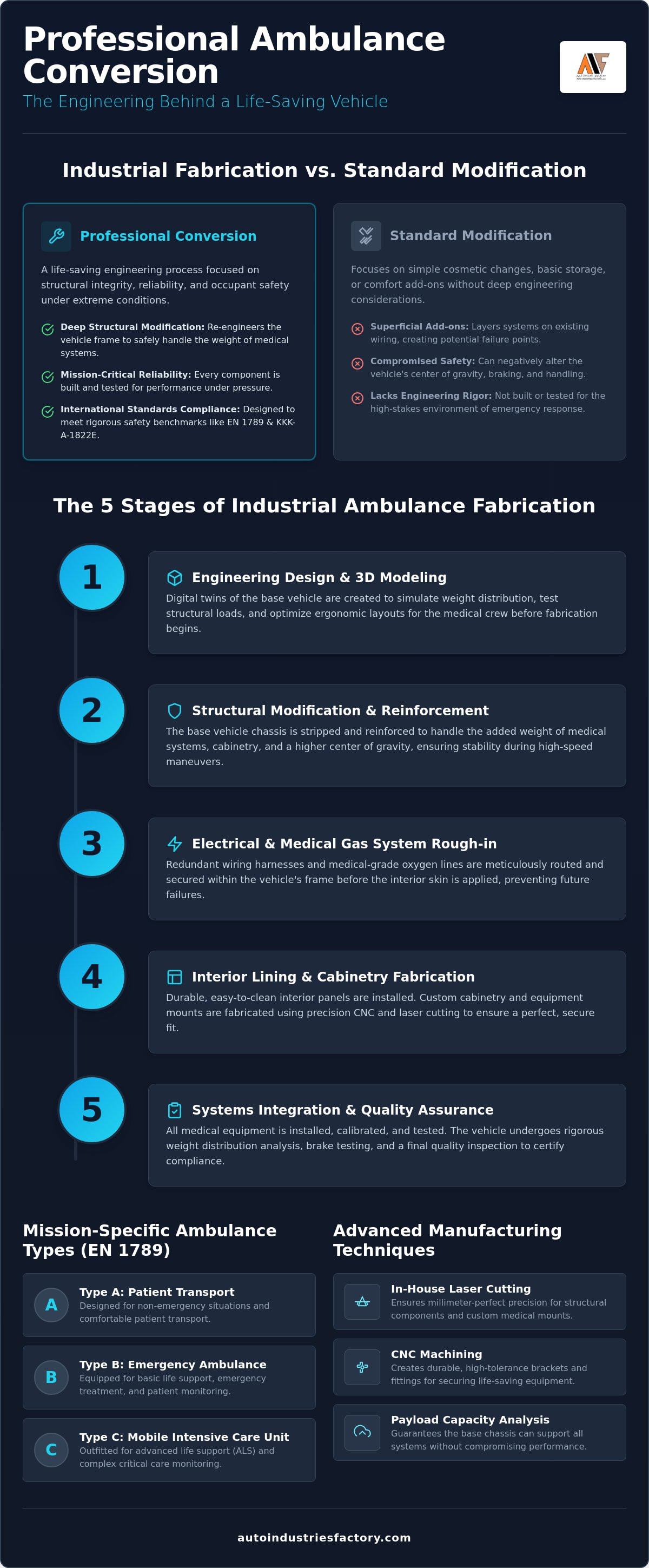
Design starts at the blueprint stage, categorizing units into Type A, B, or C as defined by standards like EN 1789. Ergonomics are vital because a paramedic needs to reach oxygen, cardiac monitors, and supplies while safely restrained during transit. A well-planned layout reduces fatigue and speeds up response times during a crisis.
- Type A: Patient transport for non-emergency situations.
- Type B: Emergency ambulances equipped for basic treatment and monitoring.
- Type C: Mobile intensive care units for advanced life support and complex monitoring.
Every layout integrates communication systems and redundant electrical paths from the start. This prevents the common failures seen in amateur builds where systems are layered on top of existing wiring without proper isolation. By building from the blueprint up, we ensure that every switch, outlet, and light is positioned for maximum efficiency in a high-pressure environment.
The 5 Stages of Industrial Ambulance Fabrication
An industrial ambulance conversion process is a disciplined engineering sequence. It's not about adding accessories to a van; it's about rebuilding a vehicle from the frame up to serve as a mobile life-support system. At Auto Industries Factory, we follow a rigorous five-stage fabrication cycle to ensure every unit is rugged, reliable, and ready for high-stakes environments. Precision is mandatory. A single weak weld or loose circuit can compromise a life-saving mission.
The fabrication cycle includes five critical phases:
- Phase 1: Engineering Design and 3D Modeling. We create digital twins to simulate weight distribution and ergonomic flow.
- Phase 2: Structural Modification and Reinforcement. The chassis is prepared for the added weight of medical systems.
- Phase 3: Electrical and Medical Gas System Rough-in. Wiring and oxygen lines are routed before the interior skin is applied.
- Phase 4: Interior Lining and Cabinetry Fabrication. We use industrial-grade materials for durability and infection control.
- Phase 5: Final Assembly, Painting, and Equipment Calibration. The unit is finished, tested, and certified for service.
Adhering to the technical benchmarks set by the Ambulance Manufacturers Division (AMD) ensures that these stages meet international safety expectations. If you're planning a fleet upgrade, you can explore our specialized conversion services to see how these phases translate into high-performance medical units.
Structural Reinforcement and Body Modification
The structural integrity of an ambulance depends on Phase 2. We reinforce floors specifically for stretcher mounts and heavy medical cabinets. This prevents floor flexing or mount failure during rapid transit. When fabricating an extended roof or a full box body, we focus on the roll-over strength of the cage. Our engineers ensure the vehicle remains balanced and stable even when fully loaded with ALS equipment. We don't just add space; we add protection.
Electrical and Life-Support Integration
Reliable power is the heartbeat of a medical vehicle. We install dual battery systems and high-output alternators to support monitors, ventilators, and climate control. During the rough-in phase, oxygen lines and medical gas manifolds are routed through protected channels to prevent leaks or damage. We also integrate mission-critical lighting, including sirens, lightbars, and high-intensity external scene lighting. This ensures the crew has maximum visibility and power in any environment. Every connection is crimped and labeled for long-term durability and easy maintenance.
Advanced Manufacturing: Laser Cutting and CNC in Conversion
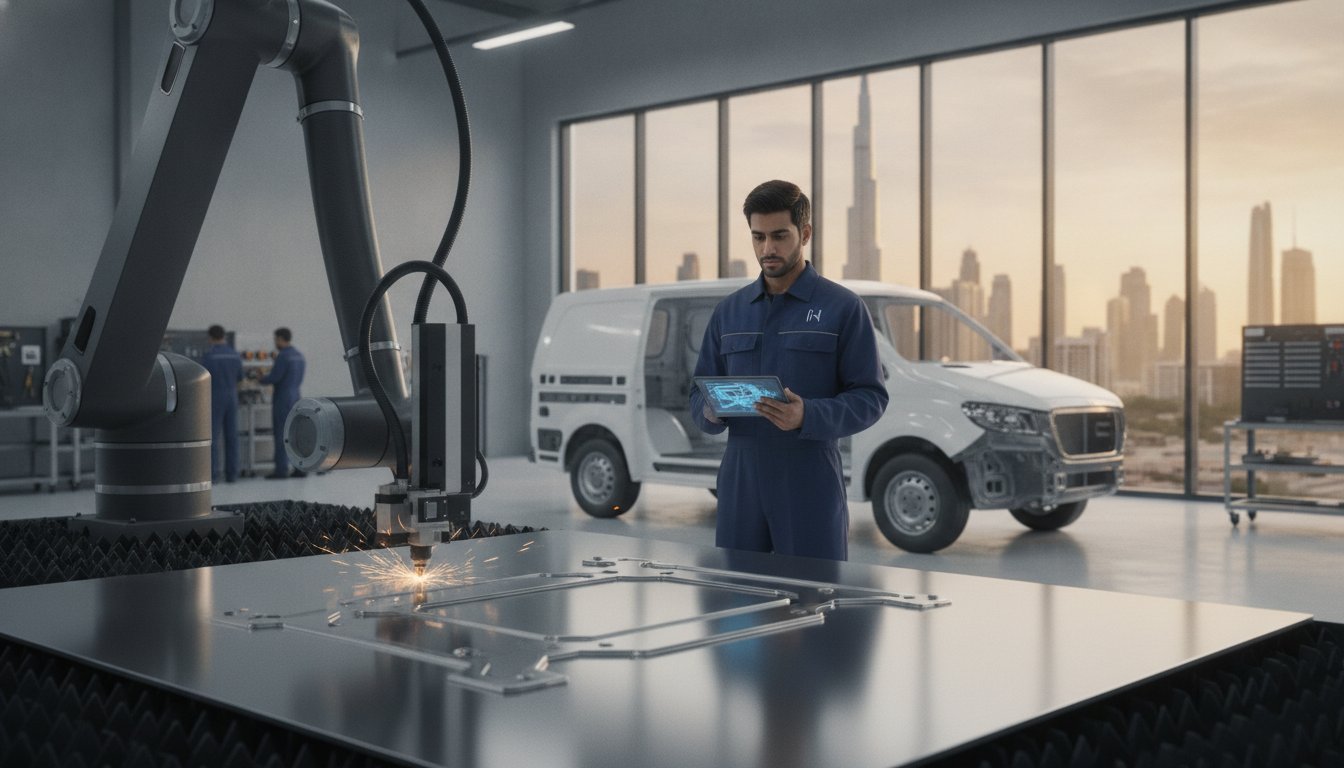
Precision manufacturing separates a purpose-built medical unit from a simple van modification. In a professional ambulance conversion process, we replace manual, hand-tool methods with advanced industrial technologies like laser cutting and CNC machining. These tools allow our engineers to create components with tolerances measured in millimeters. This level of accuracy is essential when mounting life-critical equipment that must remain secure during high-speed maneuvers or sudden impacts.
Metal fabrication is the only acceptable standard for mission-critical environments. While some aftermarket upfitters use plywood for interior cabinetry, wood is porous and nearly impossible to sanitize effectively. It also poses a fire risk and can splinter dangerously during a collision. We utilize high-grade aluminum and steel because they're non-porous, fire-resistant, and structurally superior. These materials ensure a sterile environment that meets the strictest medical hygiene standards while providing a rugged frame that lasts the life of the vehicle.
Beyond the interior, vehicle protection is a priority for units operating in demanding terrains or high-traffic urban areas. We integrate custom bull bars and bumpers to shield the chassis from front-end impacts and debris. These components are fabricated using the same laser-cut precision as our internal mounts. This ensures they provide maximum protection without interfering with the vehicle's cooling systems or safety sensors.
Precision Metal Fabrication
We utilize high-powered laser cutting to produce complex frames for medical cabinets and equipment racks. This technology allows for intricate designs that reduce overall vehicle weight without sacrificing structural strength. Once the parts are cut, we use CNC bending to create seamless, rounded surfaces. This eliminates sharp edges and deep seams where bacteria could hide, making the interior much easier to disinfect between patients. To guarantee long-term performance, all metalwork undergoes a professional painting process. This adds a durable, rust-resistant finish that withstands the harsh chemicals frequently used in medical sterilization.
In-House Quality Control
Operating as a "one-roof" solution is a core part of our engineering strategy. By keeping laser cutting, CNC machining, and painting in-house, we significantly reduce lead times and eliminate the errors common with third-party outsourcing. Our engineers maintain strict control over every equipment mounting point. This ensures they align perfectly with the 3D models created during the initial design phase. Welding quality is a critical safety feature that we never outsource. We employ expert craftsmen who understand that a single weld can be the difference between equipment staying secure or becoming a projectile during an accident. This integrated approach ensures a cohesive, robust unit that performs reliably in the field.
Safety Standards and Quality Assurance in Medical Vehicles
Engineering validation is the final safeguard in the ambulance conversion process. We don't just build; we verify. Adhering to the EN 1789:2020+A1:2023 standard is essential for road ambulances, as it governs everything from structural strength to the performance of medical systems. This standard ensures that the vehicle can withstand the physical rigors of emergency response while providing a stable platform for patient care. For a deeper look at these requirements, see our Ambulance Conversion Guide.
Weight distribution testing is a critical quality assurance step that we handle in-house. Adding an ambulance box or an extended roof significantly shifts the vehicle's center of gravity. Our technicians perform precise axle-load calculations to ensure the chassis remains balanced during high-speed emergency maneuvers. We also conduct rigorous electrical safety testing. Since these vehicles carry high-voltage medical equipment like ventilators and monitors, we ensure that isolated electrical grids are grounded and protected against electromagnetic interference. This prevents equipment failure during life-critical moments.
Crash Testing and Stretcher Retention
Safety in the patient compartment depends on secure mounting. We utilize 10G-rated stretcher mounts designed to withstand forces ten times the force of gravity during a collision. Without these reinforced mounting points, a 100kg stretcher becomes a lethal projectile in an accident. Our fabrication process includes integrated steel plates within the floor and walls to anchor every piece of life-support gear. This ensures that even in a severe impact, all interior components remain exactly where they belong, protecting both the patient and the medical crew.
Hygiene and Infection Control
Medical vehicles must be as easy to clean as a surgical suite. We select non-porous materials like high-grade aluminum or specialized medical plastics for all walls and ceilings. These materials don't absorb fluids or harbor pathogens. Our seamless flooring fabrication eliminates the gaps and corners where bacteria typically grow. Every design element is optimized for rapid decontamination between missions. This allows your crew to return to service safely and quickly without the risk of cross-contamination.
If you require a fleet built to these rigorous safety and hygiene standards, consult with our vehicle conversion specialists today to discuss your technical requirements.
Choosing a Specialist for Your Ambulance Fleet Conversion
Selecting a partner for your fleet is a strategic decision that affects operational uptime and crew safety. A professional ambulance conversion process depends on integrated, in-house capabilities. If a converter outsources their laser cutting, CNC machining, or painting, they lose control over the precision and durability of the build. At Auto Industries Factory LLC, we maintain total authority over the entire fabrication cycle. This "one-roof" model ensures that every component, from the structural cage to the smallest custom bracket, meets our stringent engineering standards.
Reviewing a specialist's track record across the medical, police, and military sectors provides proof of their technical depth. Vehicles designed for these high-stakes industries must survive extreme conditions. We apply the same rugged engineering to our medical units that we use for military-grade modifications. Reliability isn't just a goal; it's a requirement. After the vehicle is delivered, after-sales support and the immediate availability of spare parts are vital for keeping your fleet in service. A mission-ready unit is only useful if it stays on the road. We prioritize long-term performance and accessibility for all our clients.
Customization Options for Diverse Missions
No two medical fleets have the same requirements. We offer specialized configurations to meet specific operational challenges and terrain demands:
- Box type ambulance: These units provide maximum interior volume, making them ideal for complex ICU or ALS equipment layouts.
- Extended roof ambulance: This modification offers a balance of interior height and urban agility for rapid city response.
- Off-road 4x4 conversions: Built on rugged platforms like the Toyota Land Cruiser, these are engineered for remote rescue and harsh environments.
The Path to Conversion: Getting Started
Our process begins with a detailed consultation to analyze your fleet requirements and select the ideal base vehicle chassis. We don't rely on guesswork. Our engineers provide a comprehensive technical specification and a 3D layout for your approval before any metal is cut. This ensures the final unit aligns perfectly with your ergonomic needs and equipment load. While the timeline for a professional industrial conversion varies based on complexity, our in-house CNC and laser capabilities allow us to maintain an efficient, predictable schedule. This structured approach ensures that the ambulance conversion process remains transparent and focused on your specific operational goals. We move quickly from initial design to final delivery without compromising on the master craftsman quality your mission demands.
Build Your Mission-Critical Medical Fleet
Mastering the ambulance conversion process requires more than basic modifications; it demands industrial-grade fabrication and absolute adherence to safety standards. You've seen how in-house laser cutting and CNC machining ensure the structural integrity of every unit. Choosing high-performance metal over porous wood isn't just about durability; it's a commitment to hygiene and patient safety. These engineering choices define the difference between a standard vehicle and a life-saving environment.
When lives depend on your fleet, you need a partner with proven technical expertise. We specialize in transforming GMC and Toyota platforms into ruggedized units designed for the most demanding environments. Our "one-roof" solution guarantees that every weld and component is engineered for extreme reliability. Partner with the vehicle conversion specialists at Auto Industries Factory to secure a fleet that performs when it matters most. Your team deserves the confidence that comes with world-class engineering and precision manufacturing.
Frequently Asked Questions
What is the standard timeline for an ambulance conversion process?
The timeline varies depending on the complexity of the build and the base chassis. A standard van-based conversion typically takes four to six weeks; while a complex box type or extended roof project can require 12 to 16 weeks. This duration covers the entire ambulance conversion process; including initial 3D modeling; structural reinforcement; and final equipment calibration. We prioritize engineering precision over speed to ensure every unit is mission-ready upon delivery.
Which vehicles are best suited for ambulance conversion?
What is the difference between a Type II and Type III ambulance conversion?
A Type II conversion utilizes a standard van chassis where the medical compartment is integrated into the original body. A Type III conversion uses a cutaway chassis with a custom-fabricated "box" patient compartment mounted to the rear. Type III units offer significantly more interior volume and specialized storage for complex medical gear; making them the superior choice for advanced life support missions and extended transit times.
Does a professional conversion include medical equipment installation?
Yes; a comprehensive ambulance conversion process includes the mounting and integration of all specified medical systems. We install oxygen manifolds; ventilators; cardiac monitors; and suction units using 10G-rated reinforced mounts. This ensures that every piece of life-saving technology remains secure during high-speed transit. Our engineers calibrate the electrical grid to support these devices without risking power failure or electromagnetic interference during a mission.
How do you ensure the converted ambulance meets safety standards?
We adhere to international engineering benchmarks such as EN 1789 and KKK-A-1822E. Our quality assurance involves rigorous in-house testing; including axle-load calculations for weight distribution and electrical grounding audits. We also verify the structural integrity of all roll-over cages and stretcher retention systems. This disciplined approach guarantees that the vehicle remains stable and protects all occupants in the event of an impact or sudden maneuver.
Can an existing van be retrofitted into a professional ambulance?
We can retrofit existing vans if the chassis and engine meet the necessary payload and performance requirements. Our engineers perform a structural audit to ensure the vehicle can support the added weight of medical cabinetry and electrical systems. If the van passes this inspection; we apply the same industrial fabrication steps used in our new builds; including floor reinforcement and the installation of non-porous interior linings.
What are the electrical requirements for a modern emergency ambulance?
Modern units require a robust electrical architecture; including dual-battery systems and high-output alternators. We install isolated grids to prevent medical equipment from draining the vehicle's starting battery. Redundant wiring; pure sine wave inverters; and shore-power connections are essential for maintaining life-support systems. Every circuit is labeled and protected by industrial-grade breakers to ensure the crew has reliable power for lighting; climate control; and diagnostic tools.
Why is metal fabrication preferred over wood for ambulance interiors?
Metal fabrication is the only standard for professional medical environments because it's non-porous and fire-resistant. Aluminum and steel don't absorb fluids or harbor bacteria; making them easier to sanitize between missions. Unlike wood; which can splinter and become a projectile during a collision; metal provides a rugged; stable frame that enhances vehicle safety. It's an engineering choice that prioritizes long-term durability and strict infection control.


