It's frustrating to deal with fabricators who don't understand the high stakes of mission-critical standards. You need a solution that integrates perfectly with your existing lighting and storage systems while standing up to harsh national environments. This guide will show you how advanced engineering transforms standard vehicles into high-performance units. We'll examine the role of CNC machining, the impact of current material price volatility, and the critical importance of ADAS calibration in 2026. You'll discover how to secure a canopy that offers long-term reliability without compromising your vehicle's safety or performance.
Key Takeaways
- Learn why aluminum is the preferred material for specialized fleets due to its superior strength-to-weight ratio and natural resistance to corrosion.
- Discover how custom aluminum canopy fabrication utilizes digital design and CNC machining to eliminate fitment errors and ensure structural integrity.
- Explore how to optimize Toyota Land Cruiser and Hilux platforms for rugged safari missions or critical medical transport.
- Identify the essential in-house capabilities your fabrication partner must have to guarantee quality control and meet mission-critical standards.
- Understand the engineering steps required to balance a lightweight build with the durability needed for harsh off-road environments.
What is Custom Aluminum Canopy Fabrication for Vehicles?
Custom aluminum canopy fabrication is the high-precision engineering of bespoke enclosures designed to integrate directly with a vehicle's chassis. It isn't a simple bolt-on accessory; it's a mission-critical structural component. In specialized industries like emergency services, defense, and tourism, the move away from generic fiberglass or heavy steel units is driven by the need for exact specifications. Aluminum serves as the industry standard because it provides a superior strength-to-weight ratio. This allows fleets to maximize their payload without exceeding gross vehicle weight ratings (GVWR), which is essential for maintaining safety and performance.
The engineering behind these builds relies on the specific properties of aluminum alloys. These materials offer natural corrosion resistance even in high-humidity or coastal environments. While aluminum prices in July 2026 have fluctuated, with North American rates at approximately $3.34 per kilogram, the long-term ROI remains superior to steel. A lighter vehicle consumes less fuel and experiences less wear on its suspension and braking systems. This shift from generic "boxes" to mission-specific modules ensures that every vehicle in a fleet is purpose-built for its unique operational demands.
To better understand the technical complexity involved in these builds, watch this helpful video:
The Role of Canopies in Specialized Vehicle Conversions
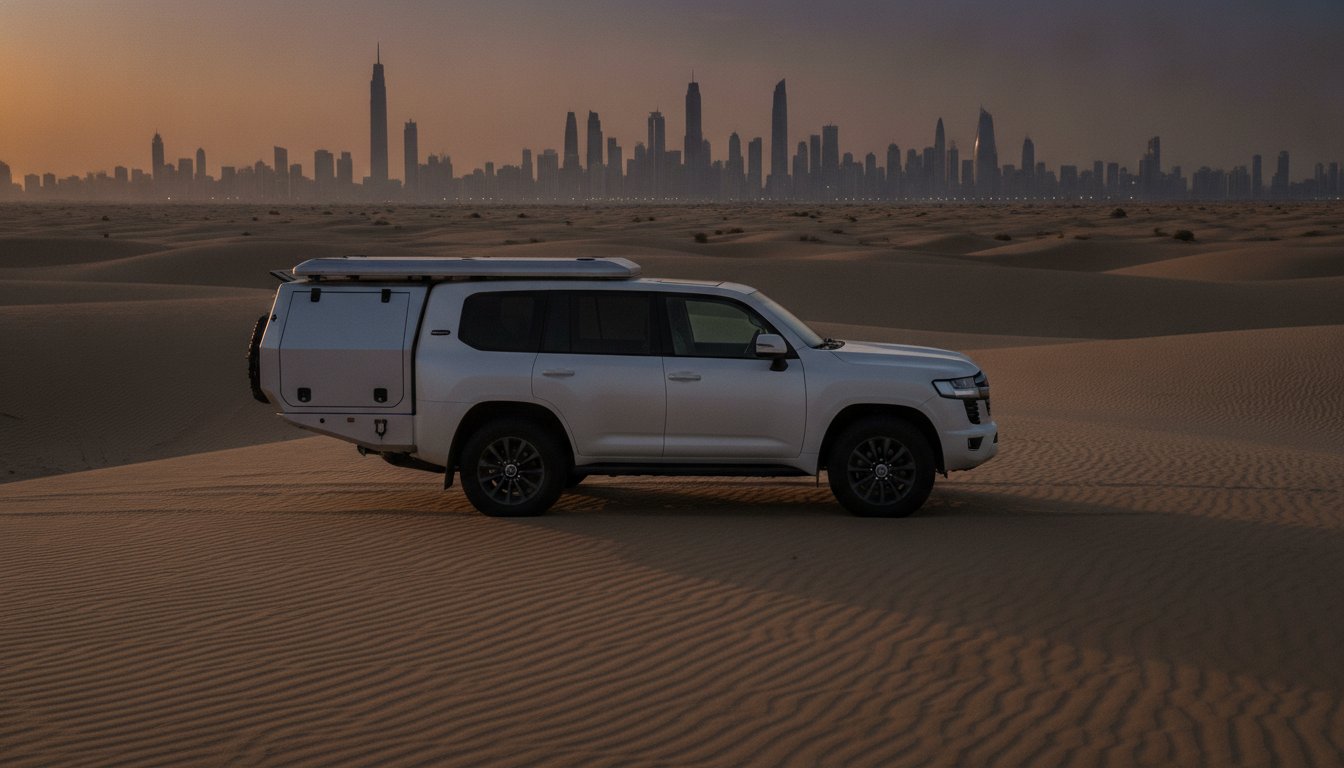
A canopy is the backbone of a specialized conversion. For ambulance conversions, these units provide a sterile, climate-controlled housing for life-saving medical equipment. In mobile command centers, they protect sensitive communication arrays from thermal stress and physical impact. For safari vehicle conversions, the focus shifts to creating secure, weather-proof storage that can withstand the constant vibrations of corrugated tracks. Every millimeter of space is optimized to ensure gear is accessible and protected, whether the vehicle is a Toyota Hilux or a heavy-duty GMC platform.
Why Custom Fabrication Beats Off-the-Shelf Solutions
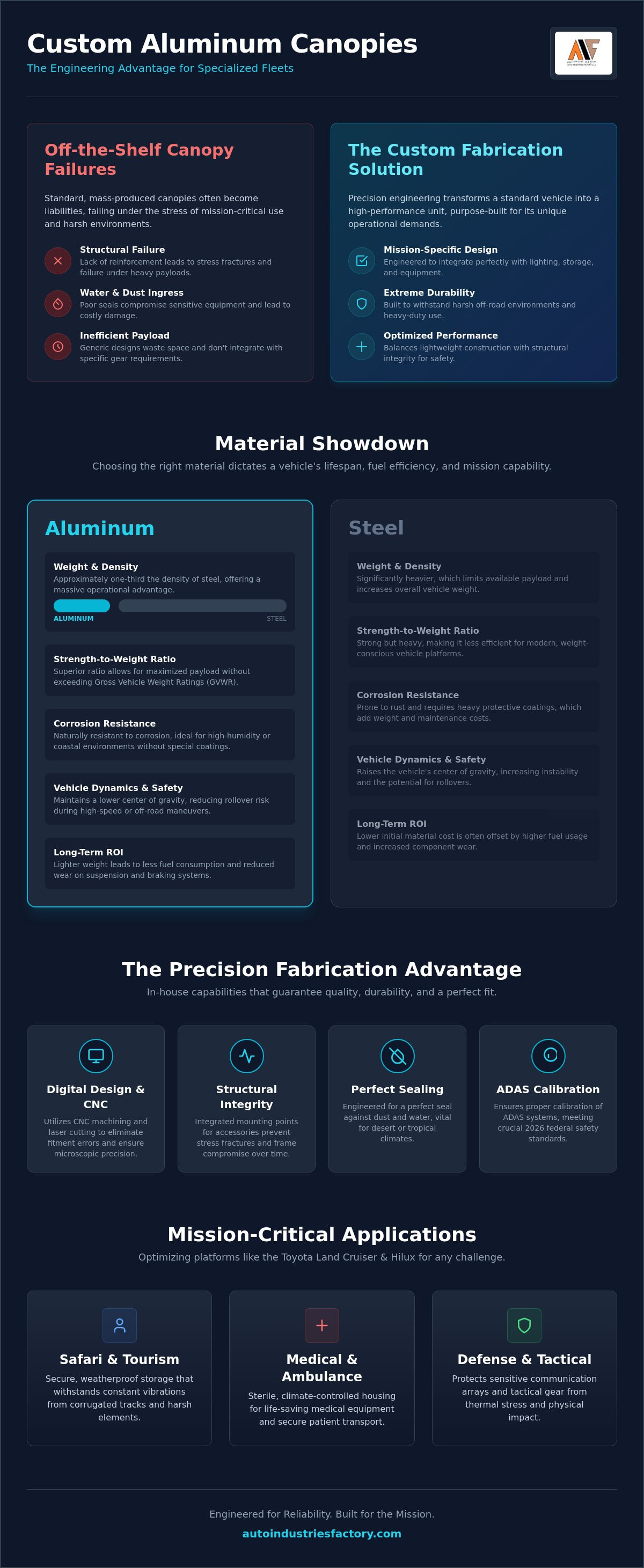
Generic, mass-produced canopies often fail when pushed to the limit. They lack the structural reinforcement required for specific vehicle payloads and can negatively affect the center of gravity (COG). Custom fabrication allows for a perfect seal against dust and water ingress, which is vital in desert or tropical climates. By utilizing in-house CNC machining and laser cutting, fabricators build mounting points directly into the frame for metal canopies and roof racks. This ensures that external accessories don't compromise the unit's structural integrity or lead to stress fractures over time. Furthermore, custom builds allow for the proper calibration of ADAS systems, which is now a federal priority under the ADAS Functionality & Integrity Act of 2026.
Aluminum vs. Steel: Choosing the Right Material for Your Build
Selecting the correct material is the most critical decision in the engineering phase of custom aluminum canopy fabrication. It dictates the vehicle's lifespan, fuel efficiency, and mission capability. While steel has historically been the default for heavy-duty builds, modern fleet managers are shifting toward aluminum to solve payload and durability challenges. Aluminum's density is roughly one-third that of steel. This weight reduction isn't just a technical statistic; it's a massive operational advantage. Every kilogram saved on the enclosure is a kilogram added to your available payload for medical supplies, tactical equipment, or water reserves.
Vehicle dynamics are significantly improved when using lighter materials. Heavy steel enclosures raise a vehicle's center of gravity, which increases the risk of rollovers during high-speed emergency maneuvers or technical off-road driving. Aluminum keeps the unit nimble while reducing stress on the suspension and braking systems. When evaluating various automotive aluminum applications, engineering teams prioritize alloys that balance workability with high structural rigidity. This ensures the canopy can handle the constant vibrations of corrugated roads without developing stress fractures.
Thermal management is another area where aluminum outperforms steel and fiberglass. Aluminum dissipates heat rapidly, helping to keep internal temperatures lower when operating in extreme desert environments. This is vital for protecting sensitive communication gear or temperature-controlled medical supplies. For fleets operating in coastal or high-humidity regions, aluminum's natural oxide layer provides a level of corrosion resistance that steel simply cannot match without heavy, maintenance-intensive coatings. If you are planning a mission-critical build, reviewing our specialized fabrication services can help you determine the best material configuration for your specific terrain.
Material Grade Selection for Heavy-Duty Use
We primarily utilize 5000-series and 6000-series alloys for specialized builds. 5083 aluminum, often called marine-grade, is the gold standard for canopy panels because of its exceptional resistance to salt-water corrosion and high weld strength. For internal structural frames and shelving, 6061-T6 aluminum offers the necessary rigidity to support heavy equipment. We typically use 3mm to 4mm thick panels for the main shell to ensure a "built-to-perform" structure that remains lightweight.
Comparison Table: Aluminum, Steel, and Fiberglass
| Feature | Aluminum | Steel | Fiberglass |
|---|---|---|---|
| Weight | Low (Lightweight) | High (Heavy) | Low (Lightweight) |
| Durability | High | Extreme | Low (Cracks under vibration) |
| Corrosion | Naturally Resistant | Prone to Rust | Immune |
| Repairability | Moderate | Easy | Difficult |
The 7-Step Precision Fabrication Process
Precision is the primary difference between a reliable fleet asset and a structural failure. Maintaining full in-house capabilities allows us to dictate every variable of the build, from material purity to final lead times. When we control the entire workflow, we eliminate the communication gaps and fitment errors that often plague outsourced projects. This integrated approach ensures that every unit is a built-to-perform module ready for the harshest off-road conditions. For specialized fleets, this "one-stop-shop" model is the only way to guarantee consistency across multiple vehicle platforms.
Digital design is the critical foundation of our custom aluminum canopy fabrication process. We use advanced CAD software to create complex 3D models before a single piece of metal is cut. These simulations allow our engineers to analyze load distribution and airflow, ensuring the canopy doesn't negatively impact the vehicle's center of gravity or aerodynamics. This proactive engineering prevents costly errors during physical assembly and ensures that every accessory, from internal shelving to external roof racks, has a dedicated, reinforced mounting point. It's about solving potential challenges in a digital environment so the physical build remains flawless.
Step 1-3: Design, CAD, and Laser Cutting
Once the digital blueprint is finalized, our high-speed laser cutting machines take over. These units produce components with millimeter-perfect accuracy, which is essential for complex features like integrated ventilation grilles and gull-wing access doors. Following the cutting phase, we utilize CNC bending to form the main structural ribs and frames. CNC bending allows us to create seamless components with fewer joints. By reducing the number of weld points, we significantly increase the canopy's overall resistance to torsion and impact during high-vibration missions.
Step 4-7: Welding, Assembly, and Finishing
Welding aluminum requires a specialized technical skill set due to the material's unique thermal properties. Our master fabricators use TIG welding for precision joints and high-output MIG welding for major structural seams. These techniques are vital for ensuring the unit can withstand the relentless stress of corrugated desert tracks or heavy tactical equipment loads. During the assembly stage, we focus on full systems integration. We don't just build an enclosure; we create a mission-ready environment with pre-installed internal mounting systems for medical gear or communication arrays. The process concludes in our professional painting facility. We provide high-durability coatings and vehicle color matching to ensure a seamless factory-finish look. You can explore our full range of our services to see how we handle complete vehicle conversions from start to finish.
Applications: From Safari Trucks to Mobile Clinics
Custom aluminum canopy fabrication is the bridge between a standard vehicle and a specialized mission tool. While previous sections detailed the technical manufacturing steps, the application phase is where engineering meets field utility. We focus on high-performance platforms like the Toyota Land Cruiser 70-series and Hilux because these vehicles provide the mechanical reliability required for demanding terrain. Our team designs enclosures that respect the original vehicle's geometry while adding layers of utility. This includes side-access doors for rapid tool retrieval and gull-wing openings that provide immediate shelter and visibility in the field.
Internal fit-outs are where a canopy becomes a functional workspace. We integrate custom shelving, heavy-duty drawer systems, and pre-wired electrical harnesses for communication gear. For security fleets, we address the critical requirement for protection. A common misconception is that aluminum lacks the strength for security applications. In reality, aluminum canopies are frequently engineered for ballistic defense by incorporating specialized armored layers. This provides a lightweight alternative to traditional steel armoring, ensuring the vehicle remains fast and maneuverable in high-threat environments without sacrificing safety.
Safari and Off-Road Expeditions
Safari builds demand a unique balance of storage and structural strength. Because aluminum is lightweight, it allows for significantly higher roof loads. You can mount heavy roof-top tents, spare tires, and extra fuel without compromising the vehicle's stability or exceeding its gross weight. Dust-proofing is another priority. We utilize automotive-grade compression seals and positive-pressure vents to keep fine desert sand out of your sensitive gear. For a deeper look at these specialized builds, read The Ultimate Guide to Safari Vehicle Conversions.
Ambulance and Emergency Response
In medical contexts, the interior of the canopy must meet strict hygiene standards. We fabricate smooth, easy-to-clean aluminum surfaces that resist bacterial growth and stand up to harsh disinfectants. The design includes integrated storage for oxygen cylinders and secure mounting for stretchers and life-support systems. Every component is positioned for ergonomic access during life-saving procedures. To learn more about our medical fleet solutions, see Ambulance Conversion: The Complete Guide. If you are ready to upgrade your fleet, contact our engineering team for a custom fabrication quote.
Selecting a Fabrication Partner for Your Fleet
Choosing a partner for custom aluminum canopy fabrication is a strategic decision that directly impacts your fleet's operational uptime and safety. It isn't enough to find a shop that can weld; you need an engineering partner that understands the specific stresses of mission-critical environments. When you evaluate potential providers, start by auditing their in-house machinery. A facility that relies on third-party laser cutting or CNC machining introduces unnecessary risks into your supply chain. These gaps often lead to fitment errors, inconsistent quality, and unpredictable lead times that can stall a fleet rollout for months.
A qualified partner must demonstrate a deep understanding of customization that goes beyond the basic shell. Specialized units require integrated internal fit-outs, including reinforced shelving and electrical harnesses that won't fail under heavy vibration. You should also prioritize partners that offer end-to-end support, including professional painting and long-term maintenance. This integrated approach ensures that protective coatings are applied correctly over the aluminum's natural oxide layer, maintaining a factory-finish look and preventing corrosion throughout the vehicle's entire lifecycle. Consistency across a fleet is only possible when one team controls every variable of the build.
The Auto Industries Factory LLC Advantage
We bring decades of expertise to every build, specializing in high-stakes specialized vehicle conversions. Our master craftsmen manage the entire workflow within our own facility. We take raw aluminum sheets and transform them into mission-ready units for police, military, and humanitarian organizations. This "one-roof" model allows us to maintain extreme engineering precision while ensuring fleet-wide consistency. Whether you're deploying a single tactical unit or a hundred ambulances, our process is designed to meet international structural standards without compromise.
Requesting a Quote for Custom Fabrication
To receive an accurate estimate, provide our team with detailed specifications regarding your vehicle model and intended use case. We need to understand your maximum payload requirements and the specific equipment you plan to house within the canopy. This data allows our engineers to optimize the structural reinforcements and weight distribution from the initial CAD phase. Lead times vary depending on whether you require a one-off custom build or a large-scale fleet production run. For a professional assessment of your requirements, contact our engineering team today for a custom canopy consultation.
Engineering Your Fleet for Maximum Performance
The evolution of specialized transport relies on the intersection of advanced metallurgy and precision engineering. Throughout this guide, we've seen how custom aluminum canopy fabrication solves the critical conflict between heavy equipment payloads and vehicle maneuverability. By choosing a solution that integrates 5083 marine-grade alloys with digital CAD modeling, you ensure that every unit in your fleet is optimized for the specific stresses of national terrain. This isn't just about adding storage; it's about enhancing the operational lifespan of your high-performance platforms.
Reliability in the field isn't a result of chance; it's the product of a rigorous, in-house manufacturing process. From the initial laser cut to the final factory-matched finish, every step is designed to protect your mission-critical equipment against dust, water, and structural fatigue. Whether you are managing emergency response units or tactical military fleets, your equipment must be as robust as the vehicles carrying it. Contact Auto Industries Factory LLC for a Custom Fabrication Quote and partner with an engineering leader committed to your operational success. Let's build a fleet that performs without compromise.
Frequently Asked Questions
Is aluminum strong enough for a heavy-duty off-road canopy?
Aluminum is exceptionally strong when engineered correctly. We utilize high-tensile marine-grade alloys like 5083 that provide superior impact resistance compared to standard materials. When combined with internal structural ribbing and expert TIG welding, these enclosures withstand the relentless torsion and vibration of off-road environments without the weight penalties of steel.
How much weight can a custom aluminum canopy support on its roof?
Load capacity depends on the internal bracing and the vehicle's gross vehicle weight rating. Our designs prioritize structural integrity to support heavy static loads like roof-top tents and dynamic loads for fuel cans or spare tires. We integrate reinforced mounting points directly into the frame to ensure weight is distributed safely across the vehicle's chassis.
Can you integrate electrical systems and lighting into the canopy?
We provide full integration for complex electrical systems and specialized mission lighting. Our custom aluminum canopy fabrication process includes pre-engineered internal channels for wiring harnesses. This allows for the clean, protected installation of internal LED lighting, external work lamps, and power outlets for medical or tactical equipment.
How long does the custom aluminum canopy fabrication process take?
Lead times vary based on design complexity and the total number of units required. A single bespoke build moves through our 7-step process at a different pace than a large-scale fleet rollout. We establish clear timelines with fleet managers during the CAD phase to ensure production meets your deployment schedule without sacrificing quality.
Do you offer painting and color-matching for the canopies?
We operate a professional in-house painting facility to ensure a factory-quality finish. Our team provides full color-matching to your vehicle's original paint code using high-durability coatings. We use specialized primers designed for aluminum alloys to guarantee long-term adhesion and protection against harsh environmental exposure.
What is the difference between a canopy and a full vehicle conversion?
A canopy is the structural enclosure mounted to the vehicle tray. A full vehicle conversion is a comprehensive "one-stop-shop" solution that includes the canopy plus internal storage systems, electrical integration, and mission-specific equipment. This might involve ambulance medical racks, police tactical gear mounts, or safari-specific internal fit-outs.
Are custom aluminum canopies dust and waterproof?
Every unit we build is engineered to be completely dust and waterproof for extreme climates. We utilize automotive-grade compression seals on all gull-wing doors and access hatches. For desert operations, we can incorporate positive-pressure vents that prevent fine sand from being sucked into the enclosure during high-speed travel on corrugated tracks.
Do you provide fabrication services for large vehicle fleets?
We specialize in large-scale production for government, military, and commercial organizations. Our in-house CNC machining and laser cutting capabilities allow us to maintain strict consistency across dozens of units. This ensures that every vehicle in your fleet meets the same mission-critical standards for performance and structural reliability.


