
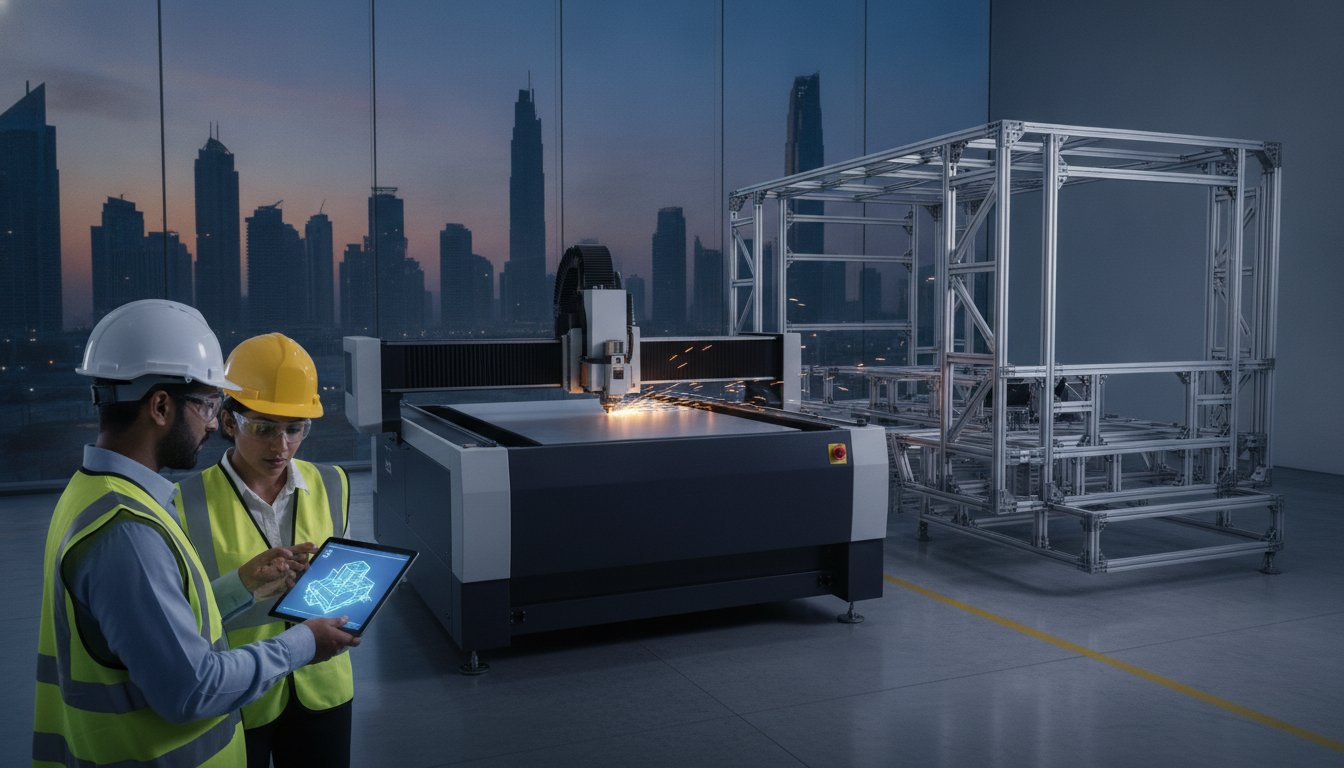
In a high-speed emergency response, the difference between a successful rescue and a catastrophic structural failure often comes down to the metallurgy of the vehicle module. It's a reality that fleet managers face daily. You understand that every kilogram of excess weight translates to slower response times and increased mechanical strain on your chassis. Precision aluminum ambulance body fabrication addresses these specific vulnerabilities, ensuring that your specialized vehicle chassis isn't just a transport tool, but a high-performance safety cell.
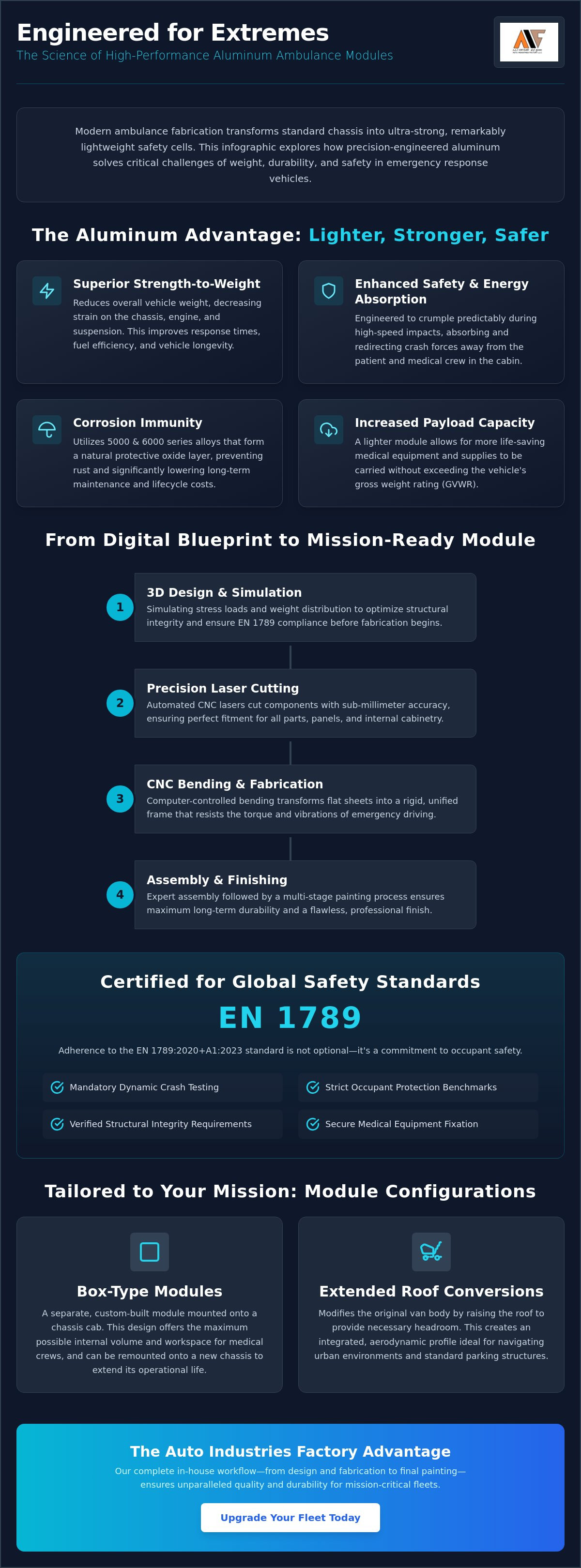
This guide explores how advanced fabrication techniques transform standard chassis into mission-critical modules that are both ultra-strong and remarkably lightweight. You'll discover how these engineering solutions solve common pains like corrosion and overweight modules while ensuring compliance with international safety standards such as EN 1789:2020+A1:2023. We'll break down the structural advantages of aluminum and how it guarantees long-term fleet durability for the most demanding environments.
Key Takeaways
- Understand why the superior strength-to-weight ratio of aluminum is essential for reducing chassis strain while maintaining maximum occupant protection.
- Explore how precision aluminum ambulance body fabrication uses CNC laser cutting and 3D modeling to deliver modules with exact structural tolerances.
- Learn the technical requirements of the EN 1789 standard to ensure your fleet meets international safety and dynamic testing benchmarks.
- Evaluate the differences between box-type modules and extended roof conversions to determine the best configuration for your specific emergency response needs.
- Discover the benefits of a complete in-house engineering workflow that integrates design, fabrication, and final painting for long-term durability.
The Advantages of Aluminum Ambulance Body Fabrication
Aluminum isn't just a material choice. It's a performance upgrade. Modern aluminum ambulance body fabrication leverages the same engineering principles that revolutionized military logistics decades ago. For instance, the M113 armored personnel carrier proved that an aluminum hull could handle the rigors of combat while providing the agility needed for rapid deployment. In the emergency services sector, this translates to a vehicle module that is lighter, faster, and more resilient than any steel predecessor.
Beyond weight, aluminum offers superior energy absorption. During a high-speed impact, the module is engineered to crumple predictably, shielding the medical crew and patient from the full force of the collision. It also acts as a natural thermal barrier. In regions with extreme heat, aluminum's reflective properties and high thermal conductivity reduce the cooling load on HVAC systems. This ensures the interior remains a stable, climate-controlled environment for sensitive life-saving equipment and medication.
To see how these high-performance modules are prepared for the field, watch this look at the fabrication and paint process:
Weight Efficiency and Fleet Performance
A lighter module is a more efficient module. When you reduce the weight of the box, you directly decrease the stress on the vehicle's brakes, suspension, and engine. This isn't just about saving fuel, though that's a significant benefit for large fleets. It's about uptime. Lower mechanical strain means fewer days in the repair shop and a longer service life for the chassis. Aluminum modules provide a significantly higher payload capacity than steel builds, allowing for the integration of more advanced medical equipment without exceeding the gross vehicle weight rating.
Durability in Harsh Environments
Corrosion is the silent killer of emergency fleets, especially in coastal or industrial zones. We utilize 5000 and 6000 series aluminum alloys because they offer exceptional resistance to oxidation and chemical exposure. Unlike galvanized steel, which eventually rusts once the protective layer is compromised, aluminum forms its own protective oxide layer naturally. This intrinsic durability significantly lowers lifecycle costs. While the initial investment reflects the quality of the material, the lack of rust-related repairs and the ability to remount the module on a new chassis makes it the smarter financial choice for long-term operations.
The Engineering Workflow: From Design to CNC Fabrication
Every mission-critical module begins in a digital environment. We utilize advanced 3D modeling to simulate stress loads and weight distribution before a single sheet of metal is touched. This phase is vital for ensuring the final build adheres to the EN 1789 international safety standard, which dictates strict requirements for medical vehicle performance and occupant protection. By validating the design digitally, we identify potential failure points and optimize the structural integrity of the frame.
Precision is the hallmark of our process. High-performance aluminum ambulance body fabrication requires exact tolerances that manual methods simply cannot match. We use computer-controlled machinery to translate digital blueprints into physical components with surgical accuracy. This ensures that every bracket, panel, and mounting point aligns perfectly, reducing assembly time and eliminating the structural gaps that lead to long-term wear.
Advanced Laser Cutting and CNC Machining
Laser cutting is the foundation of a reliable build. By using automated lasers, we achieve tolerances within fractions of a millimeter. This level of accuracy is essential when creating intricate cutouts for internal medical cabinetry or oxygen delivery systems. It also ensures that the module achieves perfect fitment on various chassis platforms, including GMC and Toyota. CNC bending then transforms these flat sheets into rigid structural components, creating a unified frame that resists the torque and vibrations common in emergency driving. If you are planning a fleet upgrade, you can explore our full range of fabrication services to see how these technologies integrate.
Structural Welding and Module Integrity
Compliance with International Safety Standards (EN 1789)
Compliance with the EN 1789:2020+A1:2023 standard is the baseline for any mission-critical vehicle. This international regulation isn't just a checklist; it's a rigorous framework for survival. It mandates that every component within the medical module, from the primary stretcher mount to the smallest medical cabinet, must withstand 10G forces in longitudinal, transverse, and vertical directions. This ensures that in a sudden deceleration or impact, life-saving equipment doesn't become a projectile. Precision aluminum ambulance body fabrication is the most effective way to meet these stringent requirements while maintaining the agility needed for urban and off-road response.
The advantages of aluminum in vehicle fabrication play a critical role in safety engineering. By utilizing specialized 5000 and 6000 series alloys, we engineer modules that absorb massive amounts of energy without the brittle failure points common in heavier steel builds. This material choice allows for the integration of advanced safety features, such as reinforced roof pillars and side-impact beams, without pushing the chassis beyond its optimal payload limit. It's a balance of protection and performance that defines modern emergency vehicle engineering.
Impact Resistance and Crash Safety
Energy dissipation is a science. Our brake-formed aluminum structures are engineered to redirect the path of kinetic energy around the occupant safety cell. We integrate high-strength reinforcement plates at every critical junction, including chassis mounting points and internal hardware tracks. This prevents the module from detaching or collapsing during high-speed collisions. Aluminum modules protect occupants during a rollover event by maintaining structural cage integrity while absorbing kinetic energy through controlled deformation.
Safety Certification and Quality Assurance
Every module undergoes a series of in-house quality control checks to verify structural integrity. We maintain strict documentation and traceability for all materials, ensuring that every weld and fastener meets our internal benchmarks for excellence. This level of quality assurance is why our conversions are trusted in harsh climates and high-stakes environments. You can learn more about how we integrate these standards into every build on Our Services page. This commitment to precision ensures your fleet remains compliant and your crew remains safe.
Custom Configurations: Box Type vs. Extended Roof
Choosing the right platform is a critical strategic decision for any emergency fleet. Aluminum ambulance body fabrication allows for two primary configurations: the modular box type and the integrated extended roof. Each serves a distinct operational role. The box type is the preferred choice for high-volume, Advanced Life Support (ALS) missions, while the extended roof excels in urban rapid response where maneuverability and speed are paramount.
Box Type Ambulance Fabrication
The box type module offers the maximum internal volume available in the industry. These are typically used for Type I and Type III configurations, where the module is built as a standalone unit and then mounted onto a heavy-duty truck or van chassis. The aluminum skin allows us to integrate external lockers and access panels directly into the structure. This provides easy access to oxygen cylinders and rescue tools from the vehicle's exterior. Unlike steel builds, these external compartments won't rust or seize in humid environments. This modularity means you can customize every cubic centimeter of the interior for specialized equipment storage. For a deeper look at these specific builds, check our guide on Ambulance Conversion.
Extended Roof and Interior Modifications
When a standard van chassis needs to be converted for emergency use, we perform high-roof modifications. This process requires significant structural reinforcement to maintain the vehicle's integrity after the factory roof is removed. We use lightweight alloys to fabricate internal medical cabinetry that is both durable and easy to sanitize. Ergonomics are the priority here. Every oxygen port, suction unit, and electrical control is positioned to ensure paramedic efficiency during high-stress transport. We focus on creating a workspace that minimizes movement and maximizes patient care.
Advanced Sub-System Integration
Customization extends far beyond the shell. Our engineering team designs dedicated electrical looms and integrated oxygen delivery systems that are vibration-resistant and easy to maintain. We also fabricate specialized storage solutions for heavy rescue tools, stretchers, and temperature-sensitive medication. Whether you need a rugged off-road unit on a Toyota chassis or a high-capacity GMC rescue vehicle, the precision of aluminum allows for a bespoke layout that fits your specific mission profile perfectly. If you are ready to discuss your fleet requirements, contact our engineering team to start your custom build.
The Auto Industries Factory Advantage
We don't rely on external vendors for critical structural work. Our facility is a center of excellence for aluminum ambulance body fabrication, where every stage of the conversion is managed by the expert engineers at Auto Industries Factory LLC. By centralizing design, CNC machining, and outfitting, we maintain total control over the mission-critical reliability of your fleet. This vertical integration eliminates the communication gaps and quality variations that occur when components are outsourced. Our fabrication department provides specialized vehicle conversions for emergency and tactical fleets, ensuring that every weld and bracket meets our rigorous internal benchmarks.
Our expertise extends across the industry's most demanding platforms. Auto Industries Factory LLC specializes in high-performance modifications for GMC and Toyota chassis, adapting our fabrication techniques to the specific mechanical requirements of each vehicle. Whether we're building a rugged off-road unit or a high-capacity urban module, our focus remains on durability and protection. We combine advanced metalwork with a pragmatic, solution-oriented approach to solve the complex challenges of modern emergency response.
Comprehensive In-House Fabrication
Having design, fabrication, and painting under one roof is a significant advantage for fleet managers. It ensures that the structural integrity of the module is maintained from the initial 3D model through to the final assembly. Auto Industries Factory LLC uses standardized fabrication templates to ensure consistency across large fleet orders, which simplifies long-term maintenance and parts replacement. You can learn more about our facility and our commitment to engineering precision by visiting our About Us page. This centralized workflow allows us to monitor every detail, ensuring that your vehicles arrive ready for immediate deployment.
Scalable Solutions for National Fleets
We provide the manufacturing capacity required for large-scale government and private medical contracts. Our facility is equipped for the bulk production of bull bars, bumpers, and full ambulance modules, allowing us to maintain rapid turnaround times without sacrificing quality. We understand that mission-critical vehicles can't afford downtime. That's why Auto Industries Factory LLC offers direct support for all converted units, providing the technical expertise needed to keep your fleet operational in the harshest climates. From a single custom build to a national fleet rollout, we deliver robust engineering solutions that protect your crew and your patients.
Engineering Your Fleet for the Future of Emergency Response
The evolution of emergency response demands vehicles that are lighter, stronger, and more resilient. Through precision aluminum ambulance body fabrication, we eliminate the traditional trade-offs between vehicle weight and occupant protection. By leveraging in-house CNC and laser cutting technology, we ensure that every module meets the exact tolerances required for mission-critical reliability.
Your fleet's performance depends on engineering that can withstand extreme conditions. Whether you're operating on GMC or Toyota platforms, our certified EN 1789 compliant engineering provides a foundation of safety that protects your crew and patients during every transport. We don't just build modules; we provide integrated solutions designed for the long-term durability of your national or private medical fleet.
Don't settle for standard conversions when lives are on the line. Our master craftsmen are ready to help you optimize your vehicle configurations for maximum efficiency and safety. Request a Technical Estimate for Your Ambulance Fleet today. We look forward to helping you build a more robust and reliable emergency response network.
Frequently Asked Questions
Why is aluminum better than steel for ambulance body fabrication?
Aluminum offers a superior strength to weight ratio and natural corrosion resistance that steel cannot match. It significantly reduces the load on the vehicle's engine and suspension, which lowers maintenance costs. Unlike steel, aluminum doesn't rust when exposed to high humidity or coastal salt air, ensuring the module lasts for decades without structural degradation.
Does an aluminum ambulance body offer ballistic protection?
Standard aluminum modules are engineered for crash safety rather than ballistic resistance. While aluminum is exceptionally strong, stopping high velocity projectiles requires specialized ballistic grade alloys and composite ceramic backing. We provide dedicated security modifications for police and military applications if your mission profile requires specific protection against kinetic threats.
What are the EN 1789 standards for ambulance construction?
EN 1789 is the European standard that dictates the design, testing, and performance requirements for road ambulances. It mandates that the medical module and all internal equipment must withstand 10G acceleration and deceleration forces in all directions. This ensures that life saving tools and occupants remain secure during high speed maneuvers or sudden impacts.
Can a box-type ambulance be transferred to a new chassis?
Yes, a primary advantage of aluminum ambulance body fabrication is the ability to remount the module on a new chassis. Because the aluminum structure doesn't suffer from the same fatigue or corrosion as steel, the module often outlasts the original vehicle. This remounting process allows fleet managers to refresh their vehicles while retaining their initial investment in the medical module.
How does aluminum fabrication affect vehicle fuel efficiency?
Aluminum fabrication improves fuel efficiency by reducing the overall curb weight of the ambulance. A lighter vehicle requires less energy to accelerate and maintain cruising speeds, which is vital for heavy duty emergency fleets. This weight reduction also decreases the frequency of brake and tire replacements, providing significant operational savings over the vehicle's lifecycle.
What is the difference between Type I and Type III ambulances?
The difference lies in the chassis mounting and cab connection. Type I ambulances use a heavy duty truck chassis with a separate module, while Type III units use a van cutaway chassis where the cab and module are integrated. Both configurations utilize aluminum fabrication to maximize internal volume and maintain a safe payload capacity for advanced medical equipment.
Is aluminum fabrication more expensive than using fiberglass or composites?
Aluminum has a higher initial material cost but offers superior structural durability and repairability. Fiberglass and composites are susceptible to cracking and are often difficult to repair after an impact. Aluminum provides a better long term value because it can be welded and restored to its original strength, ensuring the vehicle stays in service longer.
How do you ensure the structural integrity of the welding in aluminum modules?
We utilize certified MIG and TIG welding processes performed by expert technicians who understand aluminum's unique thermal properties. Every joint is inspected to ensure it meets our rigorous internal quality standards and international safety benchmarks. This precision welding creates a unified, seamless structure that handles the constant vibrations and dynamic loads of emergency driving without failure.


