
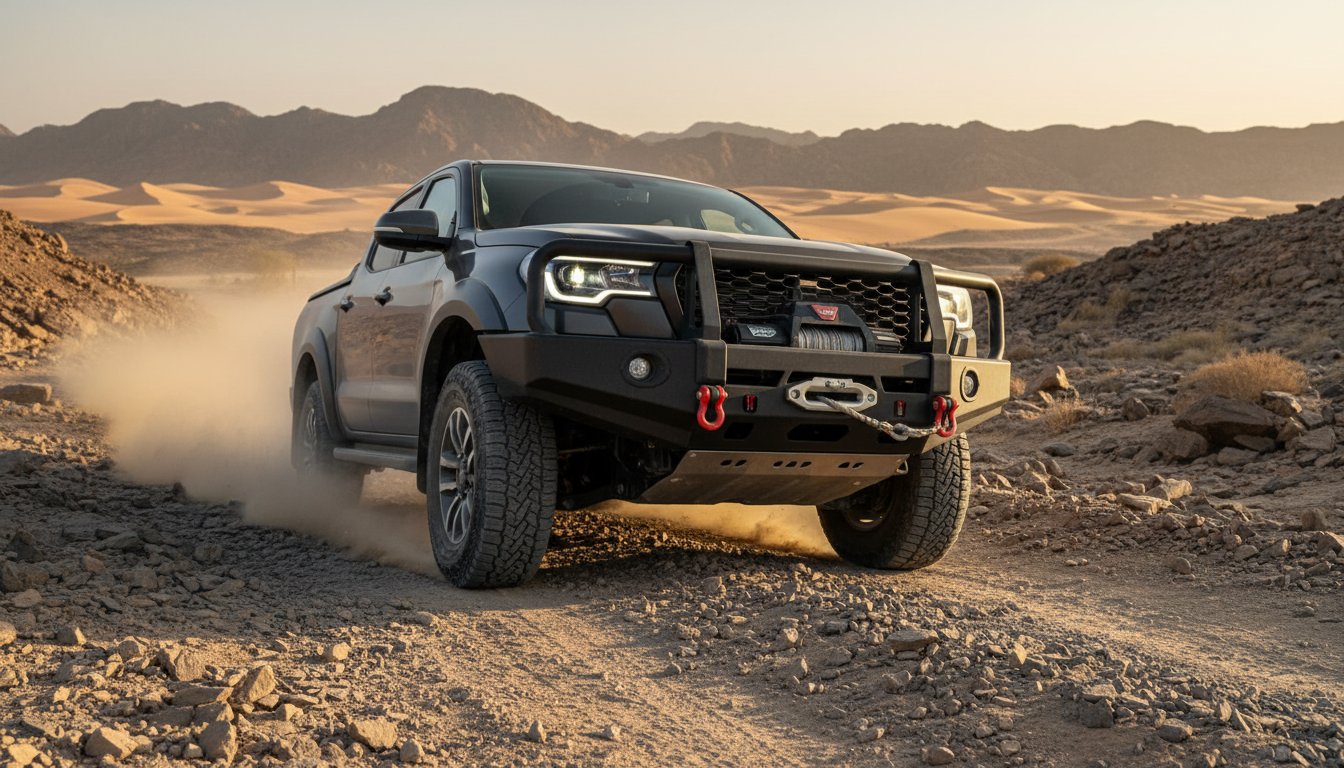
Navigating Oman's demanding terrain, from rugged mountain tracks to vast desert landscapes, requires your truck to be more than just capable-it must be fortified. Yet, selecting the right front-end protection is filled with uncertainty. Will it fit perfectly? Will it withstand the harsh climate without rusting? Can it truly handle an impact and will it interfere with your vehicle's advanced sensors? These are critical questions that lead many truck owners to search for the definitive heavy duty front bumper for trucks-one that offers uncompromising strength and flawless integration.
This guide is your definitive resource, engineered to eliminate guesswork and empower your decision. We will navigate you through everything from the critical differences in steel grades and powder-coated finishes to the functional advantages of integrated winch mounts and enhanced approach angles. You will learn how to identify superior fabrication and ensure seamless compatibility with your truck's systems. Prepare to transform your vehicle's front-end from a point of vulnerability into a statement of rugged capability and mission-ready confidence.
Key Takeaways
- Understand why your truck's factory bumper is insufficient for serious work and how a heavy-duty upgrade is a critical investment in both asset and occupant safety.
- Decide between rugged steel and lightweight aluminum by weighing key factors like your vehicle's primary use, typical terrain in Oman, and overall performance goals.
- Identify the essential design features, from integrated winch mounts to recovery points, that define an effective heavy duty front bumper for trucks and transform it into a complete protection system.
- Compare the advantages of precision custom fabrication versus off-the-shelf options to determine the best path for achieving a flawless fit and function on your vehicle.
Why Your Stock Bumper Isn't Enough: The Case for a Heavy-Duty Upgrade
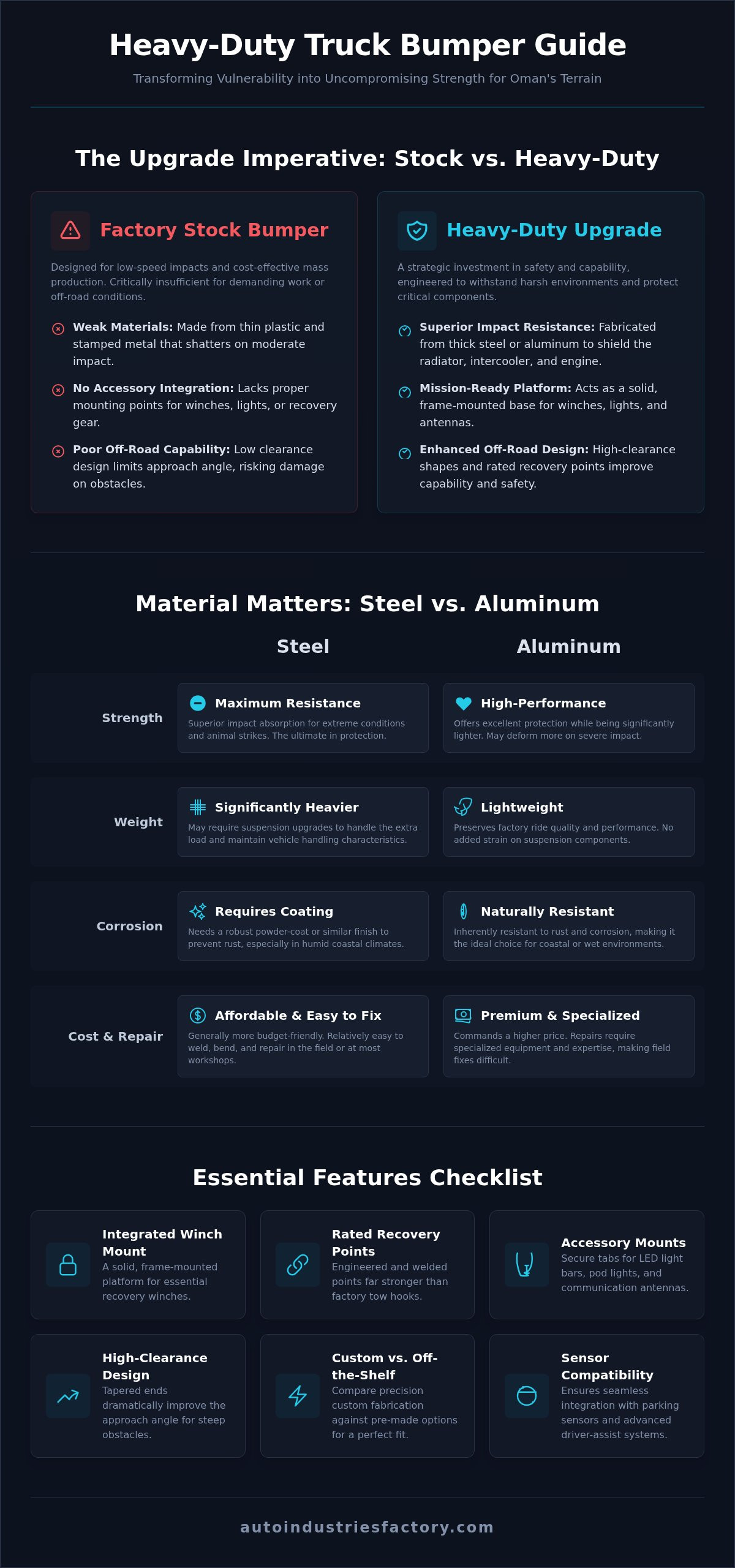
The bumper that came with your truck from the factory serves a basic purpose: to absorb minor impacts and meet mass-production cost targets. Typically constructed from plastic composites and thin, stamped metal, it is engineered to satisfy standard automotive bumper regulations for low-speed collisions. However, for the demanding conditions in the UAE—from challenging desert terrains to the realities of commercial and industrial operations across Ajman and beyond—this factory-standard protection is critically insufficient. It is a compromise, not a solution for genuine asset protection.
To better understand the robust construction and capability of an aftermarket upgrade, this video provides an excellent overview:
Upgrading to a premium heavy duty front bumper for trucks is not an aesthetic choice; it is a strategic investment in durability, safety, and operational readiness. It transforms the most vulnerable part of your vehicle into its strongest defense, safeguarding both the occupants and the mission-critical components behind it.
Superior Impact Resistance
Unlike a factory bumper that shatters on moderate impact, a heavy-duty bumper is fabricated from thick, high-strength steel. This robust construction provides a formidable shield against common hazards. Across the UAE, an unexpected animal strike involving a camel or goat can instantly disable a vehicle by destroying its radiator. A steel bumper absorbs and deflects this force, protecting the cooling system, intercooler, and engine bay, thereby preventing catastrophic failure and costly downtime for commercial fleets.
Foundation for Essential Accessories
A stock bumper offers no practical way to mount the tools required for serious work or recovery. A purpose-built heavy duty front bumper for trucks acts as a solid, frame-mounted platform for mission-critical equipment. Integrated winch mounts, reinforced tabs for high-powered LED lighting, and mounting points for communication antennas are standard features. This provides a secure and integrated solution, eliminating the need to drill into the vehicle’s frame and compromise its structural integrity.
Enhanced Off-Road Capability
Navigating the challenging terrain of the UAE's deserts, dunes, and rocky wadis, from Ajman to remote areas, demands a vehicle built for the task. Many heavy-duty bumpers feature high-clearance, tapered designs that dramatically improve the truck's approach angle, allowing you to tackle steep obstacles without impact. Furthermore, they include properly engineered and rated recovery points welded directly to the bumper structure. These are infinitely safer and stronger than factory tow hooks, ensuring secure and reliable vehicle recovery when it matters most.
Material Matters: Steel vs. Aluminum for Maximum Protection
Your truck's factory-installed bumper is engineered to meet specific regulations, such as the federal bumper safety standards, which primarily focus on absorbing low-speed impacts. For the demanding conditions of Oman's rugged wadis, desert tracks, and industrial work sites, this level of protection is simply insufficient. When selecting a heavy duty front bumper for trucks, the fundamental choice comes down to two premium materials: steel and aluminum. The right decision depends entirely on your vehicle, your mission, and your budget.
Steel vs. Aluminum: At a Glance
- Strength: Steel offers superior impact resistance for extreme conditions, while aluminum provides excellent, high-performance protection.
- Weight: Steel is significantly heavier, potentially affecting suspension. Aluminum is lightweight, preserving vehicle performance.
- Corrosion Resistance: Steel requires a robust coating to prevent rust. Aluminum is naturally corrosion-resistant, ideal for coastal areas.
- Cost: Steel is generally the more affordable option. Aluminum commands a premium price, often quoted in USD for high-end models.
- Repairability: Steel is relatively easy to weld and repair in the field. Aluminum is more specialized and difficult to repair if damaged.
The Case for Steel Bumpers
For uncompromised strength and maximum durability, nothing surpasses steel. A steel bumper is the definitive choice for extreme off-roading, commercial fleet vehicles, and any application where the risk of heavy animal strikes or terrain impact is high. It is a cost-effective solution that has the practical advantage of being easier to weld and repair. The primary trade-off is its significant weight, which can impact your truck's front suspension and handling if not properly accounted for with upgraded components.
The Advantages of Aluminum Bumpers
Aluminum offers a modern, high-performance alternative. Its most significant benefit is substantial weight savings-often less than half the weight of a comparable steel model. This preserves your vehicle's payload capacity and puts far less strain on suspension components. Aluminum's inherent corrosion resistance makes it an ideal heavy duty front bumper for trucks operating in the humid coastal climates of Muscat or Salalah. While it comes at a higher initial cost, its premium aesthetic and performance benefits are undeniable for the discerning truck owner.
Coatings and Finishes: The First Line of Defense
The raw material is only part of the equation; a precision finish is critical for longevity and performance. A flawless, durable coating is a hallmark of a truly heavy-duty product. Key considerations include:
- Powder Coating: For steel bumpers, a high-quality, electrostatically applied powder coat is non-negotiable. This thick, durable layer provides a robust barrier against moisture and abrasion, preventing the onset of rust.
- Surface Texture: Finishes can range from smooth gloss to textured matte black. Textured finishes are excellent at hiding minor scratches from trail use, maintaining a rugged, professional look for longer.
- Precision Preparation: A lasting finish begins with meticulous preparation. Proper media blasting and chemical cleaning before coating ensure maximum adhesion, guaranteeing a bumper that looks as durable as it performs.
Key Features to Demand in Your Next Truck Bumper
While the material strength of a bumper is foundational, its true value lies in its design intelligence. The best heavy duty front bumper for trucks is not merely a shield; it is an integrated system engineered to enhance your vehicle's capability and safety. Each feature should be a direct solution to a real-world challenge, whether navigating a tight wadi, recovering from soft sand, or driving remote tracks after dark. A premium bumper integrates these functions seamlessly, transforming your truck into a more formidable and reliable tool.
Winch Integration: The Heart of Self-Recovery
A simple winch tray is not enough. Demand a fully integrated winch mount where the mounting plate is a core part of the bumper's structure, bolting directly to your truck's frame. This ensures that the immense forces generated during a recovery are transferred to the strongest part of your vehicle. Furthermore, superior designs account for airflow-a critical factor in Oman's climate. The bumper must allow cool air to reach both the winch motor to prevent overheating and the vehicle's radiator to maintain engine performance.
Rated Recovery Points: Your Strongest Link
Never attempt a vehicle recovery using a non-rated hook or factory tie-down loop. These points are designed for shipping, not shock-loading, and can fail catastrophically. Insist on rated recovery points. This means the manufacturer has engineered and tested them to a specific load capacity, providing a certified safe attachment point. Look for closed-loop designs, typically thick steel tabs with 20mm holes, perfect for use with standard D-ring or soft shackles for maximum security.
Lighting and Sensor Compatibility: Modern Functionality
Your truck's advanced systems must continue to function flawlessly. A professionally engineered bumper includes provisions for both factory and aftermarket equipment. This includes precise cutouts for retaining factory fog lights or mounting powerful LED pods and light bars for superior visibility. Crucially, it must also accommodate modern technologies like parking sensors and adaptive cruise control (ACC) radar modules. A quality fabricator ensures these systems are recalibrated and operate exactly as intended, a detail that defines a truly professional upgrade.
Choosing a bumper with these integrated features is an investment in capability. It ensures your truck is prepared for any challenge, from the dunes of Wahiba Sands to the rugged mountains of Jebel Akhdar. For expert fabrication that integrates these critical systems, consult with vehicle modification professionals who understand the demands of the region.
Custom Fabrication vs. Off-the-Shelf: Finding the Perfect Fit
When selecting a heavy duty front bumper for trucks, you have two primary paths: purchasing a mass-produced, off-the-shelf model or commissioning a custom-fabricated solution. While both options can enhance your vehicle's protection, the choice depends entirely on your specific requirements for fit, functionality, and ultimate durability. Understanding the trade-offs is crucial to making a sound investment in your truck's defense.
Off-the-Shelf Bumpers: Pros and Cons
Mass-produced bumpers are the most common choice, offering convenience and immediate availability. They are often a more affordable upfront option. However, this convenience comes with significant limitations:
- Generic Fit: Designed to fit a range of model years, these bumpers may have alignment issues, unsightly gaps, or require modifications for a clean installation.
- Limited Customization: You are restricted to the manufacturer's pre-set designs, materials, and accessory mounts, which may not accommodate your specific winch or lighting setup.
- Inconsistent Quality: Build quality, weld integrity, and the thickness of the steel can vary dramatically between brands, making it difficult to guarantee performance.
The Power of Custom Fabrication
For those who demand precision and peak performance, custom fabrication is the superior solution. A bespoke bumper is engineered and built for a single purpose: to fit your exact vehicle and operational needs flawlessly. The advantages are definitive:
- A Perfect, Tailored Fit: The bumper is designed using your truck's specific measurements, ensuring seamless integration with the vehicle's body lines and frame.
- Complete Control: You dictate the material (e.g., high-strength steel or lightweight aluminum), plate thickness, and final coating for optimal resilience.
- Integrated Functionality: Specify mounts for any winch, recovery points, light bars, or other essential gear, ensuring they are placed for maximum efficiency and strength.
- Unmatched Build Quality: Benefit from the precision and craftsmanship of expert vehicle fabrication specialists, resulting in a product built for extreme durability.
When is Custom the Right Choice?
While an off-the-shelf bumper may suffice for casual use, a custom-fabricated solution becomes essential in demanding scenarios. Consider a custom build if your situation involves:
- Specialized Fleet Vehicles: Ensuring uniformity, durability, and specific equipment compatibility across security, maintenance, or industrial fleets.
- Unique Accessory Needs: When you need to integrate specialized equipment that standard bumpers do not support.
- Uncommon Vehicle Models: For trucks that have a limited selection of aftermarket parts available in the Oman market.
- Maximum Performance Demands: When absolute strength, perfect fit, and mission-critical reliability are your top priorities.
For a heavy duty front bumper truly engineered for your vehicle's unique challenges, explore the benefits of a custom solution at autoindustriesfactory.com.
Equip Your Truck for Any Challenge
Choosing the right front bumper is a critical decision that directly impacts your truck's capability and safety. As we've explored, your factory bumper simply isn't engineered for the demands of rugged terrain or unexpected impacts. Understanding the trade-offs between steel and aluminum, demanding key features like recovery points and winch compatibility, and deciding between a pre-built or custom solution are the essential steps to a successful upgrade.
When off-the-shelf options don't meet your mission-critical requirements, a custom-fabricated heavy duty front bumper for trucks is the ultimate solution. At Auto Industries Factory LLC, we leverage proven experience building for military, security, and safari vehicles to deliver unmatched durability. Our in-house process-from design and CNC laser cutting to precision welding and durable powder-coated finishes-ensures your bumper is built to withstand the most extreme environments in Oman and beyond.
Don't compromise on protection. Contact Auto Industries Factory LLC to design your custom heavy-duty bumper and equip your vehicle with the strength it deserves. Your next adventure awaits.
Frequently Asked Questions
Do heavy-duty bumpers interfere with airbags and safety systems?
Professionally engineered heavy-duty bumpers are designed to be fully compatible with your truck's factory safety systems. At Auto Industries Factory, our designs account for airbag sensors, parking sensors, and adaptive cruise control modules. We utilize precision engineering and provide specific relocation brackets to ensure all systems function exactly as the manufacturer intended. This maintains the integrity of your vehicle’s safety features while significantly enhancing its frontal protection, ensuring both safety and rugged capability.
How much weight does a heavy-duty steel bumper add to a truck?
The added weight of a heavy-duty steel bumper varies based on the truck model and bumper configuration. For popular models in Oman like the Toyota Hilux or Nissan Patrol, a base bumper can add between 45 to 75 kilograms. A fully equipped bumper with a winch plate, grille guard, and recovery points can increase this to 90 kilograms or more. We provide exact weight specifications for each custom-fabricated bumper to help you make an informed decision for your vehicle.
Will I need to upgrade my truck's suspension after installing a heavy bumper?
A suspension upgrade is highly recommended, especially if you are installing a bumper with a winch and other accessories. The additional weight, typically over 70 kg, can cause the front end of your truck to sag, affecting handling, alignment, and headlight aim. For optimal performance and safety, installing heavy-duty coil springs or a leveling kit is the best practice. This restores the factory ride height and properly manages the increased load on your vehicle's front axle.
Are heavy-duty bumpers street legal in Oman and the GCC?
Regulations for vehicle modifications can vary across the GCC. In Oman, heavy-duty bumpers are generally permissible provided they meet specific safety standards. Key considerations include ensuring the bumper does not have excessively sharp edges, does not dangerously extend beyond the vehicle's original profile, and does not obstruct lights or the license plate. We design our bumpers to comply with known regional standards, but we always advise clients to confirm the latest requirements with the Royal Oman Police (ROP) before installation.
What is the typical cost difference between a steel and an aluminum bumper?
An aluminum heavy-duty bumper typically costs 30-50% more than a comparable steel version. For the Oman market, this can translate to a difference of $400 to $700 or more, depending on the complexity of the design. The higher price of aluminum is due to the raw material cost and the specialized welding process required. While steel offers maximum durability for extreme use, aluminum provides significant weight savings, which can be beneficial for preserving fuel economy and suspension performance.
How long does the custom fabrication process for a bumper take?
The timeline for a custom heavy duty front bumper for trucks depends on design complexity and current workshop capacity. The process typically ranges from 2 to 4 weeks. This includes initial consultation and 3D design (3-5 days), precision CNC cutting and fabrication (7-10 days), and multi-stage finishing like sandblasting and powder coating (3-5 days). We provide a clear project timeline after finalizing the design to ensure our clients have accurate expectations for their premium vehicle upgrade.


