
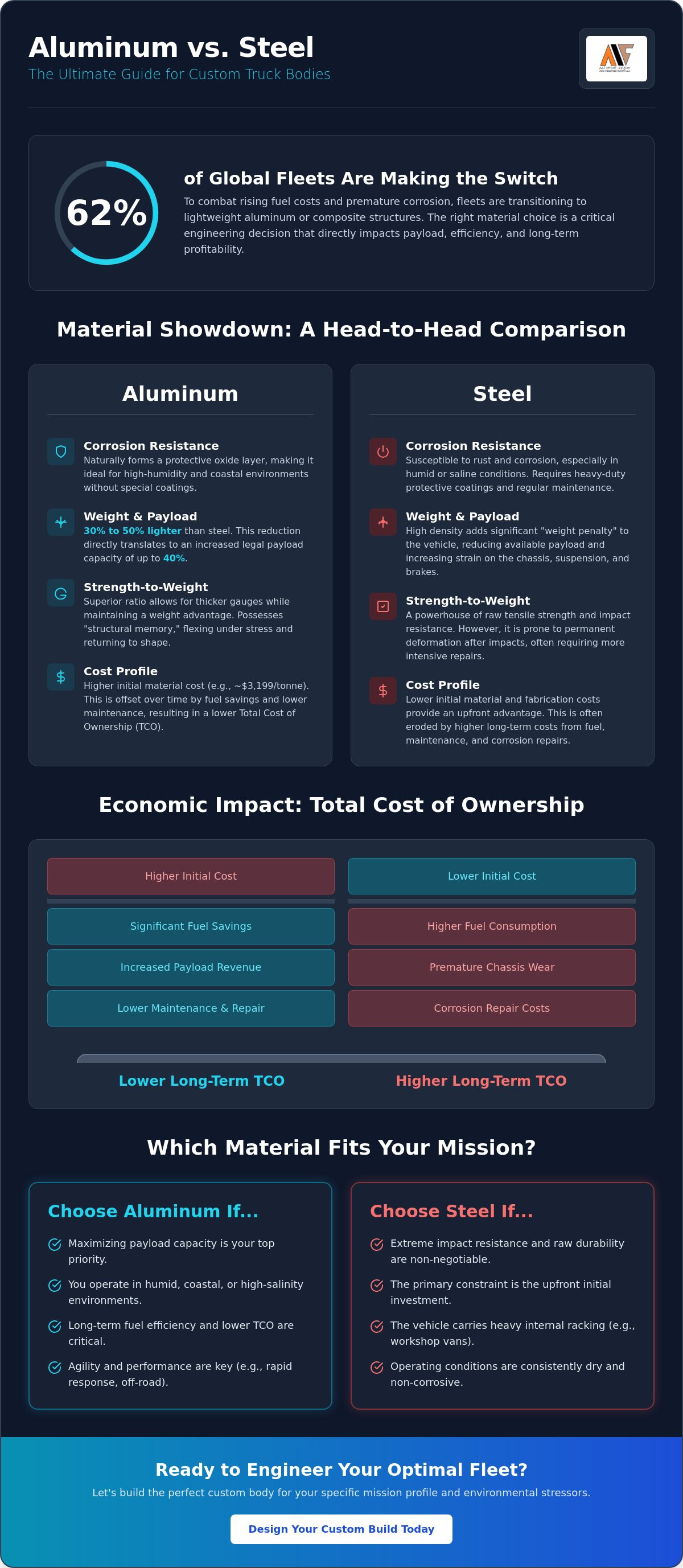
Did you know that 62% of global fleets have already transitioned to aluminum or composite structures to combat rising operational costs? When evaluating aluminum vs steel for custom truck bodies, the decision isn't just about the initial invoice. It's a high-stakes engineering calculation. You're likely facing the relentless pressure of high fuel costs and the frustration of premature body corrosion in humid coastal environments. These factors quickly erode profit margins and restrict your equipment capacity.
We agree that your specialized fleet requires a balance of rugged durability and maximum payload efficiency. This guide provides a technical breakdown of the mechanical and economic differences between these materials to help you select the optimal build. You'll discover how to maximize vehicle lifespan and increase legal payload capacity by up to 40%. We'll examine everything from the current $3,199 per tonne aluminum market price to the impact of the June 2026 AWS D9.1 welding standards on your long-term maintenance costs.
Key Takeaways
- Understand how material selection serves as the structural foundation for specialized vehicle conversions and custom fabrication projects.
- Compare tensile strength and weight ratios to maximize your legal payload capacity while minimizing unnecessary chassis strain.
- Analyze the performance of aluminum vs steel for custom truck bodies in high-humidity and coastal environments to ensure long-term corrosion resistance.
- Calculate the total cost of ownership by balancing initial investment costs against fuel efficiency gains and projected vehicle lifespan.
- Deploy a strategic decision matrix to select the optimal material based on your specific mission profile and environmental stressors.
The Fundamentals of Custom Truck Body Fabrication
In specialized vehicle modification, the truck body serves as more than just a container. It's the structural backbone that supports mission-critical equipment and protects high-value cargo. Whether we're fabricating an ambulance conversion or a military transport, every weld and bolt must align with the vehicle's Gross Vehicle Weight Rating (GVWR). Choosing between aluminum vs steel for custom truck bodies isn't a cosmetic preference. It's a strategic engineering decision that dictates your entire fabrication workflow from initial CAD design to the final protective coating.
The material you select determines the fabrication limits. Steel requires specific high-heat welding techniques and heavy-duty bending equipment. Aluminum demands specialized MIG/TIG setups and controlled environments to prevent contamination during the build. This choice ultimately defines your payload capacity and the long-term structural durability of the unit under operational stress. To better understand these fundamental differences, watch this helpful comparison:
Structural Integrity and Load Dynamics
Custom builds often utilize Body-on-frame construction to manage extreme torsional stress during off-road deployments or high-speed emergency responses. We rely on high-precision laser cutting and CNC machining to ensure every component fits the chassis perfectly. This precision is vital because material density directly impacts the vehicle's center of gravity. While a steel body offers high impact resistance, its weight can raise the center of gravity, potentially affecting stability during sharp maneuvers or heavy loading cycles.
Defining the Mission Profile
Mission-Specific Engineering starts by identifying the vehicle's primary environment. A safari vehicle conversion operating in arid desert terrain requires different thermal properties than a box-type ambulance stationed in a humid coastal city. Heavy-duty workshop vans often prioritize the ruggedness of steel to handle heavy internal racking and tool storage. Conversely, rapid-response vehicles benefit from the lightweight profile of aluminum to improve acceleration and braking performance. You must weigh the lower upfront cost of steel against the long-term operational efficiency and payload gains provided by aluminum vs steel for custom truck bodies.
Mechanical Performance: Weight vs. Strength
Engineering a specialized vehicle requires a cold calculation of tensile strength versus mass. High-grade steel remains a powerhouse for sheer structural resilience, offering massive tensile strength that handles extreme loading cycles without fatigue. However, this strength comes with a heavy density. As noted by an expert from the Steel Market Development Institute, the battle of the bodies often centers on how much weight a chassis can carry before performance degrades. When you choose aluminum vs steel for custom truck bodies, you're essentially choosing between raw impact durability and the agility of a lightweight build.
The "weight penalty" of steel is a constant factor in chassis wear. Every extra kilogram of body weight puts additional strain on the suspension, brakes, and drivetrain. Over a five-year operational cycle, this leads to premature component failure and higher maintenance overhead. Aluminum's lower density allows for a thicker gauge material to be used while still maintaining a significant weight advantage. This structural memory allows aluminum to flex and return to its original shape under moderate stress, whereas steel may require more aggressive repair after a permanent deformation.
The Weight-to-Strength Ratio
Aluminum is typically 30% to 50% lighter than steel, which directly transforms the vehicle's mission capability. In the field, every kilogram saved from the body is a kilogram added to your legal payload capacity. This is critical for safari vehicle conversions where off-road agility is key. A lighter body improves the power-to-weight ratio, allowing vehicles to traverse soft sand or steep dunes without bogging down. By reducing the curb weight, you can install heavier recovery gear, larger fuel tanks, or more passenger amenities without exceeding the manufacturer's GVWR.
Impact Resistance and Fabrication Precision
Steel remains the king for heavy-duty industrial environments where the body is subject to constant punctures or high-velocity impacts. It doesn't crack as easily under extreme cold or sudden shocks. However, fabricating with high-strength aluminum requires a master craftsman's touch. We utilize specialized TIG and MIG welding techniques to ensure structural integrity at the joints. For an ambulance conversion, we often use reinforced marine-grade alloys in mission-critical areas. This provides a robust safety cell for paramedics and patients while keeping the vehicle light enough for rapid urban response. If you're planning a build that requires this level of engineering, our precision fabrication services can help you balance these mechanical trade-offs effectively.
Durability in Extreme Climates and High Salinity
Operating a fleet in the UAE demands a material strategy that accounts for relentless humidity and high-salinity air. These factors act as catalysts for oxidation, potentially compromising the structural integrity of your build within a few years. When engineers evaluate aluminum vs steel for custom truck bodies, the decision often hinges on the environmental stressors of the specific mission profile. While steel provides unmatched impact resistance, its vulnerability to rust requires a sophisticated defense system. Aluminum, by contrast, utilizes its own chemistry to resist the elements.
Both materials require professional-grade finishes to maintain their aesthetic and structural value. We adhere to the latest industry standards, such as the AISC 420-25 guidelines for the shop application of complex protective coating systems. These standards ensure that whether you choose the ruggedness of steel or the lightweight properties of aluminum, your vehicle is shielded against the harsh sun and corrosive coastal atmosphere of the region.
Steel Protection: Galvanization and Coatings
Standard carbon steel will oxidize rapidly if exposed to coastal salt air. To prevent this, we utilize galvannealed steel for many of our custom builds. This process involves coating the steel with a zinc-iron alloy that provides a superior base for paint adhesion compared to traditional galvanization. For heavy-duty applications, we often apply industrial epoxy bedliners. These coatings provide a thick, rubberized barrier that protects against both physical abrasion and chemical corrosion. In humid environments, you don't just need paint; you need a multi-layered defense system. Regular inspections are mandatory for steel bodies to identify and seal any chips in the coating before moisture can reach the base metal.
Aluminum and Salt-Air Resistance
Aluminum is the preferred choice for maritime logistics and coastal operations due to its natural oxide layer. When exposed to air, aluminum immediately forms a thin, hard film of aluminum oxide that protects the underlying metal from further corrosion. This makes it exceptionally durable in high-salinity environments without the constant fear of structural rot. However, aluminum isn't entirely maintenance-free. It can suffer from surface pitting if salt and industrial contaminants are allowed to sit for extended periods.
The most critical engineering challenge with aluminum is preventing galvanic corrosion. This occurs when aluminum comes into direct contact with steel in the presence of an electrolyte, like salt water. To stop this chemical reaction, we use specialized non-conductive gaskets, isolation tapes, and stainless steel fasteners. By isolating these different metals, we ensure the body maintains its structural value and clean appearance through years of service in the harshest climates.
Economic Impact: ROI and Total Cost of Ownership
Selecting the right material requires moving beyond the initial purchase price to analyze the Total Cost of Ownership (TCO). While a steel body typically requires a lower upfront investment, the long-term economic profile often shifts in favor of aluminum. The initial cost of an aluminum body can be 30% to 50% higher than a comparable steel build. However, for high-mileage fleets, this gap is often closed within the first two to three years of operation through fuel savings and reduced mechanical wear. When debating aluminum vs steel for custom truck bodies, you're essentially choosing between lower entry costs and superior long-term ROI.
Fuel Efficiency and Operational Savings
Every 100kg of weight reduction typically yields a 1% to 2% improvement in fuel economy depending on the specific drive cycle and load profile. For large-scale logistics fleets, this cumulative saving represents a massive reduction in the annual carbon footprint and total fuel spend. Lighter body weights also allow engineers to specify smaller, more efficient base vehicles, such as using a GMC or Toyota platform that might otherwise be overloaded by a heavy steel structure. This "right-sizing" of the chassis further compounds the operational savings over the vehicle's lifespan.
Maintenance and Lifecycle Costs
Steel is undeniably easier and less expensive to repair when dealing with minor dents or punctures, as most local workshops possess the tools to hammer and weld mild steel. Aluminum requires specialized equipment and certified technicians, which can increase the cost per repair incident. However, the true cost of maintenance is often found in downtime. Steel bodies in high-humidity regions eventually succumb to corrosion, requiring expensive sandblasting and repainting cycles that take the vehicle out of service for weeks. Aluminum bodies maintain their structural integrity without these recurring costs.
In the secondary market, aluminum units retain significantly higher resale value after 5 to 10 years because the body remains rust-free and structurally sound, often outlasting the original chassis. By reducing the curb weight, you also minimize the strain on tires, brakes, and suspension components, extending their service life by up to 15% in some applications. If you need a detailed cost-benefit analysis for your next build, request a technical consultation from our engineering team.
Selecting the Right Material for Your Specialized Fleet
Selecting between aluminum vs steel for custom truck bodies isn't a matter of finding a superior material. It's a matter of technical alignment with your operational goals. Your choice dictates the vehicle's maneuverability, its legal payload, and its long-term survival in the field. To assist in your selection process, we utilize an engineering decision matrix that weighs your mission profile against specific material properties.
- Payload Optimization: Aluminum is the logical choice when maximizing equipment capacity is the priority.
- Capital Expenditure: Steel provides a lower entry cost for fleets with immediate budget constraints.
- Environmental Stress: Aluminum is essential for high-salinity coastal operations.
- Structural Rigidity: Steel is preferred for high-impact industrial and heavy-duty military logistics.
- Vehicle Lifespan: Aluminum offers superior ROI for units intended for 10 or more years of service.
When to Choose Steel for Your Build
Steel remains the definitive choice for heavy-duty military vehicle modifications and high-impact construction environments. Its massive tensile strength provides a level of impact resistance that aluminum simply can't match in raw industrial settings. If your mission involves high-velocity debris or extreme structural loads, steel's rigidity serves as a critical safety barrier. We recommend steel for projects where upfront budget limitations are strict. It allows for a rugged, reliable build that can be easily repaired in standard workshops using traditional welding techniques. For heavy-duty workshop vans and recovery vehicles, steel's durability ensures the structural backbone won't fail under the stress of heavy internal racking.
When Aluminum is the Superior Investment
Aluminum is the gold standard for high-efficiency, long-life specialized units. It's essential for high-roof ambulances where weight management is critical for lateral stability and rapid urban response. By reducing the body weight, you lower the vehicle's center of gravity, which is vital for safety during high-speed emergency maneuvers. We also prioritize aluminum for safari vehicle conversions. This allows you to maximize passenger count and install heavy accessories like metal canopies and roof racks without exceeding the chassis GVWR on platforms like GMC and Toyota. For fleets operating in coastal zones across the country, aluminum's natural resistance to corrosion ensures the vehicle maintains its professional appearance and structural integrity for years.
At Auto Industries Factory LLC, we position ourselves as your expert engineering partner. We don't just supply parts; we provide comprehensive solutions. Our facility is equipped for high-precision metal cutting and bending, ensuring that whether you select steel or aluminum, your custom build is manufactured to master craftsman standards. We understand the high stakes of specialized vehicle conversions. For those looking for similar excellence in the field of event automation and production, you can learn about METAL ART DXB and visit their website. If you're ready to optimize your fleet's performance and reduce long-term maintenance costs, contact our technical team to discuss your mission-specific requirements.
Engineering Your Fleet's Future Performance
Selecting between aluminum vs steel for custom truck bodies requires a deep understanding of your mission profile. You've seen how steel provides the rugged structural rigidity needed for heavy-duty military transports, while aluminum offers the lightweight agility required for high-roof ambulances and safari tours. The decision isn't just about the material; it's about engineering a solution that maximizes your payload and withstands the high-salinity environments of our coastal regions. Every build we execute is a calculation of strength, weight, and long-term operational costs.
We specialize in mission-critical vehicle conversions that demand extreme precision and reliability. Our facility utilizes in-house CNC and laser cutting precision to ensure every build meets exact structural specifications. We serve national fleets with rugged, engineered solutions that prioritize safety and long-term ROI. Don't leave your material selection to chance when your profit margins and equipment capacity are on the line. Our expertise ensures your specialized vehicles are ready for the most demanding environments.
Consult with our engineering team for your custom truck body solution and ensure your fleet is built for the challenges ahead. We're ready to help you build a stronger, more efficient future.
Frequently Asked Questions
Is aluminum as strong as steel for truck bodies?
Steel possesses higher tensile strength per cubic inch, but high-grade aluminum alloys provide comparable structural integrity when engineered with thicker gauges. The primary advantage of high-strength aluminum is its superior strength-to-weight ratio. This allows us to build a robust, durable body that withstands operational stress without the massive weight penalty associated with a traditional steel structure.
How much weight can I save by switching to an aluminum truck body?
You can typically reduce the body weight by 30% to 50% by selecting aluminum over steel. For a standard custom build, this weight reduction transforms your vehicle's capabilities. Every kilogram saved from the chassis and body is a kilogram added to your legal payload capacity, allowing you to carry more equipment or passengers while remaining within the manufacturer's GVWR.
Does aluminum really save enough fuel to justify the higher upfront cost?
Yes, aluminum provides a significant return on investment for high-mileage fleets through fuel savings and reduced wear. Since aluminum is roughly one-third the density of steel, the resulting weight savings can improve fuel efficiency by 8% to 10%. When evaluating aluminum vs steel for custom truck bodies, these operational savings often bridge the initial 30% to 50% price gap within the first three years.
Can any workshop repair an aluminum truck body?
No, aluminum fabrication and repair require specialized equipment and certified technicians. Unlike steel, which can be welded in most general automotive shops, aluminum demands specific TIG or MIG welding setups and a controlled environment. Cross-contamination from steel tools can lead to structural failure, so you must use a facility with dedicated aluminum bays and master craftsmen who understand the material's unique properties.
Which material is better for specialized ambulance conversions?
Aluminum is the superior choice for specialized ambulance conversions because it maximizes payload and improves vehicle stability. Reducing the body weight allows for a more comprehensive medical equipment loadout without overloading the chassis. Furthermore, a lighter body lowers the vehicle's center of gravity, which is a critical safety factor during the high-speed maneuvers required for rapid emergency response.
How does the UAE climate affect the lifespan of a steel truck body?
The UAE's high humidity and coastal salt air act as catalysts for rapid oxidation in steel bodies. Without advanced protective coatings like galvannealing or epoxy liners, standard steel can suffer from structural rust and surface degradation within a few years. Aluminum's natural oxide layer provides a significant advantage here, as it inherently resists the corrosive effects of a high-salinity environment.
What is galvanic corrosion and how do you prevent it in vehicle fabrication?
Galvanic corrosion is an electrochemical process that occurs when aluminum and steel come into direct contact in the presence of an electrolyte like salt water. We prevent this by using non-conductive gaskets, isolation tapes, and stainless steel fasteners. This isolation ensures there is no electrical path between the different metals, preserving the structural integrity and aesthetic value of the vehicle over its entire lifespan.
Is a custom steel body better for off-road safari vehicles?
No, aluminum is generally the better investment for safari vehicle conversions because off-road performance relies on a light curb weight. A lighter aluminum body allows the vehicle to traverse soft sand and steep dunes more effectively without bogging down. This weight savings also provides the necessary capacity to install heavy-duty accessories like metal canopies and roof racks while keeping the passenger count high.


