

A van roof is not simply a load-bearing sheet of metal. When cutting a van roof, structural-integrity risk mitigation starts by assessing how the roof connects to the vehicle body and how added weight will transfer through it. Suitable supports should distribute roof loads into the structure, rather than concentrate them on unsupported roof skin.
The cut itself matters, but an opening can affect more than the panel being removed. Its position and size, nearby structural members, and intended roof load all shape the work plan. Existing distortion, corrosion, or cracked joints are warning signs to assess before work begins.
This article explains how professionals assess roof capacity, identify weaknesses, and plan reinforcement and load distribution before cutting. It also covers which vehicle details and intended uses help shape a safer modification, and why structural assessment should guide the work from the outset.
Key Takeaways
- Roof load capacity depends on how the roof is built and where forces transfer into the vehicle, not just on the visible roof panel.
- Distortion, corrosion, cracked joints and other warning signs can change how a roof modification should be assessed.
- Structural assessment and safe work planning help identify fragile areas and fall-through hazards before roof demolition or cutting begins.
- Separate existing damage from potential hazards and structural risk to understand what needs attention before work proceeds.
- Plan the cut and any supporting metalwork around the vehicle’s structure and intended use to help preserve roof integrity.
Q: How do professionals assess and manage weight on a fragile van roof?
Before deciding where weight can sit, professionals assess the roof construction, supporting members, surface condition, and intended loads. To locate a vent, skylight, or pop-top, they map roof bows, seams, existing equipment, and drainage paths, then assess how a proposed cut could affect crash loads and roof capacity.
Assessing Deck and Load Capacity
Roof deck capacity describes how well the roof skin and supporting structure carry loads without excessive movement or damage. Professionals examine the roof profile, material, bows, joints, and existing repairs. A thin panel cannot be treated as a structural support, so this assessment guides the safe placement of workers, cutting equipment, and planned roof-mounted items.
Load distribution depends on the complete path into the body, not just the contact area at the roof surface. For example, a rack foot over a roof bow may transfer weight differently from one between bows. The assessment considers each load and how loads combine, including equipment, brackets, and the intended conversion.
Surface condition is assessed separately from structural capacity. A dented panel, corrosion around a seam, cracked sealant, or previous repair can affect how the skin responds to pressure. Professionals account for these conditions before placing equipment or planning construction, rather than assuming a broad, flat-looking area can support concentrated weight.
Drainage is also part of the assessment. Roof channels, seams, and drain openings guide water away from cut edges and joints, and a new opening or raised fitting can interrupt that route. Professionals consider how the finished layout will direct water, whether existing drains will remain clear, and whether added trim could cause water to pool around the opening.
Understanding Cut Effects on Safety
A roof cut removes material and may interrupt the connection between supporting members. This matters because roof-load capacity, rollover strength, and crash performance depend on the vehicle’s original load paths. The effect varies with the cut’s location and size, surrounding construction, and reinforcement, so the outcome for one van cannot be assumed to apply to another.
To position a vent, skylight, or pop-top, professionals compare the proposed opening with roof bows, crossmembers, seams, wiring routes, and drainage features. If a cut conflicts with a supporting member, the location may need to change or a designed reinforcement approach may be required. This ties the opening plan to the vehicle’s actual construction, not appearance alone.
Before cutting, professionals relate the proposed opening to the roof’s condition and planned use. A conversion with roof-mounted equipment needs a different load analysis from one without added equipment. They also consider how reinforcement will connect to surrounding members, so the work addresses the interrupted load path rather than merely covering the cut edge.
Warning signs requiring prompt action
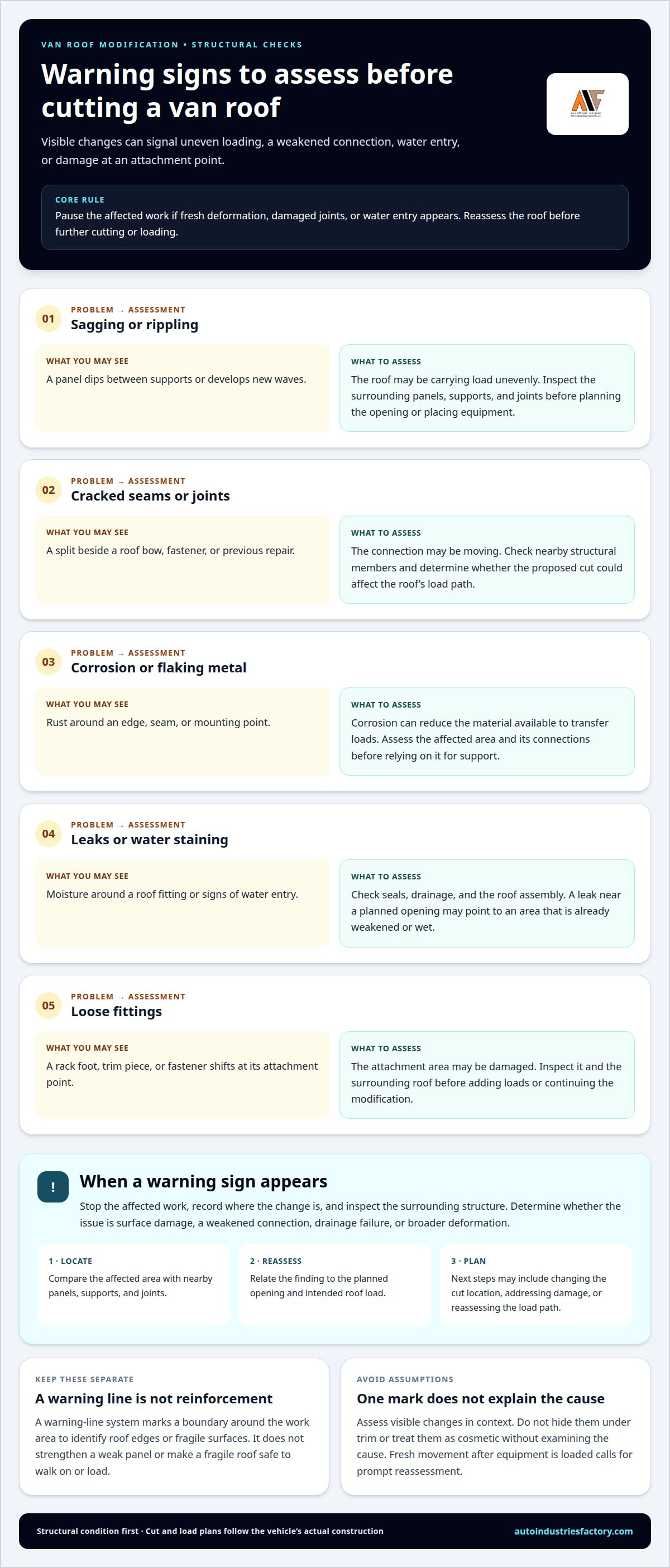
Pause a roof modification if the van shows fresh deformation, damaged joints, or water entry. These signs may indicate a change in the roof’s condition, making further cutting or loading unsafe without a new assessment.
During a roof inspection, professionals look for physical changes across the roof and around existing fittings. Warning signs include:
- Sagging or rippling: A panel that dips between supports or develops new waves may be carrying load unevenly.
- Cracked seams or joints: A split beside a roof bow, fastener or previous repair can indicate movement at a connection.
- Corrosion or flaking metal: Rust around an edge, seam or mounting point can reduce the material available to transfer loads.
- Leaks or water staining: Moisture around a roof fitting can point to failed seals, blocked drainage or water entering the roof assembly.
- Loose fittings: A rack foot, trim piece or fastener that shifts can signal damage at its attachment point.
One mark alone does not establish the cause. Professionals compare the affected area with nearby panels, supports, and joints, then relate their findings to the proposed opening. For example, a leak near a planned skylight matters because the cut could intersect an area that is already weakened or wet. Fresh movement after equipment is loaded calls for prompt reassessment before work continues.
Fall exposure needs separate controls from structural condition. A warning-line system marks a boundary around the work area, helping workers identify roof edges or fragile surfaces that present a fall hazard. It is a visual measure, not reinforcement for a weak panel or support. A marked boundary also does not make a fragile roof safe to walk on or suitable for equipment. The work zone must reflect the roof’s actual condition.
When warning signs appear, professionals stop the affected work, record the location, and inspect the surrounding structure. They determine whether the issue involves surface damage, a weakened connection, drainage failure, or broader deformation. Next steps may include changing the cut location, addressing the damage, or reassessing the load path before work resumes. Do not hide a visible change under trim or treat it as cosmetic without examining its cause.
For a vehicle in the UAE, approval, inspection, or registration requirements depend on the modification and applicable vehicle procedures. Establish the requirements for the specific vehicle and proposed roof work before proceeding.
For specialist vehicle modifications, a roof-condition assessment can inform the work plan. Explore police and military vehicle modifications in relation to the vehicle’s intended use and structural needs.
Structural assessment and occupational safety before roof demolition
Before demolition, professionals assess the roof construction, what the cut will interrupt, and how workers can access the work area safely. The vehicle’s structure and planned conversion determine the assessment.
Comparing Modification Impacts
Vents, skylights, and pop-tops differ in opening size, support requirements, and how much roof structure they may interrupt. That comparison matters because the cut must suit both the vehicle’s construction and the conversion’s intended use.
A vent usually needs a smaller opening than a pop-top, while a skylight’s dimensions depend on its design. A pop-top may require a larger roof opening and changes to surrounding supports. Professionals assess the opening in relation to roof bows, crossmembers, seams, and attachment points, then plan reinforcement where the design requires it. The modification type alone does not determine its effect on stability.
Preparing Tools and Safety Precautions
Professional preparation combines measurement and layout equipment, suitable metal-cutting tools, restraints, and protective equipment. Accurate positioning and controlled cutting help reduce the risk of damaging nearby structure, wiring, or the vehicle interior.
Before cutting, the team identifies the opening, checks the roof structure, and clears or protects the work area. Workers secure loose components and manage sharp edges, metal fragments, and tool movement. The cutting method is selected for the roof material and access conditions, not treated as a universal procedure. This is controlled fabrication work, not a task to copy from a tool tutorial.
A structural assessment also considers vehicle stability before any roof section is removed. Professionals examine how the roof connects to the body and whether the planned sequence could leave a panel unsupported. If demolition exposes a joint or support, the team accounts for the change before proceeding. Each cut is assessed for its effect on adjacent members, rather than treating the removed panel as an isolated piece.
Work planning addresses fall exposure and the risk of a person or equipment passing through a weak surface. The team defines access routes, keeps unnecessary weight away from fragile areas, and secures vulnerable openings during work. A warning line can mark a boundary, but it does not strengthen a roof or make an unsafe surface load-bearing. The work area and protection measures must match the actual site and vehicle conditions.
During removal, professionals control loose metal and separate components for handling. They account for sharp edges, unstable sections, and debris that could fall into the vehicle. If the assessment identifies hazardous legacy materials, those materials require suitable handling and disposal under applicable requirements. A planned sequence prevents removal from compromising stability before the next stage of the modification is ready.
After cutting, professionals inspect the modified roof and surrounding connections for movement, distortion, or damage. They check that the work matches the planned opening and supporting elements remain properly connected. For a vent, skylight, or pop-top, the final assessment considers the complete conversion, including structure, access, and intended load, not appearance alone.
Structural risk versus hazards, defects, and damage
Cutting a van roof can create leak paths, expose bare metal to corrosion, or damage wiring hidden behind the headliner. The risk depends on the cut’s position, nearby components, edge protection, and how the finished opening is sealed.
An inspection distinguishes four related issues. A hazard is a condition that could cause harm, such as exposed wire near the cutting area. A defect is a fault in a component, such as a split seal. Damage is an existing change, such as a dent or corroded edge. Structural risk concerns the likelihood that the modification will affect roof strength or stability.
These distinctions guide the next step. A dent in a non-supporting panel may need a different response from a cracked joint beside a roof bow. Professionals identify the affected element, examine nearby connections, and consider whether the planned opening could worsen the condition. A visible defect can also point to a hidden issue beneath trim or interior lining.
Weather exposure makes water management part of the assessment. A cut edge, poorly seated fitting, or interrupted roof channel can let water reach seams and concealed cavities. In the UAE, intense sun and occasional rain make effective sealing and drainage important to a conversion’s durability. Water entering around a fitting may stain interior trim first, while corrosion can develop out of sight.
- Leaks: Water can pass through an incomplete seal or a fitting that doesn’t sit correctly against the roof.
- Corrosion: An unprotected cut edge can become vulnerable when moisture reaches exposed metal.
- Electrical damage: A cut near concealed wiring can sever insulation or conductors and affect connected equipment.
- Structural change: Removing material beside a supporting member can interrupt the roof’s load path.
Before cutting, professionals map the opening against visible fittings and likely wiring routes, then inspect accessible areas from inside the van. They protect nearby components and plan how to treat the cut edge, seal, and drainage path. For example, a proposed skylight near an existing roof channel needs a layout that preserves water flow rather than directing runoff toward the opening.
After modification, inspection focuses on the opening perimeter, surrounding joints, nearby wiring, and water paths. A leak test can reveal a sealing issue, while a visual check can identify exposed metal or loose trim. If water staining, corrosion, or electrical faults appear later, their location and pattern can help distinguish a fitting problem from damage to a hidden element. This evidence supports targeted repairs and prevents cosmetic cover-ups from masking the cause.
That distinction also matters after work is complete: in Norway, 50% of building defects are discovered more than five years after a building is handed over, including defects arising during the building's use. A Norwegian school building experienced flooding and substantial moisture damage after its advanced roof downpipe system was inadequately designed and operated. The example highlights why water-control details belong in an assessment alongside the visible cut edge.
During roof demolition, fragile rooflights are treated as fall-through hazards and secured. Older roof materials may need screening for hazardous substances before demolition. These checks address immediate safety and material risks alongside structural condition. A roof can present hazards even when no structural defect is apparent.
Roof structural integrity
A roof cut changes the sheet and can interrupt load paths connecting the roof to the vehicle body. Consider the cut’s location, surrounding members, and reinforcement plan together.
How Roof Cuts Affect Integrity
Structural integrity is the roof’s ability to transfer forces through connected panels and supports without losing stability. Cutting an opening removes material and can interrupt those connections, affecting roof-load capacity and crash performance. The opening’s size and position, along with the vehicle’s construction, determine the structural impact.
A vent opening and a large pop-top aperture do not remove the same amount of roof material. If a cut crosses a roof bow or weakens a connection, loads previously carried by that element need another supported path. Assessing the cut as an opening in a connected structure matters more than judging the remaining panel by appearance.
Identifying Structural Roof Components
Structural roof components include ribs or bows beneath the roof skin, perimeter rails, and connections to side pillars. Their positions vary by vehicle, so the visible roof surface alone cannot reveal every safety-critical area. Locating these components matters because cutting through a support can alter how forces travel across the roof and into the body.
Professionals use information about the vehicle’s construction and inspect accessible roof sections from inside. They map bows, reinforcement, seams, and factory openings against the proposed cut. For example, if a roof rib runs across the planned skylight area, the layout must account for it rather than assume the panel is clear beneath the surface.
Planning and Installing Reinforcement
Reinforcement restores a supported load path around an opening when the original structure has been interrupted. Its design and attachment depend on the roof, cut location, and conversion requirements. This technical decision matters because adding material without secure connections does not address the structural change.
Professionals plan reinforcement to connect the structure around the opening with suitable existing members. They shape and fit supporting sections, then secure them to sound structure using a method suited to the vehicle’s material and construction. The finished assembly is assessed for fit, connections, and interference with nearby equipment or drainage.
For example, a pop-top opening may need a different reinforcement layout from a compact vent because it changes more of the roof panel. The assessment considers the full perimeter and how loads transfer into the body, not just the cut edges. The key is to preserve or re-establish structural continuity around the opening, basing reinforcement on the actual vehicle structure.
Auto Industries Factory LLC: Metal cutting & Bending
Auto Industries Factory LLC provides metal cutting and bending for vehicle fabrication projects that require precise work on modified metal components. For a van roof project, structural assessment should guide the cut location and any required supporting work. This is especially relevant when the modification is part of an ambulance conversion, police or military vehicle modification, or safari vehicle conversion.
Share the vehicle details, intended roof opening, and planned use to clarify the project requirements. The structural considerations discussed above help frame the work, while the specific conversion determines the fabrication needs.
For metalwork related to a specialized vehicle project, contact Auto Industries Factory LLC to discuss your requirements.
Plan the modification around the vehicle’s next role
A roof opening should serve the vehicle’s intended use without treating the roof as an isolated panel. Before fabrication begins, bring together the vehicle details, planned opening, and conversion requirements. This gives the structural assessment a clear purpose and helps align the metalwork with the finished build.
For cutting a van roof, structural-integrity risk mitigation belongs in the project plan from the start. It should guide the opening’s location, supporting work, and fit with the vehicle’s role. Whether the project is an ambulance conversion, police or military vehicle modification, or safari vehicle conversion, design decisions and fabrication need to work together.
Set out the intended use and roof modification, then discuss the project with a fabrication specialist. Contact Auto Industries Factory LLC to discuss your vehicle conversion and metalwork requirements. A considered plan is the right foundation for a purposeful, well-executed modification.
Frequently Asked Questions
What Is Structural Risk Assessment?
A structural risk assessment evaluates how a proposed roof modification could affect the vehicle’s structure and use. It considers the intended opening alongside the van’s current condition, configuration, and planned equipment. For example, a roof already carrying a rack presents a different project context from an unmodified roof. The assessment helps identify design constraints early, so the cut and any supporting work can be planned around the actual vehicle.
Why is an as-built assessment needed before roof demolition?
An as-built assessment records the vehicle’s actual configuration before demolition, rather than relying on assumptions about its original condition. It can reveal previous alterations, replaced panels, added roof equipment, or wiring routes that affect the work area. For example, a previously converted van may have supports or fittings that differ from the factory layout. Recording these details provides a reliable starting point for the demolition plan and helps avoid unintentionally disturbing existing components.


