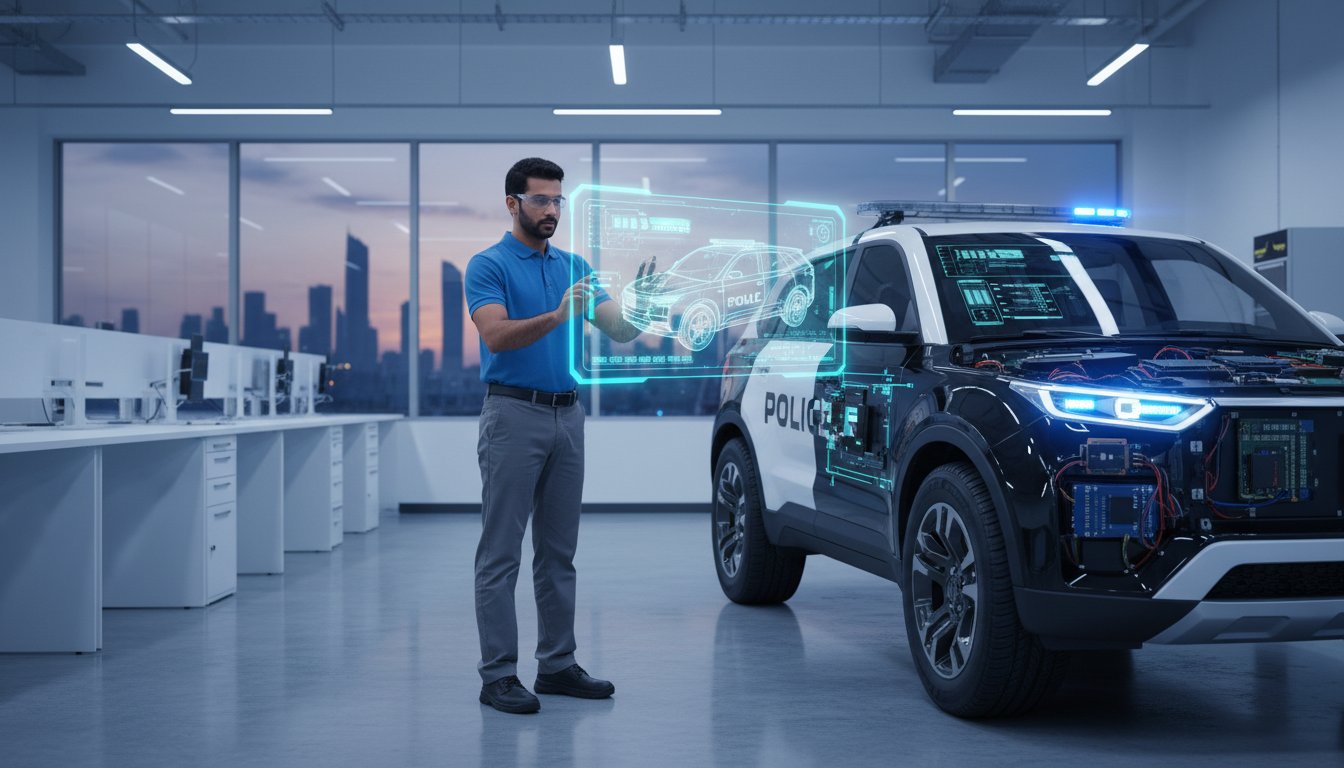
The traditional upfitting model is broken, and your fleet's downtime is the price you're paying for it. You've likely dealt with the headache of missing parts and the complexity of syncing new AI systems with EV platforms. It's frustrating when communication gaps between multiple vendors turn a simple build into a months-long ordeal. With agencies like the Illinois State Police managing fleets where the average vehicle has 100,000 miles, the pressure to replace aging units with mission-ready assets has never been more urgent.
You can master the police car upfitting timeline by shifting to a centralized, engineering-focused approach that cuts lead times and ensures every siren, sensor, and custom bull bar is installed with surgical precision. This guide provides a definitive 2026 roadmap to achieve a predictable 8 to 12 week schedule, even when dealing with the increased costs of a $44,980 base Interceptor. We'll examine how in-house fabrication eliminates third-party delays while integrating the latest biometric access and 360-degree camera systems into your specialized vehicle conversions.
Key Takeaways
- Identify the critical milestones of a 10-week conversion cycle, including CAD design and digital twin modeling for advanced electronic integration.
- Master the police car upfitting timeline by distinguishing between 6-week standard builds and the 10-week schedules required for specialized tactical or K9 units.
- Learn "Stage 0" prep strategies to accelerate deployment by procuring components and fabricating custom mounts before the vehicle chassis even arrives.
- Discover how centralized in-house metal fabrication and laser cutting at our Ajman facility eliminate the vendor-related delays that typically stall fleet readiness.
Critical Factors Influencing the Police Car Upfitting Timeline
The police car upfitting timeline is dictated by a convergence of logistics and technical precision. At our Ajman facility, we track the journey from OEM delivery to final inspection as a series of high-stakes engineering milestones. If the chassis is delayed at the port, the entire schedule shifts. However, the true complexity lies in the integration of the electronic suite. Modern 2026 fleets require AI dash cams, real-time telematics, and integrated sirens that must communicate perfectly with the vehicle's internal computer systems.
Chassis selection significantly impacts your speed to deployment. A standard patrol sedan involves a predictable install of standard police vehicle equipment, but heavy-duty SUVs or tactical armored units require structural modifications. Deep customization, such as custom bull bars and structural cage fabrication, adds time compared to simple bolt-on accessories. Precision engineering ensures these additions don't compromise vehicle safety or performance. To better understand how these components come together, watch this helpful video:
The Impact of EV and Hybrid Architecture
2026 marks a shift toward high-voltage platforms like the Chevy Blazer EV PPV. These units require technicians certified in high-voltage handling to avoid electrical failure. For Ford Interceptor hybrids, we must carefully integrate Police Engine Idle features. These systems allow electronics to run off the hybrid battery, saving fuel while maintaining mission readiness. This specialized wiring adds a layer of complexity that must be accounted for in your police car upfitting timeline to ensure safe, high-current relay connections.
Supply Chain and Global Logistics in 2026
Lead times for Tier 1 electronics and specialized ballistic glass remain volatile. By utilizing regional sourcing in the UAE, we bypass many of the global shipping delays that plague international vendors. We recommend pre-ordering "trade packages" before the chassis arrives. This approach ensures that all components, from lightbars to partitions, are on the shelf and ready for the moment the vehicle enters the production bay. Securing these parts early is the most effective way to protect your schedule from unpredictable market shifts.
The 10-Week Roadmap: From Consultation to Fleet Deployment
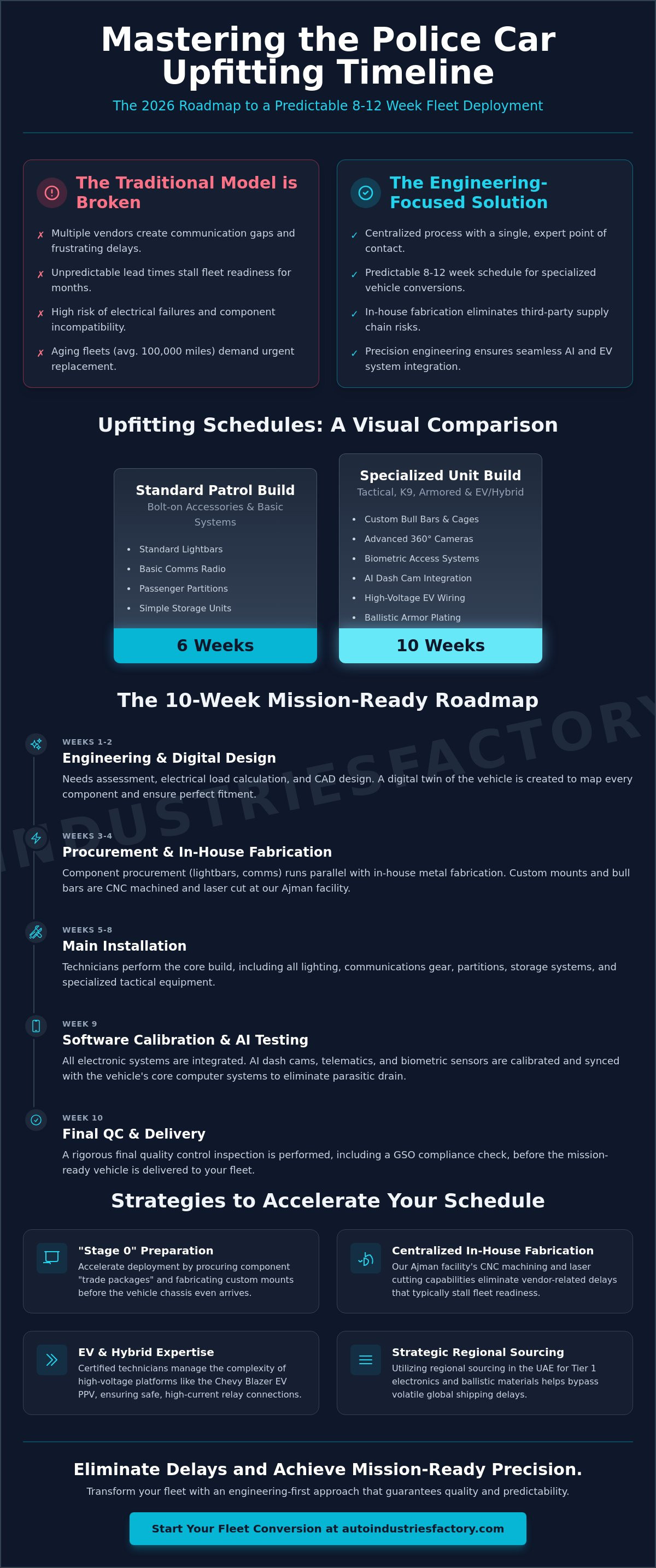
A compressed eight week schedule often leads to cut corners and electrical failures. In 2026, the standard for a mission-ready fleet has shifted to a rigorous 10-week cycle. This roadmap prioritizes engineering precision over rushed assembly. By following a structured timeline, fleet managers avoid the common pitfalls of parasitic battery drain and equipment interference. Our process is designed to transform a stock chassis into a high-performance asset through a series of defined phases.
- Weeks 1-2: Needs assessment, CAD design, and digital twin modeling.
- Weeks 3-4: Component procurement and in-house metal fabrication.
- Weeks 5-8: Main installation including lighting, comms, partitions, and storage.
- Week 9: Software calibration, AI testing, and telematics sync.
- Week 10: Final QC, GSO compliance check, and delivery.
Phase 1: Engineering and Design
Precision begins in the digital realm. During the first two weeks, our team creates a digital twin of your vehicle to map out every component. This phase is critical for finalizing the electrical load calculation. We ensure the alternator can support the 2026 suite of AI cameras and high-output sirens without compromising the vehicle's core systems. Our facility utilizes CNC machining and laser cutting to produce custom bracketry. This ensures a perfect fit for every piece of hardware without unnecessary drilling into the chassis. Working with a specialized vehicle conversion specialist allows for these custom fabrications to happen in parallel with component procurement, saving valuable weeks in the overall police car upfitting timeline.
Phase 2: Technical Integration
The installation phase is where ruggedness meets high technology. We follow Ford's modifier guides and other OEM standards to maintain the structural integrity of the vehicle. Our technicians implement "clean wiring" practices by utilizing integrated control systems like the CAN bus. Integrated control systems consolidate electrical signals into a single digital stream, which reduces wiring spaghetti and simplifies future maintenance. During weeks five through eight, we install mission-critical hardware such as custom bull bars, lightbars, and prisoner inserts. Every connection is soldered and heat-shrunk to withstand extreme temperatures and vibrations. Before the vehicle moves to final QC, we perform a comprehensive telematics sync to ensure your dispatch center has real-time visibility into the unit's status. If you're ready to modernize your fleet, you can consult with our engineering team to start your design phase today.
Standard Patrol vs. Tactical & Armored Upfitting Schedules
The police car upfitting timeline varies significantly based on the vehicle's mission profile. A standard patrol unit follows a streamlined 6 to 8 week schedule. This window covers the installation of high-intensity lighting, agency decals, and basic prisoner partitions. These builds prioritize high-volume efficiency and standardized components. However, specialized roles require extended production cycles to accommodate more complex hardware and structural changes.
Environmental factors in the UAE, such as extreme heat and fine particulate dust, require specific modifications to cooling systems and electrical seals. We integrate GSO-compliant heat management solutions to prevent system failure during high-speed pursuits in desert conditions. K9 units typically extend the schedule to 8 to 10 weeks. This extra time is necessary to install specialized flooring, climate control systems, and heat-alarm sensors that protect the service animal. Tactical or SWAT vehicles represent the most complex builds, often requiring 12 to 16 weeks for reinforced suspensions and integrated communications hubs.
Armoring and Structural Reinforcement
When a vehicle requires ballistic protection, the timeline shifts to accommodate structural engineering. Integrating B6 or B7 armor levels involves stripping the chassis to the frame and installing overlapping ballistic plates. This process demands absolute precision to ensure no gaps exist in the protection cell. You can learn more about these technical requirements in our Car Armouring Guide. We also factor in curing times for specialized protective coatings and reinforced glass adhesives, which are essential for maintaining the vehicle's durability in high-threat environments.
Specialized K9 and Medical Interceptor Needs
Modern police fleets often deploy medical interceptors that bridge the gap between patrol and emergency response. These units require the integration of advanced medical kits and oxygen storage, similar to the hardware found in an Ambulance Conversion. For K9 units, we focus on installing heavy-duty, easy-clean flooring and automated door-release systems. These technical installs are paired with heat-alarm systems that automatically roll down windows and activate fans if the interior temperature reaches a critical threshold. This level of integration ensures the vehicle is a safe and effective tool for both the officer and the K9 partner.
Strategies to Accelerate Your Fleet Upfit Schedule
The most effective way to compress the police car upfitting timeline is to eliminate the transition gaps between different stages of production. Speed in 2026 is achieved through proactive engineering rather than hurried manual labor. By adopting a "Stage 0" mindset, fleet managers can ensure that the moment a chassis arrives at the facility, every component is already staged and ready for installation. This approach removes the traditional waiting period for parts procurement that often stalls a build for weeks.
Standardization and Batch Processing
Standardizing fleet specifications is a force multiplier for deployment speed. When an agency utilizes uniform builds for a fleet of Toyota Land Cruisers or Nissan Patrols, it allows for the batch fabrication of brackets, partitions, and custom mounts. Standardized specs allow for CNC pre-cutting of components, ensuring that every metal piece is manufactured to sub-millimeter precision before the vehicle reaches the bay. Keeping these common mounts and high-wear items in local inventory prevents the entire production line from stalling over a single backordered part. This strategy transforms the build from a series of custom problems into a repeatable, high-speed process.
The Single-Source Advantage
A fragmented upfitting process is a primary cause of unpredictable delivery dates. Moving a vehicle between a painter for decals, a welder for bull bars, and an electrician for comms adds weeks of unnecessary transport and administrative lag. This "idle time" is where most schedules fail. Choosing a single-source provider ensures that the vehicle moves seamlessly through a unified production line without leaving the facility.
Our team at Auto Industries Factory LLC consolidates these capabilities within a single Ajman-based facility. By integrating metal cutting, bending, painting, and electrical engineering, we maintain total control over the production rhythm. This vertical integration eliminates the need for third-party logistics and ensures that the engineering team can communicate directly with the fabrication floor. It's a system built for accountability and speed.
To further accelerate your police car upfitting timeline, prioritize software-defined upfitting. By using programmable CAN bus controllers, we reduce the physical wiring complexity that traditionally takes days to install. These systems allow for the configuration of light patterns and siren logic through a digital interface, cutting down on manual labor and making future maintenance much simpler. If you're looking to streamline your next deployment, request a technical consultation with our engineering team to review your fleet specifications.
Mission-Ready Precision: The Auto Industries Factory LLC Advantage
Expert engineering is the foundation of every vehicle that leaves our bay. While other providers rely on external vendors for metalwork or painting, Auto Industries Factory LLC integrates every stage of production under one roof. This vertical integration is the only way to guarantee a reliable police car upfitting timeline. We operate with the precision of master craftsmen; we utilize in-house CNC machining, laser cutting, and professional painting departments to ensure every modification meets our rigorous durability standards. By eliminating the need for third-party subcontractors, we remove the primary cause of schedule slippage.
Our team possesses deep technical experience with high-performance platforms like the Toyota Land Cruiser and Hilux. These vehicles are the backbone of regional security, and we've optimized our fabrication processes to match their specific chassis requirements. Every bull bar, canopy, and electrical harness we install is designed for the high-stakes environments of the Middle East. We ensure direct alignment with UAE safety and GSO regulatory standards, providing you with a fleet that isn't just equipped, but fully compliant and mission-ready from day one.
Engineering Excellence in Ajman
Our local fabrication shop is strategically positioned to support the rapid deployment needs of Dubai and Abu Dhabi fleets. Auto Industries Factory LLC doesn't just follow a checklist. We solve complex modification challenges that generic upfitters avoid. Whether it's integrating advanced biometric access or custom structural reinforcement, our engineers handle the technical heavy lifting in-house. We invite fleet managers to visit our Ajman facility for a comprehensive timeline audit. Seeing our laser cutting and bending operations firsthand provides the transparency you need to trust your deployment schedule. It's about seeing the engineering precision that backs every claim we make.
Next Steps for Your Fleet
Initiating your 2026 fleet rollout begins with a technical consultation. We'll review your operational requirements and identify opportunities to standardize your specs for faster processing. Our custom bull bars and roof racks are engineered for extreme ruggedness; they ensure your vehicles remain in service longer with less maintenance downtime. Don't let vendor delays or communication gaps compromise your agency's readiness. High-stakes industries require high-precision partners. Consult with our vehicle conversion experts today to secure your production slot and master your police car upfitting timeline with a partner who controls the entire process.
Secure Your Fleet Readiness for 2026
Maintaining a mission-ready fleet requires more than just purchasing vehicles; it demands a disciplined engineering strategy. By shifting to a 10-week roadmap that prioritizes CAD modeling and in-house fabrication, you eliminate the common bottlenecks that stall deployment. Standardization across your high-performance platforms ensures that your police car upfitting timeline remains predictable and protected from global supply chain volatility. This proactive approach transforms your fleet from a collection of cars into a synchronized force of tactical assets.
Our Ajman facility provides a distinct technical advantage through vertical integration. We utilize in-house CNC and laser fabrication to produce every bracket and mount with surgical precision. As specialists in UAE police and military conversions, we ensure every unit meets full GSO and regional compliance standards. This means your vehicles don't sit idle waiting for third-party vendors or international shipments. We handle the technical heavy lifting so your officers can focus on their mission with absolute confidence in their equipment.
Take control of your next rollout by partnering with a team that owns the entire conversion process from design to final QC. We're ready to solve your most complex modification challenges today. Request a Detailed Fleet Upfitting Timeline & Quote and ensure your fleet is ready for the road ahead.
Frequently Asked Questions
How long does a standard police car upfit take in 2026?
A standard patrol unit typically requires 6 to 8 weeks for a complete conversion once the chassis reaches the production bay. This period covers the installation of high-intensity lighting, prisoner partitions, and agency decals. For fleets requiring the integration of 2026 AI dash cams and real-time telematics, the police car upfitting timeline usually extends to 10 weeks to allow for proper software calibration and electrical load testing.
Can I speed up the timeline by providing my own equipment?
Providing your own equipment often complicates the police car upfitting timeline rather than accelerating it. We frequently encounter compatibility issues with customer-supplied gear or missing proprietary mounting hardware that stalls the build. It's more efficient to utilize our "Stage 0" procurement process, where we source and stage every GSO-compliant component before the vehicle arrives to ensure a continuous assembly flow.
Does armoring a police vehicle significantly increase the upfitting time?
Armoring adds approximately 4 to 6 weeks to the production schedule compared to a standard patrol build. This extension is necessary for stripping the chassis, installing overlapping B6 or B7 ballistic plates, and reinforcing the suspension to support the added weight. These structural modifications require precision welding and specific curing times for ballistic glass adhesives that cannot be rushed without compromising protection levels.
What is the most common cause of delays in police fleet upfitting?
The primary cause of delay is the "vendor shuffle," where vehicles are transported between separate shops for painting, welding, and electrical work. This fragmented approach creates administrative lag and leaves vehicles sitting idle in transit. A single-source facility eliminates these gaps by managing every engineering discipline under one roof, ensuring the vehicle moves immediately from fabrication to the installation bay.
How does EV integration affect the modification schedule?
EV integration introduces specialized technical milestones, such as high-voltage safety isolation and thermal management sync. Technicians must follow strict protocols when working around large battery arrays to avoid system interference. These builds require extra time for high-current relay connections and specialized load testing to ensure that sirens and 360-degree cameras do not negatively impact the vehicle's operational range.
Are there specific UAE regulations that impact the upfitting timeline?
UAE fleets must adhere to GSO standards and specific regional requirements for heat and dust mitigation. These regulations demand the installation of heavy-duty cooling systems and sealed electrical harnesses designed to survive desert environments. We factor these compliance checks and local environmental hardening into the final week of production to ensure every unit is legally and operationally ready for deployment.
Can Auto Industries Factory LLC handle the entire timeline in-house?
Auto Industries Factory LLC manages the entire conversion cycle at our Ajman engineering facility. Our in-house capabilities include CNC machining, laser cutting, and professional painting departments, allowing us to control every variable of the schedule. By fabricating our own custom bull bars and internal racking, we solve complex modification challenges without relying on external vendors, providing a guaranteed delivery date for our clients.


