
Police vehicles need more than lights and markings. Their interiors, equipment and layout must support the demands of the job. A specialized fleet vehicle conversion brings these elements together through mission-focused planning, fabrication and vehicle modification, whether the fleet is for police, ambulance, emergency response or another special purpose.
Conversion is more than adding equipment to a standard vehicle. Start with how the vehicle will be used, what the crew needs to reach and how components can be integrated into a durable, practical build. This is especially important for police fleets, where vehicles must support operational duties and remain suitable for everyday service.
This article explains how special-purpose vehicles can be planned and fabricated in-house, which stages shape the finished conversion and what to consider when adapting a fleet. You’ll also see how ambulance and police modifications differ, where custom metalwork fits and how Auto Industries Factory LLC’s conversion and fabrication capabilities serve these needs in the UAE.
Key Takeaways
- Start with the vehicle’s operational role and crew workflow to guide equipment placement, fabrication and access.
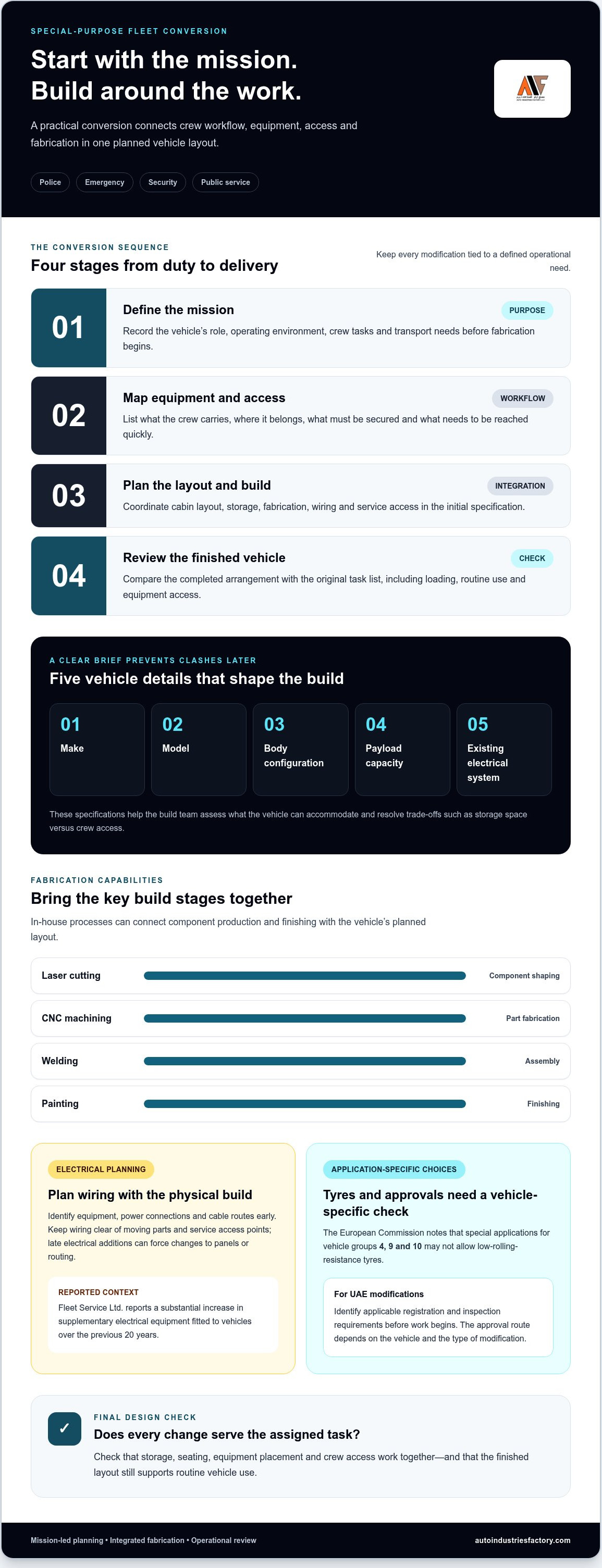
- In-house processes such as laser cutting, CNC machining, welding and painting can bring key fabrication stages together.
- Ambulance conversions can be configured for different vehicle platforms and intended uses, including road and off-road operations.
- Police fleet modifications should align the vehicle layout and fitted equipment with the practical demands of its duties.
- According to the European Commission, special applications for vehicle groups 4, 9, and 10 may not allow low-rolling-resistance tyres.
Emergency, police and security vehicle conversions
Police, emergency and security vehicles need layouts built around their assigned operations, crew tasks and equipment. In the UAE, specialist vehicle-conversion companies serve public agencies, emergency operators and private security fleets; buyers should match the fabricator’s relevant conversion work to the vehicle’s intended role.
Police Vehicle Conversions
Police vehicle conversions adapt a platform for patrol, response or other assigned duties. Begin by listing the crew’s tasks, equipment and access needs, then plan the cabin and storage around that workflow. A patrol vehicle and a unit carrying specialist equipment, for example, may need different interior arrangements. Review visibility, reach, secure stowage and how modifications affect routine vehicle use.
Military and Public-Service Vehicles
Military and public-service vehicles serve distinct roles, so define the mission before fabrication begins. Record the operating environment, crew requirements, equipment locations and transport needs. A public-service unit used for field operations may need a different layout from a personnel transport vehicle. Tie each modification to a defined task rather than adding equipment without a clear operational purpose.
Government and Security Vehicles
Government and security fleets can include response, transport and support vehicles. For each one, map who travels in it, what equipment it carries and how the crew accesses that equipment. A clear layout helps prevent storage, seating and work areas from competing for space. Review the finished arrangement against the task list, including access during loading and routine operations.
Cash-in-transit conversions have a distinct priority: support the transport task and make crew movement deliberate. The specification should identify the vehicle’s role, equipment and intended loading workflow. Treat the unit as a purpose-built vehicle, not a generic security conversion. Its interior arrangement and modifications should reflect the operator’s defined procedures, without adding features unrelated to the brief.
Across emergency and security builds, use a staged process:
- Define the vehicle’s mission, crew tasks and operating environment.
- List the equipment and decide where it must be reached or secured.
- Plan the conversion around access, storage and daily vehicle use.
- Review the completed layout against the original operational requirements.
Tyre selection also needs to reflect the vehicle’s application. According to the European Commission, special applications for vehicle groups 4, 9, and 10 may not allow low-rolling-resistance tyres. Treat that as a design consideration when specifying a vehicle for a special duty, rather than assuming one tyre choice suits every fleet role. The conversion brief should keep the vehicle’s intended use central to each decision.
Electrical planning deserves explicit attention in these conversions. Fleet Service Ltd. reports a substantial increase in supplementary electrical equipment fitted to vehicles over the previous 20 years. That trend makes it useful to identify electrical loads and equipment locations during the brief, rather than treating wiring as an afterthought. Confirm that the proposed arrangement supports the assigned tasks, preserves access to controls and equipment, and can be checked against the completed vehicle’s operational requirements.
Custom special-purpose vehicle design and fabrication
A conversion brief turns fleet duties into a vehicle layout, fabrication plan and inspection sequence. Begin with the operating task, then define the vehicle, equipment, electrical requirements and delivery checks.
Customer-Specific Vehicle Design
Customer-focused planning connects each modification to a real task. List crew roles, equipment, access points and transport needs before choosing a layout. A mobile work unit, for example, needs different storage and workspace from a personnel carrier. Record which items must remain reachable, where they will be stowed and how occupants move through the cabin.
Vehicle specifications matter too. Identify the make, model, body configuration, payload capacity and existing electrical system. These details shape what the fabrication can accommodate and where it can fit. A clear brief helps the build team resolve competing needs, such as storage volume versus crew access, before cutting or installation begins.
Custom Design and Renovation
Begin by inspecting the existing vehicle and identifying which components can be reused and which areas need modification. Translate the task list into drawings or a fabrication plan. Metal parts can then be cut, formed and fitted to suit the intended layout. Welding and finishing follow the agreed design, with each change checked against adjacent components.
Plan the electrical system and wiring alongside the physical fabrication. Map the equipment, power connections and cable routes before installation, keeping wiring clear of moving parts and service access points. An electrical component added late can force changes to panels or routing, so include it in the initial specification.
Conversion Specifications and Approvals
In the UAE, applicable approvals depend on the vehicle and the type of modification. Before work begins, identify the registration and inspection requirements relevant to the proposed changes. There is no single approval route that applies to every conversion.
Prepare a specification that records the base vehicle, intended use, installed equipment, structural changes and wiring plan. During inspection, compare the completed build with that document. This creates a clear record of what changed and helps identify mismatches before delivery.
Conversion Timelines and Factory-Built Comparisons
Conversion duration depends on the scope, fabrication complexity, component readiness and inspection needs. A defined layout and available parts support a more predictable sequence. Late changes to the specification can add redesign, fabrication and fitting stages.
Factory-built specialist vehicles suit fleets whose requirements match an available configuration. Custom conversions allow a fleet to tailor the layout to its equipment and workflow, while requiring project-specific planning. Compare the factory configuration with your task list, including body space, power needs and crew access. For examples of fabrication capabilities, explore vehicle conversion services.
In-house fleet vehicle conversion and engineering
In-house engineering brings fabrication, installation and quality checks into one project workflow. The fleet’s vehicle, equipment and maintenance needs should shape each stage.
Engineering and Quality Control
A controlled build starts with an approved specification and drawings. Use them to guide metalwork, component placement and interior changes. During fabrication, compare each part with the design before fitting it. This helps catch mismatches while adjustments are still practical, rather than at final inspection.
Quality checks should cover the completed work, not just individual components. Inspect mounting points, trim, electrical connections and access to routine service areas. A final review against the original specification gives the fleet a clear record of what was installed and where. Engineering documentation also helps technicians understand the conversion during future maintenance.
Specialist Skills and Installation
Conversion work combines vehicle systems, metal fabrication, wiring and fitting. When installing interior equipment, for example, the team must coordinate mounts with cable routes and access panels. Training should connect each trade to the vehicle as a whole, reducing the risk that one installation blocks another component or routine servicing.
For an in-house build, establish the base vehicle’s condition, approve the layout, fabricate components, install systems and inspect the finished work. Keep drawings and installation records with the vehicle documentation. If the brief changes, update the design and work instructions before fabrication continues. This prevents workshop teams from working to conflicting specifications.
Maintenance and Lifecycle Costs
After conversion, maintenance needs depend on the base vehicle, added equipment and operating conditions. Lifecycle costs are shaped by service access, replacement parts, wear on fitted components and the time needed for maintenance. A layout that preserves access to service points can make planned work more straightforward.
Safety, Warranty and Insurance
Conversion risks include poorly secured equipment, obstructed access and wiring or fittings that complicate servicing. Modifications can also raise warranty and insurance questions. Keep the build specification, component details and inspection records together, and document the finished vehicle for future maintenance and coverage discussions.
Before approving a fleet conversion, match the engineering plan to the vehicle’s operating cycle. A unit used daily may need different maintenance access from a reserve vehicle. This practical distinction affects interior layout, component placement and workshop planning. Clear records help fleet managers track these decisions throughout the vehicle’s service life.
Ambulance conversions for road and off-road use
An ambulance conversion must fit its operating environment, crew workflow and vehicle platform. Road-based services and off-road response teams place different demands on body layout, storage and access. Define those needs before selecting a vehicle or starting fabrication. The UAE fleet brief should identify the routes, terrain and working conditions the vehicle will face.
Begin with the base vehicle. Record its make, model, body style and available interior space, then compare these details with the intended ambulance layout. A box-type body offers a different configuration from an extended-roof vehicle, affecting usable space, access and the arrangement of interior components. Confirm that the proposed layout matches the actual vehicle, not just a generic drawing.
For road use, plan for routine access to the working area and equipment. Map the crew’s movement from the vehicle entrance to each work position. Place storage where its contents can be reached without blocking movement. Before fabrication, test the proposed positions of cabinets, seats and work surfaces against the crew’s expected tasks.
For off-road use, define requirements that reflect uneven routes and remote operating conditions. Consider how the vehicle’s body, interior fittings and stored equipment will function together on those routes. A component that works in a road-based layout may obstruct access or complicate the workflow elsewhere. Specify the off-road tasks clearly, then review each placement against them.
Plan the Conversion Around the Mission
Use a staged process to turn requirements into a build:
- Document the vehicle platform, work environment and crew tasks.
- Map entrances, movement paths, storage and working areas.
- Prepare a layout that fits the body and available interior space.
- Fabricate and fit components to the agreed configuration.
- Inspect access, fittings and the finished arrangement against the brief.
This sequence keeps manufacturing decisions tied to the vehicle’s actual purpose. If the base platform or crew requirements change, revisit the layout before fabrication continues. That prevents later fitting work from relying on outdated drawings.
Review the complete build, not just individual items. Walk through the proposed workflow, test access to storage and check that fitted components leave essential areas usable. Record changes from the approved layout so fleet staff can understand the final configuration. For example, a revised cabinet position should appear in the vehicle’s build documentation.
Road and off-road ambulance conversions both need a defined brief, but their priorities differ. Route conditions, vehicle body and crew workflow guide the design. A clear specification gives fabricators practical direction and gives fleet managers a consistent basis for reviewing the finished vehicle.
Police fleet conversions
A police fleet needs vehicles configured for distinct duties, not one generic layout. Patrol, traffic response and command support can place different demands on cabin space, equipment access and crew movement. Define each vehicle’s role first, then build its specification around officers’ tasks. This keeps the conversion focused and helps fleet buyers compare proposed layouts with operational needs.
Start with the base vehicle and its intended deployment. Record the model, cabin configuration, storage needs and equipment list. Then map where each item belongs and how officers will reach it during routine operations. A patrol unit may need clear access to communications equipment and frequently used supplies, while a support vehicle may prioritize organized storage. These are planning examples, not a universal fit-out.
A fully equipped vehicle is useful only if its layout supports the crew. Review seating, entry and exit paths, equipment placement and visibility from each working position. Mark proposed locations on a drawing or vehicle plan before fabrication. Ask the team who will use the vehicle to walk through common tasks. Their feedback can reveal blocked access or awkward movement before the layout is fixed.
Fleet managers should also distinguish shared requirements from role-specific changes. Standardizing the base layout across similar patrol units can simplify familiarization and fleet documentation. Keep differences tied to a clear operational need, such as additional storage in a support vehicle. A conversion schedule should record each vehicle’s configuration, installed components and any variation from the agreed specification.
Use a practical review sequence before accepting a finished unit:
- Match the vehicle platform to its assigned police role.
- Compare the proposed layout with crew tasks and equipment needs.
- Inspect access, storage and movement in the completed cabin.
- Record the final configuration for fleet and maintenance teams.
This sequence gives buyers a repeatable way to assess police vehicle modifications without assuming every unit needs identical equipment. It also provides a clear basis for discussing changes across a fleet. If officers find a frequently used item difficult to reach, review the layout against that specific task rather than making changes without a defined reason.
For UAE fleets, the strongest brief connects each modification to a vehicle role, a crew task and a practical layout decision. Prepare the vehicle details, duty requirements and equipment priorities before discussing fabrication. To explore police and military vehicle modifications, share the operational requirements for the fleet.
Auto Industries Factory: Ambulance Conversions
Auto Industries Factory LLC is a practical next step for fleets planning ambulance or police vehicle modifications. Its ambulance conversions include box-type builds and extended-roof conversions on GMC and Toyota platforms. Police & Military Vehicle Modifications also support fleets with these specialized fleet vehicle conversion requirements.
For an ambulance project, share the base vehicle and intended operating role, then outline the crew’s working layout and equipment needs. Auto Industries Factory LLC’s in-house fabrication capabilities include laser cutting, CNC machining, welding and painting, bringing key production stages together. These capabilities support projects that require fabricated vehicle components as part of a conversion.
If your fleet is planning an ambulance conversion or police and military vehicle modification, contact Auto Industries Factory LLC to discuss the project, or visit autoindustriesfactory.com.
Put Your Fleet Requirements Into Action
The next step is to turn operational priorities into a clear vehicle brief. Identify the vehicle platforms, intended duties and crew requirements, then rank the most important modifications. A focused brief gives a specialized fleet vehicle conversion project a practical starting point and keeps decisions tied to how each unit will be used.
Auto Industries Factory LLC offers Ambulance Conversions, Police & Military Vehicle Modifications and Safari Vehicle Conversions. These services support fleets planning purpose-built vehicles for emergency response, public service or safari operations. Bring your vehicle details and operational priorities to the discussion so the conversion can be considered in the context of its intended role.
Start planning your fleet’s next vehicle project with Contact Auto Industries Factory LLC today. A clear brief is the first step toward a vehicle configured for the work ahead.
Frequently Asked Questions
What is specialized fleet vehicle conversion?
A specialized fleet vehicle conversion transforms a standard vehicle into a unit configured for a specific operational role. The work can involve structural changes, custom metal fabrication, interior modifications and equipment installation. A fleet, for example, may convert vehicles for ambulance, police, military or safari use. The conversion brief connects the vehicle platform to its intended duties so each modification serves a defined function.
What types of specialized fleet vehicles are commonly converted?
Common examples include ambulances, police and military vehicles, and safari or off-road vehicles. A government fleet might need police vehicles configured for assigned duties, while a tour operator could need safari vehicles adapted for its routes. The vehicle’s role determines the conversion and fabrication required. Auto Industries Factory offers ambulance conversions, police and military vehicle modifications, and safari vehicle conversions.
What are the steps for planning and commissioning a fleet conversion?
Begin by documenting the vehicle platform, intended role, crew tasks and equipment requirements. Next, agree on the layout and fabrication scope, then coordinate installation with the vehicle’s existing systems. During commissioning, compare the finished vehicle with the approved specification, inspect fitted components and record the final configuration. The fleet handover should also brief the people who will operate or maintain the converted unit.


