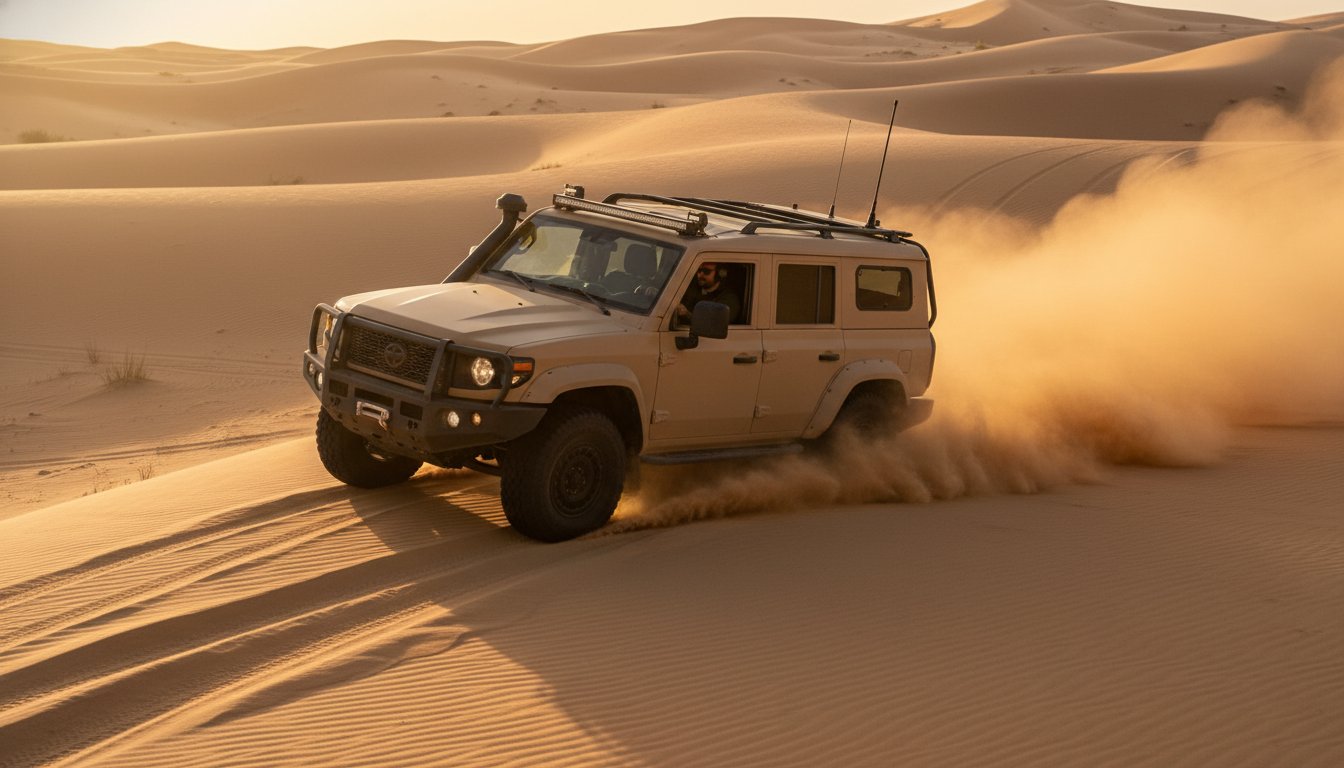
The term 'tactical' is often applied to any rugged-looking truck, but what truly defines a mission-ready platform? From a heavily modified commercial 4x4 designed for desert patrol to a purpose-built armored personnel carrier, the world of tactical vehicles is vast and frequently misunderstood. This ambiguity creates challenges, making it difficult to differentiate between aesthetic upgrades and genuine operational capability. If you've ever questioned what separates a true tactical asset from a standard off-road vehicle, or what specific modifications are critical for security and defense roles in demanding environments, you have found the definitive resource.
This comprehensive guide delivers the expert clarity you require. We will deconstruct the core definition of tactical vehicles, exploring the distinct categories from custom-converted platforms to bespoke military hardware. You will gain a robust understanding of the critical roles these assets play, the essential capabilities that define their performance, and the precision engineering required to build a vehicle that is not just tough, but truly mission-capable. Prepare to move from uncertainty to complete confidence in specifying your exact operational needs.
What Defines a Tactical Vehicle? Core Characteristics Explained
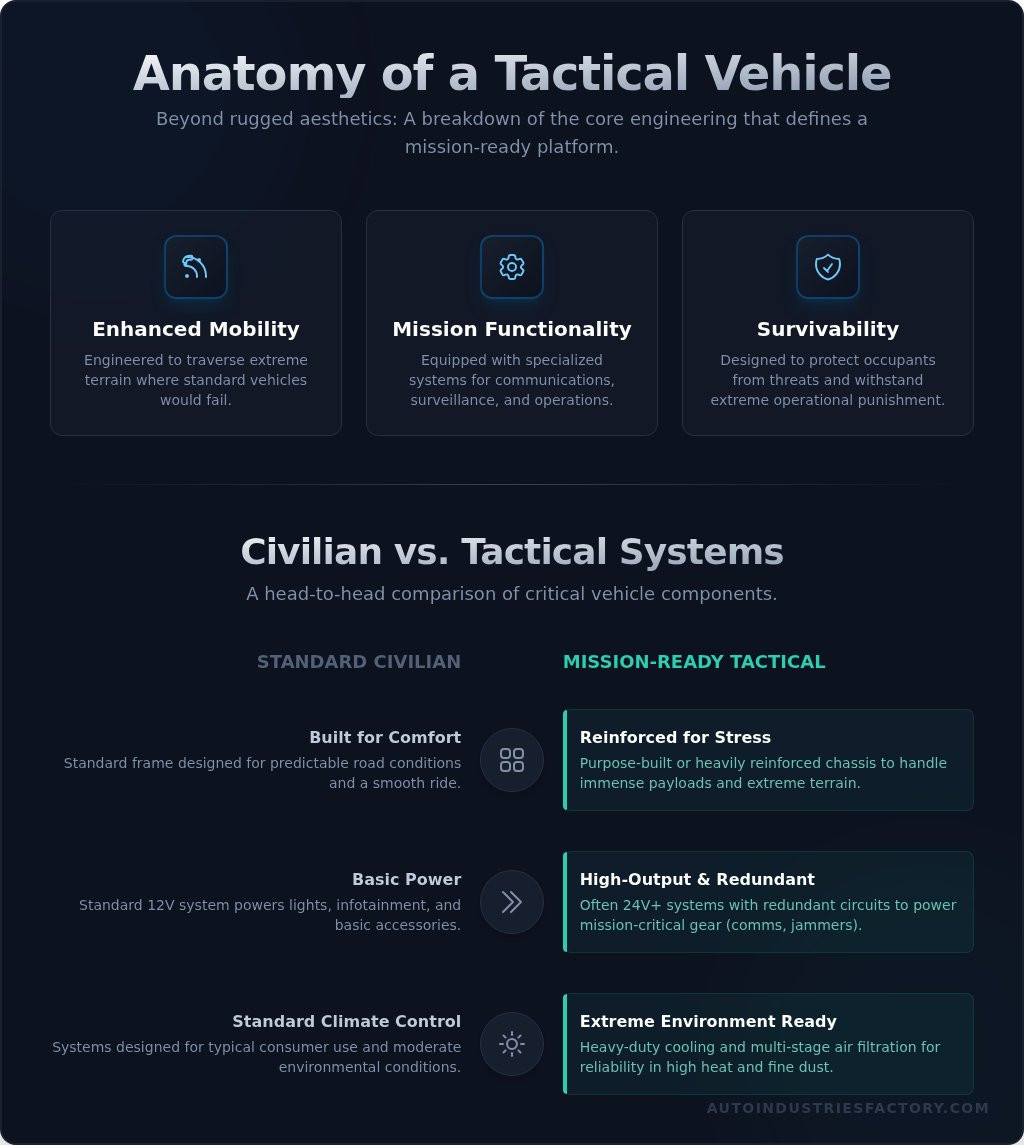
When the term "tactical vehicle" is used, the immediate image is often of a heavily armored military tank. However, the definition is far broader and more precise. At its core, a tactical vehicle is any platform engineered or modified to execute a specific, demanding mission where standard civilian vehicles would fail. Success is measured not by comfort or style, but by the successful completion of the objective. This mission-first philosophy is built upon three foundational pillars: enhanced mobility, mission-specific functionality, and survivability.
These pillars dictate every aspect of the vehicle's design, creating a clear distinction from their civilian counterparts. From a reinforced chassis built to withstand extreme punishment to high-output electrical systems designed to power advanced communications and surveillance equipment, every component is selected for performance and reliability under pressure. This specialized engineering creates a wide spectrum of capable platforms.
The Spectrum of Tactical Platforms
Not all tactical vehicles are created equal. They exist on a spectrum defined by their origin and level of modification. This ranges from purpose-built military units, which are detailed across many Military vehicle categories, to expertly converted commercial platforms. Key levels include:
- Level 1: Purpose-Built Military Vehicles: Designed from the ground up for combat or combat support roles (e.g., MRAP, JLTV). Every component is militarized for maximum durability and performance.
- Level 2: Professionally Modified Commercial Vehicles (COTS): Commercial-off-the-shelf platforms, like the Toyota Land Cruiser or Nissan Patrol, that are professionally up-armored and modified for security, law enforcement, or special operations roles.
- Level 3: Improvised Fighting Vehicles ('Technicals'): Civilian pickup trucks or 4x4s modified in the field with weapons mounts, representing a low-cost, highly mobile tactical solution.
Key Design Principles: Function Over Form
The engineering behind tactical platforms prioritizes capability above all else. Aesthetics are secondary to performance, resulting in vehicles defined by their rugged, purpose-driven appearance. Three principles guide their construction:
- Durability: Utilizes reinforced frames, heavy-duty axles, and robust components designed to operate reliably in the harshest environments without failure.
- Mobility: Features advanced suspension systems, high ground clearance, and specialized drivetrains to traverse difficult terrain, from rocky mountains to deep sand.
- Modularity: Built with adaptable platforms that can be easily reconfigured with different equipment packages, allowing a single chassis to serve multiple roles, from troop transport to a mobile command center.
Civilian vs. Tactical: A Head-to-Head Comparison
The fundamental differences between a standard vehicle and a tactical one are stark when examining their core systems. A tactical conversion is more than just adding armor; it's a complete re-engineering of the vehicle's capacity to perform under stress.
- Chassis and Suspension: A standard chassis is designed for predictable road conditions and passenger comfort. A tactical chassis is purpose-built or heavily reinforced to handle immense payloads and the dynamic stress of off-road terrain at speed.
- Electrical Systems: Civilian vehicles use basic systems for lights and infotainment. Tactical platforms require high-output, often 24-volt systems with redundant circuits to power mission-critical gear like communications, jammers, and surveillance equipment.
- Cooling and Filtration: Standard cooling and air filtration systems are inadequate for extreme climates. Tactical conversions include heavy-duty cooling packages and advanced engine air filtration to ensure operational reliability in the high heat and fine dust common in regions like Oman.
Major Categories of Tactical Vehicles by Role and Platform
Understanding the world of tactical vehicles requires categorizing them not just by size, but by their core mission and the chassis they are built upon. Broadly, these platforms fall into three distinct groups: purpose-built combat systems, modified commercial vehicles, and specialized support units. Each category is engineered with a specific set of operational priorities, from frontline engagement and personnel protection to logistical support and mission command. This classification helps clarify why a heavily armored infantry carrier and a modified pickup truck can both be considered essential tactical assets.
Purpose-Built Combat & Patrol Vehicles
These vehicles are designed from the ground up for the extreme demands of combat and high-threat environments. Engineered for maximum survivability and offensive capability, they represent the pinnacle of military vehicle technology. Strategic planning, such as the ongoing Army tactical vehicle modernization efforts, continuously evolves these platforms to meet new threats. Key examples include:
- Mine-Resistant Ambush Protected (MRAP): Vehicles like the Oshkosh M-ATV are defined by their V-shaped hulls, designed to deflect explosive blasts away from the crew compartment.
- Infantry Fighting Vehicles (IFVs) & Armored Personnel Carriers (APCs): While APCs primarily transport troops, IFVs like the Bradley Fighting Vehicle add significant firepower to support them in an assault.
- Light Tactical Vehicles (LTVs): Successors to the Humvee, vehicles like the Oshkosh JLTV offer a superior balance of protection, payload, and off-road performance for patrol and reconnaissance missions.
Modified Commercial Vehicles (COTS)
Leveraging Commercial Off-The-Shelf (COTS) platforms provides a cost-effective and reliable solution for many agencies. By modifying proven civilian vehicle chassis, organizations gain access to robust supply chains and familiar maintenance protocols. This approach is increasingly vital for law enforcement, special forces, and security operations in regions like Oman, where durability is paramount. Common conversions include modifying rugged platforms like the Toyota Land Cruiser or Nissan Patrol with armor, communications gear, and weapon mounts for patrol and rapid response roles.
Special Purpose & Support Vehicles
Behind every frontline operation is a fleet of specialized support vehicles critical to mission success. These tactical vehicles are not designed for direct combat but are indispensable for operational sustainment, command, and casualty care. Their design prioritizes function-specific equipment and reliability over offensive power. This category includes tactical ambulances and MEDEVAC units with armored patient compartments, mobile command posts that serve as on-the-move headquarters, and heavy-duty logistics trucks responsible for transporting troops, fuel, and essential supplies to keep operations running.
Mission-Critical Capabilities: The Art of Tactical Modification
A standard commercial vehicle, however rugged, is merely the foundation. The transformation into a genuine tactical asset is a process of precision engineering and mission-specific enhancement. It involves a deep understanding of the Core characteristics of tactical vehicles, where every component is upgraded or added to serve a distinct operational purpose. This is not simple customization; it is the systematic integration of advanced systems to create a durable, reliable, and effective platform capable of performing under extreme pressure. The expertise lies in ensuring these complex systems work in harmony, without compromising the vehicle's core performance.
Survivability: Armoring and Protection Systems
The primary role of many tactical vehicles is to protect their occupants. This is achieved through the integration of advanced defensive systems. The goal is 360-degree protection against a range of threats, turning the vehicle cabin into a secure environment. Key technologies include:
- Ballistic Armor: Integrating high-strength ballistic steel and lightweight composite materials into the vehicle's body, doors, and critical component areas to defeat small arms fire and shrapnel.
- Blast Mitigation: Reinforcing the vehicle's underbody with specialized V-hulls and advanced materials designed to deflect the force of explosions from IEDs or mines.
- Advanced Protection: Installing multi-layered ballistic glass, reinforced door hinges, and heavy-duty run-flat tire systems to maintain mobility even after sustaining damage.
Mobility & Performance Enhancements
Superior mobility in demanding terrain is non-negotiable. Modifications focus on enhancing the vehicle's ability to traverse hostile environments reliably, even with the added weight of armor and equipment. These upgrades include heavy-duty suspension systems to manage increased payloads, engine and drivetrain enhancements for consistent power delivery, and specialized off-road tires paired with Central Tire Inflation Systems (CTIS) that allow for on-the-move pressure adjustments for optimal traction on any surface.
C4ISR and Equipment Integration
A modern tactical vehicle serves as a mobile command and communications hub. The seamless integration of C4ISR (Command, Control, Communications, Computers, Intelligence, Surveillance, and Reconnaissance) systems is critical. This requires expert engineering to install custom mounts and wiring for a suite of equipment, including satellite links, multi-band radios, surveillance sensors, and ruggedized computers, all while managing power consumption and ergonomics. Custom-fabricated weapon mounts and secure storage solutions ensure that all operational gear is both accessible and safely stowed.
The Role of Professional Vehicle Conversion and Fabrication
Not every mission requires a purpose-built military vehicle developed from the ground up. Often, the most effective and efficient solution is to transform a proven commercial platform into a specialized asset. This process of professional conversion and fabrication bridges the critical gap between an operational requirement and a field-ready solution, delivering customized capabilities without the prohibitive cost and long lead times of bespoke manufacturing.
Why Modify? The COTS Advantage
Leveraging Commercial Off-The-Shelf (COTS) vehicles as a base platform offers significant strategic benefits for government agencies and private security firms in Oman. This approach is rooted in practicality and operational intelligence, providing a clear advantage over sourcing purpose-built armored vehicles for certain roles.
- Cost-Effectiveness: The acquisition cost of a robust commercial vehicle is a fraction of a specialized military truck. This allows for the allocation of budget towards advanced modifications and equipping a larger, more capable fleet.
- Discreet Profile: Modified COTS vehicles can blend into civilian traffic, enabling low-profile surveillance, personnel transport, and security operations without drawing unwanted attention.
- Simplified Maintenance: Base vehicle parts and service expertise are readily available through global and local Omani supply chains, drastically reducing downtime and logistical complexity compared to proprietary military hardware.
From Stock to Tactical: The Conversion Process
Transforming a standard SUV or truck into a mission-ready tactical vehicle is a meticulous, engineering-led process. It is a journey from a factory model to a hardened, reliable asset built for specific, demanding roles. The process is systematically managed through distinct phases to ensure flawless execution:
- Needs Assessment & Engineering Design: A deep dive into the client's operational requirements, threat levels, and environmental conditions-such as Oman's challenging terrain and climate-to create a detailed engineering blueprint.
- Disassembly & Structural Reinforcement: The stock vehicle is stripped to its chassis. The frame, suspension, and key structural points are reinforced to handle the added weight of armor and specialized equipment.
- Fabrication & Systems Integration: This is where the transformation occurs. Ballistic steel or composite armor is precision-cut and welded into place. Advanced communication systems, weapon mounts, and other mission-critical hardware are seamlessly integrated.
- Quality Control, Testing, & Delivery: Every system is rigorously tested for performance, durability, and reliability before the vehicle is certified for delivery and deployment.
Choosing a Fabrication Partner: Key Considerations
The success of a vehicle conversion project depends entirely on the expertise of your fabrication partner. Selecting a company with a proven track record is non-negotiable. Look for a partner with deep, in-house engineering and fabrication capabilities, including CNC machining and certified welding. Their portfolio should demonstrate extensive experience with military, police, and high-security projects, ensuring they understand the non-negotiable standards of reliability and protection. Crucially, they must grasp the unique operational requirements and standards relevant to the region. See how our in-house fabrication delivers mission-ready vehicles.
Tactical Vehicles in the UAE & GCC: Meeting Regional Demands
The operational environment of the UAE and the wider GCC region presents a unique set of challenges that standard vehicles are simply not equipped to handle. Extreme ambient temperatures, fine abrasive sand, and vast, rugged terrain demand specialized modifications and robust engineering. For defense, security, and commercial operators, selecting and customizing the right platform is a mission-critical decision. The demanding environment of the GCC requires that tactical vehicles are not just capable, but exceptionally durable and reliable under constant stress.
Adapting to the Desert Environment
Success in the region depends on vehicles purpose-built to withstand its harsh conditions. Key modifications are not optional; they are essential for performance and longevity. At Auto Industries Factory, we specialize in these critical upgrades.
- Upgraded Cooling & Filtration: Heavy-duty radiators, auxiliary transmission coolers, and multi-stage engine air filtration systems are vital to prevent overheating and protect internal components from fine dust ingress.
- Optimized Suspension & Tires: Custom-tuned suspension systems and specialized tires with reinforced sidewalls are necessary to maintain stability and traction across soft sand dunes and rocky wadis.
- Enhanced Durability: Corrosion-resistant coatings protect the chassis from humidity and saline environments, while heavy-duty interior materials resist wear from sand and extreme heat, ensuring the vehicle remains operational for years.
Proven Platforms for the Region
Decades of field use have established a clear hierarchy of base vehicles trusted for their unparalleled reliability. These models are the starting point for some of the most reliable tactical vehicles in the world.
- Toyota Land Cruiser & Hilux: The undisputed benchmark for durability and parts availability, making them the top choice for military, security, and industrial fleets.
- Nissan Patrol: Renowned for its powerful engine and robust drivetrain, offering exceptional performance in demanding off-road roles.
- American Trucks (GMC, Ford): Often utilized for heavy-duty logistics, command and control platforms, and specialized support roles where payload capacity is paramount.
Local Applications and Requirements
The demand for customized vehicles in the GCC is driven by a diverse range of critical applications. From national security to private enterprise, each role has specific requirements for protection, mobility, and equipment integration.
Fleets are commonly configured for border security patrols, critical infrastructure protection, law enforcement rapid response, and high-value private convoy security. Each application demands a unique solution, whether it involves light armor, advanced communication systems, or specialized equipment storage.
Ensure your assets are prepared for any challenge. Build your fleet for the demands of the region. Get a quote.
Equipping Your Mission: The Final Word on Tactical Vehicles
As we've explored, the true capability of a tactical vehicle is defined not by its base chassis, but by the precision and purpose of its modifications. The success of any operation hinges on the reliability of these specialized assets, making expert-led conversion and fabrication a non-negotiable requirement for creating truly mission-ready tactical vehicles.
For organizations across Oman and the wider GCC, partnering with a proven specialist is the key to operational readiness. At Auto Industries Factory, we leverage extensive regional experience to deliver unparalleled results. As proven specialists in converting robust COTS platforms from Toyota and GMC, we provide complete in-house design, fabrication, and integration services. Our track record delivering mission-critical vehicles across the UAE and GCC is a testament to our engineering excellence.
Ensure your fleet is equipped to meet every challenge. Discuss Your Tactical Vehicle Requirements with Our Experts. Let's build the rugged, high-performance solution your team depends on.
Frequently Asked Questions About Tactical Vehicles
What is the main difference between a tactical vehicle and an armored vehicle?
The primary distinction lies in their core purpose. An armored vehicle's main feature is ballistic protection, using hardened materials to defend against projectiles. A tactical vehicle, however, is defined by its mission-specific capabilities, such as enhanced off-road mobility, advanced communications, or weapon mounts. While many tactical vehicles are armored, the term 'tactical' refers to its operational function and adaptability rather than just its level of protection and armor.
Can a regular SUV or truck be effectively converted into a tactical vehicle?
Yes, a standard SUV or truck can be professionally converted, but it requires extensive engineering. The process involves reinforcing the chassis to handle added weight, upgrading the suspension for superior performance in demanding terrains like those found in Oman, and enhancing the powertrain for reliability under stress. An effective conversion transforms a civilian platform into a durable, mission-ready asset, ensuring it meets the highest operational standards for performance and safety.
What are the most common base vehicles used for tactical conversions?
In Oman and the wider region, the most trusted platforms are renowned for their durability. The Toyota Land Cruiser (70 and 300 series) and Nissan Patrol Y62 are overwhelmingly popular due to their robust chassis and reliable powertrains. Heavy-duty pickup trucks like the Toyota Hilux and Ford F-Series are also frequently chosen for their payload capacity and adaptability for various roles, from personnel carriers to logistics support and rapid intervention units.
How are tactical vehicles tested to ensure they meet performance and safety standards?
Ensuring operational readiness involves rigorous testing. Mobility trials are conducted in harsh environments to validate suspension, powertrain, and off-road capability. If armored, materials undergo ballistic testing according to international standards like NIJ and STANAG. All integrated systems, including communications and electronics, are tested for flawless performance. This comprehensive validation guarantees the vehicle meets stringent safety benchmarks required by Omani defense and security entities.
What is a 'technical' vehicle and how does it differ from a professionally converted vehicle?
A 'technical' is an improvised fighting vehicle, typically a civilian pickup truck modified in the field to carry a weapon. These are characterized by their ad-hoc nature and lack of professional engineering. In contrast, a professionally converted tactical vehicle is systematically designed and fabricated. It features a reinforced chassis, upgraded suspension, and integrated systems engineered for safety, durability, and sustained performance, representing a reliable and purpose-built operational asset.
What kind of maintenance do custom tactical vehicles require?
Custom tactical vehicles demand a more stringent maintenance schedule than their stock counterparts. Regular inspections must focus on heavy-duty suspension components, upgraded braking systems, and the integrity of any structural reinforcements. Specialized electronic systems require periodic diagnostics. For armored models, routine checks of ballistic plates and glass are critical. Adhering to a preventative maintenance plan engineered for the vehicle's specific modifications is essential for ensuring long-term mission reliability.


