

A special-order 4x4 is only as effective as its fit for the work it must do. An APC4x4 project calls for clear decisions about the vehicle’s role, configuration, and required modifications. A well-defined APC4x4 order gives installation planning and product guidance a practical starting point.
It’s reasonable to expect more than a product description when configuring a vehicle for demanding use. This guide explains the support and guidance relevant to an APC4x4 special order, including how to assess project requirements, compare providers, and plan the next steps.
Key Takeaways
- Learn which vehicle configurations and conversion requirements to clarify before placing a special order.
- Understand how to assess a UAE provider’s location, installation capabilities, and fit for your project.
- Use customer feedback to focus on practical details such as communication, workmanship, and after-sales support.
- Know which warranty, delivery, and financing terms can affect your order planning.
- See when specialist vehicle conversions or metal fabrication are a better fit for your operational needs.
What products and services does APC4X4 offer?
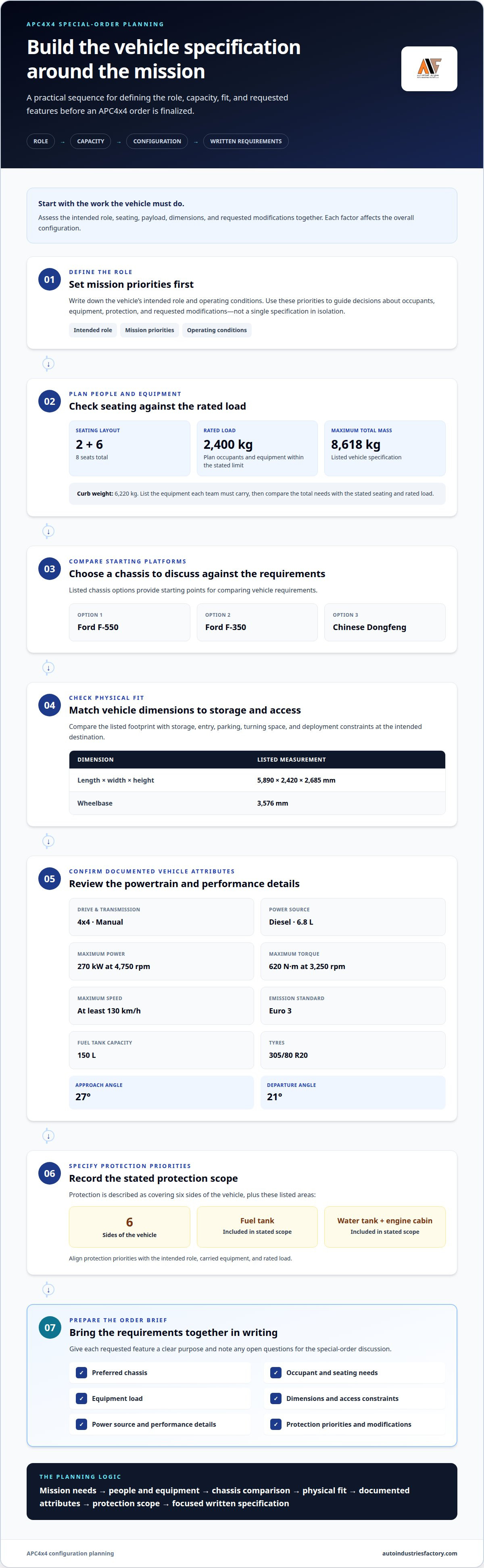
An APC4x4 is a four-wheel-drive armoured personnel carrier, with listed chassis options including Ford F-550, Ford F-350, and Chinese Dongfeng. These platforms offer a starting point for comparing vehicle requirements. For an APC4x4 special order, assess the intended role, seating, payload, dimensions, and requested modifications together. Each factor affects the overall configuration.
The listed vehicle measures 5,890 × 2,420 × 2,685 mm and has a 3,576 mm wheelbase. Its seating configuration is 2+6 seats, for eight seats in total. Maximum total mass is 8,618 kg, curb weight is 6,220 kg, and rated load is 2,400 kg. Use the rated load when planning occupants and equipment within the vehicle’s stated limits.
- Drive: 4x4 configuration.
- Engine: Diesel power source, 6.8 L displacement, and manual transmission.
- Output: 270 kW at 4,750 rpm and maximum torque of 620 N·m at 3,250 rpm.
- Fuel: 150 L tank capacity.
- Tyres: 305/80 R20.
- Approach and departure angles: 27° and 21°, respectively.
Build a requirement sheet before choosing a chassis. Start with the number of occupants, then list the equipment each team must carry. Compare those needs with the eight-seat layout and 2,400 kg rated load. Check the exterior dimensions against storage, access, and deployment constraints. This makes discussions about the APC4x4 configuration more precise.
The listed performance attributes include a maximum speed of at least 130 km/h, a diesel engine, and manual transmission. The engine’s maximum power output is 270 kW at 4,750 rpm. Its stated emission standard is Euro 3. Consider these details alongside the planned operating conditions and mission requirements, rather than treating any single specification as a complete measure of suitability.
Protection is described as covering six sides of the vehicle, plus the fuel tank, water tank, and engine cabin. Use that stated scope to define protection priorities for the APC4x4 order. Align those priorities with the vehicle’s intended role, carried equipment, and rated load. A written specification helps keep the requested configuration focused on operational needs.
For product guidance, document the preferred chassis, seating needs, equipment load, physical constraints, and mission priorities. This gives each requested feature a clear purpose and provides a practical starting point for discussing an APC4x4 special order.
The APC vehicle’s listed power source is diesel. State this clearly in the requirement sheet and confirm it suits the intended operating plan before finalizing the configuration. Recording the power source keeps comparisons focused on documented vehicle attributes, not assumptions about alternatives. Note any open questions for the special-order discussion.
The power source should be considered alongside seating, equipment needs, physical constraints, and protection priorities. This keeps the decision connected to the vehicle’s intended role instead of allowing one attribute to determine the whole specification. Where requirements remain open, document them clearly so the requested APC4X4 configuration can be discussed against the stated needs. The result is a more focused basis for comparing the requested features and confirming which details need further clarification.
Where is APC4X4 located in the UAE?
APC4X4 identifies a vehicle type, not a UAE emirate or workshop address. For buyers, the relevant location is the site handling the vehicle discussion, installation, and handover. Treat those as separate project points. A seller’s office, fabrication facility, and collection location can serve different purposes, so identify which one applies to each stage.
Before arranging a visit, write down what needs to be handled in person. A specification meeting can cover the vehicle’s role and order requirements. Installation coordination may involve reviewing vehicle access and work scope. Collection needs a practical plan for moving the finished vehicle to its operating base. Define the purpose first, then plan the visit around it.
Use this sequence to plan location logistics for an APC4x4 order:
- Set the operating base. Identify where the vehicle will be stored and deployed across the UAE.
- Define each visit. Separate specification discussions, installation coordination, and collection.
- Map the route. Plan travel between the project team, work location, and vehicle’s intended base.
- Plan site access. Consider vehicle dimensions, parking, turning space, and entry arrangements.
- Assign a coordinator. Have one person manage meeting details and consolidate project questions.
For example, a fleet operating across several emirates may need a central meeting point, even when vehicles are assigned to separate bases. Keep travel planning separate from technical suitability. A convenient address alone does not show that a facility can carry out the required installation work. A workshop’s location also does not determine where the vehicle will operate.
Prepare useful details before visiting: vehicle identification, project purpose, required modifications, operating base, and the decisions needed from the meeting. A written record helps the team carry those details between planning and handover. For an APC4x4 project, route planning should also account for the vehicle’s size and the access conditions at its destination.
When comparing location arrangements, distinguish the registered business address from the place where work is carried out. Set the meeting point, installation site, and collection arrangements separately in the project plan. This helps avoid relying on an address for the wrong stage and supports coordination among those responsible for moving the vehicle.
Use a visit checklist that names the purpose, attendees, vehicle details, and required decisions. Include the journey between the operating base and each project site. This makes UAE location planning a concrete part of the APC4x4 order process, alongside specification and installation coordination.
How does APC4X4 compare with other UAE 4x4 shops?
A useful comparison starts with the job, not a broad “4x4 specialist” label. APC4X4 refers to an armoured personnel carrier configuration, while other UAE workshops may focus on different vehicle work. Compare each option against your project’s actual scope: vehicle conversion, metal fabrication, accessory fitting, or routine servicing. A provider’s capability in one area doesn’t establish capability in another.
Use a written comparison sheet and ask the same questions about each option. Record the vehicle type, requested work, installation responsibilities, and customer support included. A fleet commissioning a purpose-built operational vehicle, for example, should assess conversion experience differently from a driver looking for a roof rack. Comparisons are more useful when responses address the project’s actual requirements.
- Project fit: Match the provider’s stated work to the exact vehicle and intended role.
- Technical scope: Separate fabrication, component installation, and complete conversion requirements.
- Specification handling: See whether the discussion addresses fit, load planning, and vehicle use.
- Installation coordination: Identify which work stages the provider will perform and how handover is handled.
- After-sales terms: Compare written warranty, delivery, and customer-care details without assuming they are standard.
For an APC4X4 configuration, use the vehicle’s published details as a baseline, then examine how each provider addresses the requested work. A response should relate to the selected vehicle and project requirements, not just general 4x4 experience. If the requirement involves a custom body or conversion, assess the fabrication and integration scope. If it involves fitting an accessory, focus on compatibility and installation responsibilities.
Across the UAE, consider the practical journey to the workshop and the visits needed for specification, installation coordination, and collection. A workshop closer to the operating base may simplify logistics, while a more distant one may suit a project requiring particular technical capabilities. Assess location separately from technical fit so convenience does not replace relevant expertise.
Customer reviews can provide context, but look for specific evidence rather than relying on star ratings alone. Seek comments about similar work, such as vehicle conversions or metal fabrication. Note whether reviewers discuss communication, workmanship, or support after installation. Reviews about unrelated services offer limited insight into an APC project.
Finish with a side-by-side assessment of project scope, technical relevance, installation process, location, and written terms. Mark each item as addressed, partly addressed, or unanswered. This simple check reveals gaps without creating an unsupported ranking, and gives the project team a clear basis for selecting a UAE workshop suited to the vehicle’s intended use.
What do customers say about APC4X4
Customer feedback is most useful when it describes a specific vehicle, installation, or service interaction. For an APC4X4 purchase, broad praise alone won’t show whether comments relate to armoured vehicle work. Separate feedback about product quality from feedback about communication, installation, and after-sales support. Each category answers a different buyer question.
First, check whether a review identifies the work performed. A comment about a standard accessory installation may not reflect experience with an armoured personnel carrier. Look for details such as the vehicle type, requested modification, installation process, and reported result. Specific examples provide more context than an unexplained rating.
Sort customer comments into practical themes:
- Communication: Did the review describe clear updates, specification discussions, or responses to questions?
- Workmanship: Does it refer to fit, finish, fabrication, or installation on a named vehicle?
- Project handling: Does the customer explain how requirements or changes were managed?
- After-sales care: Does the comment describe support after handover or during later use?
- Relevance: Was the reviewed job similar to the vehicle and conversion you’re considering?
Read the full review before relying on its star score. A reviewer might praise courteous service without commenting on fabrication quality. Another might describe a well-fitted bull bar but say nothing about a complete vehicle conversion. Both comments can be useful, but they support different conclusions. Match each review to the claim it actually makes.
Look for recurring details described independently, rather than treating one comment as a pattern. If several reviewers separately mention clear installation updates, that may inform your assessment of communication. A single report of a delayed response is worth noting, but does not establish a typical outcome. Compare dates and project types, giving more weight to comments that explain the circumstances.
For a special order, turn review findings into project questions. If feedback mentions fitment, ask how the requested components relate to your vehicle configuration. If it discusses handover communication, clarify how project updates will be handled. For comments about a custom bull bar or bumper, distinguish that fabrication experience from feedback on other work.
Keep a simple evidence note with the review topic, vehicle or service mentioned, and the customer’s specific point. Separate direct experience from opinion, and avoid treating online comments as a technical inspection. This gives buyers a grounded view of customer sentiment while keeping decisions focused on the actual scope, installation requirements, and support needed for the UAE project.
Does APC4X4 offer warranties, delivery, or financing
The listed APC vehicle has a 1-year warranty. Treat that period as one part of the purchase terms, not as a complete description of coverage. The written warranty should identify covered components, the start date, claim process, and exclusions. Those details help distinguish protection for the base vehicle from coverage for conversion work or installed equipment.
For a special order, organize warranty questions around the finished vehicle. The chassis, protective body, and fitted components may have different coverage conditions. Record each item in the order documents, along with the responsible party and any evidence needed for a claim. Clear records help explain how a future issue should be reported and assessed.
Use this warranty review checklist before signing:
- Coverage: Identify which vehicle systems, conversion elements, and installed parts the warranty addresses.
- Duration: Note the stated coverage period and when it begins.
- Claims: Record the notification route and documents needed for a claim.
- Exclusions: Read conditions that may affect coverage, including maintenance or use requirements.
- Handover: Keep the warranty document with the vehicle’s specification and installation records.
Treat delivery as a separate order decision. Define the collection point, destination, vehicle handover, and responsibility for arranging transport. For example, a fleet receiving a vehicle away from its operating base needs to coordinate driver availability and onward transport. Include these arrangements in the project schedule so collection is not left as an informal final step.
Set out financing terms separately in writing. Map payment stages to the order process and compare them with internal budget approvals. A fleet procurement team may need authorization before placing an order, while a private buyer may plan around personal funding. The agreement should clearly identify payment timing, required documents, and any financing conditions.
Keep warranty, delivery, and financing in separate sections of the purchase file. This prevents warranty coverage from being confused with delivery timing or payment obligations, and gives procurement, operations, and finance teams a shared record. An operations manager can review handover arrangements while the finance team checks payment milestones.
Before committing, prepare one document listing the 1-year warranty, coverage terms, delivery responsibilities, and payment schedule. Mark each item with its corresponding written term. This creates a clear basis for evaluating the full purchase arrangement without treating delivery or financing as automatic parts of the vehicle specification.
Auto Industries Factory LLC: Ambulance Conversions
Auto Industries Factory LLC is a practical next step for UAE buyers planning a specialized vehicle conversion. Its work includes ambulance conversions, police and military vehicle modifications, and safari vehicle conversions. These options suit projects that need a purpose-built vehicle rather than general apc4x4 accessories. Metal canopies and roof racks also support utility-focused vehicle requirements.
For ambulance projects, define the vehicle’s intended role and conversion requirements before discussing the build. For police or military vehicle modifications, outline the operational purpose and required configuration. A clear project brief keeps the discussion focused on the relevant conversion work.
For a specialized vehicle conversion, contact Auto Industries Factory LLC or visit its website.
Move Your Vehicle Project Forward
Turn your operational requirements into a concise project brief before taking the next step. Define the vehicle’s intended role, the modifications required, and the decisions your team still needs to make. This gives any discussion about an apc4x4 configuration a clear purpose and helps keep technical priorities in focus.
For projects centered on specialist conversions, Auto Industries Factory offers Ambulance Conversions, Police & Military Vehicle Modifications, and Safari Vehicle Conversions. These services may suit teams whose requirements call for a purpose-built vehicle rather than a general 4x4 accessory installation. Share your project brief to start a focused conversation about the relevant conversion work.
Contact Auto Industries Factory to discuss your vehicle requirements. A clear brief is a strong first step toward a well-defined project.
Frequently Asked Questions
What is APC4X4?
An APC4X4 is a four-wheel-drive armoured personnel carrier designed to transport personnel in a protected vehicle. The name describes the vehicle type and drivetrain, not a general 4x4 accessory package. For buyers assessing an apc4x4, the practical starting point is its intended role: consider who it must carry, what equipment it needs, and the operating conditions it will face. Those requirements guide configuration decisions.


