

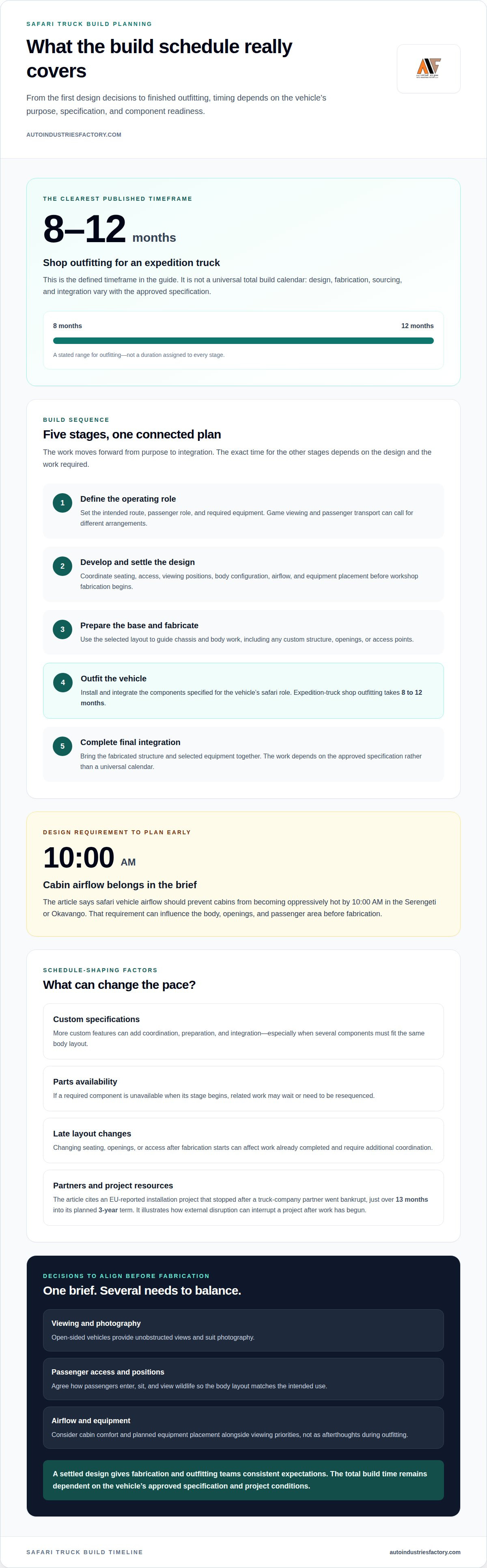
The shop-outfitting stage for an expedition truck takes 8 to 12 months. The full time to build a safari truck depends on the custom design and the work required to turn that design into a finished vehicle, so how long it takes to build a safari truck is shaped by more than workshop time alone.
It’s reasonable to want a clear timeline, especially when the vehicle must perform reliably on demanding routes. There is no single build time for every safari truck: the schedule depends on the design, passenger layout, viewing access, and equipment to be installed.
This guide explains the main stages from custom design through shop outfitting, what can extend or streamline the schedule, and how to plan a safari vehicle conversion for use in the UAE. You’ll see why defining the vehicle’s purpose early helps turn a broad idea into a practical build plan.
Key Takeaways
- Set the vehicle’s intended use and layout early to give design and fabrication a clear direction.
- Understand how design, parts sourcing, chassis and body fabrication, and shop outfitting fit together in the build schedule.
- Recognize that custom specifications and parts availability can affect how smoothly work moves between stages.
- Learn how a vehicle conversion specialist can turn a defined safari truck brief into a practical outfitting plan.
Custom-built safari truck design
A custom build starts with the intended route, passenger role, and equipment, while a ready-made safari vehicle starts with an existing configuration. Customization can better match a specific journey, but design choices, parts availability, and partner or funding risks can extend the schedule.
Build Stages and Their Duration
A safari truck build moves from defining its purpose to design, fabrication, outfitting, and final integration. Understanding these stages helps distinguish workshop work from the decisions and sourcing that happen beforehand.
The design brief should set out passenger needs, wildlife-viewing priorities, route conditions, and required equipment. A truck designed for forest game viewing has different visibility and access priorities from one intended for a long journey. The approved layout guides chassis and body work, so late changes can affect later stages.
Fabrication follows the design, with the chassis and body prepared for the selected layout. Shop outfitting is the stage with a defined timeframe: expedition-truck outfitting takes 8 to 12 months. Integration brings the fabricated structure and chosen equipment together; the exact work depends on the approved specification, not a universal build calendar.
Fabricating the Chassis and Body
Chassis and body fabrication turns the design into the vehicle’s physical structure. Its duration matters because later outfitting relies on the structure and openings being ready for the planned passenger layout.
The design establishes where passengers sit, how they enter, and how they view wildlife. A game-viewing layout may need different openings and sightlines from one designed mainly for passenger transport. Fabricators use these decisions to shape the body and position its components, so changing the layout after fabrication begins can add work.
Material preparation and cutting also follow the design. A custom body with a roof structure or altered access points requires work suited to those features; a simpler configuration has a different scope. Electrical equipment must also be considered during design so the structure and outfitting can accommodate its planned placement.
Parts Availability, Customization, and Delays
Parts availability, customization, and dependencies all affect progress from design to completion. Identifying these factors early helps explain why two safari truck builds may take different amounts of time.
Specialized components can affect the order of fabrication and outfitting. If a required part is unavailable when the team reaches the stage that uses it, related work may have to wait or be resequenced. Custom features can add coordination, preparation, and integration, especially when several components must fit the same body layout.
Partners and funding also matter. According to the European Union, a truck-company partner’s bankruptcy shut down an installation project just over 13 months into its planned 3-year term. That example shows how a project can stop even after work has begun. A clear design, aligned responsibilities, and stable project resources support continuity from fabrication through outfitting.
Cabin airflow is also part of the design brief, because it affects comfort during the journey. Safari vehicle airflow should prevent cabins from becoming oppressively hot by 10:00 AM in the Serengeti or Okavango. That requirement can guide choices about the body, openings, and passenger area before fabrication begins. Considering airflow alongside viewing priorities helps keep comfort needs within the same approved layout, rather than treating them as an afterthought during outfitting. The design must balance the desired level of enclosure with the experience passengers expect from the vehicle.
Open-sided safari vehicles provide unobstructed views and suit photography. Choosing between open sides and a more enclosed cabin is therefore a core design decision, not just a styling preference. Passenger access, viewing positions, and airflow should be considered together so the body suits its intended use. A clear brief gives fabricators and outfitting teams consistent expectations, while late changes to openings or seating may affect completed work. Agreeing on priorities early helps the finished vehicle serve the journey it was built for.
What are the main stages of building a safari truck, and how long does each take?
A safari truck moves through a sequence of decisions and workshop operations, from defining its role to integrating its outfitting. Shop outfitting an expedition truck takes 8 to 12 months; the other stages depend on the vehicle’s specification, component readiness, and how much custom fabrication it requires.
- Define the operating role. The build begins by establishing how the vehicle will be used, who it will carry, and what the route demands. A truck focused on game viewing needs a different passenger arrangement from one intended primarily for transport. These decisions shape the design and help prevent conflicting requirements later.
- Develop and settle the design. The layout translates the operating brief into a buildable vehicle plan. Passenger access, viewing positions, body configuration, and equipment placement need to work together. A change to the seating layout, for example, can affect openings and interior arrangements. Settling these choices before fabrication reduces redesign during workshop work.
- Prepare the base and fabricate the structure. The selected platform and body plan guide the work on the chassis, metal structure, and custom openings. The scope depends on how much of the vehicle changes. A build using a more extensively altered body requires additional coordination between design details and fabrication than a conversion with fewer structural changes.
- Outfit the vehicle. This stage installs and integrates the components specified for the safari role. Expedition-truck shop outfitting takes 8 to 12 months. Its position in the sequence matters: the design and fabricated structure need to support the equipment and layout being fitted, so earlier changes can affect this work.
- Integrate and complete the build. The final stage brings the completed structure, outfitting, and vehicle systems into one working configuration. The team resolves fit and finish issues that emerge as parts come together. The extent of this work follows the chosen specification; a custom arrangement with more interfaces requires more coordination than a simpler one.
These stages are connected, rather than separate blocks of time. Design can progress while components are identified, but fabrication depends on settled structural details. Outfitting then relies on the prepared vehicle and selected parts being ready. A delay in one dependency can affect the next stage, while completed design decisions help the workshop plan its sequence.
For the UAE reader, the practical planning point is to distinguish shop outfitting from the full project. The 8 to 12 months applies to outfitting an expedition truck in the shop, not every stage from initial brief to completion. A useful schedule therefore identifies design decisions, fabrication scope, parts readiness, and outfitting as separate milestones. That breakdown gives each project a clearer sequence without treating a custom build as a fixed-duration package.
To understand the expected timeline, map each operation to its prerequisites. Body fabrication follows approval of the layout, while outfitting follows structural preparation. A useful project schedule shows these dependencies and identifies which decisions must be made before each stage can proceed.
For the UAE reader, safari vehicles generally fall into two main types. Identifying which type the build is intended to serve gives the project a clearer starting point: the team can assess passenger needs, viewing arrangements, access, and equipment against the vehicle’s intended role. That choice should guide the brief rather than be left until the workshop has begun, since the body configuration and interior plan need to support the same purpose.
A clear intended use also keeps later decisions aligned. The design can set structural and layout priorities, and the workshop can plan fabrication around them. If the vehicle’s role changes after those details are settled, the team may need to reconsider how components fit together. Keeping the intended use in view connects the original brief to the finished vehicle and helps define the work required at each stage.
What factors affect safari truck build time, such as parts availability and customization?
Build time depends on how closely the vehicle’s components, structure, and intended use align. Parts availability can pause dependent work, while custom features add design coordination and fabrication. For a UAE project, the schedule also depends on whether the chosen vehicle is already available or must be imported.
Parts sourcing and vehicle availability
The schedule can shift before fabrication begins if the base vehicle or a required component isn’t ready. Importing an expedition truck can take several weeks to 2 months. That sourcing period affects when the vehicle can enter the workshop and when its dimensions and condition can inform the build plan.
Components also influence the order of work. If a planned roof structure depends on specific hardware, the body design and installation plan need to account for those parts. A delay can hold up installation or require the team to sequence other work around it. Identifying required components early helps reveal these dependencies.
Customization and design choices
Every custom feature adds decisions about placement, fit, and interaction with other vehicle systems. A pop-up roof intended to support viewing through 360 degrees needs to align with the roof structure and passenger positions. An open-sided layout gives unobstructed views, but its body configuration differs from an enclosed vehicle. Each option changes the work the build requires.
Route conditions shape other requirements. A design intended for rough ground may call for at least 8-9 inches of ground clearance. That decision affects the vehicle configuration and needs to be considered alongside the body and equipment. Adding requirements late can trigger new design coordination rather than simply adding an item during outfitting.
Work sequence and project coordination
Build operations depend on one another. Body fabrication requires settled dimensions, while installation requires the relevant structure and components to be ready. If an equipment choice changes after the structure is prepared, the fitting plan may need to change too. Decisions affecting several parts of the vehicle therefore carry more schedule weight than isolated finish choices.
Customization can affect how smoothly separate workstreams proceed. A viewing roof, passenger arrangement, and equipment placement must work together as one design. If one choice changes, the team may need to review its impact on the others before proceeding. Coordinating these decisions early reduces avoidable rework and helps keep the planned sequence on track.
How to interpret timeline changes
When the schedule changes, identify the affected dependency rather than treating every delay alike. A late-arriving vehicle affects the start of physical work; a late component affects the operations that need it. A design revision may affect both fabrication and fitting. Separating these causes shows which milestone has shifted and what work can continue.
For a safari truck build, schedule pressure often arises where sourcing, custom design, and workshop tasks meet. A clear specification helps align the vehicle, parts, and fabrication sequence. The schedule then serves as a practical working plan, with changes tied to their actual effect on the build.
How long do safari truck chassis and body fabrication typically take?
Chassis and body fabrication time depends on the work needed to match the truck’s structure to its design. The scope varies with the base vehicle, structural changes, body layout, and coordination with later outfitting. A chassis that retains its existing configuration involves different work from one requiring substantial adaptation for passenger access or viewing.
Start with the chassis and build scope
The first fabrication step is to identify which chassis areas remain unchanged and which need adaptation. This sets the scope of structural work and helps fabricators plan how the body will align. For a vehicle intended for uneven routes, ground-clearance requirements should be considered alongside the body design.
Safari vehicles should have at least 8-9 inches of ground clearance to clear rocks, ruts, and eroded track edges. That requirement affects how the chassis and body configuration are considered together. It isn’t an isolated measurement: changes to one part of the vehicle can influence the placement and fit of other structures.
Once the chassis scope is clear, the team can plan cutting, forming, and joining around the approved design. Fabricators rely on dependable workshop gear to handle heavy-duty assembly accurately; resources like naredi.in highlight the range of specialized automotive tools used in modern vehicle workshops. Metal parts need to fit the selected structure and one another. If the body layout changes after fabrication starts, dimensions may need review or prepared components may need modification.
Shape the body around passenger use
Body fabrication translates passenger and viewing requirements into physical openings, supports, and interior boundaries. A pop-up roof, for example, needs to fit the roof structure and the planned passenger positions. Its hatch allows passengers to stand and scan 360 degrees without leaving the vehicle, making roof placement central to the design.
An open-sided body follows a different fabrication path. It provides unobstructed views and suits photography, but the body must be designed for that configuration. An enclosed layout requires different openings and structural arrangements. Deciding between these options early gives fabrication a stable target.
Passenger capacity also shapes the body. A standard pop-up roof 4×4 safari vehicle seats 5-7 passengers. The number and arrangement of seats affect access and viewing positions, so they need to be defined before interior structures are placed. Altering the arrangement later can require changes to completed body work.
Coordinate fabrication with outfitting
The fabricated structure must accommodate the equipment and features planned for the vehicle. A roof hatch, side opening, and passenger layout all compete for space and require coordinated placement. The body is therefore part of an integrated vehicle design, not a shell that can be completed independently.
The sequence matters. Chassis preparation establishes the foundation, body fabrication creates the required form, and outfitting follows the prepared structure. Expedition-truck shop outfitting takes 8 to 12 months, but that period describes outfitting, not chassis and body fabrication. Keeping those stages distinct makes a project timeline easier to interpret.
For a custom safari vehicle conversion, the practical starting point is a settled layout and defined structural scope. Clear decisions about passenger arrangement, roof design, and body openings help fabrication proceed in sequence. Explore safari vehicle conversion services when the build requires coordinated custom vehicle work.
Auto Industries Factory: Safari Vehicle Conversions
Auto Industries Factory LLC provides Safari Vehicle Conversions for projects that need a vehicle configured around a defined use and passenger layout. When your brief is ready, the team can move from schedule planning to fabrication and outfitting. Metal Canopies and Roof Racks can also form part of the vehicle configuration, depending on project requirements.
Outline the intended use, preferred layout, and required features to establish the scope and sequence of work. This gives the conversion project a concrete starting point, with fabrication coordinated around the vehicle’s specified requirements.
Contact Auto Industries Factory LLC to discuss your safari vehicle conversion requirements.
Turn Your Safari Truck Brief Into a Build Plan
Knowing how long it takes to build a safari truck is useful, but the next step is turning your intended use into a clear project brief. Define the vehicle’s role, passenger needs, and key features so the fabrication plan reflects its operating requirements.
Auto Industries Factory LLC handles Safari Vehicle Conversions, alongside Ambulance Conversions and Police & Military Vehicle Modifications. For a safari build, the discussion can focus on your intended vehicle and the conversion work needed to shape it for its purpose.
Bring your project requirements to the team and discuss the next steps. Contact Auto Industries Factory LLC to start planning your vehicle conversion with confidence.
Frequently Asked Questions
How long does it take to build a safari truck from scratch?
There is no fixed duration for every custom build; the schedule depends on the specification and sequence of work. A vehicle requiring a new structure, custom body, and extensive outfitting involves more coordination than a simpler configuration. A useful estimate separates design, chassis and body fabrication, parts sourcing, and outfitting, then accounts for dependencies such as components needed before installation.
How long does it take to convert a standard truck into a safari vehicle?
The conversion timeline depends on how much of the standard truck changes. Retaining the existing body and adding selected safari features has a different scope from structural alterations, a revised passenger layout, or custom openings. For example, a game-viewing conversion may require changes to access and sightlines. A Safari Vehicle Conversion plan should define these requirements before workshop work begins.


