
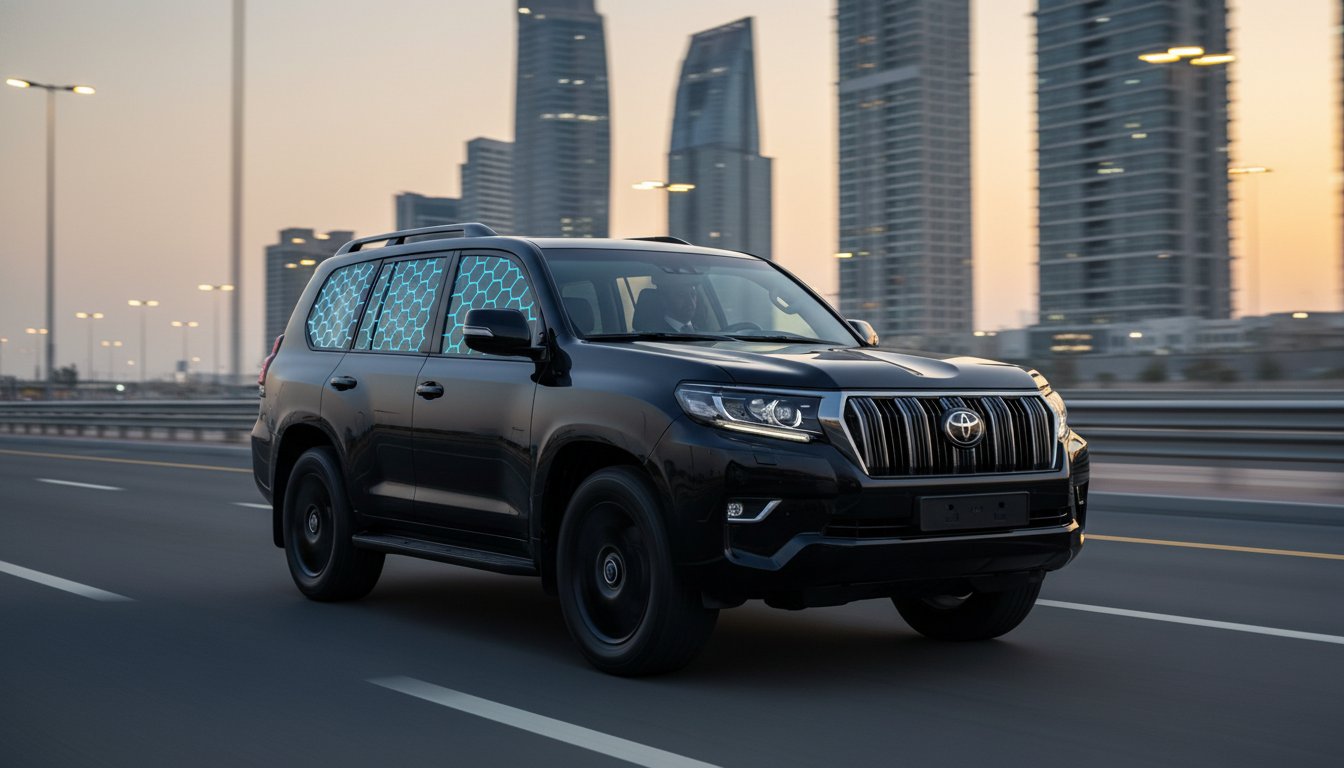
Your daily commute through Muscat or a long drive across the Sultanate should be a time of comfort and focus, not a source of anxiety. In a world where personal security is paramount, the vulnerability felt on the road is a valid concern for many. For discerning individuals who prioritize safety without sacrificing luxury or attracting unwanted attention, the definitive solution is an advanced class of vehicle: the armored car civilian models, engineered for discreet protection.
Forget the image of a cumbersome, obvious tactical vehicle. Modern armoring is a science of subtlety, transforming premium SUVs and sedans into mobile safe rooms that are visually indistinguishable from their factory counterparts. This guide is built to give you confidence and clarity. We will demystify the technical standards of ballistic protection, from B4 to B7, and reveal how expert fabrication integrates a heavy-duty shield without compromising the vehicle's performance. Discover how to select the right level of security for your specific needs in Oman and gain ultimate peace of mind for yourself and your family on every journey.
What is a Civilian Armored Car? (And How It Differs from Military Vehicles)
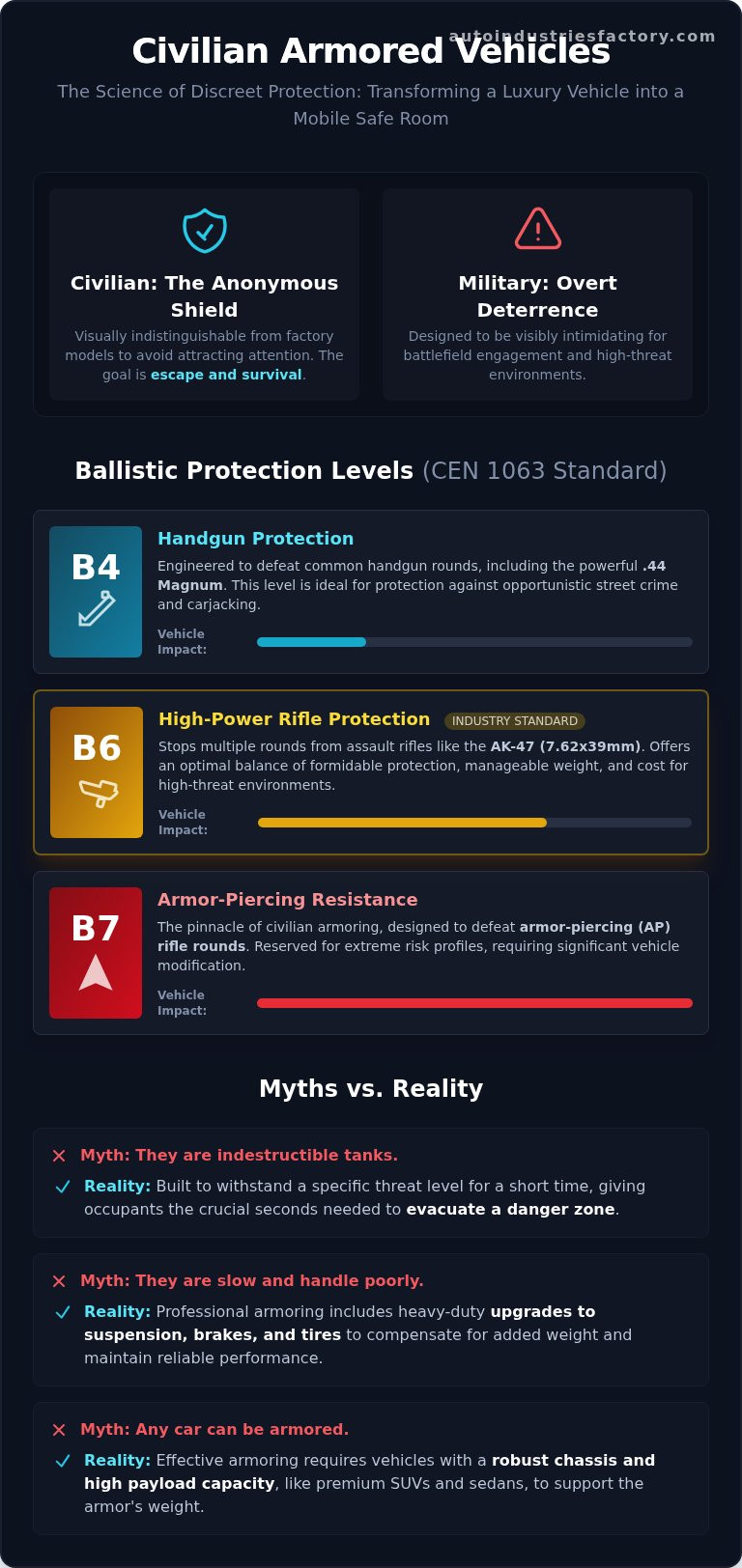
At its core, an armored car for civilian use is a standard production vehicle that has been expertly and discreetly modified with advanced protective materials. Unlike their military counterparts, which are designed for overt deterrence and battlefield engagement, the primary objective of a civilian armored car is to blend in seamlessly with everyday traffic. This philosophy of anonymity is its greatest strength, providing a shield of protection without attracting unwanted attention.
The primary purpose is to safeguard occupants from a range of threats, including handguns, high-powered rifles, and the shrapnel from explosive devices. For high-net-worth individuals (HNWIs), corporate executives, diplomats, and their families in Oman and across the region, this level of security offers peace of mind. It transforms a premium vehicle like a Toyota Land Cruiser or Lexus LX into a mobile safe room, engineered not for aggression, but for survival.
The Philosophy of Discreet Protection
The most effective personal security is often the security that no one knows is there. An armored car civilian model is built on this principle. All ballistic protection-from hardened steel plates and aramid fibers to multi-layered bullet-resistant glass-is installed within the vehicle's original frame. From the outside, it is virtually indistinguishable from the factory model. This ensures that potential attackers cannot identify it as a hardened target, denying them the element of surprise and giving the occupants a critical tactical advantage: the time to escape an ambush.
Common Misconceptions about Armored Vehicles
Understanding the reality of armored vehicles is key to using them effectively. Several myths persist that misrepresent their true purpose and capabilities.
- Myth: They are indestructible tanks.
Reality: Civilian armored vehicles are engineered to withstand a specific level of ballistic threat (e.g., CEN B6/BR6) for a short period. Their primary function is to defeat the initial attack and provide occupants with the crucial seconds needed to evacuate the danger zone, not to engage in a sustained firefight. - Myth: They are slow and difficult to drive.
Reality: Professional armoring includes essential, heavy-duty upgrades to the suspension, brakes, and tires to compensate for the added weight. While heavier, a properly modified vehicle maintains predictable handling and reliable performance for evasive maneuvers. - Myth: Any car can be armored.
Reality: Effective armoring requires a vehicle with a robust chassis and a high payload capacity. Premium SUVs and sedans are ideal candidates due to their durable construction, which can safely support the significant weight of ballistic materials without compromising structural integrity.
Understanding Ballistic Protection Levels: From Handguns to Rifles
When selecting an armored vehicle, "protection" is not a single, undefined standard. It is a precise capability measured by certified ballistic levels that specify exactly what kind of threat the armor can defeat. The most widely recognized standard in the vehicle armoring industry is the European CEN 1063 BR (Ballistic Resistance) rating. The system is straightforward: a higher number signifies a greater level of protection. While vehicle armor has its own certifications, the principles align with established research on Ballistic Protection Levels from authorities like the U.S. National Institute of Justice. It is critical to understand that professional armoring provides 360-degree protection for the entire passenger cabin-including all glass, the roof, floor, and firewalls-ensuring there are no ballistic gaps.
Here is a simplified overview of the most common protection levels:
- Level B4: Engineered to defeat common handguns up to and including a .44 Magnum.
- Level B6: Engineered to defeat high-power assault rifles like the AK-47 (7.62x39mm).
- Level B7: Engineered to defeat armor-piercing (AP) rifle rounds (e.g., 7.62x51mm AP).
Level B4 Protection: Defense Against Handguns
This level provides robust defense against common handgun threats. It is an ideal solution for clients in Oman whose primary concern is mitigating risks from opportunistic street crime, carjacking, or smash-and-grab attempts. A key advantage of B4 armor is its relatively low weight, which has a minimal impact on the vehicle's original performance, handling, and fuel efficiency while providing a crucial layer of security.
Level B6 Protection: The Industry Standard for High-Power Rifles
Level B6 is the most requested protection level for a high-security armored car civilian model. It is engineered to stop multiple rounds from prevalent high-power assault rifles like the AK-47. This level represents the optimal balance of heavy-duty protection, manageable weight addition, and overall cost. For executives, families, and security-conscious individuals facing elevated or uncertain threat environments, B6 provides formidable and reliable defense against common military-grade weapons.
Level B7 Protection: Armor-Piercing Resistance
Representing the pinnacle of conventional civilian armoring, Level B7 is designed to defeat armor-piercing rifle ammunition. This level of protection is reserved for individuals with extreme risk profiles, such as diplomats or those operating in high-threat environments. The significant weight of B7 armor necessitates a complete overhaul of the vehicle's suspension and braking systems, making it a substantially more complex and costly conversion for a specialized armored car civilian application.
The Conversion Process: How a Luxury SUV Becomes a Mobile Safe Room
Transforming a premium SUV like a Toyota Land Cruiser or Nissan Patrol into a high-security armored car civilian model is a process rooted in precision engineering. Far from simply adding steel plates, it involves completely deconstructing the vehicle down to its frame. The objective is to build a discreet, impenetrable "ballistic cell" around the passenger compartment. This intricate blend of craftsmanship and advanced technology, as detailed by publications like HowStuffWorks in their guide on how a luxury SUV becomes a mobile safe room, ensures total protection without compromising the vehicle's original aesthetics.
Step 1: Fabricating the Ballistic Shell
The foundation of protection is a custom-fabricated shell. Using advanced CNC equipment, we laser-cut panels from high-strength, certified ballistic steel or lightweight composite materials like Aramid. These pieces are then expertly welded and fitted to the vehicle's frame, creating a seamless protective layer. Crucially, all potential weak points-door seams, window frames, and pillars-are engineered with overlaps to eliminate any ballistic gaps, ensuring 360-degree security.
Step 2: Installing Multi-Layered Ballistic Glass
All original glass is removed and replaced with custom-made, multi-layered bullet-resistant glazing. This transparent armor is significantly thicker than standard glass and features a final inner layer of polycarbonate. This critical component prevents "spalling," where projectiles can cause dangerous shards of glass to fly into the cabin upon impact, even if the pane is not fully penetrated. The installation is meticulously done to retain a factory appearance and, where possible, original functionality.
Step 3: Upgrading the Chassis to Handle the Weight
The addition of hundreds of kilograms of steel and glass places immense strain on a stock vehicle. To manage this weight and maintain performance, we perform critical chassis upgrades. The suspension is fully replaced with heavy-duty springs and performance-tuned shock absorbers. The braking system is reinforced with larger discs, high-friction pads, and upgraded calipers. Furthermore, door hinges are replaced with custom-engineered, heavy-duty alternatives to support the immense weight of the armored doors.
Step 4: Reassembly and Finishing
Once the armoring and mechanical upgrades are complete, the vehicle is carefully reassembled. Our technicians expertly reinstall the original interior trim, leather, and electronics, leaving no visible trace of the heavy-duty protection concealed underneath. Every system is rigorously tested to ensure flawless operation. A final series of quality control inspections and demanding road tests confirms that the vehicle's performance, safety, and comfort meet our uncompromising standards. The result is a mobile safe room with a factory-finish look.
See our fabrication expertise in action.
Essential Features Beyond Armor: What Else to Consider
While premium ballistic steel and armored glass form the core of personal protection, their primary function is to buy you critical time. A successful outcome in a hostile situation is defined by escape, not simply enduring an attack. True security comes from a vehicle engineered for total survivability, integrating advanced systems that keep you moving and in control when it matters most. These features transform a vehicle from a passive shelter into an active tool for evasion.
Mobility and Escape Systems
The ability to drive away from a threat is the most critical function of any armored vehicle. For any armored car civilian model, these mobility enhancements are non-negotiable components for ensuring a safe exit from a dangerous zone.
- Run-Flat Tires: These heavy-duty tires are engineered to support the vehicle's full weight and maintain operational speed for a significant distance even after being completely deflated by gunfire or road debris.
- Fuel Tank Protection: A compromised fuel tank can disable a vehicle or create a severe fire hazard. We encase fuel tanks in ballistic steel or wrap them in self-sealing materials to prevent catastrophic leaks.
- Battery and ECU Protection: The vehicle's electronic control unit (ECU) and battery are its brain and heart. Armoring these essential components ensures the engine keeps running and electronics remain functional under duress.
Optional Security and Countermeasure Systems
Beyond core mobility, specialized systems can provide a decisive tactical advantage, helping you overcome obstacles and control your immediate environment during an emergency.
- Reinforced Ram Bumpers: Heavy-duty bumpers are fabricated to forcefully clear roadblocks or other vehicles, ensuring your path of escape remains open without disabling your own vehicle.
- External PA/Intercom System: This allows for clear communication with individuals outside-such as at security checkpoints or with law enforcement-without compromising the integrity of the armored cabin by opening a window.
- Emergency Light and Siren Packages: In critical situations, these systems can be invaluable for navigating traffic. Note: The installation and use of such systems on civilian vehicles are subject to strict regulations in Oman and must be legally permissible.
At Auto Industries Factory, we specialize in integrating these advanced systems to create a rugged and reliable security solution tailored to your specific protection needs.
Choosing the Right Base Vehicle for Your Needs
The success of any armored vehicle conversion hinges entirely on the selection of the base platform. The significant added weight of ballistic steel, composite materials, and reinforced glass demands a vehicle with inherent structural integrity. A successful conversion starts with three critical factors: a robust, heavy-duty frame, a powerful engine to manage the extra mass without sacrificing performance, and a high factory payload capacity to support the upgrades safely and legally.
For these reasons, full-size SUVs have become the premier choice for creating a durable and effective armored car civilian platform, especially in Oman and the wider GCC region where rugged performance is paramount.
Top SUV Platforms for Armoring
Certain models have proven their capability time and again, establishing themselves as industry standards for civilian armoring conversions:
- Toyota Land Cruiser / Lexus LX: Revered for their legendary reliability and exceptional off-road capability, these vehicles possess a durable body-on-frame construction that is ideal for armoring. Their widespread availability of parts in the region adds to their practical appeal.
- Nissan Patrol: A regional favorite, the Patrol boasts a powerful V8 engine and an exceptionally strong chassis. It is engineered to handle harsh conditions, making it a natural fit for the added demands of an armored conversion.
- GMC Yukon / Chevrolet Suburban: When maximum interior space and payload capacity are the priority, these American SUVs are unmatched. Their heavy-duty platforms are designed to carry significant weight, making them perfect for executive or family protection vehicles that require ample room and comfort.
Armored Sedans and Other Options
While SUVs dominate the market, armored sedans offer distinct advantages for clients seeking discretion and on-road performance. With a lower profile, an armored sedan like a Mercedes-Benz S-Class or BMW 7 Series can blend seamlessly into urban traffic, providing high-level protection without drawing unwanted attention. For more specialized applications, pickup trucks and commercial vans can be converted to serve the logistical needs of security teams or for the secure transport of assets.
Consulting with an Expert
Ultimately, the best vehicle is the one that aligns with your specific lifestyle and perceived threat level. A conversion specialist can provide invaluable guidance, analyzing your daily routes, passenger requirements, and security needs to recommend the perfect base vehicle. This expert consultation ensures the final product delivers uncompromising safety without sacrificing essential performance and usability.
Making the right choice is the first and most important step in commissioning a reliable personal security vehicle. Let our experts help you choose the right vehicle and engineer a solution built to protect what matters most.
Secure Your World with Uncompromising Protection
Choosing a personal protection vehicle is a critical decision. It goes beyond simply selecting a luxury car; it involves understanding precise ballistic protection levels and the advanced engineering required to transform a vehicle into a mobile safe room. The foundation of a premium armored car civilian model is this expert conversion, ensuring every component works in flawless harmony for your safety and peace of mind on the roads of Oman.
This level of precision demands proven expertise. At Auto Industries Factory, we apply our deep knowledge of military-grade vehicle fabrication to every project. Trusted by government and private clients throughout the UAE and GCC, our complete in-house design, cutting, and welding capabilities guarantee uncompromising quality. We are your dedicated partners in achieving superior personal security.
Take the definitive step towards securing your world. We invite you to Request a Confidential Consultation for Your Armored Vehicle Conversion and discover how our advanced solutions can protect what matters most to you.
Frequently Asked Questions About Civilian Armored Cars
How much does a civilian armored car cost?
The cost is determined by the base vehicle, desired protection level (e.g., B4, B6), and custom features. A premium conversion on a luxury SUV can range from $40,000 to over $150,000, in addition to the vehicle's cost. This investment covers advanced ballistic steel, reinforced glass, heavy-duty suspension upgrades, and run-flat tires. For an accurate estimate tailored to your specific security requirements in Oman, a detailed consultation is necessary to define the project scope.
Is it legal for a private citizen to own an armored vehicle?
In the Sultanate of Oman, it is legal for a private citizen to own an armored vehicle, but it is a regulated process. Ownership requires obtaining a No Objection Certificate (NOC) and special approval from the Royal Oman Police (ROP). The vehicle must then be properly registered with its armored status declared. We provide expert guidance to our clients through this entire process, ensuring full compliance with all Omani regulations for a lawful acquisition.
How much weight does armoring add to a vehicle?
The weight added by our armoring solutions depends directly on the ballistic protection level. A B4 level package, designed to stop handgun rounds, typically adds 200 to 450 kg. A higher B6 level, offering protection against high-powered rifle rounds, can add between 550 and 1,200 kg. This added mass comes from the installation of heavy-duty ballistic steel and multi-layered ballistic glass, necessitating comprehensive suspension and brake system upgrades to maintain vehicle integrity.
How does armoring affect the car's performance and fuel economy?
The significant added weight from armoring will impact performance. While acceleration may be slightly slower, our mandatory heavy-duty suspension and brake upgrades ensure handling remains safe and predictable. Fuel economy will see a reduction, typically between 10% to 20%, depending on the level of armor and the base vehicle. Our engineering focus is on balancing premium protection with optimal vehicle dynamics, ensuring your armored car remains a capable and reliable asset.
Can my existing personal vehicle be armored?
Yes, in most cases, we can convert your existing personal vehicle. The ideal candidates for conversion are vehicles with a robust frame and a powerful engine, such as the Toyota Land Cruiser or Nissan Patrol. These platforms are engineered to handle the additional weight effectively. We conduct a thorough vehicle assessment to confirm its suitability before beginning any conversion, ensuring the final armored car civilian product meets our stringent standards for safety and reliability.
What is the maintenance schedule for an armored car?
An armored vehicle follows the manufacturer's standard maintenance schedule for the engine and drivetrain. However, we recommend bi-annual inspections specifically for the armoring components. This includes checking the integrity of ballistic glass, door hinges, and the upgraded suspension and braking systems, which experience greater stress due to the added weight. Adhering to this enhanced schedule ensures the vehicle's protective features and performance components remain in optimal condition for maximum reliability.
How long does the armoring conversion process take?
The timeline for converting a vehicle into a certified armored car civilian model varies based on the protection level and custom specifications. A standard B6 armoring package for an SUV typically takes between 30 to 45 working days to complete. This timeframe allows our expert technicians to meticulously disassemble, fabricate, install, and reassemble the vehicle, ensuring every component meets our flawless quality standards. More complex projects with bespoke features may require additional time.


