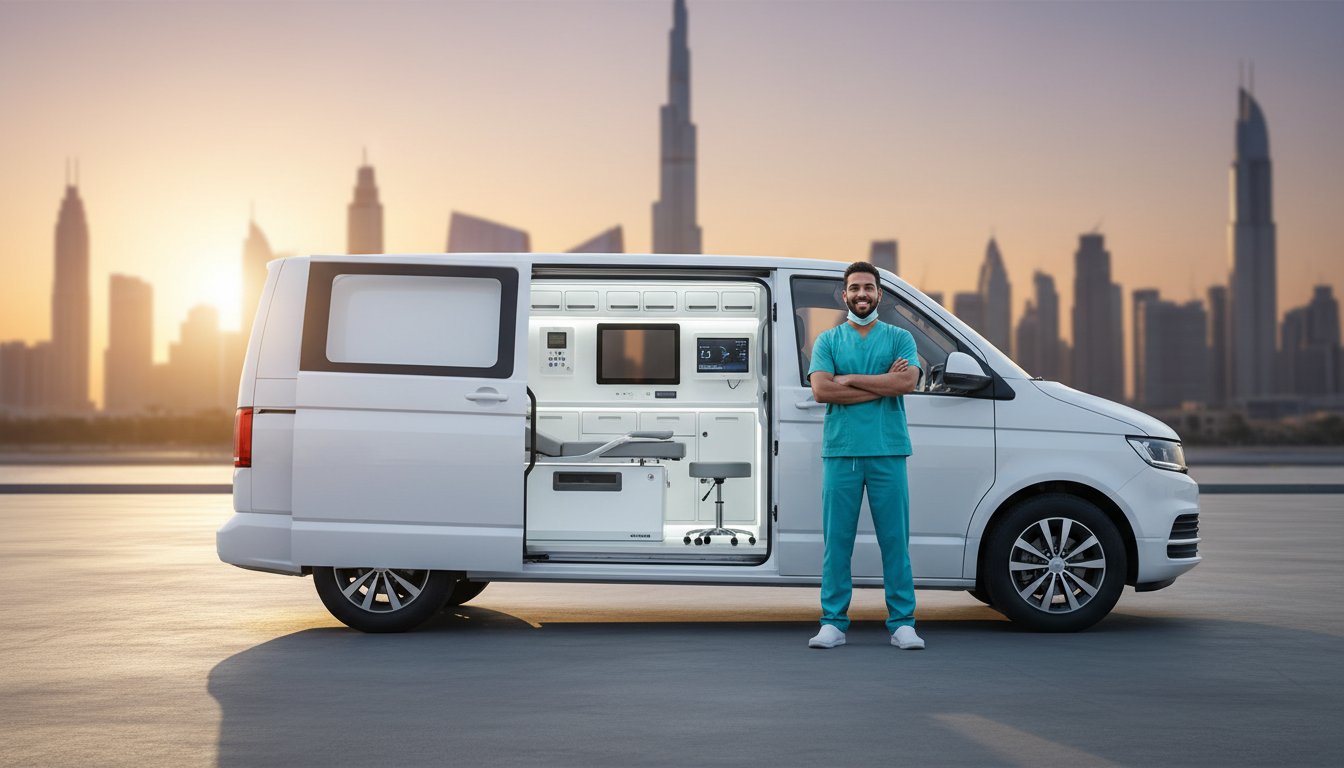
A standard conversion will fail in the 50°C heat of a Dubai summer if the engineering doesn't account for the UAE's specific environmental and regulatory demands. It's a high-stakes build. You likely understand that converting a van into a mobile clinic requires more than just installing cabinets; it demands a surgical approach to fabrication that satisfies both the Road and Transport Authority (RTA) and the Dubai Health Authority (DHA). Auto Industries Factory (AIF) specializes in these complex transformations, ensuring your medical unit remains a reliable asset rather than a maintenance liability.
We agree that navigating the overlapping requirements of DHA, MOHAP, and RTA can feel like an endless cycle of paperwork and technical revisions. This guide promises to simplify that journey by providing a masterclass in the technical requirements, engineering essentials, and heat-resistance strategies necessary for building a high-performance unit in the Emirates. We'll cover everything from structural reinforcement for heavy diagnostic machinery to the specific insulation protocols that protect your sensitive medical equipment from the desert sun.
Key Takeaways
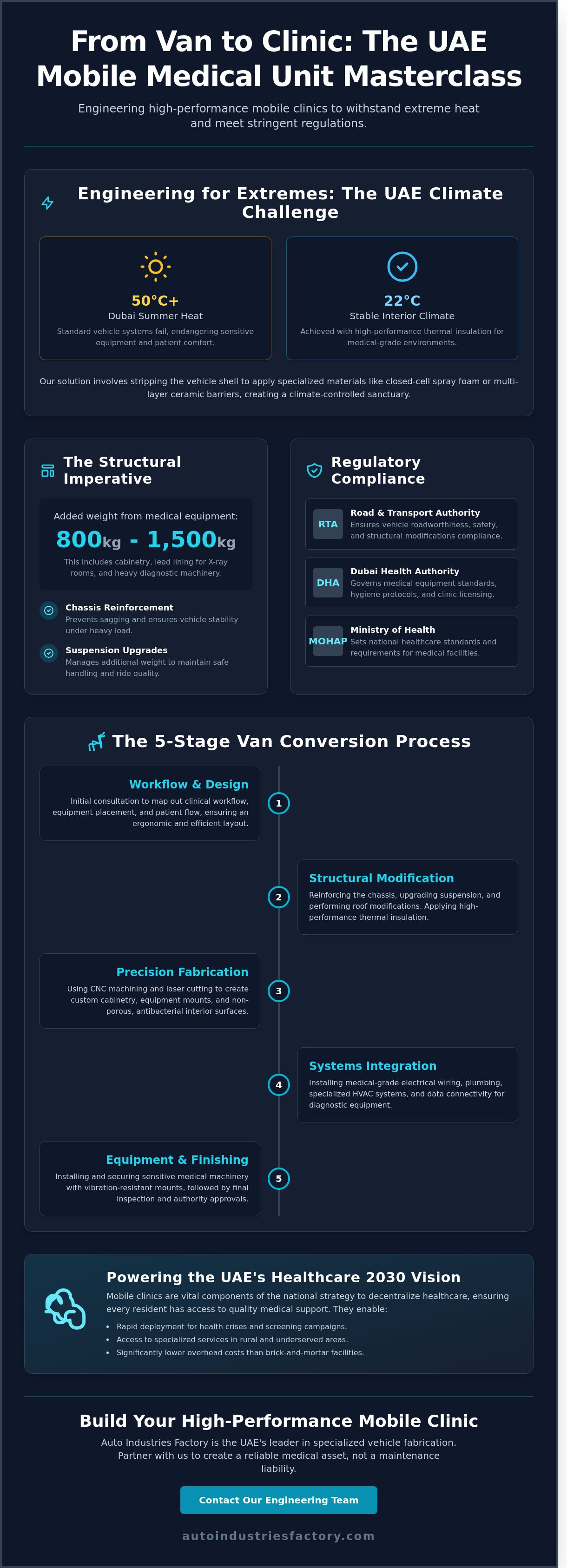
- Learn how to engineer high-performance thermal insulation systems that maintain a stable 22°C interior even during the 50°C+ UAE summer heat.
- Navigate the essential regulatory landscape, including DHA, MOHAP, and RTA safety standards required for modified commercial vehicles in the Emirates.
- Discover the 5-stage engineering process for converting a van into a mobile clinic, from initial workflow design to structural roof modifications.
- Understand why specialized CNC machining and laser-cut fabrication are critical for ensuring the structural integrity and long-term durability of medical units.
- Explore how custom mobile clinics align with the UAE’s Healthcare 2030 vision to bring specialized outpatient services to rural and underserved areas.
What is a Mobile Clinic and Why is it Essential in the UAE?
Auto Industries Factory (AIF) specializes in high-precision vehicle transformations that bring essential services directly to the people. What is a Mobile Clinic essentially defines a specialized vehicle engineered for outpatient consultation, medical screening, and professional treatment. These units serve as mobile extensions of traditional hospitals. They're equipped with the same diagnostic tools found in fixed facilities but offer the mobility to reach patients wherever they're located. For many healthcare providers, converting a van into a mobile clinic is the most efficient way to expand their service footprint without the massive capital expenditure of a permanent building.
In the United Arab Emirates, these units are vital components of the "Healthcare 2030" vision. The government's strategy focuses on decentralizing healthcare to ensure every resident, regardless of their location, has access to quality medical support. Mobile medical units allow for rapid deployment during health crises or public screening campaigns. They offer significantly lower overhead costs than brick-and-mortar clinics and provide the community outreach flexibility required to serve the UAE's diverse population. Whether it's a routine check-up in a remote village or a specialized screening in a busy urban center, these vehicles ensure no one is left behind.
Standard commercial vans aren't built for medical use. They require professional fabrication to meet the strict hygiene and safety standards set by UAE health authorities. AIF handles the complex engineering required to turn a raw vehicle shell into a sterile, functional medical environment. This process involves more than just adding equipment; it requires a total overhaul of the vehicle's internal architecture to ensure it can support life-saving technology.
Types of Mobile Medical Units Used in Dubai
The healthcare landscape in Dubai utilizes several specialized vehicle types. Primary Care Vans are the most common, designed for general consultations, blood pressure monitoring, and vaccinations. Specialized Screening Units focus on specific diagnostic needs, such as mammography, dental care, or audiology. Additionally, Occupational Health Clinics are frequently deployed to serve the massive workforce in industrial zones like Jebel Ali and Musaffah. These units perform mandatory fitness-to-work exams and health surveillance on-site, saving companies thousands of man-hours in travel time.
The Shift from Standard Transport to Medical-Grade Units
When converting a van into a mobile clinic, the focus must be on durability and infection control. Simple wooden shelving or standard cabinetry is insufficient because it lacks the stability needed for expensive medical equipment during transit. AIF uses heavy-duty, vibration-resistant mounting systems to protect sensitive gear. Hygiene is equally critical; we install non-porous, antibacterial surfaces that can withstand rigorous chemical disinfection. It's also vital to distinguish these from ambulances. While an ambulance is built for emergency transit and stabilization, a mobile clinic is designed for stationary patient care and comprehensive diagnostic procedures. You can learn more about our specialized fabrication on our services page.
Engineering for the Emirates: Extreme Heat and Structural Integrity
Converting a van into a mobile clinic in Dubai demands an engineering approach that accounts for the UAE’s harsh climate. When ambient temperatures climb past 50°C, a standard vehicle’s air conditioning system isn't sufficient for medical environments. These systems are designed to cool a cabin while the engine is running, but they can't maintain the precise 22°C required for sensitive diagnostic tools and vaccine storage. We solve this by stripping the vehicle to its shell and applying high-performance thermal insulation. Using specialized materials like closed-cell spray foam or multi-layer ceramic barriers ensures the interior remains a climate-controlled sanctuary regardless of the external heat.
Structural integrity is the second pillar of a successful build. A mobile clinic often carries between 800kg and 1,500kg of additional weight from cabinetry, lead lining for X-ray rooms, and heavy medical machinery. We reinforce the chassis and upgrade the suspension systems to manage this load. This prevents sagging and ensures the vehicle remains stable during high-speed transit on UAE highways. Following the Mobile Healthcare Unit design guidelines is vital during this stage to ensure the structural modifications meet international safety and operational standards.
Heavy-Duty HVAC and Power Systems
Relying on the van’s primary engine for cooling is inefficient and leads to premature mechanical failure in desert conditions. We install redundant, secondary cooling systems that operate independently. These units are powered by 400Ah lithium-ion battery banks or dedicated auxiliary power units (APU). This setup allows for silent, emission-free operation during long stationary periods at event sites or construction zones. For extended deployments, we integrate external shore power connections, allowing the clinic to plug into the local grid and preserve its battery reserves for transit.
Medical-Grade Interior Fabrication
Auto Industries Factory (AIF) specializes in precision fabrication using laser-cut 304-grade stainless steel and aluminum. We avoid heavy wood or porous materials that won't withstand the rigors of medical sterilization. Our interiors feature:
- Seamless Vinyl Flooring: 2mm thick medical flooring with coved edges to prevent bacterial accumulation in corners.
- Shadowless Lighting: High-output LED arrays providing 1,000 lux in examination areas to ensure clinical accuracy during procedures.
- Ergonomic Cabinetry: Lightweight metal storage solutions with secure-lock mechanisms for safe transport of expensive medical supplies.
Engineering a vehicle for these extremes is a complex process that requires specialized knowledge. You can explore our specialized vehicle conversion services to see how we transform standard vans into high-performance medical units that thrive in the Middle Eastern heat.
Compliance and Regulatory Standards for UAE Mobile Clinics
Operating a medical facility on wheels requires meeting stringent UAE federal laws. Auto Industries Factory (AIF) specializes in ensuring every conversion meets the high benchmarks set by the Dubai Health Authority (DHA) and the Ministry of Health and Prevention (MOHAP). These bodies regulate clinical layouts, sterilization protocols, and equipment calibration to guarantee patient safety across the Emirates. You can't simply add a desk and a stretcher; the interior must function as a sterile, professional environment that mirrors a stationary hospital. Every modification must be documented and approved before the unit treats its first patient.
Beyond medical licensing, the vehicle must pass rigorous Roads and Transport Authority (RTA) safety inspections. This includes adhering to GSO 1794 standards, which govern the safety requirements for motor vehicles modified for specialized use. When converting a van into a mobile clinic, weight distribution is a critical engineering factor. An unbalanced load from heavy medical machinery can lead to tire failure or compromised braking distances. AIF provides certified weight distribution certificates and engineering drawings to ensure the vehicle remains road-legal and safe for transit. Compliance also extends to patient access under Federal Law No. 29 of 2006. We integrate heavy-duty hydraulic wheelchair lifts and non-slip telescopic ramps that meet international accessibility standards, ensuring people of determination can enter and exit the unit safely.
Licensing Your Mobile Medical Unit
To secure a "Mobile Clinic" designation on your vehicle registration, you must submit a comprehensive technical file to the RTA and DHA. This file must include fire safety approvals from Civil Defence and detailed electrical schematics. AIF assists clients by managing the technical documentation phase, providing the precision drawings required for preliminary approvals. Our team ensures that all modifications are documented correctly to avoid delays during the final registration process. This professional oversight is a core part of the custom conversion services we provide in our Ajman and Dubai facilities.
Infection Control and Safety Protocols
Maintaining a sterile environment is a non-negotiable requirement for MOHAP certification. We install medical-grade air handling units equipped with HEPA filtration to eliminate 99.97% of airborne particles, creating a pressurized clean-room effect within the van. Hazardous waste management is equally vital; our designs include integrated, secure sharps containers and dedicated biohazard storage areas that prevent cross-contamination. For fire safety, we install specialized suppression systems tailored for electronic medical equipment. These systems use clean agents that protect sensitive diagnostic tools from damage during an emergency without leaving corrosive residue, ensuring your investment remains protected in all conditions.
The 5-Stage Van Conversion Process: From Chassis to Clinic
Auto Industries Factory (AIF) specializes in the precision engineering required for converting a van into a mobile clinic. This complex transition demands a methodical approach to ensure the vehicle meets both UAE Ministry of Health (MOHAP) standards and Dubai Health Authority (DHA) requirements. Our fabrication process follows five distinct stages designed for durability and medical efficiency.
- Phase 1: Consultation and Workflow Design. We map the patient journey within a confined space. This involves identifying high-traffic zones and ensuring the clinician can move freely between diagnostic tools and the patient. Every square centimeter is optimized for clinical utility.
- Phase 2: Structural Modification. Our team installs high-roof extensions to provide a minimum 1.9m standing height. We use premium GRP (Glass Reinforced Plastic) for roofs and reinforce the internal framing with heavy-duty steel to support medical cabinetry.
- Phase 3: Utility Integration. We install independent 220V electrical systems, clean and waste water tanks, and specialized medical gas piping. These systems are built to withstand 50°C external temperatures without compromising internal climate control.
- Phase 4: Equipment Fitting. We secure dental chairs, lab stations, or X-ray machines using advanced mounting brackets. Precision is critical here to prevent equipment shifting during transit across Dubai's varied road conditions.
- Phase 5: Quality Control. Every unit undergoes a 100km road test and climate-chamber simulation. We verify that the HVAC system maintains a steady 22°C environment even during the peak UAE summer.
Choosing the Right Chassis for the UAE
Selecting a vehicle depends on your specific service area. The Toyota Hiace and Nissan Urvan are the preferred choices for urban primary care units because they navigate narrow Dubai streets easily. For heavy-duty screening or mobile labs, the GMC Savana and Ford Transit offer the payload capacity needed for bulky diagnostic machinery. When converting a van into a mobile clinic, the choice between a standard van-body and a custom box-type conversion is vital. Box-type units provide up to 30% more floor space, allowing for a square interior that simplifies the installation of medical-grade cabinets.
Customizing the Patient Experience
A mobile clinic shouldn't feel like a vehicle to the person receiving care. We design private consultation rooms using high-density soundproofing materials to ensure patient confidentiality in noisy urban environments. Integrating 5G-enabled tele-health capabilities allows local practitioners to consult with specialists in real-time via high-speed networks provided by local carriers like Etisalat or du. By using antimicrobial surfaces and LED surgical lighting, we create a clinical environment that mirrors a stationary hospital room in every detail.
Ready to start your project? Explore our custom conversion solutions to see how we build mobile clinics for the UAE's toughest environments.
Why Auto Industries Factory is the Leader in UAE Vehicle Fabrication
Auto Industries Factory (AIF) specializes in high-performance vehicle conversions that meet the rigorous demands of the UAE medical sector. With over 20 years of collective engineering experience, our team transforms standard commercial vehicles into sophisticated healthcare units. Converting a van into a mobile clinic requires more than just interior shelving; it demands structural integrity and advanced electrical integration that can withstand the unique environmental pressures of the Middle East.
Our 50,000 square foot facility in Ajman serves as the hub for our precision manufacturing. We don't outsource critical components. Instead, we utilize in-house CNC machining and high-speed laser cutting to create custom medical cabinetry and equipment mounts. This ensures a flawless fit that eliminates rattling and structural fatigue during transit across Dubai or the Northern Emirates. Our professional painting booths provide a sterile, durable finish that remains resilient even in the 50°C summer heat common in Abu Dhabi and Sharjah.
We've established a proven track record in ambulance conversion and emergency vehicle fabrication. Every weld and wiring harness is built to protect patients and staff. We prioritize mission-critical reliability because we know these vehicles operate in life-and-death scenarios. Our fabrication process follows strict ISO standards, ensuring every mobile clinic we deliver is as rugged as it is functional.
Our Engineering Advantage
AIF engineers utilize advanced 3D modeling to ensure every millimeter of the van's interior is utilized. You get direct access to our design team for custom layouts, whether you need specialized dental chairs or laboratory-grade refrigeration. We provide comprehensive post-conversion support and maintenance to keep your specialized medical fleet operational 24/7. This technical edge minimizes downtime and maximizes the lifespan of your investment in the UAE's competitive healthcare market.
Get a Consultation for Your Mobile Clinic
Starting your project is straightforward with our expert engineering assessment. We handle everything from single-unit prototypes for private clinics to full-scale fleet conversions for government health departments. Converting a van into a mobile clinic is a significant investment, so we provide a detailed technical estimate to ensure transparency from day one. Contact Auto Industries Factory today to discuss your specific requirements and see how our fabrication expertise can bring your mobile healthcare vision to life.
Drive Healthcare Innovation with Precision Engineering
Successfully converting a van into a mobile clinic requires a specialized approach that balances medical compliance with the UAE's harsh environmental demands. High-performance insulation and structural reinforcement are non-negotiable when summer temperatures regularly exceed 48°C in Dubai and the Northern Emirates. By following a structured 5-stage conversion process, providers ensure their mobile units meet the strict safety and operational standards required for local healthcare licensing. Auto Industries Factory (AIF) brings years of engineering expertise to every project, utilizing ISO 9001 Certified Fabrication and advanced in-house CNC and laser cutting technology to guarantee a flawless finish.
Our facility is trusted by UAE Emergency Services to build rugged, reliable vehicles that perform under pressure. We don't just modify vans; we engineer mobile solutions that protect patients and sensitive medical equipment in the field. From the initial chassis selection to the final medical fit-out, every detail is handled by master craftsmen focused on durability and mission success. It's time to bring your medical services directly to the communities that need them most with a vehicle built for the long haul.
Request a Free Estimate for Your Mobile Clinic Project and let's start building your mobile healthcare future today.
Frequently Asked Questions
Do I need a special license to drive a mobile clinic in the UAE?
You don't need a heavy vehicle license to drive a mobile clinic in the UAE if the total Gross Vehicle Weight stays under 3,500kg. Most standard van conversions like the Toyota Hiace or Ford Transit fall into this category, allowing drivers with a valid Category 3 light vehicle license to operate them. If the custom fabrication exceeds this weight limit, the RTA requires the driver to hold a heavy vehicle permit.
How long does the average van-to-mobile-clinic conversion take?
The average timeline for converting a van into a mobile clinic ranges from 30 to 60 days depending on the complexity of the medical layout. Auto Industries Factory (AIF) specializes in streamlined fabrication processes that include interior lining, electrical wiring, and equipment mounting. A basic consultation unit might take 4 weeks, while a high-tech surgical or dental van often requires 8 weeks for precision calibration and testing.
Can I convert a used van into a mobile clinic?
You can convert a used van into a mobile clinic provided the chassis is less than 5 years old and passes RTA safety inspections. Older vehicles often struggle with the heavy-duty electrical demands of medical cooling and diagnostic tools. It's recommended to use a van with a high roof and a long wheelbase to ensure the interior space meets the 2.1-meter height requirements preferred for clinical workflows.
What medical equipment can be installed in a mobile unit?
Mobile units can house a wide range of medical grade equipment including portable X-ray machines, dental chairs, ultrasound scanners, and laboratory centrifuges. Every piece of equipment must be secured with heavy-duty mounting brackets to prevent movement during transit through Dubai's urban traffic. AIF ensures that the internal power grid supports 220V medical devices through integrated heavy-duty inverters and external shore power inlets for stationary use.
How does the mobile clinic stay cool in the Dubai summer?
Mobile clinics stay cool using high-capacity, independent 12V or 220V rooftop air conditioning units that operate even when the engine is off. We use 50mm thick polyurethane spray foam or glass wool insulation to line the van walls, which maintains a steady 22°C internal temperature even when external heat reaches 50°C. This thermal management is critical for protecting heat-sensitive medications and ensuring patient comfort during peak summer months.
Are mobile clinics in the UAE required to have wheelchair access?
UAE regulations for healthcare facilities generally require mobile units to provide inclusive access, which is achieved through hydraulic tail lifts or telescopic ramps. According to the Dubai Universal Design Code, the ramp must have a non-slip surface and support a minimum load of 300kg. Installing these accessibility features ensures your mobile clinic complies with Ministry of Health (MoH) standards for public healthcare service delivery across all Emirates.
What is the cost difference between a van conversion and a container clinic?
A van conversion is typically more cost-effective for urban operations because it doesn't require a separate heavy-duty truck for towing. While a container clinic offers more square footage, the operational costs in the UAE are higher due to specialized transport fees and site preparation requirements. When converting a van into a mobile clinic, you gain a 40% increase in mobility, making it the preferred solution for rapid deployment.
How is medical waste handled in a mobile medical vehicle?
Medical waste in a mobile vehicle is managed through integrated biohazard compartments and puncture-resistant sharps containers that meet WHO safety standards. Operators must have a valid contract with a licensed UAE waste management company for regular collection and sterilization. The interior fabrication includes seamless, medical-grade flooring with coved edges to prevent liquid waste from being trapped in corners, ensuring a flawless and sterile environment for every patient.


