
A mission-ready vehicle starts with its task, not its trim. Ambulance conversion transforms a standard van or truck into a specialised emergency medical unit. Emergency vehicle conversion services can adapt the cabin and vehicle systems to support that operational role.
The layout matters as much as the base vehicle. Crew movement, equipment access and durable working surfaces all affect how a converted unit functions in the field. This guide explains ambulance conversion, how layout decisions shape the finished vehicle and how specialised conversions support emergency and utility fleets. It also covers the decisions that define a project, from choosing the platform to specifying the unit’s duties. Planning around real operating needs helps prevent a standard setup from being forced into an unsuitable role.
Key Takeaways
- Understand how an ambulance conversion transforms a standard vehicle into a purpose-built emergency unit.
- See how layout choices can shape access, workflow and the use of interior space.
- Learn which project requirements influence a custom conversion and how to plan around fleet needs.
- Explore how specialised vehicle conversions can support emergency and utility operations beyond ambulance use.
- Find out how Auto Industries Factory LLC’s conversion and modification services can support suitable fleet projects.
What is Ambulance Conversion?
Ambulance conversion turns a standard vehicle, such as a van or truck, into a specialised emergency medical unit. The work adapts the cabin, equipment layout and systems to the vehicle’s intended duties.
UAE Ambulance Fleet Conversion
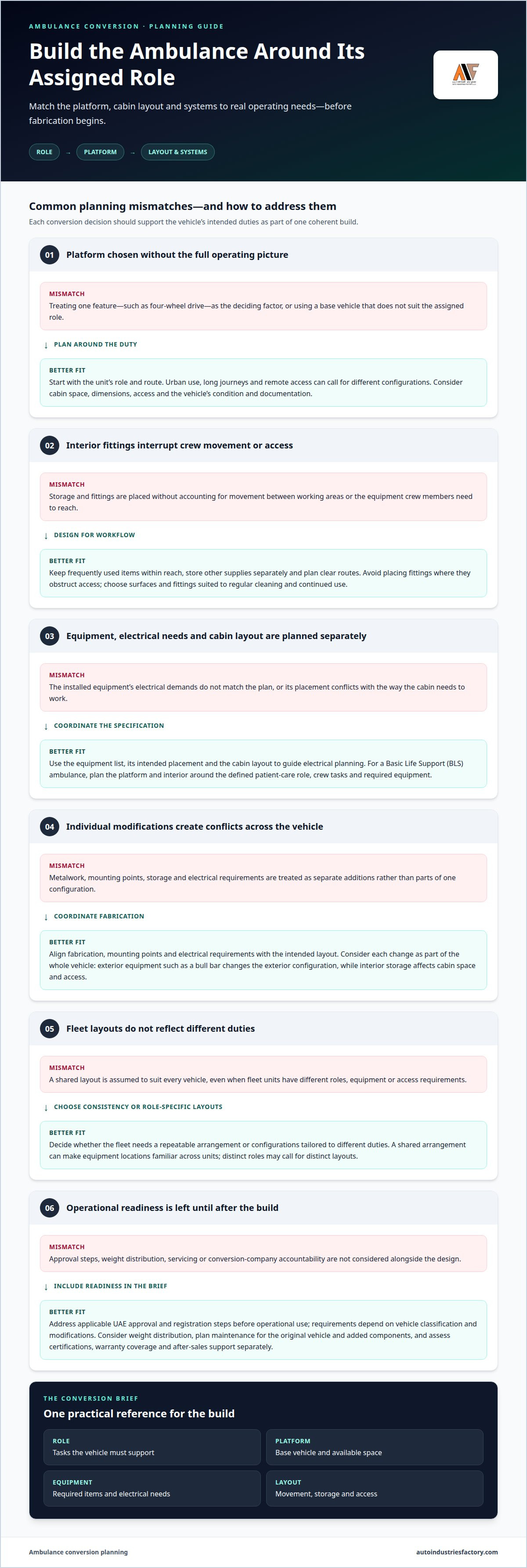
For a UAE fleet, planning starts with the unit’s role and vehicle platform. An ambulance assigned to urban routes may need a different configuration from one used for long journeys or remote access. Cabin space, access points and carried equipment all influence the conversion scope. Fleet operators should also decide whether vehicles need a consistent layout or configurations tailored to different roles.
A shared arrangement can make equipment locations familiar across units. The vehicle conversion services page describes specialist work relevant to organisations planning purpose-built vehicles.
Ambulance Interior and Equipment Design
Interior planning focuses on crew movement, equipment access and how to use the available cabin space. Frequently used items can be positioned within reach, with other supplies stored separately. Plan clear routes between working areas and avoid placing fittings where they obstruct access.
Electrical planning should match the equipment selected for the ambulance. The equipment list, its placement and the cabin layout guide the installation plan. Surfaces and fittings should also suit regular cleaning and continued use.
4×4 And Basic Life Support Ambulances
A 4×4 platform may suit ambulance duties involving rougher access routes. Its cabin space, dimensions and intended operating environment shape the conversion layout. The platform should be considered alongside the work assigned to the vehicle, rather than treating four-wheel drive alone as the deciding factor.
A Basic Life Support (BLS) ambulance is configured for its defined patient-care role. Its interior should accommodate the crew’s planned tasks and required equipment. The BLS configuration, vehicle platform and equipment layout need to be planned together.
Conversion Process and UAE Approvals
The conversion process begins by defining the ambulance’s role, selecting a suitable platform and planning the cabin and systems. Fabrication and installation then follow the agreed configuration. Imported or used vehicles can serve as conversion bases when their condition, documentation and platform suit the intended role.
Applicable UAE approval and registration steps depend on the vehicle classification and modifications, and should be addressed before operational use. Key risks include an unsuitable base vehicle, poor weight distribution and electrical demands that do not match the installed equipment. Maintenance planning should cover both the original vehicle and added conversion components, with service needs guided by their condition and use.
Custom emergency vehicle conversion services
A custom conversion aligns a vehicle’s configuration with its assigned emergency role. The work can involve interior fabrication, electrical systems, storage, access points and equipment mounting. A response vehicle carrying a defined set of tools, for example, needs a different arrangement from an ambulance designed for patient care. The aim is a coherent vehicle layout, not a collection of unrelated modifications.
Emergency vehicle conversion services can address fleet requirements as well as individual vehicle needs. A fleet may need a repeatable configuration across several vehicles or distinct layouts for different duties. The conversion brief should identify the platform, operational tasks, equipment and access requirements. These decisions guide fabrication and help prevent late changes to cabinets, panels or mounting positions.
Custom work can include cleanable interior surfaces and removable, reusable configurations. These features can support cabin maintenance and make it possible to remove selected components when the operating setup changes. Their value depends on the vehicle’s role: an ambulance interior has different priorities from a police or military vehicle modification. Each change should serve a defined purpose.
- Role: Define the tasks the vehicle must support, such as patient care or equipment transport.
- Platform: Match the conversion scope to the base vehicle and its available interior space.
- Layout: Plan movement, storage and equipment access around crew workflow.
- Fabrication: Coordinate metalwork, mounting points and electrical requirements with the intended configuration.
These steps connect the initial brief to a usable build. A custom bull bar, for example, changes the vehicle’s exterior configuration, while interior storage affects access and available cabin space. Considering each modification as part of the whole vehicle helps avoid conflicts between components. It also gives fleet planners a clearer basis for deciding which features are essential and which can be left out.
When comparing emergency vehicle conversion companies, assess certifications, warranty and after-sales service separately. Review the documented scope of each certification, which components and workmanship the warranty covers, and the stated process for service support. These details address different aspects of accountability.
For a fleet project, a clear conversion brief can specify the role, platform, equipment and preferred layout before fabrication begins. That gives the build a practical reference point and helps align custom work with operational needs. Explore vehicle conversion services for projects requiring specialised vehicle modifications.
Auto Industries Factory offers ambulance conversions with cleanable surfaces and removable, reusable configurations. Consider these options alongside the vehicle platform, operational tasks and equipment list when preparing the conversion brief. Keeping the intended role in view helps determine whether these features suit the build, rather than treating them as default requirements for every vehicle.
For an ambulance, cleanable surfaces and removable configurations can inform planning for cabin maintenance and changing operating setups. The final arrangement still needs to suit the selected platform, crew workflow and equipment access requirements.
Bespoke emergency vehicle layouts
A bespoke layout connects the vehicle’s assigned tasks with its physical arrangement. Start with the work sequence, then position storage, work surfaces and access points around it. In an ambulance, frequently used supplies can be placed for direct access, while less frequently used items go in secondary storage. This makes the floor plan support the crew’s workflow.
Map movement through the cabin before fixing cabinets or partitions. Consider where a crew member enters, turns, reaches equipment and moves between work areas. A cabinet that looks efficient on a drawing may obstruct movement when a door opens or equipment is removed. Marking these interactions on a layout helps reveal conflicts before fabrication.
Design storage around the shape and handling needs of the equipment. Shelves suit items that need quick visual access, while enclosed compartments can separate supplies or protect them during travel. A removable module may help adapt a vehicle for different duties. Plan its fixing points and removal path alongside nearby fittings.
- Access: Place priority equipment where the intended user can reach it without blocking a passage.
- Separation: Arrange distinct work areas so stored items and crew movement do not interfere.
- Adaptability: Use removable components when the vehicle must support changing configurations.
- Service access: Preserve practical access to panels and systems that require inspection or maintenance.
Include electrical routing in the layout plan. Wiring routes should account for cabinets, partitions and equipment positions, rather than being left until final installation. Moving a storage unit after wiring, for example, can complicate access and require rework. Coordinating fabrication and system placement helps keep the arrangement coherent.
Fleet consistency is another design decision. A shared layout can put familiar equipment in similar locations across vehicles, while a tailored variant can serve a different duty. Decide which features must remain consistent and which should vary by role. This distinction helps balance standardisation with operational needs.
Before fabrication, review the proposed arrangement against the actual vehicle platform. Check door openings, cabin dimensions, visibility, equipment access and existing vehicle systems. A useful drawing shows how each major component fits, not just how the finished cabin looks. This review helps identify compromises early and keeps the layout tied to the vehicle’s intended work.
Specialised and utility vehicle conversions
Not every fleet vehicle carries patients. Specialised conversions adapt vehicles for defined field tasks, such as transporting equipment, supporting an operational team or providing services at a remote location. The intended duty determines the body configuration, storage, access and work areas. A vehicle designed for one task may need significant layout changes to serve another.
A mobile clinic is one example. Its configuration can include a consultation area, treatment space or primary healthcare unit. Each arrangement serves a different purpose: a consultation area prioritises private discussion, while a treatment space needs room for clinical work. The vehicle platform and available interior volume influence how these functions can be arranged.
Utility conversions also serve teams working outside fixed facilities. A field unit may need secure tool storage, an accessible work area and durable interior fittings. A safari vehicle has different requirements, with passenger access and intended routes shaping its configuration. Police and military vehicles likewise need layouts matched to their operational roles.
- Mobile clinic: Define whether the primary function is consultation, treatment or a broader healthcare unit.
- Field utility vehicle: Arrange storage around the tools and equipment carried for the task.
- Safari vehicle: Plan seating and access for the intended passenger use and route.
- Operational vehicle: Match the interior and exterior modifications to the unit’s assigned duties.
Start a project by describing the work the vehicle must perform. List the people, equipment and activities the configuration needs to accommodate, then map movement through the vehicle. A mobile consultation unit needs a clear route to its consultation area, for example, while an equipment carrier needs practical access to stored items.
Next, align the conversion scope with the base vehicle. Interior dimensions, door openings and existing systems affect where components can fit. A layout that works in a larger vehicle may need a different arrangement in a smaller one. Resolving these constraints during planning keeps the conversion focused on essential functions.
Finally, consider how the specialised unit will fit into fleet operations. Decide whether vehicles need a shared configuration or distinct layouts for different duties. Consistent equipment placement can support familiar routines, while a dedicated unit can serve a specific task. These decisions define the conversion brief before fabrication and installation begin.
Auto Industries Factory configures mobile clinics with consultation areas, treatment spaces or primary healthcare units. Choose a configuration by clarifying the service the vehicle must provide and the activities that need to happen inside it. The arrangement should give each activity an appropriate place without adding features that do not support the intended work.
Before finalising a layout, review how occupants will enter, use the work area and reach equipment. Check that the arrangement is practical within the chosen vehicle’s dimensions and access points. A clear scope also separates essential modifications from optional ones. Record the intended function and equipment layout so the completed vehicle can be assessed against operational needs. This provides a practical basis for deciding whether each duty calls for a shared layout or a dedicated configuration.
Which UAE companies convert vehicles into ambulances, fire trucks, and police vehicles?
These projects require specialist vehicle fabrication, not routine servicing. The work must match the unit’s purpose: an ambulance needs a patient-care configuration, a fire vehicle carries equipment for firefighting duties, and a police vehicle supports its assigned role. Each project has a different scope, so vehicle type alone does not define the conversion.
For UAE fleet planning, start by defining the vehicle’s function and base platform. A van intended for ambulance use has different space constraints from a truck configured for specialist equipment. A police vehicle may need different interior or exterior modifications from either. The conversion brief should state the platform, work tasks, equipment and operating environment before fabrication details are set.
Capabilities vary by project type. Ambulance work adapts vehicles for emergency medical use, while police and military modifications address distinct operational requirements. Fire-truck conversion is a separate specialist scope and should not be assumed just because a company modifies other emergency vehicles. Bodywork, storage and system integration depend on the unit’s function.
Look for specific examples of relevant fabrication work, the ability to tailor a layout to the vehicle, and coordinated metalwork and installation. A box-type ambulance and an extended-roof ambulance, for instance, require different body configurations. A police vehicle modification may instead focus on assigned equipment and access needs. These examples show why a generic conversion description does not define a project.
- Ambulance: Define patient-care use, cabin arrangement and equipment needs.
- Fire vehicle: Specify its firefighting role and the equipment configuration required.
- Police vehicle: Identify the assigned operational duties and necessary modifications.
- Fleet unit: Decide which features should remain consistent across vehicles.
Before work begins, connect the vehicle platform to its intended duties in the conversion scope. A clear sequence covers requirements, layout planning, fabrication, installation and review of the completed configuration. This helps establish whether the proposed work addresses the actual vehicle type, rather than relying on a broad label such as “emergency conversion.”
For fleets, compare project scopes by what each conversion includes, how the layout addresses the operational brief and which vehicle categories the work covers. A company that modifies ambulances or police vehicles should not automatically be described as a fire-truck converter. Clear distinctions support accurate planning and help match each vehicle to the required specialist work.
Auto Industries Factory
Auto Industries Factory LLC helps UAE fleet operators convert vehicles for specialised operational roles. Its services include ambulance conversions, police and military vehicle modifications, safari vehicle conversions, and metal canopies and roof racks.
Consider these conversion services when a fleet vehicle needs a configuration suited to a specific duty. In-house fabrication includes laser cutting, CNC machining, welding and painting.
Contact Auto Industries Factory LLC to discuss your fleet conversion requirements.
Set the Direction for Your Fleet Build
A fleet conversion starts with a clear operational brief. Define the vehicle’s role, the duties it must support and the configuration your team needs. Use those priorities to guide the project discussion and keep the proposed work focused on real fleet requirements.
Auto Industries Factory provides ambulance conversions, Police & Military Vehicle Modifications, and Safari Vehicle Conversions. These services give fleet operators a practical starting point for planning emergency or specialist vehicles. With the intended role established, emergency vehicle conversion services can be discussed in terms of the vehicle and modifications that suit the operation.
Bring your fleet requirements into the next conversation and outline the vehicle type, its intended use and the changes you’re considering. Contact Auto Industries Factory to discuss a conversion project. A focused brief is a strong first step toward a vehicle built around its assigned work.
Frequently Asked Questions
What emergency vehicle conversion services are available in the UAE?
UAE fleets can arrange ambulance conversions, police and military vehicle modifications, safari conversions and utility vehicle work. Fabrication categories include metal canopies and roof racks, while specialised vehicle services include rescue vehicles and fire trucks. The right scope depends on the vehicle’s assigned role. A mobile workshop, for example, needs a different configuration from a patient-care unit or police vehicle.
What is the typical timeline for an emergency vehicle conversion?
Timelines depend on the vehicle platform, conversion scope and equipment integration. Auto Industries Factory states “deliver in a week” for ambulance fabrication; this timing should not be assumed for every custom conversion. A different vehicle type or more extensive configuration may require a different schedule. The layout, fabrication requirements and installation scope shape the work sequence.
What equipment and specifications are required for UAE ambulance conversions?
Equipment requirements depend on the ambulance’s intended care role and operating duties, so there is no single equipment list for every unit. The conversion should align the selected equipment with cabin layout, storage and electrical planning. Ambulance specifications are described as meeting EN1789, ISO, GCC standards, KKK-A-1822, and WHO guidelines. BLS, ALS, ICU, neonatal and 4×4 off-road ambulance types are listed.
What are the steps to convert a standard vehicle into an emergency response vehicle?
Begin by defining the vehicle’s mission and selecting a suitable platform. Establish the required layout, equipment and fabrication scope, then complete the conversion, including relevant structural, interior and electrical modifications. The final stage is a review of the completed configuration and applicable approval steps before operational use. An ambulance and a police vehicle, for example, need different briefs and build plans.
How do emergency vehicle conversion companies compare on certifications, warranty, and after-sales service?
Compare the documented scope of each certification, the components and workmanship covered by the warranty, and the stated process for service support. Assess each separately.


