
A mobile workshop is only as dependable as the vehicle beneath its tools. Mobile workshop vehicle fabrication in the UAE brings together a suitable chassis, capacity and transmission upgrades for the added machinery, and a practical workspace designed for fleet use.
Getting the layout right matters: equipment, storage, power and access all need to work together in a confined vehicle. This guide explains how mobile workshops are planned, fabricated by Auto Industries Factory LLC and prepared for deployment across the UAE, so fleet operators can understand the key build decisions before moving ahead.
You’ll learn what affects chassis selection, how fabrication shapes the cabin, and which interior features support day-to-day field work. We’ll also explain how to connect each design choice to fleet requirements, from the vehicle platform to the workshop fit-out.
Key Takeaways
- Understand how the build sequence connects the vehicle platform, added machinery, fabrication and fleet delivery.
- See how workshop surfaces and cabin construction contribute to a durable mobile workspace.
- Compare chassis formats, including the listed HZJ 79 single-cab 4 x 4 and van, truck and bus platforms.
- Identify interior equipment and storage options that can be arranged around the work crews need to perform.
- Learn when vehicle conversion and fabrication capabilities can support a fleet’s specialized vehicle requirements.
Design, build, and delivery process
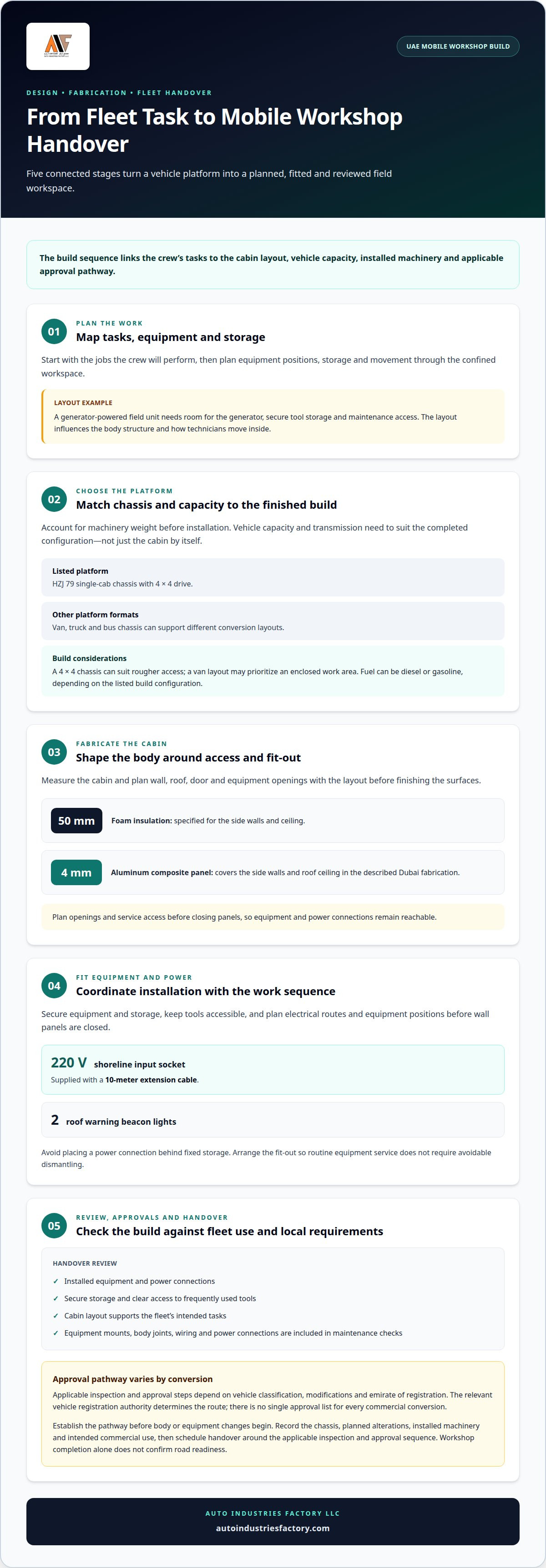
A mobile workshop build moves through planning, chassis preparation, fabrication, fit-out and fleet handover. In the UAE, each stage connects the vehicle’s intended work with its added machinery and operating setup.
Design and Build Stages
Planning starts by mapping the tasks, equipment and storage needs inside the vehicle. The layout then guides fabrication, installation and checks. For example, a generator-powered field unit needs space for the generator, secure tool storage and maintenance access. These choices affect the body structure and how technicians move through the workspace.
Before machinery is fitted, account for its added weight. The vehicle’s capacity and transmission need to suit the finished configuration. This connects the equipment plan to the vehicle platform, rather than treating the cabin as a separate box. The selected fuel type can be diesel or gasoline, depending on the listed build configuration.
Fabrication turns the planned layout into a working cabin. The side walls and ceiling use 50 mm foam insulation, while the final arrangement must leave usable access to tools and equipment. Electrical planning also matters: a 220 V shoreline input socket comes with a 10-meter extension cable. Two roof warning beacon lights form part of the listed setup.
Before handover, review the completed vehicle against the fleet’s intended tasks. Check the installed equipment, power connections, storage access and cabin layout. For example, confirm that a technician can reach frequently used tools without moving heavier machinery or blocking the work area.
Required Approvals
There is no single approval list for every commercial vehicle conversion in the UAE. The approval route depends on the vehicle classification, the modifications and the emirate of registration. The relevant vehicle registration authority determines the inspection or approval steps for each conversion.
For a fleet build, establish the approval pathway before changing the vehicle’s body or equipment configuration. Define the conversion scope by listing the chassis, body alterations, installed machinery and intended commercial use. This gives the relevant authority a clear basis for identifying applicable review steps, without assuming one process covers every vehicle.
Plan delivery around the required approval and inspection sequence, not just workshop completion. The modified vehicle must align with the pathway for its classification and registration location. Fleet operators can then schedule handover around completed fabrication and the applicable vehicle review, rather than assuming the finished build is automatically ready for road use.
Workshop fabrication in Dubai
Dubai workshop fabrication turns a selected vehicle platform into a protected, organized work cabin. The side walls and roof ceiling are covered with 4 mm aluminum composite panel.
Vehicle Types and Chassis
Platform choice shapes how much workspace and equipment the conversion can accommodate. The listed HZJ 79 is a single-cab chassis with a 4 x 4 drive system. Mobile workshops also commonly use van chassis, while truck and bus chassis serve other conversion layouts.
Match the platform to the fleet’s routes, tools and working environment. A 4 x 4 chassis can suit operations that include rougher access, while a van layout may prioritize an enclosed work area. These examples describe different build priorities, not a universal ranking. The workshop body, installed equipment and vehicle capacity must work together.
Added equipment and regular use create practical maintenance demands. Include checks of equipment mounts, body joints, wiring and power connections in fleet maintenance routines. Loose storage fittings can affect tool security, while damaged wiring can disrupt workshop equipment. Set inspection frequency according to vehicle use and component condition.
Modification and Registration Rules
UAE modification and registration requirements depend on the vehicle’s changes, classification and emirate of registration. The relevant vehicle registration authority determines the applicable approval and inspection steps. No single approval list applies to every commercial workshop conversion.
Set the approval pathway before fabrication begins. Record the chassis, planned body changes, equipment and intended commercial use, then align the build sequence with the authority’s requirements. Workshop completion alone does not make a modified vehicle ready for road use. Registration and inspection steps depend on the individual conversion.
At the fabrication stage, measure the cabin and map the wall and roof surfaces before fitting the 4 mm aluminum composite panel. Accurate panel cutting helps create consistent coverage around the body structure. Openings for doors, access points or installed equipment should be planned with the layout, rather than cut after finishing.
Next, fit the interior around the intended work sequence. A field team using larger tools needs clear access and secure storage; a unit focused on smaller tasks may need a more compact arrangement. Include service access to installed equipment in the plan. This makes routine maintenance more direct and reduces avoidable dismantling.
Fabrication also requires coordination between bodywork and electrical installation. Mark cable routes and equipment positions before closing wall panels. A power connection placed behind fixed storage, for example, can be difficult to reach later. Review panel fit, equipment access, secure mounting and the approval pathway for the vehicle’s registration emirate before handover.
Which UAE companies build and fit out mobile workshop vehicles?
For UAE fleets, vehicle conversion and metal fabrication specialists can integrate a cabin with its vehicle platform. A mobile workshop needs more than an enclosed body: its structure, equipment positions, electrical installation and storage must function as one work unit.
Assess the fabrication processes involved. Metal cutting and bending shape panels and brackets; welding joins structural components; painting finishes fabricated surfaces. CNC machining can produce accurately formed parts for a specific fit. These processes matter when a build includes custom openings, equipment mounts or body components that must align with the vehicle.
Fit-out capability matters just as much. The builder needs to translate fleet tasks into a usable cabin arrangement. For example, a team servicing equipment in the field may need a fixed workbench, secure tool storage and clear access to electrical connections. Component placement affects movement inside the cabin and access for later maintenance.
Assess the build as a sequence, not a catalogue of separate tasks:
- Scope: define the vehicle’s intended work, equipment and storage needs.
- Fabrication: form and join the body components, then finish exposed surfaces.
- Integration: install the workshop layout, electrical components and machinery.
- Handover: review access, mounting and operation against the intended tasks.
This sequence shows whether the work is coordinated. A metal body fabricated without a fit-out plan can leave awkward spaces around machinery. An electrical layout completed after panels are closed can make connections difficult to reach. Coordinating fabrication and fit-out early gives each component a defined place.
Consistency across fleet vehicles matters, too. The same storage arrangement and equipment positions can help crews work from familiar layouts. If vehicles serve different tasks, the specification can distinguish shared components from areas that vary. For example, vehicles might retain common access points while tool storage changes by team.
A useful scope document records the chassis, body changes, equipment, power requirements and intended use. It gives the fabrication team a clear reference from planning through final inspection. Mobile workshop vehicle fabrication in the UAE benefits from defining these details before metalwork begins, since later changes can affect cabin layout and component access. A clear scope connects fleet needs with the fabrication and fit-out sequence.
What vehicle types and chassis are suitable for a mobile workshop in the UAE?
The listed HZJ 79 mobile workshop uses a single-cab chassis and 4 x 4 drive system. Other common platforms for mobile workshop conversions include van chassis, truck chassis and bus chassis. Each presents a different starting point for fitting a work area, machinery and storage into a vehicle.
Start by matching the platform to the fleet’s routes and work tasks. The HZJ 79’s 4 x 4 configuration is one option for operations that need four-wheel drive. A van chassis may suit a conversion organized around an enclosed cabin, while truck and bus chassis offer different body formats. These are starting points, not automatic recommendations for every fleet.
Cab layout matters as much as the chassis label. The single-cab HZJ 79 separates the driver’s cab from the workshop body, so the equipment plan must work within the available rear cabin. A van-based unit begins with an enclosed vehicle body. Truck and bus platforms can suit other cabin arrangements, depending on the tasks and equipment planned.
Use a clear selection sequence before committing to fabrication:
- Define the work: list the tools, machinery and tasks the vehicle must support.
- Map the route: identify whether the fleet needs the listed 4 x 4 configuration.
- Choose a platform: compare the HZJ 79, van, truck and bus chassis formats.
- Plan the cabin: position equipment and storage around access and movement.
- Review the conversion: align the body and fit-out with the selected vehicle.
For example, a field team carrying fixed machinery needs a cabin plan that reserves space for it. A crew using varied tools may need accessible storage instead. This distinction affects usable interior space and helps determine whether a van, truck, bus or single-cab platform suits the task.
Choose the chassis for the complete conversion, not just the empty vehicle. Machinery and body components add weight, so the vehicle’s capacity and transmission need to suit the finished configuration. Assessing these requirements early connects the selected model to the equipment plan before fabrication progresses.
For UAE fleet planning, compare the HZJ 79’s single-cab, 4 x 4 layout against van, truck and bus alternatives using the same work brief. Specify routes, equipment and storage needs first. Then select the chassis that supports those requirements and allows the workshop body to be arranged for practical use.
What equipment and interior layouts can be included in a mobile workshop vehicle?
A mobile workshop fit-out can combine work surfaces, storage, lighting and onboard power. Place frequently used tools within reach while keeping machinery and electrical connections accessible. For demanding fleet use, choose high-quality, durable equipment and machinery.
The floor is covered with a 3 mm aluminum checkered plate. This creates a defined surface for the work area and storage. Ply or metal racking can organize tools along the cabin walls. A work bench provides a dedicated working surface, while the position of racks should preserve a clear route through the cabin.
Lighting and climate equipment support work inside the rear cabin. The listed setup includes four fluorescent interior lights and one roof-mounted air conditioner for the rear cabin. Internal PIR lights and amber beacons are also possible options. Position them to suit the cabin layout, so racks or machinery do not block useful illumination.
Plan power around the tools and equipment carried onboard. The listed electrical fit-out includes:
- 220 V AC outlets for compatible workshop equipment.
- 12 V DC outlets for compatible low-voltage devices.
- A 1000 VA inverter/charger with two additional heavy-duty batteries.
- A 5.5 KW gasoline electric generator for onboard power.
- A 220 V shoreline input socket supplied with a 10-meter extension cable.
These components serve different power needs, so placement matters. Keep outlets reachable where equipment is used, and plan positions for the batteries and inverter/charger within the fit-out. A shoreline socket and extension cable provide a connection option when external power is available. The generator is another listed power source for the vehicle.
Optional additions can extend the work area’s practical functions. A hand wash unit supports basic cleaning tasks, while a tow bar serves a separate vehicle function. Both affect the room available for storage and movement. Prioritize equipment according to actual field tasks instead of filling every available space.
A clear layout starts with a list of machinery, tools and power requirements. Position the work bench, racks, outlets and lighting around those needs, then preserve access to installed equipment. For example, a team using powered tools may place outlets near its bench, while a tool-heavy crew may give more wall space to racking. Plan a vehicle fit-out around your fleet’s equipment and work tasks.
A conversion can include ply or metal racking and other tool-storage areas, arranged around the equipment carried. This makes the available cabin space useful without treating every fit-out as identical. Work benches provide a place for tasks, while internal PIR lights and amber beacons can be included when they suit the vehicle’s intended use. A hand wash unit and tow bar are further possible additions, each with a different function and effect on the layout.
Mobile workshop vehicles face demanding use, so their equipment and machinery should be high quality and durable. The rear cabin can include one roof-mounted air conditioner alongside the other chosen fit-out components. Select items around the vehicle’s planned work to balance storage, working space and onboard facilities. The final arrangement should bring together the required tools and equipment while keeping the cabin practical for its intended tasks.
Auto Industries Factory
Auto Industries Factory LLC supports UAE fleets with specialized vehicle modifications and conversion work. Its offerings include Ambulance Conversions, Police & Military Vehicle Modifications, Safari Vehicle Conversions, and Metal Canopies and Roof Racks.
Turn to Auto Industries Factory LLC when your fleet needs a specialized vehicle conversion or fabricated metal components. Share the vehicle type, intended use and key requirements to define the project scope and align the work with your operational needs.
For a fleet vehicle modification or conversion, contact Auto Industries Factory LLC to discuss your requirements.
Plan the next fleet conversion
The next step is to turn your operational requirements into a clear vehicle project scope. For mobile workshop vehicle fabrication across the UAE, define the tasks, equipment and fleet role first, then map those needs to the appropriate conversion or fabrication work.
Auto Industries Factory LLC handles specialized vehicle projects, including Ambulance Conversions, Police & Military Vehicle Modifications, and Safari Vehicle Conversions. These capabilities are relevant when your wider fleet plan includes purpose-built vehicles alongside workshop units. A defined scope keeps each vehicle’s role clear from the outset.
Bring your fleet requirements and vehicle details together before discussing the next project. Contact Auto Industries Factory LLC to discuss your project. A practical plan is the right starting point for a capable fleet.
Frequently Asked Questions
What is a mobile workshop vehicle and what fabrication services are available in the UAE?
A mobile workshop is a vehicle fitted as a work area for tools, equipment and field tasks. Fabrication can involve metal cutting, bending, laser cutting, CNC machining, welding and painting. These processes can shape and finish vehicle components, while the fit-out arranges work surfaces, storage and equipment inside the cabin. The required scope depends on the fleet’s tasks and chosen vehicle platform.
How long does mobile workshop vehicle fabrication and fit-out take in the UAE?
The schedule depends on the conversion scope, chassis, fabrication work and fit-out complexity. A project with custom body components and integrated machinery involves different steps from a simpler cabin arrangement. Equipment selection and the order for fitting and reviewing components also affect timing. Share the vehicle details, intended tasks and fit-out requirements at the outset to establish a schedule around the actual build.


