
What if the best-looking safari vehicle canopy is the wrong setup for your trip? A strong safari vehicle canopy design starts with the job it needs to do, then accounts for the specific vehicle model. Inspiration images can spark ideas, but they rarely show whether a layout will leave enough room for passengers, provide practical access to equipment, or integrate with a Land Cruiser or Hilux.
These are practical decisions, not finishing details. A setup planned around passengers has different priorities from one designed to organize and access equipment. The vehicle’s usable space and the fabrication approach matter too. Auto Industries Factory combines safari and off-road conversion experience with in-house metal fabrication, including CNC laser cutting, bending, welding, machining, and painting.
This guide covers the decisions that shape a functional canopy, how to compare passenger-focused and equipment-focused priorities, and what to include in a clear fabrication brief. You’ll learn how to connect intended use with the vehicle model, available space, and key design considerations so the finished setup is planned for practical use, precision, and reliability.
Key Takeaways
- Plan safari vehicle canopy design around the vehicle’s role first, then choose appearance details that support its function.
- Match access, storage, and layout needs to the vehicle model and the space available.
- Compare canopy concepts by how well they suit passengers, equipment, and the vehicle’s intended use.
- Separate essential functions from visual preferences when preparing a fabrication brief.
- Understand how CNC laser cutting, bending, welding, machining, and painting support metal canopy fabrication.
What Makes a Safari Vehicle Canopy Design Work in the Field?
A safari vehicle canopy is a vehicle-specific structure planned around the vehicle’s role, operating conditions, and required layout. A useful safari vehicle canopy design starts with function, not a reference image. The structure should suit what the vehicle needs to carry or support, fit the specific platform, and keep its working layout practical.
A metal canopy is a fabricated structure, not a canvas cover or fabric accessory. Its form and arrangement need to be considered alongside the vehicle and its intended use. A Safari vehicle may be configured for game viewing, passenger travel, or other field duties, so appearance alone can’t determine a suitable setup.
Start with the vehicle's role and operating requirements
Begin by describing a typical day of use. A passenger-tour vehicle may need to prioritize passenger space, visibility, and movement. An equipment-carrying or overland vehicle may put more emphasis on how gear is arranged and accessed. These priorities lead to different design discussions, even when the vehicles look similar.
Before considering optional styling, write down what the canopy needs to support in everyday operation:
- Who or what the vehicle carries during a typical trip.
- Which areas need to remain accessible during loading and use.
- What the canopy needs to accommodate as part of the vehicle’s working role.
This short description of the vehicle’s purpose helps separate required functions from visual preferences. It also prevents choosing a feature just because it looks appealing in a photograph, without considering how it serves the vehicle’s actual work.
Design for the specific vehicle model
The vehicle model belongs in the first design discussion because canopy planning depends on the platform it must integrate with. Auto Industries Factory’s safari and off-road conversion work includes vehicles such as the Toyota Land Cruiser and Hilux. Naming the exact model gives the fabrication brief a clear starting point and keeps the proposed arrangement grounded in the vehicle being modified.
Custom-fabricated canopies are engineered for the specific vehicle model. A design shouldn’t be treated as a universal shape that can simply be transferred from one vehicle to another. Consider the intended role and model together, then reflect both in the canopy brief. Share the model and its use before discussing appearance, and treat reference images as inspiration rather than proof of fit.
A dependable field setup begins with that alignment: the mission defines what the canopy must do, and the vehicle model anchors how the structure is planned. Once those points are clear, decisions about access, storage, and fabrication can be made against a practical brief rather than guesswork.
Which Design Elements Shape a Practical Safari Vehicle Canopy?
A practical layout is built around what the vehicle carries, how people reach it, and how the canopy relates to the rest of the setup. For a safari vehicle canopy design, settle these functional decisions before focusing on outer appearance. That gives the fabrication brief a clear purpose and helps avoid a layout that looks suitable but makes everyday tasks awkward.
Start with the vehicle’s role. A passenger-oriented setup may need to preserve clear movement and access for people, while an equipment-focused setup may prioritize organized storage and convenient retrieval. These are different priorities, not competing versions of one universal design. Discuss a metal canopy as a fabricated vehicle component, not as a canvas cover or a collection of fabric accessories.
Plan access, storage, and usable space
List the items the vehicle regularly carries, then note which ones need to be reached during a trip. Frequently used equipment may need a more direct access route than items carried for occasional use. Think through loading and unloading too. An arrangement that holds everything but makes routine access cumbersome won’t serve the vehicle well in the field.
For a passenger-oriented layout, consider how the canopy arrangement relates to the passenger area and the way people use the vehicle. For an equipment-focused layout, consider how contents can be grouped and retrieved without unnecessary rearrangement. Priorities depend on the vehicle and its work, so begin with a practical inventory rather than assuming a pictured layout will suit your needs.
- Separate regularly accessed items from equipment used less often.
- Identify where loading, unloading, and passenger movement need to remain straightforward.
- Mark essential storage and access needs separately from optional preferences.
These notes make trade-offs visible early and give the fabrication discussion a useful basis for arranging available space. They also help avoid relying on assumed dimensions or generic layouts.
Coordinate canopy and roof rack decisions
Plan roof rack requirements alongside the canopy, not as an afterthought. A rack changes how the overall setup is used, so its intended role belongs in the same brief as canopy access and storage. Consider what the vehicle needs the rack to accommodate and how that requirement fits with the canopy’s purpose. Keep these as project requirements rather than assuming a particular capacity, mounting arrangement, or feature.
Auto Industries Factory LLC manufactures metal canopies and roof racks, bringing both categories into the same fabrication discussion. Its in-house capabilities include CNC laser cutting, bending, welding, machining, and painting. A coordinated brief connects the planned components to the vehicle’s role and intended layout.
When your priorities are clear, the canopy and roof rack manufacturing discussion can focus on the vehicle, required functions, access, and overall arrangement. That’s a stronger starting point for precision fabrication than choosing a style first and trying to fit the practical details afterward.
How to Compare Safari Vehicle Canopy Designs for Your Needs
Reference images can help you describe a look, but they can’t tell you whether a canopy layout suits your vehicle’s daily role. Compare concepts against practical criteria: who or what the vehicle carries, how the layout supports that work, which model it must fit, and how the canopy coordinates with the wider vehicle setup. The goal isn’t to find a universally “best” style. It’s to identify an option that fits your use.
Compare passenger-focused and equipment-focused priorities
A tour operation may prioritize passenger experience and a clear, usable layout. Field or overland use may place more emphasis on keeping equipment organized and accessible. These examples are starting points, not fixed templates. Decide what matters most for your operation, then assess each concept against those requirements rather than appearance alone.
| Comparison point | Passenger-focused use | Equipment-focused use |
|---|---|---|
| Use case | Regular passenger tours or game viewing | Field travel or overland use |
| Layout priority | Clear passenger space and a straightforward arrangement | Organized placement and access to equipment |
| Vehicle model | Assess the concept against the exact vehicle platform | Assess the concept against the exact vehicle platform |
| Coordination needs | Consider how the canopy fits the vehicle’s passenger role | Consider how the canopy and other planned components work together |
Use the table to compare actual concepts, not imagined specifications. For each reference, note what it appears to support, what the vehicle needs, and which points still need to be resolved in the brief. Don’t treat a photo as evidence of capacity, compatibility, or performance. It shows a visual example, not how that setup will work on your vehicle.
Use vehicle compatibility as a decision criterion
Compare every concept against the specific vehicle model, not a generic image of a similar 4x4. A design that looks suitable on one platform may not transfer directly to another. State the model clearly and treat the proposed canopy arrangement as vehicle-specific. Auto Industries Factory’s custom-fabricated canopies are engineered for the specific vehicle model, connecting the concept to the platform it’s intended for.
This model-first comparison also helps keep appearance in proportion. If two concepts both suit the vehicle, compare how well each supports the operation and coordination needs. Safari vehicle conversion work provides context for considering the canopy as part of a vehicle setup rather than an isolated visual upgrade.
Takeaway: The best canopy design is the one aligned with the vehicle’s mission and specific model, not simply the one that looks best in a reference image.
How to Prepare a Clear Safari Canopy Design Brief
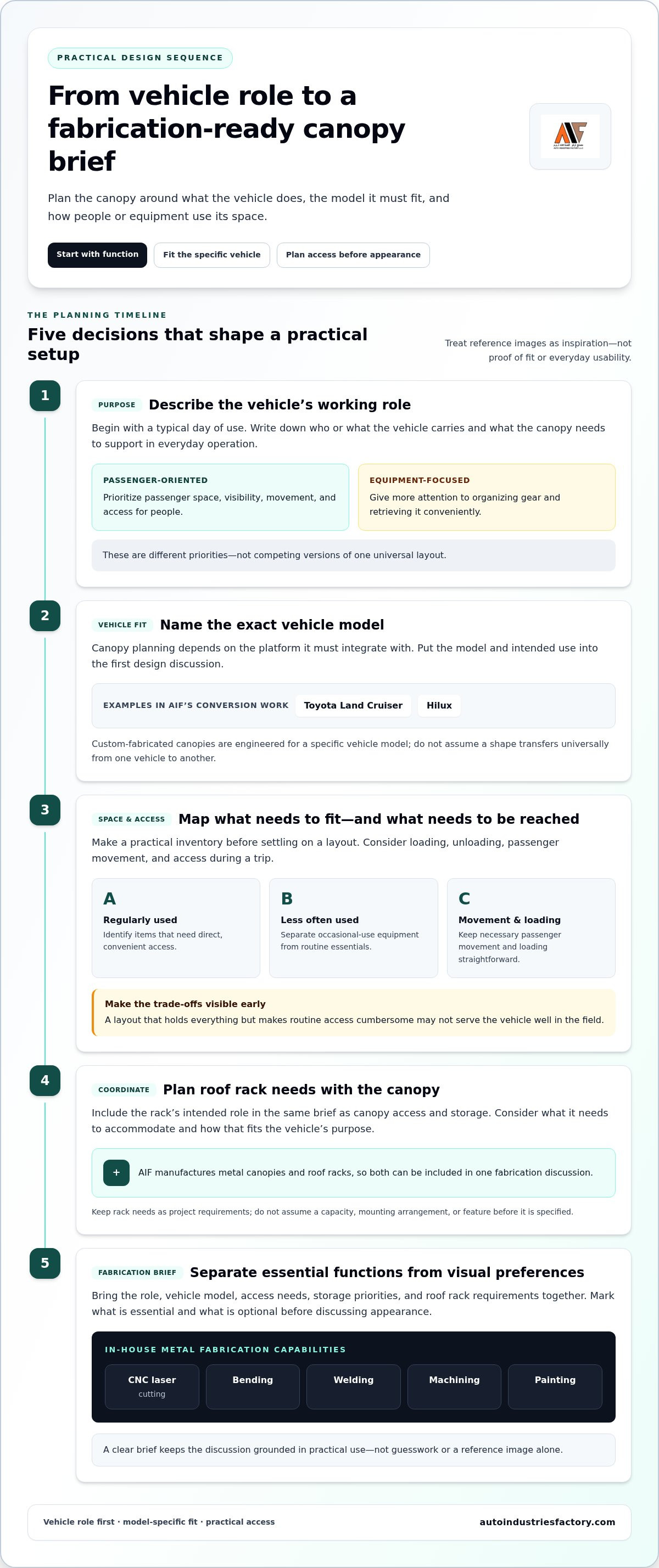
A clear brief turns a general idea into useful information for a fabrication discussion. For safari vehicle canopy design, organize your notes in a practical sequence: intended use, vehicle details, people and equipment, layout priorities, reference images, then related project requirements. Keep required functions separate from visual preferences so essential decisions don’t get lost among styling ideas.
An actionable canopy brief identifies the vehicle model, its role, the people or equipment it carries, the access the layout must support, and your preferred visual direction.
Document the vehicle and intended use
Begin with the vehicle’s exact model and explain what the canopy needs to support in regular operation. Describe who uses the vehicle and how. For example, note whether it’s primarily passenger-focused or carries equipment for field or overland use. Then list the items it typically carries and identify those that need frequent access.
Keep the brief grounded in what you know. Don’t assume dimensions, capacity, or technical specifications. Focus on needs and constraints you can describe. A useful checklist includes:
- The vehicle model and its intended role.
- Regular users and the kind of trips or work the vehicle supports.
- Equipment that must be carried, with frequently accessed items identified.
- Access and layout needs that are essential to daily use.
- Optional visual preferences, clearly separated from required functions.
This information keeps the fabrication discussion focused on the actual vehicle and its duties, rather than a generic setup that may suit neither.
Turn inspiration into fabrication requirements
Collect reference images that communicate the overall direction you like. Use them to point out visual details or arrangements worth discussing, not as instructions for dimensions or proof that the same configuration will suit your vehicle. Add a short note to each reference explaining what you like, such as its general layout or appearance. Annotated examples are more useful than a collection of images without context.
Next, divide your notes into two groups: essential requirements and optional preferences. Essential requirements explain what the canopy must support; preferences describe the look you’d like if it can be accommodated. If the project includes other fabricated vehicle components, note how they relate to the canopy rather than treating each part as an isolated choice. For example, custom bull bars and bumpers are engineered according to vehicle chassis dimensions to ensure perfect alignment and secure mounting, and may form part of the same broader vehicle modification discussion.
Bring the vehicle details, needs list, and annotated references together for a project discussion. Auto Industries Factory LLC manufactures metal canopies and roof racks, supported by in-house CNC laser cutting, bending, welding, machining, and painting. Discuss your metal canopy and roof rack requirements with a brief that separates what the vehicle must do from how you’d like it to look.
How AIF Turns Safari Canopy Design into Precision Fabrication
A considered safari vehicle canopy design needs a fabrication approach that reflects the intended use and the specific vehicle. Auto Industries Factory LLC manufactures metal canopies and roof racks, supported by in-house CNC laser cutting, bending, welding, machining, and painting. These capabilities connect the project brief to the work required to manufacture its components.
Precision starts with clear inputs. The vehicle model, use case, access priorities, storage needs, and reference images give the project discussion practical direction. They help distinguish required functions from optional styling and keep the fabrication conversation focused on the setup the vehicle needs. Clear planning also supports reliability, engineering for safety, and attention to on-time delivery as project priorities.
A coordinated fabrication approach for canopy projects
Each fabrication capability contributes to a different part of the work. CNC laser cutting prepares metal components from the planned design; bending shapes them, while welding joins fabricated parts. Machining and painting are also part of AIF’s in-house capabilities. Together, these processes support a coordinated metal canopy project without assumptions about materials, dimensions, or product specifications.
A canopy may also be considered alongside a roof rack or other fabricated vehicle components. Planning related requirements together helps keep the project aligned with the vehicle’s role and overall setup. Auto Industries Factory LLC’s vehicle conversion and fabrication services include metal canopies, roof racks, and safari vehicle conversions. The intended model and use remain central to the brief.
Move from design direction to a project discussion
Prepare a concise set of project details before discussing fabrication. Include:
- The vehicle’s exact model and its intended role.
- The people or equipment the canopy needs to accommodate.
- Essential access and layout priorities, separated from optional appearance preferences.
- Reference images with notes on what each example communicates.
- Any roof rack or related component requirements for the wider vehicle setup.
These inputs give the discussion a clear starting point without relying on assumptions about technical specifications. Auto Industries Factory LLC’s experience with safari and off-road conversions, including Toyota Land Cruiser and Hilux platforms, connects vehicle use with metal fabrication. The aim is to turn a defined direction into a practical project plan, with precision and reliability as priorities.
Bring your vehicle model, use case, and design priorities together to discuss a canopy project with Auto Industries Factory LLC. Visit Auto Industries Factory to learn more.
Put Your Canopy Brief into Motion
Your next step is to turn the decisions you’ve made into a project conversation. Keep the brief focused on the vehicle’s role and the functions that matter most. That gives the work a clear reference point as the safari vehicle canopy design moves from an idea toward a practical setup.
As the project develops, keep required functions distinct from preferences. This makes it easier to assess choices against the vehicle’s needs and maintain a coherent design direction. For a vehicle-specific project, that clarity supports a focused discussion of the metal canopy and roof rack arrangement, with fabrication planning guided by intended use.
Auto Industries Factory brings metal fabrication and safari vehicle conversion experience to canopy projects. Its in-house CNC laser cutting, bending, welding, machining, and painting capabilities support the move from a defined brief toward precision fabrication. Share your vehicle model and project priorities to begin.
Request an estimate for your canopy project and take the next step toward a setup planned around your vehicle.
Frequently Asked Questions
What is the difference between a safari vehicle canopy and a roof rack?
A canopy is a structure fitted to the vehicle, while a roof rack is a framework intended to carry items above it. They can be considered together, but they don’t serve the same purpose. A project might need a canopy for its chosen vehicle arrangement and a rack for separate carrying needs. Define what each component must do before deciding how they should work together.
How do I choose a safari vehicle canopy design for my vehicle?
Choose a safari vehicle canopy design by matching the layout to the vehicle model and its main duty. Start with a real-use scenario: will the vehicle primarily carry passengers, equipment, or both? Then consider which areas need access during a typical trip and what else must be coordinated with the canopy. Use appearance references to communicate preferences, but judge each idea by how well it supports the vehicle’s daily role.
Can a metal canopy be designed for a Toyota Land Cruiser or Hilux?
Yes. Auto Industries Factory works with safari and off-road platforms including the Toyota Land Cruiser and Hilux, and manufactures metal canopies for vehicle-specific projects. Custom-fabricated canopies are engineered for the specific vehicle model. Include the exact model in your project details, since a reference showing a similar vehicle is not a substitute for planning around the platform you own or operate.
What should I include in a safari vehicle canopy design brief?
Include the vehicle’s exact model, its primary use, who or what it regularly carries, and any access needs that affect daily operation. Add reference images with short notes explaining the details you like. Separate must-have functions from optional styling choices, and identify related components that may be part of the same project. This gives the discussion useful direction without relying on guessed measurements or specifications.
Can a safari vehicle canopy and roof rack be planned together?
Yes. Planning both in one project brief helps show how the components relate to the vehicle’s role and intended arrangement. Describe what the canopy needs to support and what you expect the rack to carry, then note any access or layout considerations that affect both. This coordinated approach gives the fabrication discussion a broader view of the setup instead of treating each component as an unrelated addition.
Which details should I compare when looking at safari canopy designs?
Compare concepts by intended use, layout priorities, vehicle compatibility, and coordination needs. A passenger-focused vehicle may call for a different arrangement from one used mainly to organize field equipment. Check whether each reference relates to your specific model, and note what it demonstrates rather than assuming its dimensions or features will transfer. The most useful comparison identifies which concept best supports your actual operation.
Does Auto Industries Factory manufacture metal canopies for safari vehicles?
Yes. Auto Industries Factory manufactures metal canopies and roof racks and carries out safari vehicle conversions. For a canopy project, bring the vehicle model and a clear description of its use so the discussion stays tied to the intended application. This is especially helpful when considering the canopy as part of a wider vehicle setup rather than as a standalone appearance change.


