
A 4×4 conversion is only useful if it fits the vehicle’s mission. For UAE fleets, a specialized vehicle conversion company in the UAE can adapt vehicles for demanding roles, from ambulance and police use to off-road safari operations, with the configuration shaped around how each unit needs to perform.
Choosing a vehicle conversion involves more than adding equipment or changing its appearance. The base vehicle, intended use, required layout, and working environment all shape the result. A specialized vehicle conversion company in the UAE can help plan a practical, purpose-built vehicle around those needs.
This article explains what custom, ambulance, police and 4×4 vehicle conversions can involve, what to consider when planning a fleet project, and how modifications can be matched to operational demands in the UAE. You’ll also learn how Auto Industries Factory LLC’s vehicle fabrication and conversion capabilities fit into that process.
Key Takeaways
- Match each conversion to the vehicle’s role, operating environment and fleet requirements before settling on a configuration.
- Understand how ambulance layouts and equipment integration shape a purpose-built medical transport vehicle.
- Identify the police vehicle modifications that support operational requirements without treating every fleet unit the same.
- Plan 4×4 upgrades around the terrain and tasks the vehicle must handle, including safari use.
- Learn what to consider when assessing conversion capabilities for fleets operating across the UAE’s emirates.
Custom and special-purpose vehicle conversions
A custom conversion changes a vehicle’s structure or fit-out for a defined task. Start with the operating brief: who will use the vehicle, what it must carry, where it will work, and how its layout should support daily duties. A mobile workshop, for example, needs accessible tool storage, while a field unit may require protected equipment space. Across the UAE, heat, dust, road conditions, and distances between sites can also influence material and layout choices.
Vehicle customization and fitments can include storage, work surfaces, partitions, protective metalwork, or a new exterior finish. Plan each as part of the complete build, rather than as an isolated add-on. A roof-mounted fitment affects clearance and loading, for example, while interior cabinetry must suit the equipment and access required. Before fabrication, map each fitment to its purpose, vehicle platform, and installation position.
Custom kiosks and retail units require a different brief from specialized fleet vehicles. A mobile coffee kiosk may need a service counter, internal storage, and work areas arranged around staff movement. A retail unit might require display shelving and a clear customer-facing opening. The conversion plan should account for the vehicle’s setting and the sequence of daily tasks. These are examples of possible projects, not a standard fit-out package.
Camper conversions and custom trailers also depend on their intended use. A camper layout may prioritize sleeping, storage, and access to personal items; a work trailer may need secure compartments for tools or supplies. The base vehicle or trailer, payload, interior plan, and intended routes all influence design and fabrication. Define these requirements first, then turn them into a layout and fitment plan.
How can you compare UAE conversion companies by experience, warranty, and customer reviews? Compare relevant completed projects, written warranty scope and exclusions, review patterns, business ethics, and the quality of after-service support. Look for evidence that the company has handled the same conversion type, not just a similar-looking vehicle.
How long do vehicle conversions take in the UAE? The timeline depends on the conversion’s complexity, fabrication requirements, fitments, and finish. A straightforward fit-out involves different work from a custom kiosk or trailer build, so the project schedule follows the approved scope and production sequence.
Aftercare matters once a unit enters service. A clear handover should identify installed components, operating considerations, and how to report a workmanship issue. Before production, document the vehicle’s role, layout, fitments, finish, and handover requirements. This gives the conversion team a practical basis for planning fabrication and customer support.
Before choosing a conversion company, assess its service quality, customer reviews, business practices, and after-service support separately. Do not let one consideration stand in for the others. Customer reviews are one part of the assessment; the quality of the work, how the company conducts business, and its support after handover also matter. Looking at all four gives you a broader basis for deciding whether a company suits your project.
Ambulance conversion and medical equipment
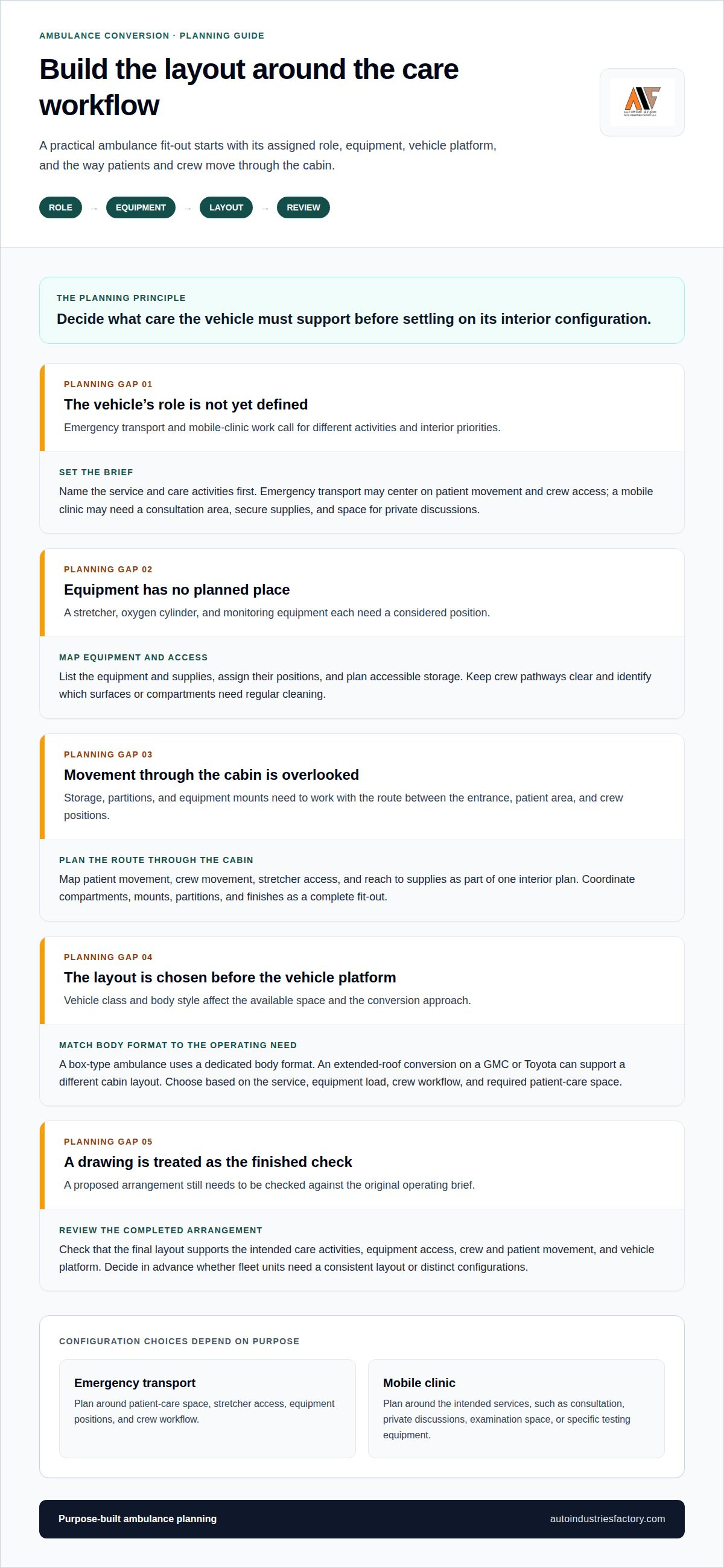
An ambulance conversion starts with its assigned role, patient-care workflow, and vehicle platform. The body must accommodate the intended equipment and allow a practical route between the entrance, patient area, and crew positions. A box-type ambulance uses a dedicated body format, while an extended-roof conversion on a GMC or Toyota can support a different cabin layout. Each configuration needs a plan based on its vehicle platform and operational use.
Medical equipment should shape the interior plan before fabrication begins. A stretcher, oxygen cylinder, and monitoring equipment, for example, each need an assigned position that supports access during a call. Organize supplies in accessible storage while keeping crew pathways clear. The conversion brief should identify the equipment to be carried, how staff will reach it, and which surfaces or compartments need regular cleaning.
Vehicle class and body style affect available space and the conversion approach. A standard vehicle platform may suit a compact patient compartment, while a box body or extended roof can support a different arrangement. The right option depends on the intended service, equipment load, crew workflow, and patient-care space required. Fleet planners should also decide whether vehicles need a consistent layout or distinct configurations.
Mobile clinics serve a different purpose from emergency transport. A clinic conversion may need a consultation area, secure supply storage, and a layout that supports private discussions. A community outreach unit, for instance, could prioritize examination space and organized inventory, while a screening vehicle may need room for specific testing equipment. The intended services should determine the interior, not the label “mobile clinic” alone.
A practical planning sequence helps prevent layout conflicts:
- Define the vehicle’s role and the care activities it must support.
- List the equipment and supplies intended for the interior.
- Map access, storage, crew movement, and patient movement.
- Match the layout to the vehicle body and platform.
- Review the completed arrangement against the original operating brief.
Fabrication details matter. Equipment mounts, storage compartments, partitions, and interior finishes must work together as one fit-out. A layout that looks complete on a drawing may still make access awkward if it overlooks the stretcher route or reach to supplies. Coordinating the vehicle platform and equipment plan early gives the conversion team a clear basis for fabrication.
For fleet operators planning a patient transport or mobile clinic fit-out, ambulance conversion services provide a relevant starting point for matching the vehicle body to its intended role.
Police vehicle equipment and conversion
A police vehicle conversion should start with the duties assigned to that unit. A patrol vehicle, command unit, and transport vehicle need different layouts and equipment access. The base platform also matters. A listed Mitsubishi Pajero Police Car, for example, has model year 2020. That example shows why a conversion brief should identify the exact vehicle before fabrication begins.
Equipment placement should allow clear movement inside the cabin. Communications equipment, storage, and warning systems each need a defined position in the plan. A storage compartment, for example, should be reachable without obstructing the driver’s controls or passenger access. Map these locations before installing brackets, panels, or wiring to reduce layout conflicts during assembly.
Diagnostic equipment can help during and after installation. Vehicle diagnostic tools may identify warning lights or electrical faults following modifications. A structured inspection can also review connections, switches, and the operation of installed equipment. New vehicle electronics create more integration options, but every added system needs a clear power and control plan. Unmapped wiring can make later fault tracing harder.
Passenger and equipment safety depend on secure placement and usable access. Loose equipment can shift while the vehicle is moving, and poorly positioned fittings may obstruct a seat or door. A conversion plan should account for crew movement and equipment mounting points. Useful checks include:
- Confirm that each item has a secure, intended mounting position.
- Keep access to seats, doors, and driver controls clear.
- Route wiring away from moving parts and high-traffic areas.
- Test installed switches and equipment during handover.
These checks connect the conversion layout to the unit’s actual work and give fleet managers a clear basis for reviewing each vehicle. Consistent placement across a batch can make cabin layouts familiar. Where duties differ, configure each vehicle for its operational needs instead of forcing the same layout onto every platform.
What are the risks and common problems with vehicle conversions in the UAE? Common issues include unsecured equipment, wiring faults, blocked access, and fitments that conflict with the vehicle’s intended use. Heat, dust, and regular fleet use make durable installation and practical access for maintenance important considerations.
A final review should compare the completed vehicle with the agreed layout. Inspect mounting points, cabin access, electrical operation, and diagnostic indicators before handover. Recording equipment locations and installed systems also gives fleet staff a useful reference for routine checks. A disciplined conversion process keeps the vehicle platform, equipment, and assigned role aligned.
4×4 Vehicle upgrades and modifications
A 4×4 modification should match the terrain and work assigned to the vehicle. A safari unit crossing uneven tracks has different priorities from a support vehicle travelling between work sites. Start with a clear operating brief: routes, passenger or cargo needs, frequency of off-road use, and equipment carried. These details help define which changes support the task and which add complexity without practical value.
For UAE operations, the route matters as much as the vehicle platform. A fleet travelling between paved roads and sandy terrain needs a configuration suited to both. A safari operator, for example, may prioritize passenger access and clear views of the surroundings, while a remote-site support unit may need organized cargo space. Plan modifications around daily tasks, not a generic off-road appearance.
Vehicle fitments can affect access, visibility, storage, and how the vehicle is used. A roof-mounted load changes the vehicle’s overall profile, while added front-end protection can affect clearance around the vehicle. These changes should be considered together. A conversion team can map each requested fitment against the vehicle layout, intended route, and passenger or cargo requirements before fabrication begins.
Customization can also change a vehicle’s appearance. A vehicle color change can distinguish fleet roles or create a consistent look across a safari fleet. Plan the finish alongside operational features, rather than treating appearance as a substitute for them. A unit designed for guided trips, for example, still needs a layout that supports passenger entry, seating, and equipment storage. A clear scope connects appearance to the vehicle’s purpose.
Use a practical planning sequence for each 4×4 project:
- Record the vehicle platform and its assigned fleet role.
- Describe the terrain, routes, and typical operating conditions.
- List the people, cargo, and equipment the unit must carry.
- Map each requested modification to a specific task.
- Review access, visibility, and fitment placement as one layout.
This sequence helps prevent mismatched upgrades. A change that suits one vehicle may not suit another, even within the same fleet. The base platform, intended load, and route all influence the conversion choices. A safari vehicle, for instance, may need a different passenger arrangement from a 4×4 used mainly to carry field equipment.
After fabrication, review the vehicle against the agreed brief. Confirm that each modification has a clear purpose and that the finished layout supports the vehicle’s assigned role. For a fleet, consistent configurations can make units easier to use interchangeably. Where routes or duties differ, distinct layouts may be more practical. The right 4×4 conversion is the one built around the job, not a list of add-ons.
Which UAE vehicle conversion companies serve Dubai, Abu Dhabi, and other emirates?
For a fleet operating across the UAE, service coverage involves more than a workshop address. The project also includes vehicle delivery, conversion work, handover, and coordination with the fleet’s operating schedule. A conversion plan should set out where vehicles are based, where work takes place, and how completed units return to service.
Start with the fleet’s operating locations. A company with vehicles distributed across the country needs a movement plan that accounts for each unit’s base and intended use. Identify the vehicle’s home location and preferred handover point, then factor them into intake, fabrication, final inspection, and collection. This puts distance and coordination into the project plan.
Project type also affects how work is organized. A single-vehicle conversion may follow a direct intake and handover sequence. A fleet project may be divided into batches so some vehicles remain available during fabrication. A national operator, for example, could group vehicles by platform or assigned role. This can help maintain consistent specifications while accounting for each vehicle’s location.
Useful details to define in a UAE conversion brief include:
- Vehicle base: Record where each unit operates within the UAE.
- Project scope: Describe the required conversion and identify differences between fleet units.
- Movement plan: Set out how vehicles reach the conversion site and return to operation.
- Handover needs: Identify the fleet team receiving each vehicle and the information required.
These steps help prevent avoidable scheduling friction. A vehicle assigned to a remote worksite may need different coordination from one kept near a central depot. A fleet operating across several emirates also needs a clear sequence for transporting vehicles and sharing updates. Build the work plan around the fleet’s actual operating locations.
Coverage should also account for the conversion’s technical requirements. A specialized vehicle conversion company in the UAE needs a clear scope to plan fabrication, fitments, and handover across a fleet. The vehicle platform, intended role, and requested changes determine how the work is organized. A consistent project brief gives everyone involved the same reference across the country.
For a fleet project, put the locations and vehicle requirements into one brief before work is scheduled. Plan a UAE vehicle conversion project around the fleet’s operating bases, conversion scope, and handover sequence.
Auto Industries Factory LLC
Auto Industries Factory LLC helps fleet operators across the UAE turn operational requirements into purpose-built vehicle conversions. Its work includes ambulance conversions, police and military vehicle modifications, safari vehicle conversions, and metal canopies and roof racks. These services support teams planning specialized units or adapting vehicles for distinct fleet roles.
Include the vehicle platform, intended use, and required fitments in the project brief. This gives the conversion work a clear starting point and helps align the finished vehicle with its role. For fleet projects, describing differences between units also helps shape a practical configuration.
If your fleet needs a specialized conversion, contact Auto Industries Factory LLC to discuss the project scope.
Turn your fleet requirements into a clear project brief
The next step is to define what each vehicle must do, then translate that requirement into a conversion scope. A focused brief helps align the vehicle platform, intended role, and required modifications before fabrication starts. For a fleet, identify which units share a configuration and where operational needs call for a different setup.
Auto Industries Factory LLC offers Ambulance Conversions, Police & Military Vehicle Modifications, and Safari Vehicle Conversions for specialized fleet requirements. Choosing a specialized vehicle conversion company in the UAE is a practical step when standard fleet vehicles need purpose-specific adaptation. Share the operating role and vehicle details to start a focused discussion about the project scope.
Contact Auto Industries Factory LLC to discuss your fleet conversion requirements. A clear brief is a strong starting point for a capable, purpose-built vehicle.
Frequently Asked Questions
What vehicle conversion companies specialize in custom vehicles in the UAE?
Auto Industries Factory LLC specializes in vehicle fabrication and conversions for mission-specific use in the UAE. It transforms standard vehicles into specialized units, including ambulances, police and military vehicles, and safari vehicles. When planning a fleet, match the conversion company’s capabilities to the vehicle’s role and project scope. Relevant experience with the required type of build matters more than a general claim of customization expertise.
What types of vehicles and conversions do UAE specialists offer?
Specialists in the UAE convert vehicles for emergency transport, police and military operations, and safari use. Auto Industries Factory LLC offers ambulance conversions, police and military vehicle modifications, safari vehicle conversions, and metal canopies and roof racks. Its ambulance work includes box-type configurations and extended-roof conversions on GMC and Toyota platforms. The vehicle’s role and base platform shape the appropriate conversion scope.
What UAE approvals and regulations apply to modified or converted vehicles?
Applicable approvals depend on the vehicle and its modifications. A change to the body, structure, or vehicle use may involve different requirements from an accessory fitment. Before a converted vehicle enters service, establish which UAE approval and inspection requirements apply to that build. Keep the conversion scope and vehicle documentation together so the relevant details are available during the approval process.
What certifications and safety standards should a UAE vehicle conversion company meet?
There isn’t one certification that automatically covers every conversion type. For ambulance conversions, Auto Industries Factory LLC references EN 1789, ISO, GCC standards, KKK-A-1822, and WHO guidelines. These references relate to ambulance work, so they shouldn’t be treated as universal requirements for safari or police vehicles. Assess standards against the vehicle’s intended role, conversion scope, and applicable approval requirements.


