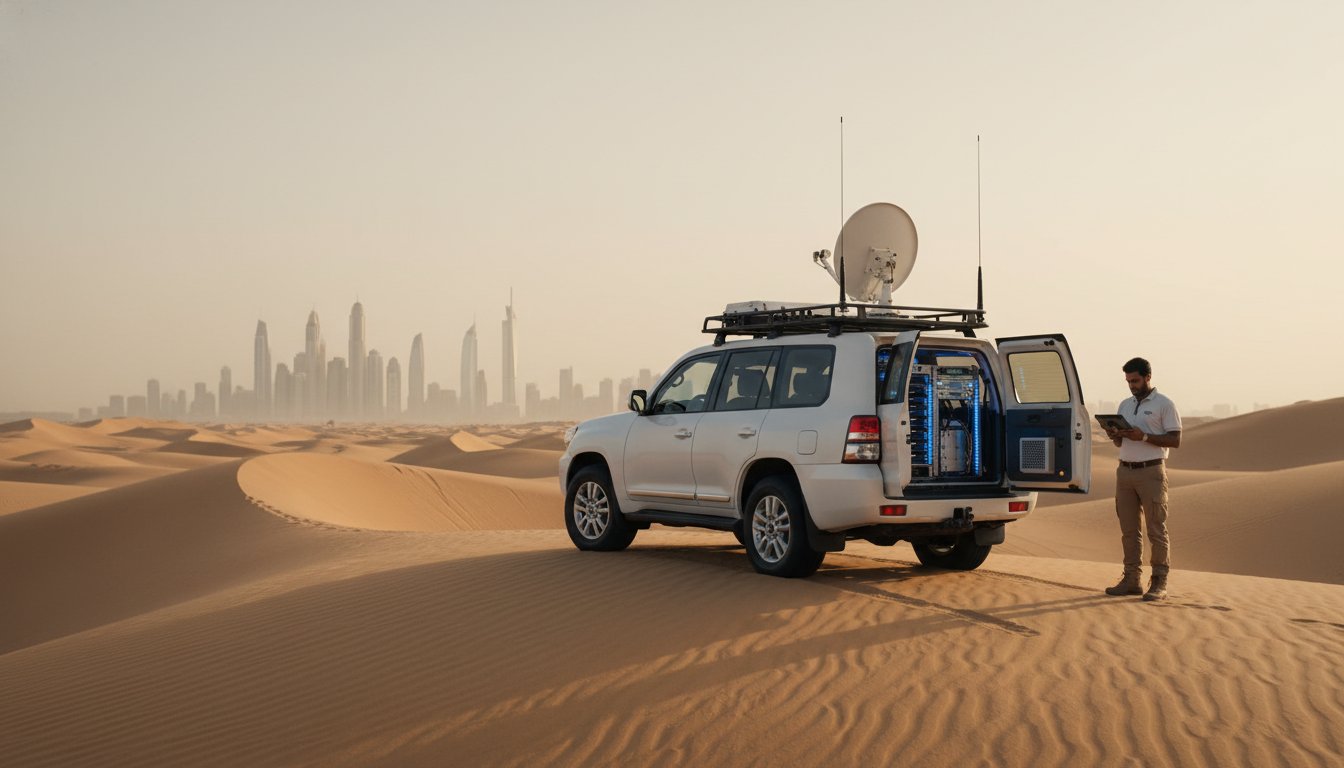
Can your mission-critical communication infrastructure survive a 52°C afternoon in the Rub' al Khali without dropping a single packet? Most fleet operators in the UAE understand that standard setups quickly succumb to thermal throttling and signal interference when pushed to the limit. Auto Industries Factory (AIF) specializes in high-spec telecommunication vehicle conversion projects that turn standard SUVs and vans into ruggedized mobile command centers. We know that in the field, a three-minute signal drop can result in thousands of Dirhams in lost operational efficiency or; in emergency sectors, a compromised mission.
You're likely aware that navigating RTA and GSO modification standards is just as challenging as the off-road terrain itself. This article shows you how specialized vehicle conversions enable mission-critical communication across the UAE’s most demanding landscapes while ensuring full regulatory compliance. We'll preview the essential engineering behind 50°C+ heat rejection, electromagnetic shielding, and the structural reinforcements needed for seamless satellite and radio gear integration.
Key Takeaways
- Understand why specialized mobile hubs are vital for maintaining the UAE’s smart city infrastructure and emergency response connectivity in Dubai and Abu Dhabi.
- Discover the essential engineering components of a high-performance telecommunication vehicle conversion, from vibration-damped 19-inch racks to high-capacity power redundancy.
- Learn how to select the optimal platform for your mission by comparing the internal volume of vans against the rugged off-road capabilities of 4x4 trucks for Northern Emirates terrain.
- Explore advanced thermal management strategies, including dual-redundant HVAC systems designed to maintain mission-critical uptime in the UAE’s extreme 50°C heat.
- Gain insights into the end-to-end custom fabrication process at our Ajman facility, ensuring your fleet is engineered for maximum precision and reliability.
What is Telecommunication Vehicle Conversion and Why Is It Vital in the UAE?
Telecommunication vehicle conversion is the precision engineering process of transforming standard automotive chassis into high-tech mobile hubs for satellite, radio, and data transmission. It isn't just about installing hardware. It involves a complete structural and electrical overhaul to support mission-critical communication. In the UAE, where digital infrastructure is the lifeblood of the economy, these vehicles serve as mobile nodes that extend the reach of the national network into every corner of the country.
The role of these units is critical for the smart city frameworks of Dubai and Abu Dhabi. They provide the necessary redundancy for emergency response networks and public safety. During the record-breaking rainfall in April 2024, mobile units were deployed to maintain communication in areas where fixed infrastructure faced temporary outages. These conversions allow authorities to establish a 5G or satellite link within minutes, ensuring that coordination remains seamless during large-scale events or natural disasters.
There's a growing shift from standard commercial vans to ruggedized 4x4 platforms. This transition is driven by the need for remote desert connectivity. Standard vehicles often fail in the soft sands of the Empty Quarter, but a custom telecommunication vehicle conversion on a heavy-duty 4x4 chassis ensures that technicians can reach remote oil rigs or desert camps without risking a breakdown. These units bridge the gap in areas where laying fiber-optic cables is geographically or economically impossible.
Primary Use Cases Across the Emirates
Mobile units are deployed for various specialized tasks across the UAE. In Sharjah and Ajman, police and security forces utilize Mobile Command Centers (MCC) for tactical coordination and real-time surveillance. UAE-based media outlets rely on Satellite News Gathering (SNG) units for live 4K broadcasts from remote locations. Additionally, providers like Etisalat and du use these vehicles for routine 5G site testing and maintenance in rapidly expanding suburban districts where fixed towers aren't yet operational.
The Necessity of Professional Fabrication
Auto Industries Factory (AIF) specializes in the high-spec fabrication required to survive the UAE’s 50°C summer heat. Low-spec modifications often lead to equipment failure or structural collapse. Mounting a 150kg satellite dish or a 12-meter pneumatic mast requires expert reinforcement of the vehicle's roof and frame. AIF engineers meticulously calculate payload capacity to ensure the specialized equipment doesn't exceed the vehicle’s safety limits on the E11 highway. Professional conversion services also include advanced thermal management systems to protect sensitive servers from the harsh Middle Eastern climate.
Core Components of a High-Performance Telecom Conversion
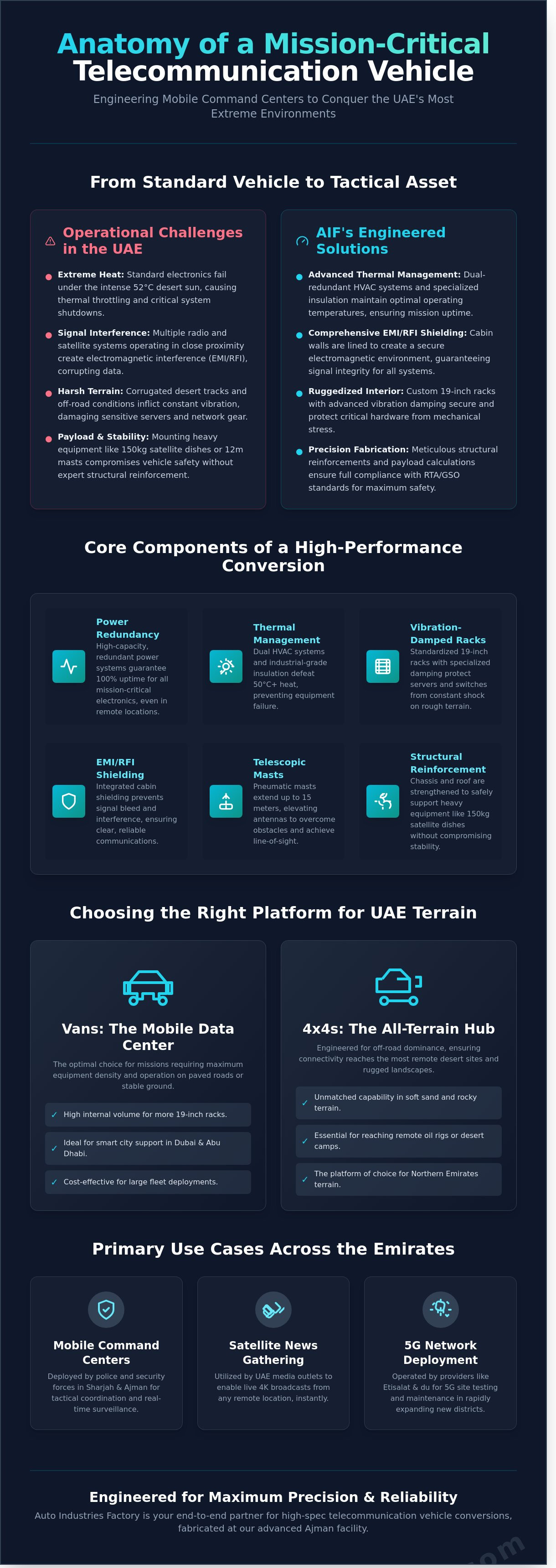
Auto Industries Factory (AIF) specializes in the precision engineering required to turn standard vans and SUVs into mobile command centers. A successful telecommunication vehicle conversion relies on a ruggedized interior that protects sensitive hardware from the UAE’s extreme climate and terrain. We prioritize the installation of standardized 19-inch racks equipped with specialized vibration damping. This engineering choice is vital for protecting high-density servers and network switches when the vehicle travels over corrugated desert tracks or construction sites in Ajman. These racks ensure that hardware remains seated and functional despite constant mechanical stress.
Signal integrity is another critical factor in our builds. We integrate comprehensive EMI/RFI shielding within the cabin walls to prevent electromagnetic interference. This is essential when multiple radio frequencies and satellite uplinks operate simultaneously within a small footprint. For teams requiring maximum range, we install telescopic pneumatic masts. These systems can reach heights of 15 meters, allowing antennas to clear local obstacles and achieve a stable line-of-sight connection in remote regions. Explore our specialized vehicle conversion services for technical details on how we customize these components for mission-critical reliability.
Advanced Electrical Systems and Power Management
AIF designs power architectures that guarantee 100% uptime for mobile connectivity. We install heavy-duty alternators that provide high-amp output to support electronic equipment even while the engine idles in 50°C heat. Our systems include high-capacity lithium battery banks and 5000W inverters, allowing the tech stack to run without the engine for extended periods. We integrate smart power distribution units (PDU) that allow for remote monitoring of energy levels. For long-term off-grid monitoring, we often add roof-mounted solar panels to provide a sustainable trickle charge, ensuring the vehicle is always ready for deployment.
Structural Reinforcement and Mast Mounting
Mounting a heavy pneumatic mast requires significant structural modification to the base vehicle. We perform custom chassis reinforcement to handle the specific torque and weight distribution of a 15-meter mast. AIF utilizes precision laser-cut mounting brackets designed specifically for rugged models like the Toyota Land Cruiser 70-series. We also focus on weather-sealed roof apertures. These seals are tested to withstand the intense, high-pressure rainstorms that occasionally impact Dubai, preventing water ingress from damaging internal servers. If you need to expand your mobile capabilities, you can upgrade your fleet with our specialized structural engineering solutions.
Choosing the Right Platform: Van vs. 4x4 for UAE Terrain
Auto Industries Factory (AIF) specializes in analyzing the specific environmental demands of the Middle East before beginning any telecommunication vehicle conversion. The choice between a van and a 4x4 isn't just about size; it's an engineering decision based on the deployment zone. Urban operations in Dubai and Abu Dhabi require high-roof accessibility and maximum interior volume for server racks. Conversely, remote deployments in the Northern Emirates or the vast desert regions demand high-clearance drivetrains and reinforced suspension systems to reach off-grid locations.
Payload management is the most critical factor in these builds. A standard suite of telecom equipment, including pneumatic masts, satellite dishes, and backup power arrays, typically adds 700kg to 1,300kg to the vehicle's curb weight. If the mission requires ballistic protection for sensitive data transit, the weight increases significantly. We ensure the chosen chassis has a Gross Vehicle Weight Rating (GVWR) that accommodates this gear while maintaining a 15% safety margin for stability and braking performance.
Wind resistance is another localized challenge. During Shamal wind seasons, gusts in open desert areas can exceed 50 km/h. A vehicle's wheelbase plays a vital role in keeping a 10-meter mast steady. We prioritize longer wheelbases for high-profile builds to lower the center of gravity. This prevents lateral sway and ensures that sensitive satellite alignment remains precise even in turbulent weather conditions.
Van-Based Conversions for Urban Command
Vans are the preferred choice for city-based operations where climate control and ergonomic workspaces are the priorities. We often utilize the GMC Savana or Mercedes Sprinter for these projects because they offer up to 15 cubic meters of internal space. High-roof configurations allow technicians to stand fully upright, which is essential for long-duration monitoring. These platforms are ideal for mobile offices and cellular signal boosters, providing a controlled environment that keeps sensitive electronics at a steady 21 degrees Celsius despite the 50-degree UAE summer heat.
4X4 and Truck Conversions for Remote Operations
For connectivity in oil and gas fields or mountainous terrain, we turn to the Toyota Land Cruiser and Hilux. These 4x4 platforms are engineered for durability and high-torque performance. We install custom metal canopies and integrated roof racks to store external gear, ensuring the interior remains dedicated to the core tech stack. These builds are designed to handle 30-degree inclines and soft sand without overheating. You can explore our expertise in preparing off-road chassis in our guide on Safari Vehicle Conversions. Every 4x4 telecommunication vehicle conversion we deliver is tested to ensure it meets the rigorous demands of the UAE's most challenging landscapes.
Engineering for the UAE Climate: Heat and Dust Protection
Operating a mobile command center in the UAE means battling 50°C ambient temperatures. Standard automotive AC units can't handle the 3,000 to 7,000 watts of heat generated by high-density server racks. A professional telecommunication vehicle conversion requires a specialized approach to thermal management. Auto Industries Factory (AIF) specializes in integrating dual-redundant HVAC systems. This setup ensures that if one unit fails, the second immediately takes over. It maintains the 22°C environment required for mission-critical uptime. We utilize aerospace-grade ceramic insulation and reflective thermal barriers to reduce radiant heat transfer from the vehicle's metal skin by up to 90%. Reliability is non-negotiable when hardware costs exceed 500,000 AED. We engineer every build to withstand the harshest desert conditions. This involves more than just cooling; it requires a total sealed-environment strategy. Our technicians apply heavy-duty, weather-resistant seals to every chassis modification point. We ensure that every telecommunication vehicle conversion remains operational during peak summer months without thermal throttling or equipment degradation.Thermal Management and Cooling Strategies
Precision airflow is the difference between a functional hub and a total system failure. AIF utilizes custom air ducting that directs chilled air specifically to the intake fans of equipment racks. We don't just cool the cabin; we manage the micro-climate of the hardware. Our systems include active cooling for localized hotspots and passive heat sinks for auxiliary components. Every build features IoT-enabled monitoring systems. These provide real-time temperature alerts to operators via SMS or cloud dashboards if internal temps fluctuate by even 2°C.
Dust and Sand Mitigation
Fine desert sand can bypass standard filters and cause catastrophic short circuits. We implement positive pressure systems that maintain a higher air pressure inside the vehicle than outside. This prevents dust from entering when doors or hatches open. All air intake points use heavy-duty, washable filtration systems rated for high-particulate environments. External ports and connectors meet IP65 or IP66 ratings for ingress protection. Additionally, we apply specialized UV-resistant and sand-abrasion coatings to external antennas. These coatings prevent the degradation of signal quality caused by the constant scouring of wind-blown grit.
Protect your high-value equipment with engineering built for the Middle East. Explore our specialized telecommunication vehicle conversion solutions today.
Auto Industries Factory: Your Partner for Telecom Conversions in Ajman
Auto Industries Factory (AIF) specializes in high-performance telecommunication vehicle conversion projects that bridge the gap between complex electronics and rugged mobility. Operating from our expansive facility in Ajman, we provide a complete in-house solution for specialized fleets. We don't rely on third-party contractors for critical engineering. Our team manages the entire lifecycle of the build, starting from heavy-duty CNC laser cutting for internal mounting systems to the final application of weather-resistant fleet paint. This centralized approach allows us to maintain a "zero-defect" policy across every square inch of the vehicle.
Customization is the foundation of our engineering process. We recognize that a mobile command unit for a government agency in Fujairah has different requirements than a commercial satellite uplink van in Ras Al Khaimah. Our engineers design specific layouts based on your unique mission profile. We maximize internal space while ensuring that weight distribution remains within the chassis manufacturer's safety limits. This precision prevents premature wear on suspension and braking systems, which is a common failure in low-quality conversions. Our builds are engineered to last for years in the harshest Middle Eastern climates.
Precision Fabrication in Our Ajman Facility
Our workshop utilizes advanced CNC machining to produce brackets, server racks, and cabinetry with a flawless fit and finish. We use premium-grade aluminum and steel to ensure that internal structures don't rattle or fatigue under constant vibration. Our expert welding team performs structural work that preserves the vehicle's long-term durability. Learn more about our team and the engineering philosophy we apply to every technical build. We focus on ruggedness because we know these vehicles often operate in high-heat, high-dust environments across the UAE.
Quality Control and Mission Readiness
Mission success depends on reliability. We implement rigorous testing protocols that analyze electrical loads and structural stability under extreme conditions. Every telecommunication vehicle conversion we deliver meets RTA, GSO, and international safety norms. We ensure your mobile hub is fully compliant with UAE regulations for immediate road registration. This attention to detail reduces downtime and ensures your fleet stays operational. Our final finishing stage includes professional painting and livery application for police, civil defense, or corporate fleets. Contact us today for a free estimate on your next project and see why AIF is the trusted partner for mission-critical vehicle solutions in the region.
Future-Proof Your Mobile Connectivity Infrastructure
Deploying a reliable telecommunication vehicle conversion in the UAE requires more than just standard equipment installation. It demands engineering that withstands 50°C summer peaks and rigorous desert dust. Auto Industries Factory (AIF) delivers this through in-house CNC laser cutting and precision fabrication at our Ajman facility. We ensure every mobile unit meets 100% GSO and RTA compliance standards, which is why government and commercial sectors across Dubai and Ajman trust our builds for mission-critical operations.
Your fleet's uptime depends on rugged durability and advanced thermal management. Whether you're upgrading a single 4x4 for remote desert sites or a full van fleet for urban 5G rollouts, our team provides the technical expertise to keep your hardware safe and functional. Don't settle for generic modifications when you can have a custom-engineered solution built to last in the Gulf environment. We focus on maximizing your investment in AED by delivering vehicles that require less maintenance and offer superior protection for sensitive electronics.
Ready to enhance your mobile network capabilities? Get a Free Estimate for Your Telecom Conversion today. Let's build a mobile hub that powers your connectivity across the Emirates.
Frequently Asked Questions
What types of vehicles can be converted for telecommunications use?
Auto Industries Factory converts a wide range of platforms including 4x4 SUVs, heavy-duty trucks, and commercial vans. We frequently utilize the Toyota Land Cruiser 70 Series and Nissan Patrol for off-road connectivity, while the Mercedes-Benz Sprinter or Ford Transit serve as larger mobile hubs. Our engineering team adapts chassis ranging from 3.5 to 15 tons to accommodate specific payload requirements for telecommunication vehicle conversion projects across the UAE.
How do you ensure equipment doesn't overheat in the UAE summer?
We install redundant, high-capacity HVAC systems designed to maintain internal temperatures of 21°C even when outside heat reaches 50°C. Each conversion features 50mm high-density thermal insulation and heat-reflective roof coatings. We use industrial-grade cooling fans for server racks that provide a minimum airflow of 150 CFM. This ensures sensitive electronics remain within safe operating parameters during the peak UAE summer months without performance throttling.
Can you integrate satellite dishes and telescopic masts into the same vehicle?
Yes, we integrate both auto-pointing satellite dishes and pneumatic telescopic masts into a single vehicle platform. Our custom roof rack systems can support 1.2-meter VSAT antennas alongside 15-meter masts without compromising vehicle stability. We use heavy-duty outriggers and hydraulic leveling systems to ensure 100% signal accuracy. This dual-setup allows for simultaneous high-speed data uplinks and local radio broadcasting from remote desert locations.
Are your telecommunication vehicle conversions RTA compliant?
All our telecommunication vehicle conversion projects are fully RTA compliant and undergo rigorous safety inspections. We provide the necessary technical certificates and weight distribution reports required for registration in Dubai and Ajman. Our engineers ensure that every modification stays within the Original Equipment Manufacturer gross vehicle weight rating. We handle the documentation process to ensure your mobile unit is road-legal and ready for immediate deployment.
Do you provide EMI/RFI shielding for sensitive radio equipment?
What is the typical lead time for a custom telecom conversion in Ajman?
The typical lead time for a custom telecom conversion at our Ajman factory ranges from 4 to 8 weeks. This timeline depends on the complexity of the internal electronics and the specific mast requirements. We provide a detailed project milestone chart within 48 hours of order confirmation. Our 25,000 square foot facility is equipped to handle multiple builds simultaneously, ensuring we meet strict delivery deadlines for corporate and government fleets.
Do you offer mobile command center conversions for police or military use?
AIF specializes in designing mobile command centers for police, military, and emergency services. These units include multi-screen monitoring stations, secure communication encryption, and optional B6 level ballistic protection. We've delivered over 45 tactical units to regional authorities, featuring integrated workstations for 4 to 6 operators. Each build is customized with sirens, emergency lighting, and independent power generators for 24/7 field operations in demanding environments.
Can existing fleet vehicles be retrofitted with new telecom gear?
We offer full retrofitting services for existing fleet vehicles to upgrade outdated technology with modern 5G or satellite hardware. Our team can strip old installations and replace them with 2024-standard equipment in as little as 10 business days. This cost-effective solution saves clients up to 40% compared to purchasing a new vehicle. We ensure all new wiring harnesses are labeled and integrated into the existing power management system for seamless operation.


