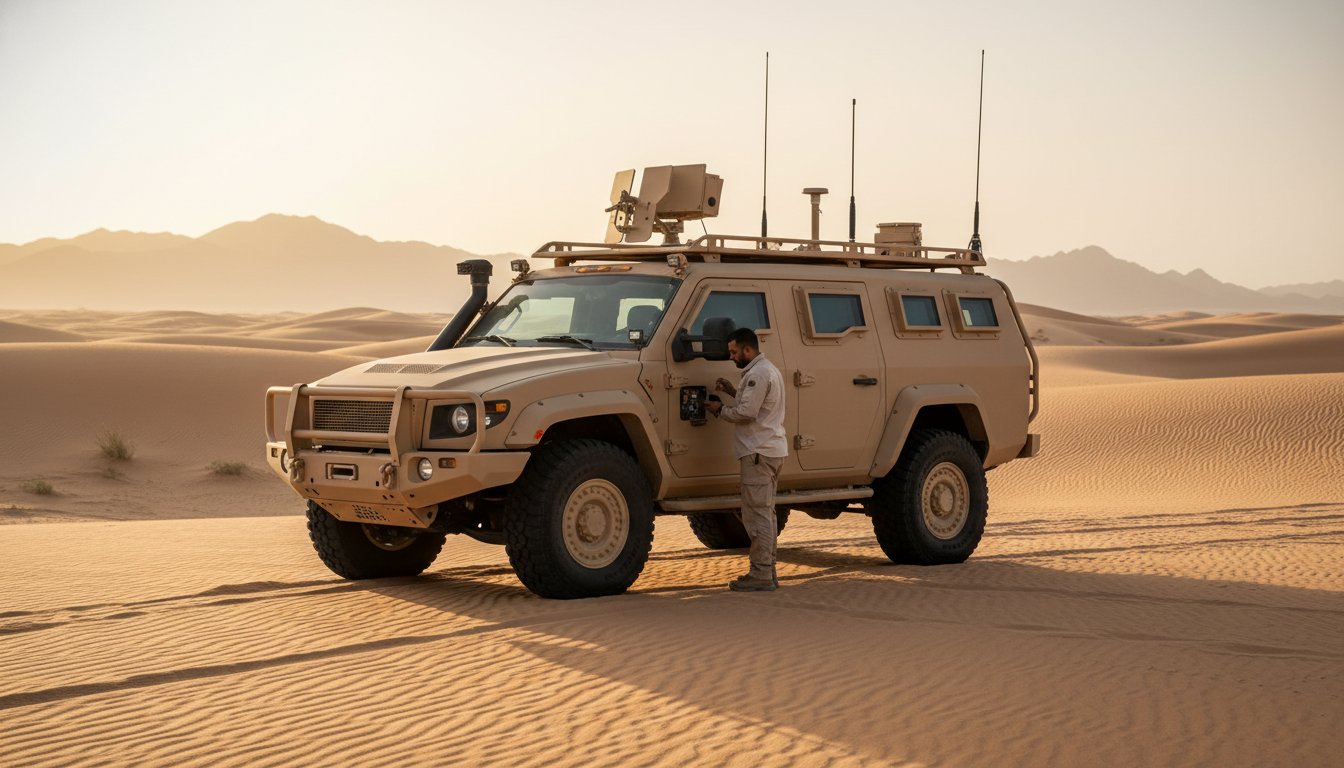
In the demanding operational landscapes of Oman, the line between a standard heavy-duty vehicle and a true mission-ready asset can seem blurred. When success depends on reliability and performance, understanding which modifications are critical can feel like a complex challenge. Is it possible to convert your existing fleet, or is a custom build necessary? These are the high-stakes questions that fleet managers and security professionals face daily.
This is where the specialized engineering of a tactical truck provides the definitive solution. More than just a rugged 4x4, a tactical truck is a purpose-built platform, meticulously converted for specific objectives. This guide demystifies the entire process. We will break down the core capabilities that define these advanced vehicles, explore the most critical custom conversions for protection and performance, and provide a clear roadmap for transforming a standard vehicle into an asset built to excel in the toughest conditions.
Defining the Tactical Truck: More Than Just a Heavy-Duty Vehicle
A tactical truck is far more than a simple heavy-duty vehicle; it is a purpose-built platform engineered for mobility, protection, and mission support in the most demanding conditions. Unlike commercial trucks designed for paved roads and operator comfort, every component of a tactical vehicle is optimized around three fundamental principles: survivability in hostile environments, extreme off-road performance, and substantial payload capacity.
These vehicles are typically classified into Light, Medium, and Heavy categories, each tailored for specific operational demands. These classifications, which have evolved over decades as seen in comprehensive lists of U.S. Army tactical truck models, help define a vehicle's role, from rapid reconnaissance to heavy equipment transport. The core design ensures functionality in environments where failure is not an option, making them indispensable for defense, security, and specialized industrial sectors across Oman.
Primary Mission Roles and Capabilities
A tactical truck is a versatile asset, designed to execute a wide range of critical tasks. Its core capabilities are built around mission success and adaptability. Key roles include:
- Troop and Personnel Transport: Safely moving personnel through hazardous or undeveloped terrain where standard vehicles cannot operate.
- Logistics and Cargo Hauling: Serving as the backbone of supply lines by transporting essential equipment, fuel, and mission-critical supplies.
- Mobile Command Platforms: Acting as a rugged, mobile base for command, control, and communications (C3) systems.
- Specialized Operations: Custom-configured for roles like patrol, reconnaissance, medical evacuation (MEDEVAC), or as a weapons platform.
Key Distinctions from Commercial Trucks
The engineering philosophy behind a tactical vehicle prioritizes mission reliability over all else. This results in crucial, performance-driven differences from their commercial counterparts. The focus is on robust construction and field serviceability, ensuring the vehicle can complete its objective and return safely.
- Reinforced Chassis and Frame: Built to withstand extreme torsional stress and impacts from rough terrain and potential threats.
- Upgraded Powertrain: Heavy-duty engines, transmissions, and cooling systems designed for continuous operation under maximum load in high temperatures.
- Superior Off-Road Mobility: Advanced suspension systems, high ground clearance, and robust all-wheel-drive configurations are standard.
- Durability and Field Serviceability: Engineered for longevity in harsh climates and ease of repair with basic tools, prioritizing operational uptime.
The Anatomy of a Tactical Conversion: Key Upgrades and Modifications
Transforming a standard commercial vehicle into a mission-ready tactical asset is a process of precision engineering, not just aftermarket additions. A successful conversion depends on an integrated design philosophy where every modification works in concert to enhance durability, mobility, and protection. It’s about building a complete system capable of performing reliably under the most demanding operational conditions.
Chassis, Powertrain, and Drivetrain Reinforcement
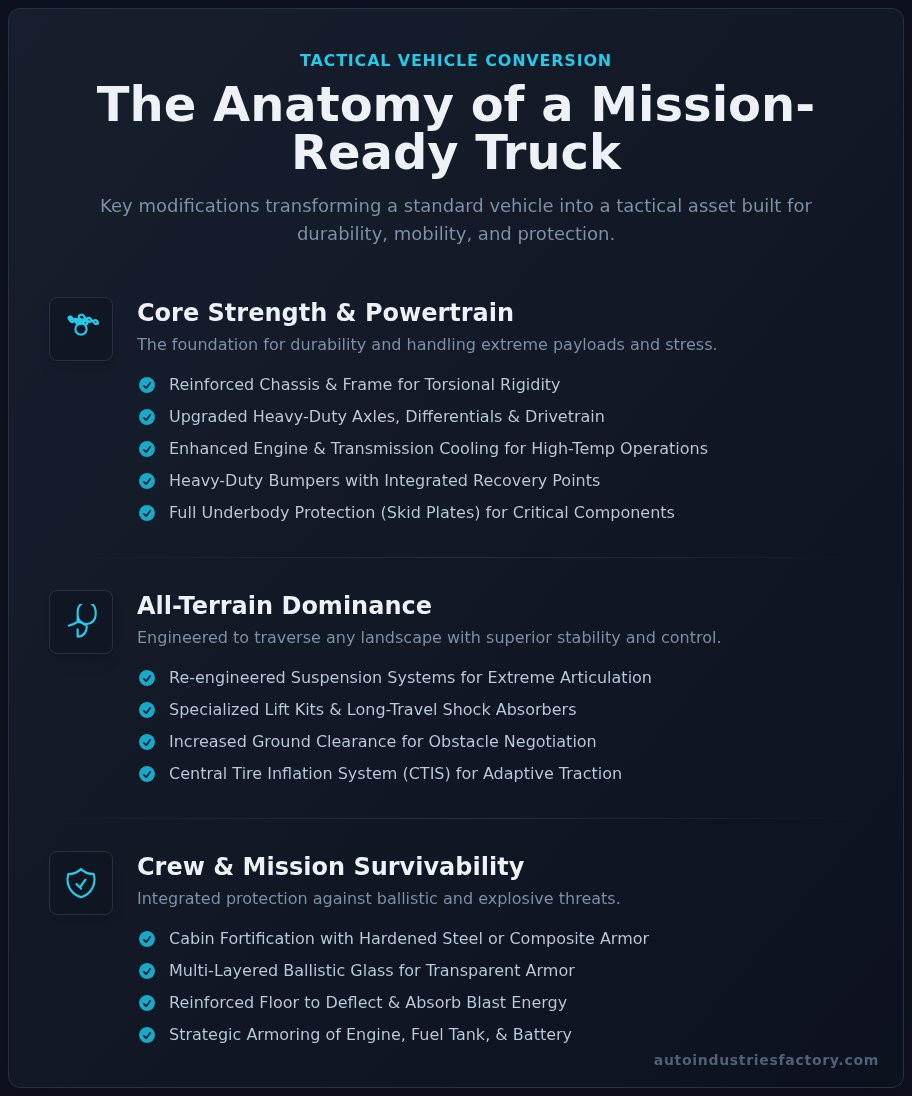
The foundation of any heavy-duty tactical truck is its core structure. The process begins by reinforcing the vehicle’s frame to handle immense payloads and the torsional stress of extreme off-road travel. This structural integrity is complemented by powertrain upgrades, including heavy-duty axles, locking differentials, and robust transfer cases that deliver maximum torque. This approach mirrors the ground-up engineering seen in dedicated military platforms, like the advanced Oshkosh Defense tactical vehicles, where every component is designed for resilience. Essential additions include:
- Enhanced engine and transmission cooling systems, critical for high-stress operations in Oman's climate.
- Heavy-duty steel bumpers with integrated recovery points for self-recovery and vehicle extraction.
- Full underbody protection (skid plates) to shield the engine, fuel tank, and drivetrain from impacts.
Advanced Mobility and Suspension Systems
A vehicle's tactical advantage is defined by its ability to traverse any terrain. This capability is achieved through a completely re-engineered suspension system. Specialized lift kits and long-travel shock absorbers are installed to increase ground clearance and wheel articulation, allowing the vehicle to overcome large obstacles while maintaining stability. Depending on the mission profile, heavy-duty leaf springs are used for maximum load-bearing, or custom coilover systems are fitted for superior performance. For elite applications, a Central Tire Inflation System (CTIS) allows the operator to adjust tire pressure from the cab, optimizing the vehicle's footprint for sand, rock, or paved surfaces.
Ballistic and Blast Protection (Armoring)
For security, law enforcement, and military roles, crew survivability is the highest priority. This is achieved by integrating ballistic and blast protection into the vehicle's structure. The cabin is fortified with hardened steel or lightweight composite armor, while windows are replaced with multi-layered ballistic glass. To counter explosive threats, the floor is reinforced to deflect and absorb blast energy. This protection is not limited to the crew; strategic armoring of critical components like the engine bay, battery, and fuel tank ensures the vehicle can maintain mobility even after sustaining damage.
Choosing the Right Platform: Base Vehicles for Tactical Conversion
The foundation of any successful tactical truck is the base chassis. The decision between a readily available Commercial Off-the-Shelf (COTS) platform and a purpose-built military one dictates the project's scope, cost, and timeline. While large-scale military programs, like the Joint Light Tactical Vehicle acquisition, develop vehicles from the ground up, COTS conversions offer a flexible and efficient path to deploying highly capable assets.
Benefits of Commercial Off-the-Shelf (COTS) Platforms
For many applications in Oman and across the region, COTS platforms are the superior choice. Proven models like the Toyota Land Cruiser, Hilux, and GMC Sierra offer world-renowned reliability and durability. Their primary advantages include significantly lower initial acquisition costs and the widespread availability of spare parts and service centers, which is critical for maintaining fleet readiness. Furthermore, their civilian appearance provides a lower profile, an essential feature for discreet operations by police, border patrol, and private security firms.
Key Factors in Platform Selection
Selecting the correct base vehicle is a strategic decision that directly impacts the final vehicle's performance and lifespan. Our engineers evaluate every project against a core set of criteria to ensure the platform is perfectly matched to its intended role. Key considerations include:
- Payload Requirements: The total weight of all personnel, armor, and specialized equipment the vehicle must carry.
- Operational Environment: The primary terrain, from urban streets and highways to rugged desert wadis and mountainous regions.
- Mission Profile: The specific tasks the vehicle must perform, such as patrol, personnel transport, command and control, or rapid response.
- Budget and Lifecycle Costs: Balancing the initial investment with long-term maintenance, fuel, and operational expenses.
Why a Custom Conversion Can Outperform an OEM Vehicle
While an OEM vehicle is built for a general purpose, a custom tactical truck conversion is engineered for a specific mission. This bespoke approach allows for the seamless integration of specialized systems, from advanced communications suites to defensive countermeasures and custom weapon mounts. It provides the flexibility to precisely balance performance, protection, and budget, resulting in a vehicle that is a purpose-built tool, not a compromise. Discuss your mission requirements with our engineers to explore how a tailored solution can enhance your operational capabilities.
Tactical Truck Applications Across Defense and Security Sectors
The true value of a custom tactical truck lies in its unparalleled versatility. A single, durable base platform-often a proven chassis like a Toyota Land Cruiser or Nissan Patrol-can be expertly converted to serve a wide spectrum of mission-critical roles. This adaptability provides a significant strategic and financial advantage for government and private entities, allowing them to field specialized vehicles without the cost of entirely unique platforms for each task. From the rugged frontiers of Oman's borders to high-stakes urban operations, these vehicles are engineered to deliver mission reliability.
Military and Defense Operations
For national defense forces, a tactical truck is a force multiplier, enhancing mobility, command, and sustainment. These rugged conversions are designed to operate in harsh terrains and demanding conditions, providing essential support for troops on the ground.
- Light Infantry & Special Forces Mobility: Configured for rapid insertion and extraction of small units in austere environments.
- Logistics Support: Custom-built to transport critical supplies like ammunition, water, fuel, and medical equipment to forward positions.
- Mobile Command Posts: Outfitted with advanced communications and surveillance equipment to serve as forward operational hubs.
- Border Security & Reconnaissance: Equipped for long-range patrols, providing a persistent and capable presence in remote areas.
Law Enforcement and SWAT Teams
In the domestic security arena, tactical conversions provide police and special response teams with the protection and capability needed to manage high-risk situations safely and effectively. These vehicles are purpose-built to protect personnel and transport specialized gear.
- Armored Personnel Carriers (APCs): Providing ballistic protection for tactical teams during entry, extraction, and crowd control scenarios.
- Equipment Transport: Securely hauling specialized gear, including breaching tools, shields, and surveillance drones.
- High-Risk Operations: Serving as a mobile defensive position during hostage rescue or high-risk warrant service.
- Mobile Command Centers: Coordinating large-scale security operations for major events or critical incidents.
Private Security and Critical Infrastructure Protection
For Oman's vital industries, such as oil, gas, and logistics, private security is paramount. Converted trucks offer a robust solution for protecting high-value assets, facilities, and personnel in potentially hazardous zones.
- Convoy Security: Protecting valuable cargo and personnel during transit through high-risk corridors.
- Rapid Response Vehicles: Enabling security teams to quickly address threats at large industrial sites, ports, or remote facilities.
- Executive Protection: Offering discreet yet highly capable secure transport for VIPs and corporate leaders.
- Conservation Enforcement: Supporting anti-poaching and environmental protection patrols in national parks and reserves.
The ability to tailor a single vehicle platform for these varied roles demonstrates the immense value that expert conversion specialists bring to modern security operations.
The Conversion Process: From Your Requirement to a Deployed Asset
Transforming a standard commercial vehicle into a mission-ready asset is a precise, engineering-led process. At Auto Industries Factory, we have refined a transparent, four-step workflow that ensures every project moves from initial concept to a fully deployed tactical truck with meticulous attention to detail, quality, and your specific operational demands.
Step 1: Consultation and Needs Assessment
The foundation of every successful conversion is a deep understanding of your requirements. Our process begins with a comprehensive consultation to define the vehicle's mission profile, whether for security patrols, critical infrastructure protection, or specialized industrial use across Oman. We analyze key factors including:
- Mission Profile: Defining the vehicle's primary objectives, from rapid response to surveillance.
- Operational Environment: Assessing the terrain, from rugged mountains to harsh desert plains.
- Payload & Protection: Determining necessary equipment and required levels of ballistic protection.
This critical analysis allows us to recommend the optimal base chassis, such as the proven Toyota Land Cruiser or Nissan Patrol, renowned for their durability in the region.
Step 2: Engineering Design and Fabrication
With requirements finalized, our engineering team creates detailed CAD models and technical blueprints. This digital design phase guarantees every component integrates flawlessly. Our advanced fabrication facility then utilizes precision technology, including CNC laser cutting and press brakes, to manufacture custom structural reinforcements, armor plating, and equipment mounts. Expert welders assemble these elements, fundamentally strengthening the vehicle for its new role.
Step 3: Systems Integration and Final Assembly
This is where the vehicle becomes a fully integrated tactical tool. Our technicians meticulously install and wire all mission-critical systems, from advanced communications suites and surveillance gear to power management solutions. The interior is then completed with custom seating, secure storage, and ergonomic operator controls. Finally, the vehicle receives a heavy-duty protective coating or paint finish, engineered to withstand Oman’s demanding climate.
Step 4: Quality Assurance and In-Field Testing
Before any tactical truck is approved for delivery, it undergoes a battery of exhaustive quality assurance checks. Every weld, electrical system, and mechanical component is inspected against our exacting standards. We conduct performance trials that simulate real-world operational stress, ensuring flawless functionality. Only after passing every test and exceeding client specifications is the asset ready for deployment. This rigorous validation guarantees reliability when it matters most.
To learn how this proven process can deliver a solution for your organization, contact our conversion specialists today.
Your Partner in Advanced Tactical Vehicle Solutions
A tactical truck is far more than a heavy-duty vehicle; it is a mission-critical asset, meticulously engineered for specific operational demands. From selecting the right COTS platform, like a rugged Toyota or GMC, to executing a flawless conversion with specialized armor, communications, and performance upgrades, every detail is crucial for deployment success. The effectiveness of these vehicles in defense and security sectors hinges on the precision of their design and fabrication.
At Auto Industries Factory, we transform your requirements into field-ready assets. With proven experience serving military, police, and security clients in the UAE and across the region, we are the trusted experts in tactical conversions. Our complete in-house fabrication, utilizing advanced CNC laser cutting and press brake technology, ensures every component meets the highest standards of durability and reliability. Take the next step in enhancing your operational capability. Request a free consultation for your custom tactical vehicle project.
Let's work together to build the advanced, rugged solution your mission demands.
Frequently Asked Questions About Tactical Trucks
What is the difference between a tactical truck and an MRAP?
The primary difference lies in their design origin and purpose. An MRAP (Mine-Resistant Ambush Protected) is a purpose-built military vehicle with a V-shaped hull specifically engineered to deflect explosive blasts from below. In contrast, a tactical truck is typically a civilian or commercial heavy-duty vehicle that has been extensively modified for tactical roles. Its conversion focuses on enhancing mobility, payload, and mission-specific capabilities, which may include armoring, but its chassis is not inherently designed for mine resistance.
How much does a custom tactical truck conversion typically cost?
In Oman, the cost for a custom tactical truck conversion varies significantly based on the project's complexity. A basic modification with essential equipment and light armor might begin around 50,000 USD. However, a comprehensive build with high-level ballistic protection (e.g., B6/B7), advanced surveillance systems, and heavy-duty powertrain upgrades can exceed 200,000 USD. The final cost is determined by the base vehicle, armor level, and specific operational equipment required.
Can a standard pickup truck like a Ford F-150 be converted for tactical use?
While a Ford F-150 can be modified for light-duty tactical applications, it has significant limitations. The main constraint is its payload capacity, which is often insufficient to safely handle the immense weight of comprehensive armor and specialized equipment. For serious tactical conversions in the region, more robust platforms like the Toyota Land Cruiser 70 Series, Nissan Patrol Safari, or heavy-duty American trucks (F-250/350) are strongly recommended due to their stronger frames and suspension.
How long does the tactical vehicle conversion process take from start to finish?
A typical tactical vehicle conversion project takes between 8 and 16 weeks to complete, from design finalization to final delivery. This timeline can be influenced by several key factors, including the complexity of the required modifications, the specific level of ballistic armoring, and the lead time for sourcing specialized components like advanced communication systems or weapon mounts. A precise schedule is provided after the initial project consultation and engineering assessment.
What are the maintenance considerations for a heavily modified tactical vehicle?
A modified tactical vehicle requires a more intensive maintenance schedule than its standard counterpart. The substantial added weight from armor and gear puts increased stress on brakes, suspension components, and tires, necessitating more frequent inspections and earlier replacement. The powertrain and cooling system must also be carefully monitored to handle the increased load. Adhering to a specialized maintenance plan is crucial for ensuring the vehicle's long-term reliability and operational readiness.
Is it possible to armor an existing vehicle in our fleet?
Yes, armoring existing vehicles is a highly specialized service we offer. The process begins with a thorough engineering assessment of the vehicle's chassis, suspension, and powertrain to confirm it can safely manage the additional weight of the armor. Based on this analysis, we design a custom armor solution and recommend necessary upgrades to the brakes and suspension to maintain optimal performance, handling, and safety standards for the newly protected asset.


