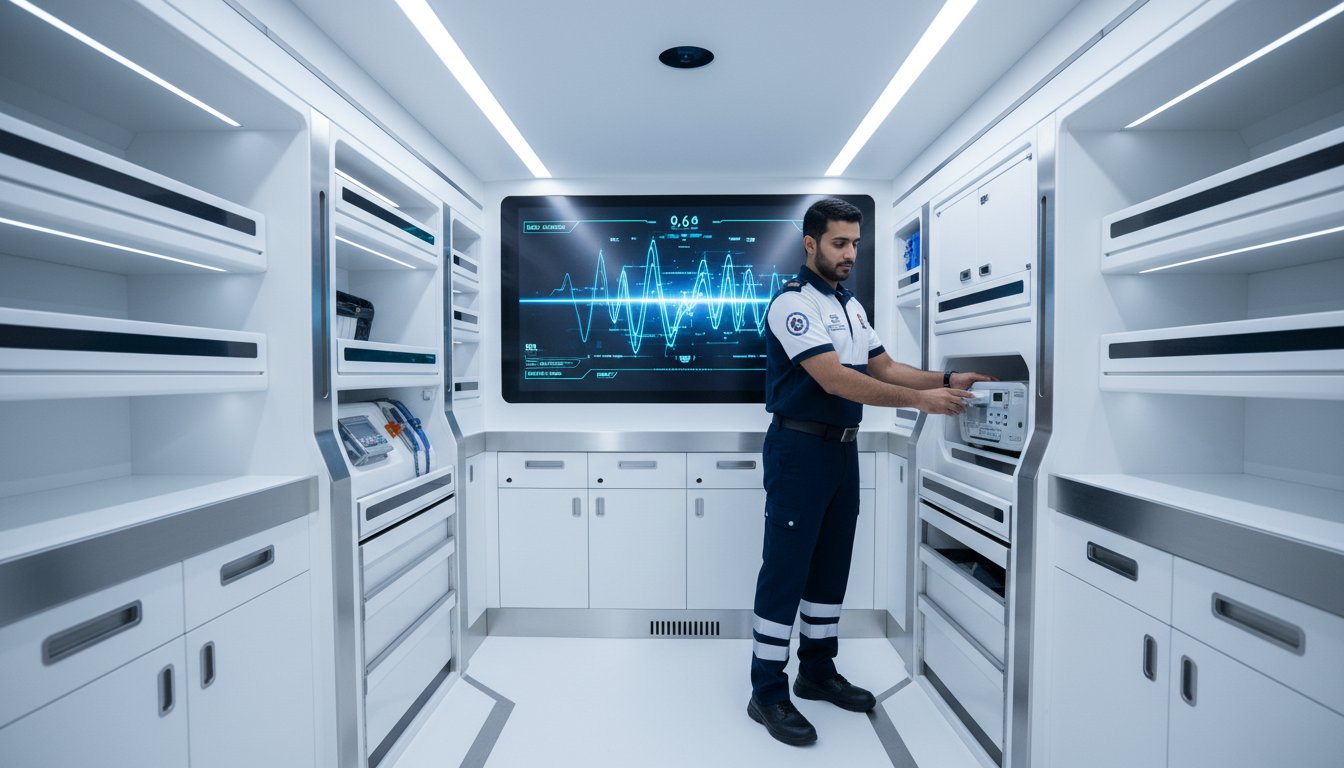
Did you know that research published in the International Journal of Emergency Services indicates that approximately 60% of emergency responders suffer from musculoskeletal injuries caused by cramped, inefficient vehicle layouts? You understand that in the high-stakes environment of Dubai and the Northern Emirates, a fraction of a second can change a life. When your crew is fighting 50°C summer temperatures and intense humidity, an optimized ergonomic design for paramedic vehicles isn't just a luxury; it's a critical requirement to prevent burnout and ensure rapid response times.
Auto Industries Factory (AIF) specializes in engineering robust, mission-critical solutions that prioritize crew health and mission reliability. This 2026 guide reveals how advanced engineering reduces physical strain, improves patient outcomes, and ensures your fleet remains fully compliant with MOH and DCAS standards. We'll examine the technical innovations in modular storage, precision equipment placement, and heavy-duty climate systems that keep UAE emergency teams performing at their peak under the most demanding conditions.
Key Takeaways
- Learn how advanced engineering directly influences life-saving outcomes by reducing rescuer fatigue and streamlining emergency workflows in high-pressure environments.
- Master the "Triangle of Care" concept to optimize ergonomic design for paramedic vehicles, ensuring all critical medical equipment remains within a 50cm zero-strain reach zone.
- Understand how specialized HVAC integration and strategic vent placement protect paramedic cognitive performance during the extreme heat and humidity of UAE summers.
- Explore the transition to digital cockpits and integrated 15-inch touchscreens that keep drivers focused on Dubai’s roads while maintaining full control over sirens and lighting.
- Discover why custom CNC laser-cut solutions outperform standard conversion kits by meeting the specific operational demands of specialized UAE emergency fleets.
The Fundamentals of Ergonomic Design for Paramedic Vehicles in the UAE
Ergonomics is the specialized science of fitting the ambulance workspace to the paramedic's physical needs rather than forcing the medic to adapt to a cramped environment. In the high-pressure emergency medical services (EMS) sector of the UAE, this discipline focuses on human factors engineering to ensure that every tool, seat, and surface is within a natural reach zone. A precision-engineered ergonomic design for paramedic vehicles directly influences patient care outcomes. When a medic can access a defibrillator or airway management kit without unbuckling their safety restraint, the speed and accuracy of life-saving interventions increase significantly.
To better understand how these engineering principles translate to real-world safety and efficiency, watch this detailed webinar on modern standards:
Standard vehicle interiors often fail the ergonomic test because they are designed for cargo, not for complex clinical procedures. In cities like Dubai and Abu Dhabi, where emergency crews face extreme heat and high call volumes, a poorly designed interior leads to rapid fatigue and increased risk of clinical error. Regulatory bodies, including the Ministry of Health (MOH) and the Dubai Corporation for Ambulance Services (DCAS), require vehicles to meet strict GSO standards that prioritize crew safety and operational flow. Auto Industries Factory (AIF) specializes in bridging the gap between basic transport and advanced mobile intensive care units through rigorous engineering.
Why Ergonomics Matters for UAE Fleet Managers
Fleet managers in the UAE must prioritize ergonomics to reduce work-related musculoskeletal disorders (WMSDs). Statistics in global EMS studies indicate that back injuries account for a large percentage of lost workdays; an optimized layout reduces the need for awkward stretching or heavy lifting in tight spaces. In congested urban areas like Downtown Dubai, ergonomic efficiency slashes vital seconds off response and prep times. Auto Industries Factory (AIF) specializes in creating these high-performance environments, leveraging years of fabrication expertise to protect the health of frontline heroes.
Standard Compliance: GSO and International Norms
Successful ambulance conversions must integrate European ambulance standards (EN 1789) with regional GCC requirements to ensure maximum safety during high-speed transit. This involves installing certified crash-tested seating and modular restraint systems that allow paramedics to remain mobile yet secure. A key innovation in modern ergonomic design for paramedic vehicles is the introduction of specialized seating. Zero-G seating for paramedic attendants is an advanced chair configuration that mimics a neutral body posture to distribute weight evenly and minimize spinal compression during turbulent emergency transport.
Optimising the Patient Compartment: The Science of Reach Zones
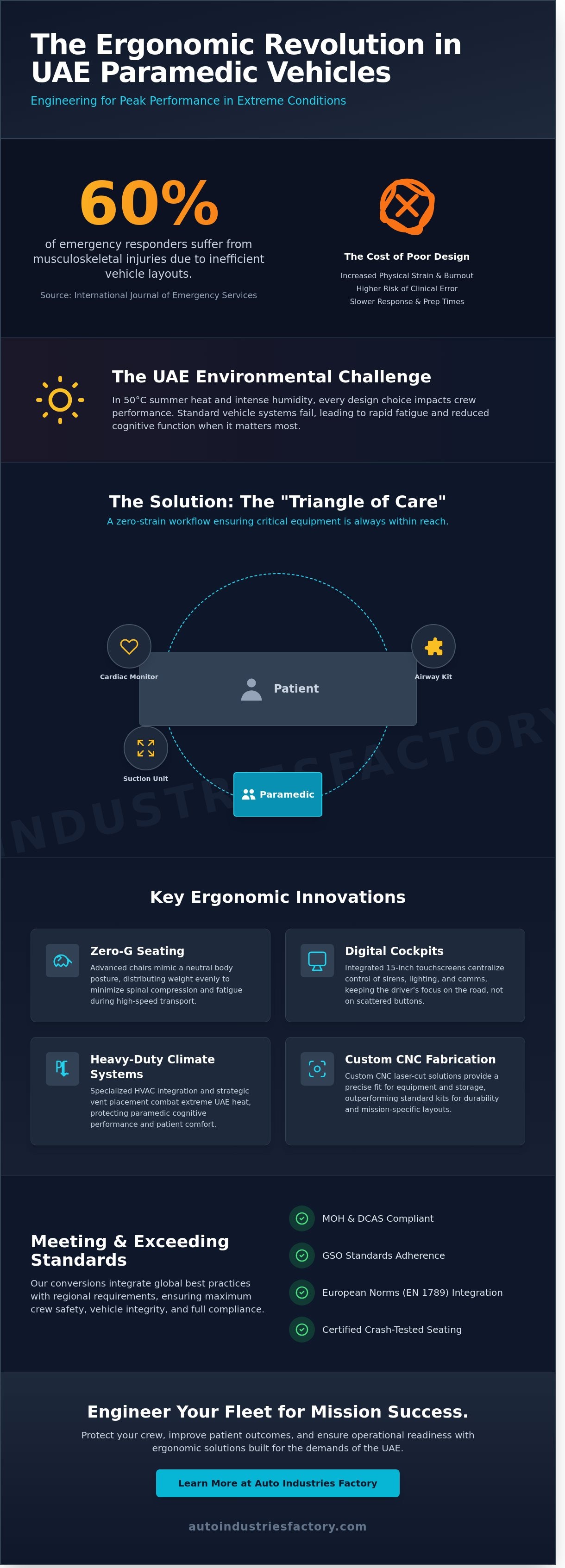
Performance in the field depends entirely on the layout of the medical interior. Auto Industries Factory (AIF) specializes in engineering a "Triangle of Care" where the paramedic, the patient, and the life-critical equipment form a seamless, efficient workflow. This concept focuses on zero-strain access. It ensures that a medic never has to unbuckle their harness to reach life-saving tools during high-speed transport on UAE highways. When the ergonomic design for paramedic vehicles is executed correctly, every movement is deliberate and every second is saved.
Efficiency is measured by primary and secondary reach zones. Primary zones contain tools required within the first 60 seconds of an emergency, such as airway management kits, suction units, and cardiac monitors. We position these within a 50cm radius of the attendant seat. Secondary zones house items used for stabilization or post-intervention care, like spare IV fluids or splints. Keeping the primary tools within an easy arm's length prevents physical overextension and reduces the risk of injury to the medic while the vehicle is in motion.
Vertical clearance and floor space are equally vital for advanced procedures. AIF designs ambulance interiors with a minimum of 1.7 metres of headroom to ensure paramedics can perform high-quality CPR. This height allows a medic to stand and apply full body weight to chest compressions without hitting the ceiling. We use heavy-duty, non-slip flooring that withstands the 45°C plus UAE summer temperatures without warping. To protect sensitive medical electronics, we integrate anti-vibration mounts that dampen the micro-vibrations caused by high-speed travel on the E11 or E311.
The Attendant Seat: The Command Centre
The attendant seat is the heart of the compartment. We install 360-degree swivel seats that lock at 90-degree intervals, allowing the medic to face the patient or the side-wall equipment consoles instantly. Control panels for lighting, oxygen flow, and suction are integrated directly into the armrests or the adjacent bulkhead. This configuration ensures the medic remains securely belted in a four-point or five-point safety harness while maintaining full command of the patient's environment.
Storage Solutions for Rapid Access
Secure storage is a safety requirement, not a luxury. We use custom-fabricated brackets to secure heavy oxygen cylinders and monitors, ensuring they don't become projectiles during a sudden stop. Our cabinets feature magnetic latches and soft-close mechanisms to prevent doors from swinging open during sharp turns. For teams looking to maximize their internal layout, our ambulance conversion guide offers detailed equipment layout ideas based on international safety standards. You can also explore our full range of specialized vehicle conversion services to see how we apply ergonomic design for paramedic vehicles to different chassis types like the Toyota Hiace or Ford Transit.
Climate-Specific Ergonomics: Managing UAE Heat and Humidity
Operating an ambulance in the United Arab Emirates presents environmental challenges that directly impact medical outcomes. High-ambient temperatures reaching 50°C in Abu Dhabi summers aren't just a comfort issue; they're a safety risk. Thermal stress degrades a paramedic's cognitive performance, leading to slower reaction times and potential errors in medication dosage. Effective ergonomic design for paramedic vehicles must prioritize a stable internal microclimate to ensure the crew remains focused during high-pressure interventions.
Strategic HVAC vent placement is the foundation of this thermal strategy. We design airflow patterns to create a uniform cooling envelope without blowing directly onto sensitive medical monitors or obstructing access to ceiling-mounted equipment. Interior surfaces utilize antimicrobial, heat-resistant polymers that maintain structural integrity even when the vehicle is parked in direct sunlight. To combat the extreme external heat, we employ multi-layer insulation techniques, including high-density polyurethane foam and reflective foil barriers, ensuring the healthcare module stays at a consistent 22°C regardless of outside conditions.
High-Ambient Temperature HVAC Systems
AIF engineers implement dual-zone cooling systems to manage the distinct needs of the driver cabin and the rear medical module. This separation prevents the loss of cooled air when front doors open. The ergonomic design for paramedic vehicles includes temperature controls via large, tactile buttons or haptic touchscreens that paramedics can operate while wearing nitrile gloves. Given the dusty desert environment, AC units feature external access panels for rapid filter cleaning and condenser maintenance, reducing fleet downtime during peak summer months.
- Independent Compressors: Dedicated units for the patient compartment ensure redundant cooling capacity.
- Digital Thermostats: Precision sensors maintain a sterile, cool environment for temperature-sensitive medications.
- Dust Filtration: Multi-stage HEPA filters designed to handle fine Arabian Peninsula sand.
Lighting and Visibility in Desert Conditions
Visibility in the UAE involves managing intense external glare and high-contrast shadows. We install adjustable LED "cool-white" lighting inside the module to reduce eye strain during long shifts. These LEDs emit minimal heat, which assists the HVAC system in maintaining the target temperature. For external operations, scene lighting is calibrated to penetrate dust storms and heavy haze without causing "white-out" reflections for the driver.
Anti-reflective coatings are standard on all interior glass partitions and equipment monitor screens. This prevents the harsh desert sun from washing out vital patient data. By controlling light bounce and heat emission, the interior becomes a calm, high-visibility workspace that supports rapid clinical decision-making. Our fabrication process ensures every light fixture is recessed and flush-mounted, eliminating snag points while maximizing the available ergonomic space for the medical team.
Digital Integration and the Modern Paramedic Cockpit
The transition from manual analog toggles to digital interfaces represents a massive leap in ambulance safety. Modern paramedic cockpits now feature integrated 15-inch touchscreen interfaces that consolidate climate control, lighting, and patient status into a single hub. This reduction in physical clutter minimizes the cognitive load on the driver. AIF integrates steering wheel controls for sirens and emergency lighting; this ensures the driver's eyes stay on the road during high-speed responses. Efficiency is not just a preference; it's a requirement for survival.
Telemedicine integration has become a standard requirement in the UAE. We focus on the ergonomic placement of high-definition cameras and data terminals. These are positioned at specific angles to allow real-time consultation with hospital-based doctors without obstructing the crew's workspace. Communication windows between the cab and the patient area are engineered to balance acoustic compartmentalisation with the need for immediate crew coordination. This setup ensures that the driver and the medic remain a synchronized unit despite being in separate zones.
The Driver's Ergonomic Environment
Navigating the narrow streets of Sharjah or the high-speed junctions of Dubai requires an optimized field of vision. AIF's ergonomic design for paramedic vehicles prioritizes clear sightlines by lowering the profile of dashboard-mounted equipment. We include dedicated storage for personal belongings and integrated hydration systems. These additions prevent driver fatigue during demanding 12-hour shifts. Every dashboard modification is customized to house UAE-specific GPS and dispatch systems, ensuring seamless communication with local emergency centers. Precision engineering ensures that every tool is within a natural reach zone, reducing physical strain over long hours of operation.
Smart Alerts and Feedback Systems
Safety extends beyond the steering wheel. Smart feedback systems provide audible and haptic alerts if equipment is unsecured or doors are left open. Central displays offer real-time monitoring of oxygen levels and battery status, preventing critical failures during transport. These advancements often mirror police vehicle modifications where high-stress environments demand instant data access. By monitoring vehicle health digitally, crews focus entirely on the patient. This proactive approach to ergonomic design for paramedic vehicles ensures that the technology works for the operator, not against them.
AIF specializes in designing and fabricating high-quality cockpits that meet the rigorous demands of UAE emergency services. We don't just install tech; we integrate it into a cohesive life-saving environment. Our solutions are built to withstand the heat and humidity of the Gulf while maintaining flawless electronic performance.
Contact us to discuss your fleet requirements or view our full range of vehicle conversion services to see our latest innovations in action.
Custom Fabrication: How AIF Delivers Bespoke Ergonomic Solutions
Standard conversion kits often fall short of the rigorous demands faced by specialized UAE fleets. These "one-size-fits-all" solutions ignore the specific spatial constraints and high-intensity usage patterns of local emergency services. Auto Industries Factory (AIF) specializes in filling this gap through advanced custom fabrication. We utilize in-house CNC laser cutting to manufacture precision medical brackets and mounting systems. This technology ensures that every life-saving device is positioned within the "golden circle" of reach for a seated paramedic. This is a critical component of effective ergonomic design for paramedic vehicles.
Our process is comprehensive and localized. We begin with a 3D design consultation to map the vehicle's interior volume precisely. Once the layout is optimized, we move to fabrication, final painting, and assembly at our Ajman facility. This local presence allows for rapid prototyping. If a fleet manager needs to adjust a layout for a new type of heart monitor, we can produce a prototype in days. We don't rely on long international shipping chains that delay fleet readiness.
- In-house CNC Precision: Laser-cut brackets ensure zero-rattle environments and perfect equipment fitment.
- Bespoke Layouts: We design around your specific medical protocols, not a generic template.
- Rapid Prototyping: Localized manufacturing in Ajman means faster turnaround for fleet-wide upgrades.
Precision Engineering in Our Ajman Factory
AIF engineers focus on maximizing both durability and efficiency. We utilize lightweight, heavy-duty alloys for interior cabinetry and flooring. This approach maximizes the available payload for medical supplies while improving fuel efficiency across the fleet. Beyond the interior, we fabricate custom bull bars and reinforced bumpers. These components protect critical front-end systems during high-speed responses in dense Dubai or Abu Dhabi traffic. You can explore our full range of capabilities by visiting our services page.
Future-Proofing Your Fleet for 2026 and Beyond
Modern emergency services must adapt to rapid technological shifts. AIF implements modular interior designs that allow for equipment upgrades without requiring a full vehicle refit. As we approach 2026, sustainability is becoming a core requirement for UAE government tenders. By reducing vehicle weight through smart fabrication, we help operators lower their carbon footprints and operational costs. This forward-thinking ergonomic design for paramedic vehicles ensures your fleet remains compliant and high-performing for years. Contact Auto Industries Factory today for a custom ergonomic consultation tailored to your specific mission requirements.
PRECISION ENGINEERING FOR THE FUTURE OF UAE EMERGENCY SERVICES
The evolution of ergonomic design for paramedic vehicles is no longer a luxury; it's a mission-critical requirement for 2026. Effective fleet management in Dubai and Abu Dhabi demands interiors that mitigate heat-related fatigue and prioritize the science of reach zones. By integrating digital cockpits and climate-resilient materials, operators ensure their teams perform at peak efficiency even during 50-degree Celsius summer peaks. These advancements directly impact response times and patient outcomes across the Emirates.
Auto Industries Factory (AIF) specializes in these advanced conversions from our state-of-the-art facility in Ajman, UAE. We use precision CNC laser cutting to create bespoke medical interiors that maximize every square centimeter of the patient compartment. Our fabrication process ensures that every vehicle meets the rigorous reliability standards required by Dubai and Abu Dhabi emergency services. It's about providing your crew with a workspace that protects their health while they save lives. Let's build a safer, more efficient future for UAE healthcare together.
Ready to upgrade your response capabilities? Request a Professional Ergonomic Consultation for Your Fleet today.
Frequently Asked Questions
What are the most important ergonomic features in a modern ambulance?
Height-adjustable seating, swivel chairs, and overhead grab rails are the most vital ergonomic features. These components reduce muscle strain by 25% during standard 12-hour shifts. Modern builds also prioritize 360-degree patient access, which allows paramedics to perform life-saving procedures like CPR without unbuckling their safety harnesses.
How does ergonomic design improve paramedic safety during transport?
Ergonomic design for paramedic vehicles improves safety by placing critical equipment within a seated medic's immediate reach. This layout ensures the crew remains belted during 100% of the transport phase. Industry data shows that 60% of paramedic injuries occur when staff stand up to reach monitors or medications while the vehicle is moving.
Can existing ambulances be retrofitted with ergonomic upgrades in the UAE?
Yes, fleet operators can retrofit existing ambulances with ergonomic upgrades at specialized facilities in Ajman and Dubai. Technicians install modular cabinetry and crash-tested seating to meet 2024 safety standards. This process often extends a vehicle's operational life by 5 years while significantly improving crew efficiency and comfort during daily operations.
What role does HVAC play in paramedic ergonomics?
HVAC systems are essential for ergonomics because they maintain a stable internal temperature of 21 degrees Celsius. This is critical for preventing heat exhaustion during the 45-degree UAE summer. Proper airflow also prevents CO2 buildup in the cabin, which keeps paramedics alert and focused during long deployments or high-stress emergency calls.
How do UAE regulations influence the ergonomic layout of a medical vehicle?
UAE regulations from the Dubai Health Authority (DHA) and MOHAP dictate specific internal dimensions, including a minimum of 1.6 meters of head clearance. These standards ensure there's enough vertical space for medics to move safely. Every conversion must comply with these local legal requirements to pass annual inspections and maintain operational licensing.
Why is custom fabrication better than standard conversion kits for ergonomics?
Custom fabrication is superior because it allows for 100% optimization of the internal floor plan. Standard kits often leave gaps or use generic layouts that don't fit specific chassis like the Toyota Land Cruiser. Custom builds allow for the integration of heavy-duty mounts that withstand the intense vibrations of off-road desert rescue missions.
What is the 'reach zone' and why is it critical for emergency care?
The reach zone is the area within a 50-centimeter radius of the seated paramedic where 90% of essential supplies are stored. It's critical because it eliminates the need for the medic to lean precariously or stand while the vehicle is in motion. Proper reach zone planning can reduce the time required for critical interventions by 15 seconds.
How does Auto Industries Factory ensure ergonomic compliance in its builds?
Auto Industries Factory (AIF) ensures ergonomic compliance by using CNC laser cutting and precision engineering to meet exact client specifications. Every ambulance conversion undergoes a 50-point quality check to verify that all features meet UAE safety codes. AIF's team focuses on durable, rugged solutions that protect both the patient and the medical crew in demanding environments.


