
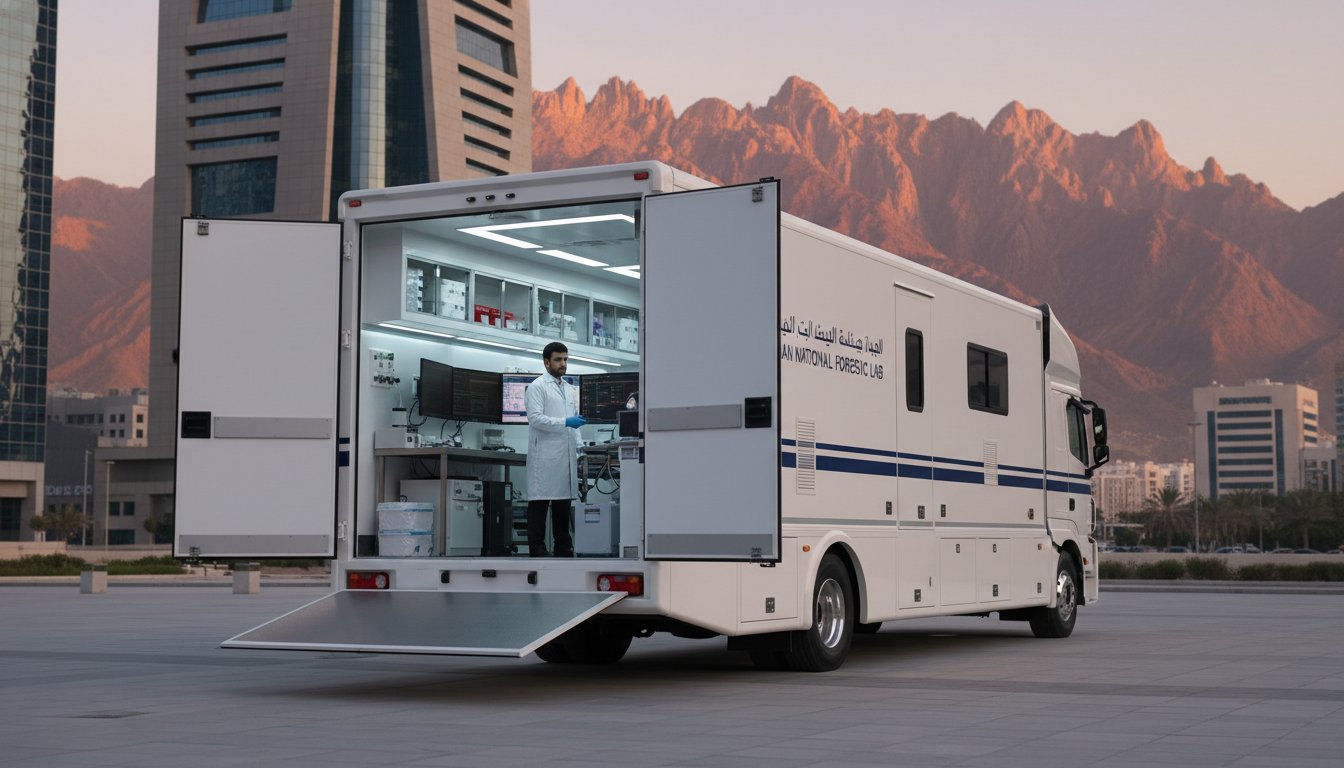
In 2026, 97% of agency managers report that their communities expect digital evidence to be utilized in almost every criminal case. You understand that maintaining evidence integrity in the field is a high-stakes operation where a single degree of temperature fluctuation or a speck of environmental dust can compromise a multi-year investigation. A true forensic science vehicle conversion isn't just a van with shelves. It is a mission-critical, sterile laboratory engineered for absolute precision and rugged reliability.
This guide explains how specialized engineering transforms standard vehicle platforms into high-tech mobile labs that protect your work from contamination and equipment failure in high-heat environments. You'll discover the technical requirements for sterile, climate-controlled workspaces, secure chain-of-custody storage, and integrated digital forensic tools. We'll explore the ruggedized solutions that ensure your team remains operational and your evidence remains admissible, no matter the environment. From custom cabinetry to advanced communication hubs, we'll break down the master craftsmanship required to build a reliable mobile command center.
Key Takeaways
- Learn how modern engineering transforms standard chassis into sophisticated mobile laboratories capable of immediate on-site evidence processing.
- Identify the mission-critical power and climate control systems required to protect sensitive forensic equipment in high-heat environments.
- Discover how reinforced structures and RFID-controlled access systems maintain a secure chain of custody for critical evidence.
- Explore the technical process behind a forensic science vehicle conversion, from 3D CAD modeling to precision in-house metal fabrication.
- Gain insights into creating a sterile, organized workspace that eliminates contamination risks during complex field investigations.
What is a Forensic Science Vehicle Conversion?
A forensic science vehicle conversion transforms a standard heavy-duty vehicle into a specialized Mobile laboratory designed for immediate on-site processing. Gone are the days when crime scene units were merely transport vans used to ferry evidence from the field to a central office. Modern forensic science vehicle conversion involves integrating high-tech workstations, climate-controlled storage, and sterile environments directly into the vehicle's chassis. This shift allows investigators to perform complex tasks like DNA extraction, fingerprint analysis, and digital evidence recovery without leaving the scene.
To better understand the high-stakes environment these units serve, watch this helpful video:
The primary roles of these units include evidence collection, digital forensics, and on-site chemical analysis. Standard vehicles fail to meet these rigorous standards because they lack the structural reinforcement and environmental shielding required for sensitive work. Without professional modification, a standard van cannot maintain the sterile conditions or provide the stable power supply needed for forensic equipment. Precision metal fabrication is essential to create custom internal layouts that maximize space while ensuring structural integrity under the weight of heavy laboratory gear.
The Core Purpose of Mobile Forensic Units
Time is the most critical factor in any investigation. Professional conversions help maintain the "Golden Hour" by enabling immediate processing before evidence degrades or is contaminated. These units also act as a protective barrier. They shield investigators from hazardous materials and provide a secure, climate-controlled environment that prevents equipment failure in extreme heat. Reliability is not optional; it is a requirement for justice.
Common Vehicle Platforms for Conversion
The choice of platform depends on the mission profile. Heavy-duty SUVs are ideal for rapid response in difficult terrain, providing the ruggedness needed for rural or off-road scenes. For full-scale operations, extended roof vans and box-type trucks offer the necessary square footage for multiple workstations and long-term evidence storage. These larger platforms allow for a complete laboratory workflow, from initial intake to secure storage.
Essential Features of a Modern Mobile Forensic Laboratory
A professional forensic science vehicle conversion is defined by its ability to maintain laboratory-grade precision in the harshest field conditions. Reliability starts with a high-output power system. Mobile units must support power-hungry forensic servers and digital analysis tools without relying solely on the vehicle's engine. We integrate auxiliary battery banks and external shore power inlets to ensure 100% uptime. This electrical architecture is the backbone of the entire operation, allowing for continuous evidence processing during long-term deployments.
Climate control is equally critical. In regions with extreme heat or heavy dust, standard automotive air conditioning is insufficient. Mission-critical cooling systems are engineered to protect sensitive hardware from thermal failure. These systems maintain a stable internal temperature even when external conditions are severe. For high-precision work, we install custom-fabricated laboratory workstations. These surfaces are crafted from chemical-resistant materials, providing a durable and stable platform for on-site chemical analysis. Integrated communication hubs complete the setup, enabling real-time data transfer to headquarters via secure, high-bandwidth links.
Internal Environment and Contamination Control
Maintaining a sterile field is non-negotiable. Modern conversions utilize HEPA filtration and positive pressure systems to prevent external particulates from entering the workspace. As noted in the study of Mobile Laboratories in Crisis Response, environmental control is a primary factor in evidence viability. Interior linings are made from seamless, medical-grade materials. This allows for rapid, thorough decontamination. Shadowless LED lighting systems are also standard, providing the high-intensity, even illumination required for detecting trace evidence and performing micro-analysis.
Specialized Storage and Equipment Integration
Secure evidence management is the core of any investigation. We install climate-controlled evidence lockers specifically designed to preserve biological samples and prevent degradation. Every piece of equipment, from ANPR cameras to forensic servers, is housed in secure, vibration-dampened mounts. This protects expensive technology during transit over rugged terrain. For agencies requiring these high-performance integrations, exploring Specialized Vehicle Conversions ensures that every modification meets the rigorous standards of forensic science. This level of engineering transforms a simple transport van into a robust, mission-ready asset.
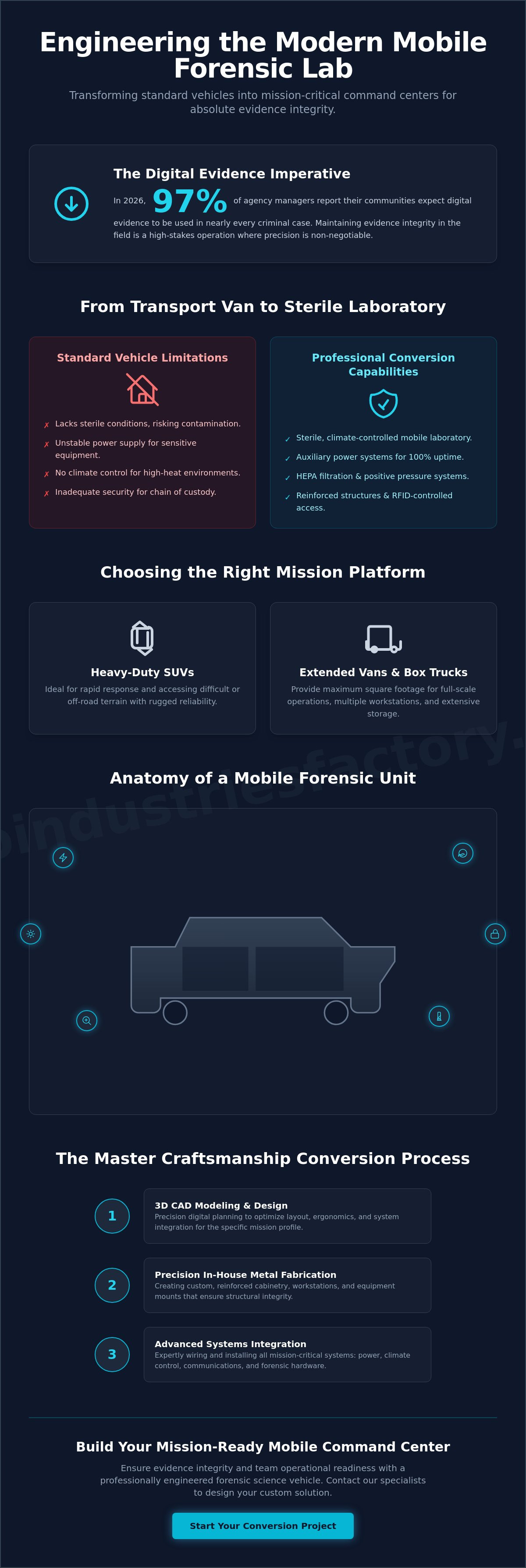
Engineering for Integrity: Chain of Custody and Security
Physical integrity is the foundation of every forensic science vehicle conversion. We engineer reinforced vehicle structures that act as a protective shell for sensitive equipment and irreplaceable evidence. This structural hardening prevents external impact or vibration from compromising delicate instruments during transit. Beyond physical strength, the vehicle serves as a secure vault. We integrate RFID-controlled access systems for all evidence storage compartments. These systems create a digital log of every interaction, providing a tamper-proof record that is essential for maintaining the chain of custody in court.
External security is just as vital as internal organization. High-intensity scene lighting and 360-degree surveillance systems ensure the perimeter remains secure during night-time operations. Professional conversion directly addresses the primary concern of legal admissibility. By providing a controlled, audited environment, the mobile lab ensures that evidence is handled according to strict protocols. This eliminates the risk of defense arguments regarding contamination or mishandling on-site.
Ruggedization for National Field Operations
Forensic units often operate in demanding environments, from urban centers to arid desert regions. We provide heavy-duty suspension upgrades to manage the significant weight of laboratory equipment and reinforced metal cabinetry. To ensure reliable operation in extreme climates, our conversions include advanced dust-proofing and environmental sealing. This prevents fine particulates from entering the sterile workspace or damaging electronic hardware. For agencies requiring a broader range of tactical features, our guide on Police Vehicle Modifications details full-scale fleet upfitting.
Digital Evidence Protection
With 97% of investigators identifying smartphones as a leading evidence source in 2026, protecting digital data is paramount. We install shielded server racks that prevent electromagnetic interference from corrupting data during analysis. Redundant power supplies ensure that digital forensic processing continues uninterrupted, even if the primary power source fluctuates. This engineering precision guarantees that your digital findings remain as secure as physical samples. If you are ready to upgrade your fleet, explore our specialized vehicle modifications to build a mission-ready unit.
The Conversion Process: From Standard Chassis to Specialized Unit
The transformation begins long before the first piece of metal is cut. We start with detailed consultation and 3D CAD modeling to map internal laboratory workflows precisely. Every equipment rack and workstation position is calculated to maximize ergonomic efficiency and ensure structural balance. This digital blueprint allows us to simulate real-world usage before physical fabrication begins. It's during this phase that we integrate the complex electrical grids and medical-grade ventilation systems required for a high-performance forensic science vehicle conversion.
Once the design is finalized, the vehicle undergoes extensive structural reinforcement. We don't just add equipment; we rebuild the interior to support the heavy loads of forensic servers and climate control units. Precision is maintained through our in-house metal cutting and bending capabilities. Every bracket and mounting point is engineered for long-term durability in high-vibration environments. This meticulous approach ensures that the vehicle remains a stable, reliable platform for years of field service.
In-House Fabrication Excellence
Our facility utilizes advanced CNC machining to create bespoke, rattle-free storage solutions. These custom lockers are essential for protecting sensitive evidence during transit over rough terrain. We also employ precision laser cutting for the perfect fitment of custom bull bars and rear bumpers, ensuring the vehicle's exterior is as rugged as its interior. To learn more about our master craftsman approach and engineering standards, visit our About Us page.
Final Finishing and Compliance
The final stage involves professional vehicle painting and specialized livery application. We ensure every unit is clearly marked for its mission profile while meeting all national safety and security standards. Before field deployment, each vehicle undergoes rigorous quality control and environmental testing. This verifies that all systems operate at peak performance even in extreme climates. Contact us today for a technical consultation on your forensic fleet.
Secure the Future of Your Investigative Fleet
A professional forensic science vehicle conversion is the difference between a compromised scene and a successful conviction. You've seen how specialized engineering protects sensitive evidence from extreme environmental factors and ensures a digital paper trail for court admissibility. By prioritizing structural reinforcement and sterile workspace design, your agency gains a mobile asset that functions as a true extension of the central laboratory. These units don't just transport equipment; they protect the very foundation of your investigation.
Our master craftsmen utilize in-house laser cutting and CNC machining to deliver ruggedized solutions specifically built for high-heat environments. We specialize in mission-critical vehicle fabrication, ensuring every mounting point and electrical circuit meets the highest standards of reliability. Don't settle for standard modifications when the integrity of your evidence is on the line. Precision engineering is the only way to ensure your team has the tools they need to succeed in the field.
Request a Technical Estimate for Your Forensic Conversion and take the first step toward a more capable, secure mobile crime lab. We're ready to help you deploy a unit that stands up to the most demanding field conditions.
Frequently Asked Questions
What types of vehicles are best for forensic science conversion?
Heavy-duty truck chassis and extended-roof vans are the most effective platforms for a forensic science vehicle conversion. We frequently utilize high-performance chassis like the GMC or Toyota platforms to ensure the structural integrity required for heavy laboratory equipment. These vehicles provide the necessary payload capacity for auxiliary power banks, reinforced cabinetry, and climate control systems. The choice depends on your mission profile; smaller vans offer urban mobility while larger box-type units provide full-scale laboratory square footage.
How do you ensure the interior of a forensic vehicle remains sterile?
Sterility is maintained through a combination of environmental engineering and medical-grade materials. We install high-efficiency HEPA filtration systems and positive pressure ventilation to prevent external contaminants from entering the workspace. Interior surfaces are constructed using seamless, non-porous linings that resist chemical absorption. This design allows for rapid and thorough decontamination between scenes. Additionally, shadowless LED lighting ensures that trace evidence remains visible without the risk of environmental interference or cross-contamination during the analysis process.
Can existing police vehicles be retrofitted for forensic support?
Yes, existing units within a fleet can be retrofitted, provided the chassis has the remaining payload capacity to support the modification. We specialize in police and military vehicle modifications, allowing us to integrate forensic workstations and secure storage into currently deployed assets. It's essential to evaluate the electrical architecture first. If the original alternator can't support laboratory-grade power requirements, we install auxiliary battery systems and high-output power management to ensure the unit is field-ready and reliable.
What power requirements are typical for a mobile forensic laboratory?
A typical mobile forensic lab requires a redundant power architecture to support workstations, servers, and climate control. We integrate high-output auxiliary battery systems paired with external shore power inlets for long-term deployments. These systems are engineered to provide 100% uptime for digital forensic tools and refrigeration units. By separating the laboratory power grid from the vehicle's primary engine battery, we ensure that mission-critical equipment remains operational without risking the vehicle's ability to start or move in emergency situations.
How long does a professional forensic vehicle conversion take?
The timeline for a professional conversion varies based on the complexity of the laboratory integration and the specific chassis selected. A full build-out typically involves several weeks of precision engineering, starting with 3D CAD modeling and moving through in-house metal fabrication. Every stage, from structural reinforcement to final quality control testing, is handled with meticulous attention to detail. We provide a specific project schedule during the initial technical consultation to ensure your procurement timeline is met with accuracy and professional transparency.


