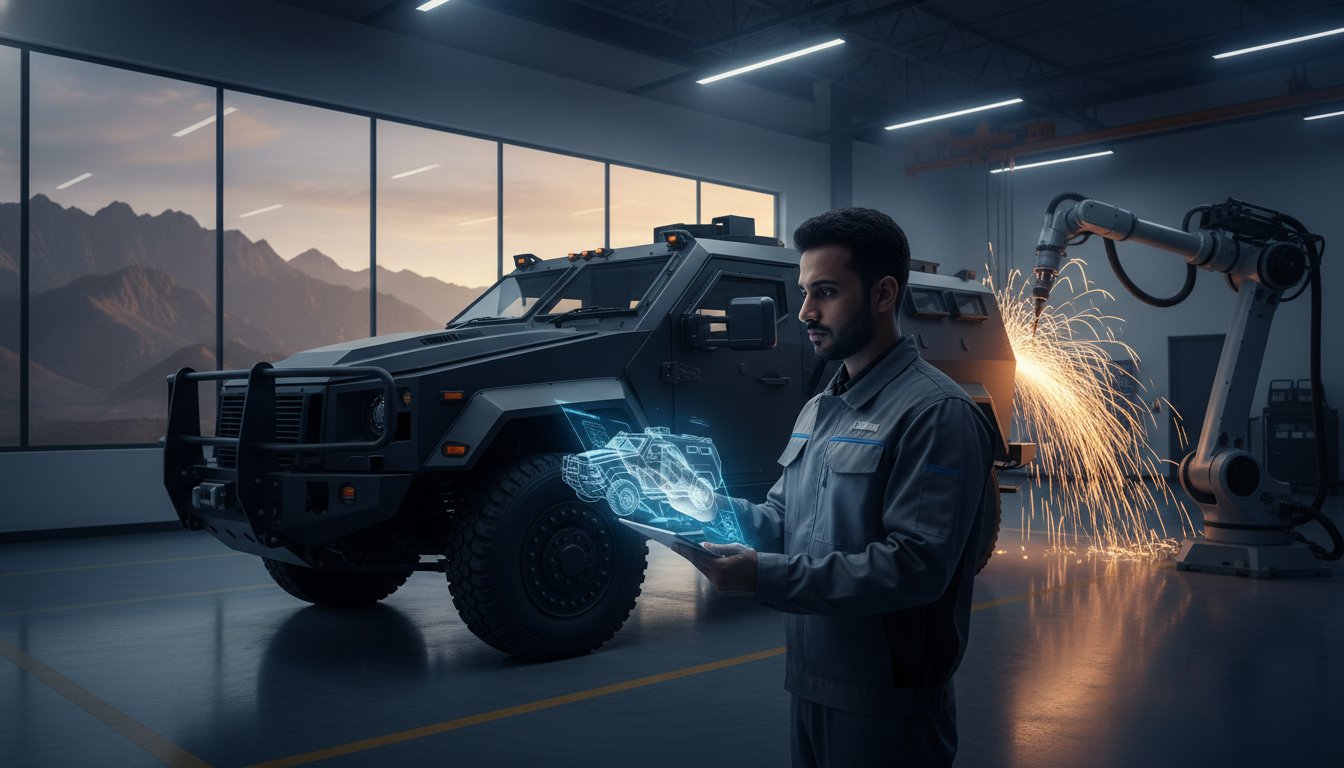
A tactical response unit isn't just a modified van; it's a precision-engineered platform where structural reinforcement and ballistic protection are forged into the very frame. When a mission reaches its highest stakes, the last thing any commander should worry about is mechanical failure or equipment integration issues. Selecting an expert SWAT vehicle and tactical response unit builder ensures your fleet isn't just a collection of parts, but a unified solution built to withstand extreme environments. Whether it's complying with the new NIJ Standard 0123.00 or integrating advanced thermal surveillance, the engineering must be flawless from the first cut of metal.
You understand that the complexity of specialized comms and medical equipment requires more than just a bolt-on approach. We agree that reliability is the only metric that matters when lives are on the line. This guide reveals how in-house metal fabrication and specialized vehicle conversions transform standard chassis into high-performance units capable of surviving the most demanding operations. We'll examine the technical requirements for ballistic compliance, the impact of advanced materials like graphene composites on maneuverability, and the essential features that ensure a durable, mission-ready lifecycle for every vehicle in your tactical fleet.
Key Takeaways
- Differentiate between basic police upfitting and the specialized structural modifications required for high-risk tactical operations.
- Explore the technical requirements for high-grade ballistic materials and the necessary mechanical upgrades to handle increased vehicle mass.
- Understand the logic of tactical interior layouts designed for rapid deployment and multi-role mission functionality.
- Learn why selecting a SWAT vehicle and tactical response unit builder with in-house CNC and laser cutting capabilities ensures superior manufacturing precision.
- Identify how single-source fabrication improves quality control and creates a more manageable maintenance lifecycle for your fleet.
What Defines a Professional SWAT Vehicle and Tactical Response Unit Builder?
A professional SWAT vehicle and tactical response unit builder acts as a master architect for mission-critical operations. They don't just add accessories to a van. Instead, they strip a vehicle to its core and rebuild it using a "purpose-built" philosophy. This approach ensures every component, from the frame to the glass, can handle the extreme stress of a high-risk deployment. While an off-the-shelf SUV might work for patrol, a true tactical unit must withstand ballistic threats and heavy equipment loads without mechanical failure.
Engineering precision is the heartbeat of this process. It determines whether a vehicle remains operational for years or breaks down under its own weight within months. A high-performance Police armored vehicle demands a builder who understands the physics of weight distribution and structural integrity. Selecting an expert SWAT vehicle and tactical response unit builder ensures that the final product is a unified solution, not just a collection of parts.
To better understand this level of engineering, watch this helpful video:
The Critical Difference: Upfitting vs. Specialized Fabrication
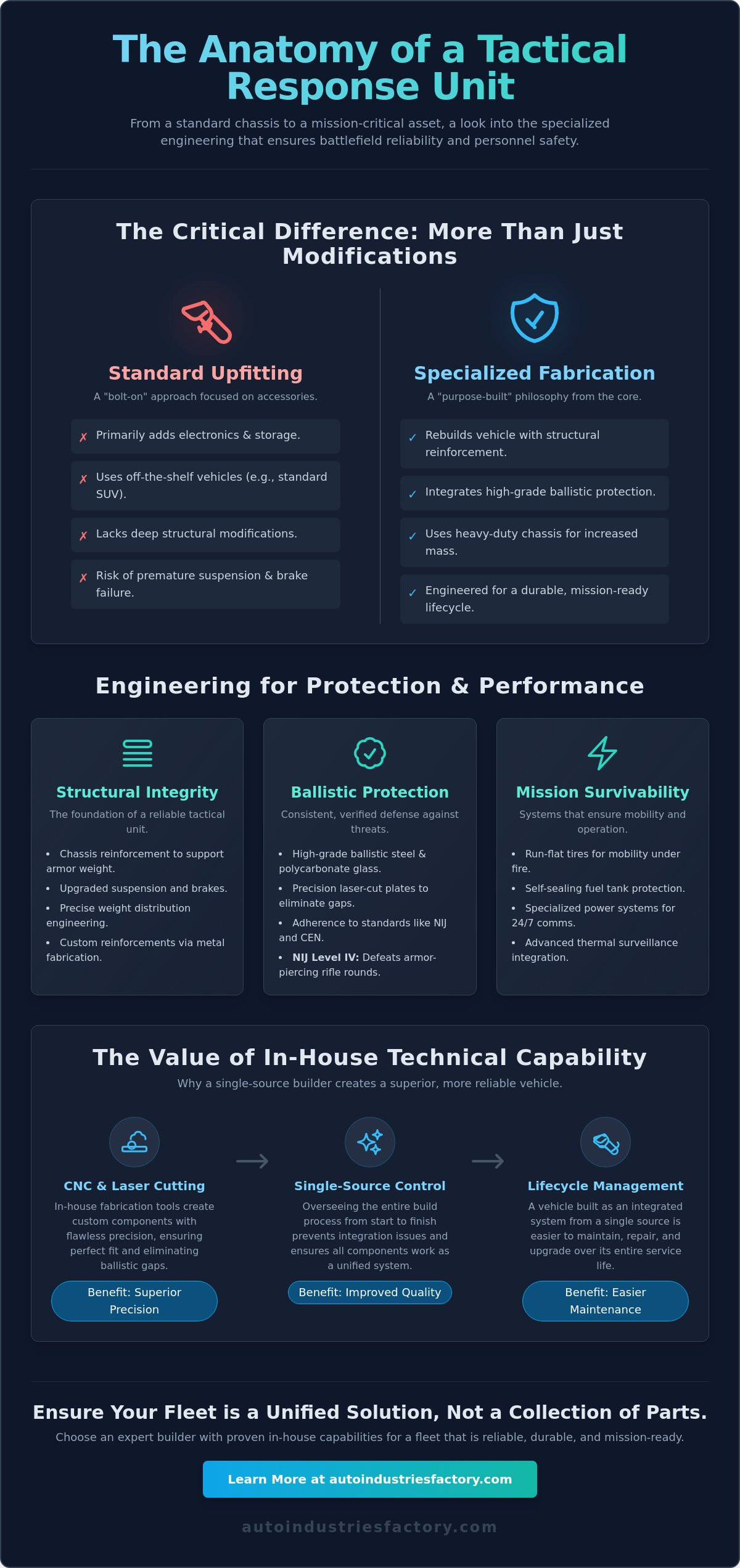
Standard police vehicle modifications often focus on electronics and storage. However, tactical response units require deep structural fabrication. This includes reinforcing the chassis to support the massive weight of ballistic steel and full tactical teams. Without these modifications, the vehicle's suspension and brakes will fail prematurely. Professional builders use in-house metal cutting and bending to create custom reinforcements that standard shops simply can't provide.
Reliability also hinges on chassis selection. For urban environments where speed and agility are vital, builders often choose lighter platforms like the Ford Interceptor. For heavy-duty ballistic protection and larger teams, a heavy-duty truck chassis is mandatory. These builds also integrate specialized power systems. These systems provide 24/7 mission readiness for encrypted comms and surveillance without draining the primary battery. Every weld and bolt is engineered to ensure the vehicle remains a reliable asset during the most intense operations.
Engineering for Protection: Ballistic Standards and Structural Integrity
Engineering a tactical unit requires a deep understanding of ballistic physics and material science. A SWAT vehicle and tactical response unit builder must ensure that every square inch of the platform provides consistent protection. This involves integrating high-grade ballistic steel and multi-layered polycarbonate glass that can withstand multiple impacts. Beyond the shell, survival in hostile zones depends on specialized systems like run-flat tires and self-sealing fuel tank protection. These components ensure the vehicle remains mobile even after taking fire.
Adherence to international benchmarks like the NIJ Ballistic Protection Levels or CEN standards is the only way to verify builder quality. These protocols provide the data needed to match a vehicle's armoring to its specific threat environment. Reliability starts with these certifications.
Ballistic Steel and Armoring Levels
Protection requirements vary based on the mission profile. Builders use precision laser cutting to create armor plates that fit perfectly within the vehicle's body, eliminating ballistic gaps where rounds could penetrate. For high-threat scenarios, NIJ Level IV protection is designed to defeat armor-piercing rifle rounds, providing the highest degree of personnel safety. If your mission requires this level of precision, exploring our specialized vehicle modifications can help define your technical requirements.
Chassis Reinforcement for Heavy Tactical Loads
Adding armor significantly increases vehicle mass. Standard GMC or Toyota chassis aren't built to carry an extra 2,000 pounds of steel. A professional builder reinforces the pillars and installs heavy-duty hinges to prevent door sag and structural fatigue. Engine and radiator protection are also critical to prevent a single shot from disabling the unit. For larger operations, these principles are scaled up as seen in our Armoured Personnel Carrier guide, where structural integrity is the foundation of the entire build.
Tactical Interior Layouts: Optimizing Deployment and Equipment
The interior of a tactical unit is a high-pressure workspace. Every second spent fumbling for gear or struggling with a door is a second lost in a critical situation. A professional SWAT vehicle and tactical response unit builder prioritizes the logic of rapid ingress and egress. This means designing wide-opening rear doors and optimized step heights that allow teams to deploy in full gear without snagging. Multi-role functionality is now the industry standard. A single platform must transition seamlessly between a mobile command center, a troop transport, and a medical evacuation unit.
Maintaining operator performance requires more than just floor space. High-output climate control systems are essential for extreme environments. They prevent heat exhaustion during long standoffs and protect sensitive surveillance electronics from overheating. Custom storage solutions ensure that weapons, breaching tools, and tactical gear are secured yet instantly accessible when the situation escalates.
Ergonomics and Personnel Safety
Safety inside the cabin goes beyond ballistic shells. We integrate blast-attenuating seats and four-point harnesses to protect personnel from sudden impacts or kinetic forces. Custom-fabricated metal bulkheads are another vital feature. These barriers separate the cab from the rear compartment. They protect the driver and front passenger from unsecured cargo or equipment shifts during high-speed maneuvers.
Integrating Advanced Communications and Medical Systems
Modern missions rely on real-time data and encrypted connectivity. We install dedicated tactical radio racks and satellite link systems to ensure constant communication with command. Many agencies now demand a hybrid "MedEvac" configuration. This setup allows the unit to function as a tactical EMS vehicle during high-risk operations. Our deep ambulance conversion expertise provides the technical foundation for these life-saving interiors. If you need a vehicle that balances tactical power with medical capability, contact us to discuss our Police & Military Vehicle Modifications.
Choosing a Builder: The Value of In-House Technical Capability
Selecting the right SWAT vehicle and tactical response unit builder is a decision that impacts fleet readiness for years. Many providers simply assemble components from various third-party suppliers. However, true precision comes from in-house design and fabrication. When a single-source manufacturer handles every step, from initial CAD drawings to final welding, they maintain total accountability for the vehicle's structural integrity. This eliminates the tolerance errors often found when armor plates are sourced from one shop and the chassis is modified at another.
Lifecycle support is another critical factor. We prioritize builds on proven commercial platforms like GMC and Toyota. This strategy ensures that while the tactical modifications are specialized, the core mechanical components remain serviceable at standard facilities. It's a pragmatic approach that reduces downtime and simplifies the maintenance lifecycle for agencies operating in diverse regions. A builder who understands the long-term cost of ownership is just as valuable as one who understands ballistic steel.
Before commissioning a build in 2026, use this evaluation checklist to ensure mission success:
- Does the builder perform in-house laser cutting and CNC machining to ensure tight tolerances?
- Are the ballistic materials certified to current NIJ or CEN standards?
- Is there a clear path for mechanical maintenance using standard commercial parts?
- Can the builder demonstrate custom electrical integration for mission-critical comms and surveillance?
The Role of CNC and Laser Precision in Fabrication
Precision metalwork is the foundation of a rugged tactical build. CNC machining ensures that custom bull bars, roof racks, and internal equipment mounts fit the vehicle's specific geometry perfectly every time. This isn't just about aesthetics; it's about ensuring that every attachment point can withstand the kinetic energy of a tactical breach or off-road deployment. Professional painting and specialized protective coatings are then applied to prevent corrosion and ensure the vehicle's durability in harsh, salt-heavy, or desert climates.
Partnering for Mission Readiness
We don't just sell vehicles. We provide engineered solutions. Auto Industries Factory LLC operates as your partner in design and engineering to ensure your fleet meets the exact demands of your operational environment. Whether you need a box-type ambulance or a fully armored troop transport, our team is ready to assist. Consult with our engineering team for your tactical vehicle requirements to start your custom build today.
Securing Your Tactical Advantage Through Precision Engineering
Engineering excellence is the only way to ensure personnel safety during high-stakes deployments. We've explored how structural reinforcement, ballistic compliance, and ergonomic interior design create a unified tactical platform. By prioritizing in-house fabrication through our full CNC and Laser Cutting facility, we eliminate the tolerance gaps that compromise vehicle integrity. This expert approach ensures every component supports the mission without failure.
Choosing a specialized SWAT vehicle and tactical response unit builder ensures your fleet remains operational under the most extreme stress. Our expertise in international ballistic standards and focus on GMC and Toyota chassis conversions provides a clear path for both protection and long-term maintenance. Don't settle for off-the-shelf modifications when your mission requires a purpose-built solution. We're committed to delivering vehicles that stand up to the toughest challenges in the field.
Contact Auto Industries Factory LLC for a Custom Tactical Vehicle Quote today. We look forward to engineering your next mission success.
Frequently Asked Questions
What is the difference between a SWAT van and an Armored Personnel Carrier (APC)?
A SWAT van is typically built on a commercial chassis to prioritize urban mobility and rapid deployment. These units focus on surveillance integration and troop transport within city environments. An APC is a ground-up armored platform designed for high-intensity combat and maximum blast protection. An expert SWAT vehicle and tactical response unit builder optimizes the van's layout for agility while ensuring it meets necessary ballistic standards.
Can any commercial vehicle be converted into a tactical response unit?
While many vehicles can undergo modification, heavy-duty platforms like the GMC Savana or Toyota Land Cruiser are the industry preference. These chassis have the structural integrity to support the significant weight of ballistic steel and specialized tactical gear. Converting a light-duty vehicle often leads to premature engine or suspension failure. We focus on platforms that maintain a manageable maintenance lifecycle after the armoring process is complete.
How long does the typical tactical vehicle conversion process take?
Conversion timelines depend on the depth of structural modification and the complexity of the integrated electronics. A standard build involving ballistic armoring and custom interior fabrication usually takes several weeks to a few months. This period ensures that every weld is precise and all communication systems are fully tested. Each project's schedule is defined by the specific mission requirements and the chosen chassis.
What armoring levels are recommended for urban tactical response?
NIJ Level III or III+ is the standard recommendation for most urban environments. It provides protection against common rifle threats while keeping the vehicle light enough for city streets. For high-risk scenarios involving armor-piercing rounds, Level IV protection is necessary. A professional SWAT vehicle and tactical response unit builder helps agencies balance this protection against the need for vehicle speed and maneuverability.
Does a tactical builder provide training for vehicle operation and maintenance?
Builders provide comprehensive orientation on the vehicle's specialized systems and reinforced components. While a builder doesn't offer security or tactical training, they ensure your team can operate the custom climate control, surveillance arrays, and power systems. Maintenance guidance is also provided to help your technicians manage the upgraded heavy-duty brakes and suspension systems. This support ensures the vehicle remains mission-ready for its entire service life.


