
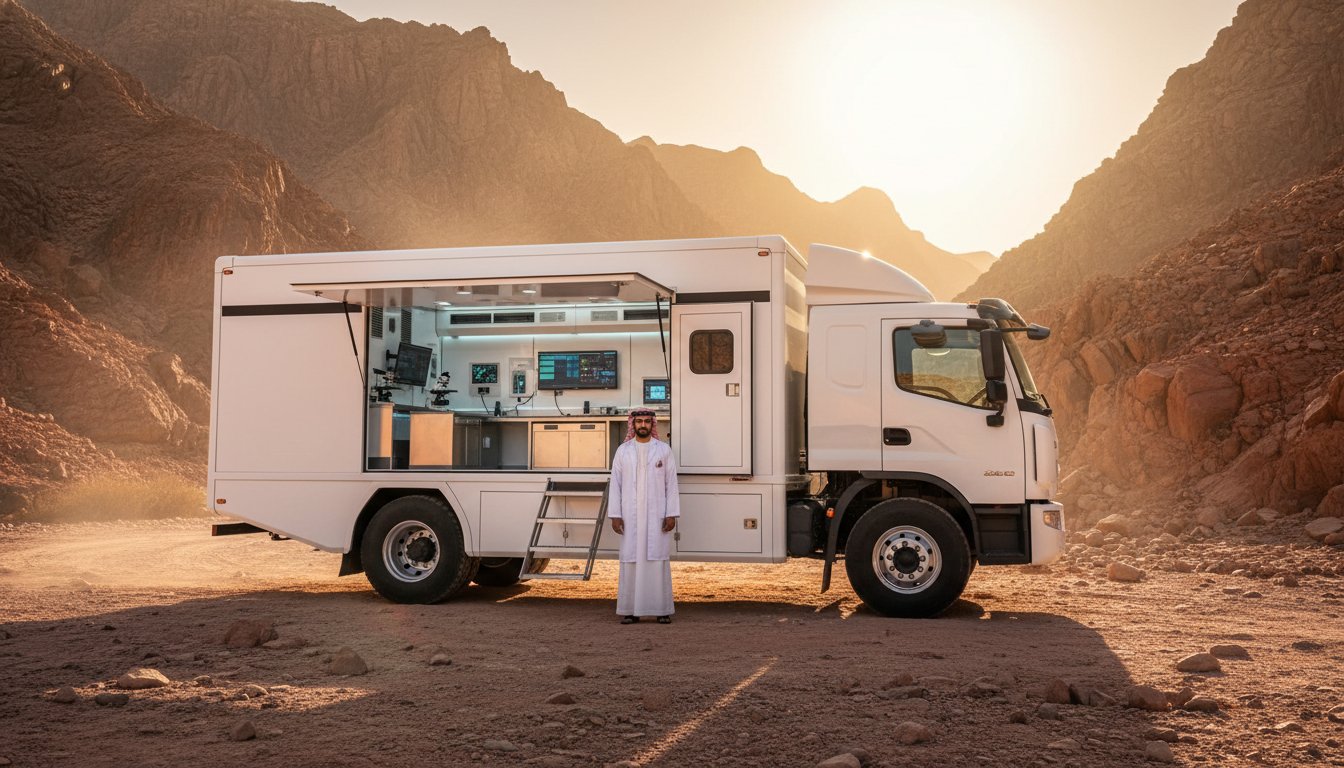
Can a high-precision diagnostic environment survive hundreds of miles of unpaved terrain without losing its calibration? For most standard vehicles, the answer is no. Constant vibration, extreme ambient heat, and unstable power grids quickly compromise sensitive medical equipment and sterile field conditions. You need more than just a modified van; you need a mobile fortress that protects your data and your team from the world's harshest external conditions.
We understand that in the field, equipment failure isn't just an inconvenience; it's a mission-critical risk. Specialized mobile laboratory truck fabrication solves these challenges by integrating heavy-duty structural reinforcement with advanced climate and power systems. This article explores how expert engineering transforms vehicle platforms into turn-key, BSL-compliant solutions designed for maximum durability. You'll discover the specific fabrication techniques used to mitigate vibration, maintain sterile environments, and ensure your lab delivers lab-grade precision in any remote environment.
Key Takeaways
- Discover why specialized mobile laboratory truck fabrication is the only way to ensure sensitive diagnostic equipment remains calibrated in harsh field conditions.
- Learn the engineering standards for Biosafety Level (BSL) compliance, focusing on HEPA filtration and sterile air management.
- Identify the best high-performance chassis platforms, such as GMC and Toyota, and the modifications needed to handle extreme heat and dust.
- Understand how precision metal cutting and expert welding create a ruggedized shell that protects against vibration and structural fatigue.
- Gain the knowledge needed to specify a turn-key mobile lab that delivers reliable results regardless of the environment.
The Essentials of Mobile Laboratory Truck Fabrication
Mobile laboratory truck fabrication is the comprehensive conversion of heavy-duty vehicles into sterile, climate-controlled environments. Unlike standard upfitting, which often relies on generic shelving and basic power strips, custom fabrication involves structural re-engineering. This ensures the vehicle can support the weight of sensitive diagnostic instruments while maintaining a hermetic seal against external contaminants. Every joint and weld is designed to withstand the physical stresses of remote field operations.
In Oman, these units serve as critical infrastructure for the national health, environmental, and industrial sectors. A turn-key solution from Auto Industries Factory LLC integrates design, precision metalwork, and specialized technology into a single, mission-ready unit. This master craftsman approach provides a seamless transition from the workshop to the field, ensuring that your mobile lab is operational the moment it reaches its destination.
To better understand the scale and complexity of these builds, watch this helpful video:
Primary Applications for Mobile Lab Units
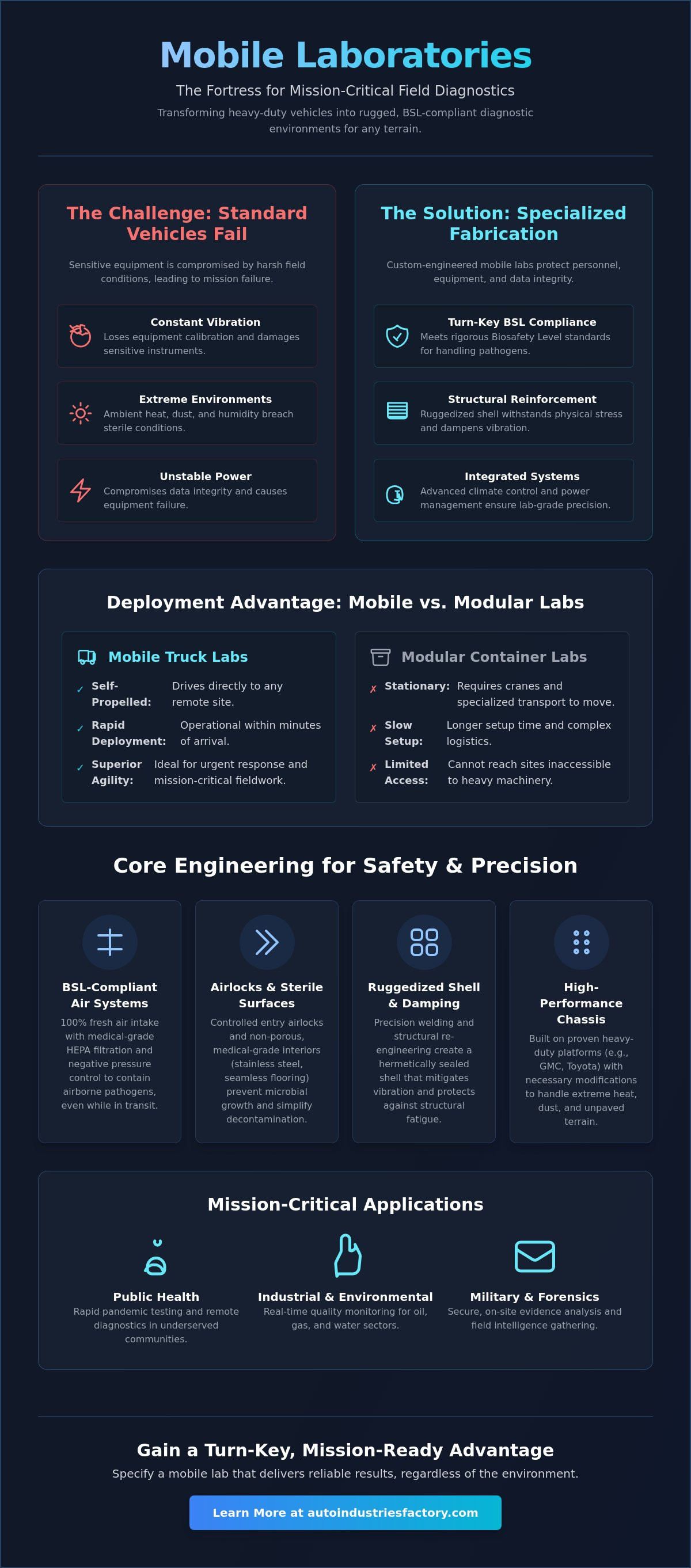
Custom-fabricated units are essential for diverse, high-stakes environments. Public health teams use them for rapid pandemic testing and remote diagnostics in underserved areas. In the industrial sector, they provide real-time monitoring for oil, gas, and water quality. Military and forensic teams rely on these units for secure, on-site evidence analysis. Each of these applications requires strict adherence to Biosafety Level (BSL) standards to protect personnel and ensure sample integrity.
The Difference Between Mobile and Modular Labs
Mobility is the primary advantage of truck-based systems. While modular labs are typically containerized and require cranes or specialized transport for every move, truck-based units are self-propelled. They offer rapid deployment to remote national locations, reaching sites where modular units cannot go. This speed is vital for environmental emergencies. Professional mobile laboratory truck fabrication ensures the lab is fully operational within minutes of arrival, making it the superior choice for mission-critical fieldwork.
Engineering for Safety: BSL Standards and Sterile Environments
Safety in field diagnostics isn't optional. When handling pathogens or sensitive chemicals, the vehicle must function as a high-containment facility. This is where mobile laboratory truck fabrication meets rigorous scientific standards. Biosafety Level (BSL) requirements dictate strict air management protocols. We implement 100% fresh air intake and exhaust systems paired with medical-grade HEPA filtration. These systems maintain negative pressure even while the vehicle travels across uneven terrain, preventing contaminated air from escaping the work zone.
Our engineering team uses ambulance conversion standards as a baseline for sterility. However, a mobile lab requires even more robust containment. Achieving this level of security involves hermetically sealing the vehicle shell. This ensures that environmental factors like dust or humidity don't breach the workspace. For those interested in the technical specifics, Mobile laboratory design considerations provide a deep dive into the durability and layout requirements necessary for these specialized units.
Airlock Systems and Contamination Control
Entry points are the weakest link in any sterile environment. We design controlled airlocks with hand sensors or card access to minimize physical contact and maintain pressure differentials. Inside, every surface is built from non-porous, medical-grade materials. Stainless steel cabinetry and seamless flooring prevent microbial growth. This makes the lab easy to decontaminate after high-risk missions. If you need a vehicle that meets these rigorous demands, our custom fabrication solutions provide the necessary technical edge.
Structural Integrity and Vibration Damping
Standard truck bodies aren't designed to carry the concentrated weight of centrifuges or mass spectrometers. They flex, which can crack seals and ruin calibration. Expert mobile laboratory truck fabrication involves reinforcing the chassis to eliminate this flex. We install custom anti-vibration mounts for all sensitive measuring instruments. These mounts isolate the equipment from road shock. Your diagnostics remain accurate even after a long haul through the desert.
Optimizing the Platform: Chassis Selection and Ruggedization
Selecting the right foundation is the first step in successful mobile laboratory truck fabrication. GMC and Toyota platforms are industry favorites because they offer the structural integrity needed for heavy modifications and the reliability required for remote missions. These platforms undergo tactical reinforcement similar to our police vehicle modifications to ensure they survive high-stress operations and heavy payloads without structural failure.
In Oman, ruggedization means surviving 50°C+ heat and fine desert dust. Standard cooling systems often fail under these conditions. We re-engineer the vehicle's thermal management and install multi-stage dust filtration to protect both the engine and the laboratory air supply. Additionally, heavy-duty suspension upgrades are mandatory. These systems handle the concentrated weight of lead-shielding or industrial machinery, preventing chassis fatigue and keeping the lab level during critical diagnostic procedures. Furthermore, maintaining the exterior finish is crucial for long-term durability in such harsh climates, a task that requires the specialized heavy-duty expertise offered by facilities like AA Truck Body & Paint.
Independent Power and HVAC Redundancy
Sensitive diagnostics require absolute power stability. We integrate high-capacity UPS subsystems and built-in electric generators to provide an uninterrupted power supply. For air quality and temperature control, we reference standards like the EPA National Performance Audit Program to ensure monitoring environments meet international benchmarks. Dual HVAC systems provide essential redundancy; if one unit fails in the desert heat, the second maintains the sterile environment.
Custom External Fabrication: Racks, Canopies, and Protection
External metalwork adds a final layer of field protection. We fabricate custom bull bars and heavy-duty rear bumpers to safeguard the vehicle shell from impacts in off-road environments. External storage compartments are specifically designed for gas cylinders and hazardous waste, keeping dangerous materials isolated from the internal workspace. If you need a vehicle engineered for the toughest terrain, view our specialized vehicle conversion services to see how we build for durability.
The Auto Industries Factory Advantage: Precision Fabrication
At Auto Industries Factory LLC, we maintain total control over the manufacturing lifecycle. While other providers might outsource critical components, our mobile laboratory truck fabrication relies on high-precision CNC machining and laser cutting performed in our own facility. This ensures every mounting point and structural reinforcement meets the exact tolerances required for lab-grade certification. A single millimeter of misalignment can compromise a sterile seal; our process eliminates that risk through engineering rigor.
Our master craftsmen ensure that every weld is a structural asset. We don't just assemble pre-made parts; we engineer custom solutions designed to withstand the physical stresses of remote field work. This meticulous attention to detail prevents the structural fatigue that often plagues vehicles modified by generalists. By keeping the entire process in-house, we guarantee the quality and reliability necessary for mission-critical diagnostics.
From Design Consultation to National Deployment
We work directly with lab technicians to map out internal workflows before the first piece of metal is cut. This collaborative process ensures that the placement of centrifuges, sinks, and workstations maximizes ergonomic efficiency. Every unit undergoes rigorous quality control testing to simulate harsh field conditions. We verify that the structural integrity and climate systems remain stable under pressure, ensuring the unit is field-ready the moment it's delivered.
Long-Term Reliability and Support
Field diagnostics demand equipment that remains operational for years. Our commitment to durability includes professional painting services and the use of corrosion-resistant materials designed for Oman's high-salinity and high-heat environments. This ensures your mobile lab remains a professional and functional asset long after deployment. To view our full list of conversion capabilities, explore our services. We provide turn-key solutions that bridge the gap between engineering precision and field results.
Secure Your Mission with Engineered Precision
Successful field operations depend on the synergy between structural engineering and diagnostic precision. We've seen how specialized mobile laboratory truck fabrication creates a controlled environment that survives 50°C temperatures and rugged terrain without compromising BSL safety standards. By choosing a ruggedized platform over a standard upfit, you ensure your data remains accurate even in the most isolated locations.
Auto Industries Factory LLC provides the technical expertise needed to deploy these high-stakes solutions across Oman. With our in-house CNC machining, laser cutting, and specialized experience in GMC and Toyota chassis conversions, we deliver vehicles built for extreme durability. We're ready to help you move your diagnostics from the hospital to the field with absolute confidence.
Request a Technical Consultation for Your Mobile Lab Project and start your conversion today.
Frequently Asked Questions
What is the difference between BSL-2 and BSL-3 mobile laboratories?
BSL-3 units require significantly higher containment levels than BSL-2, specifically for handling airborne pathogens. While BSL-2 covers moderate-risk agents, BSL-3 fabrication includes directional airflow and double-door entry systems to prevent environmental contamination. Professional mobile laboratory truck fabrication for BSL-3 missions involves hermetically sealed shells and advanced exhaust filtration that exceed standard BSL-2 requirements.
Can a mobile laboratory truck operate completely off-grid?
Mobile laboratories can operate entirely off-grid using integrated power generation systems. We equip these units with high-output diesel generators and industrial-grade UPS subsystems to provide a stable power flow. This configuration ensures that diagnostic instruments and HVAC systems remain active in remote desert areas where the local power grid is either unreliable or non-existent.
How do you protect sensitive lab equipment from vehicle vibrations?
We use specialized anti-vibration mounts and chassis reinforcement to safeguard delicate diagnostic instruments. These mounts absorb road shocks and high-frequency vibrations that could otherwise damage internal sensors or ruin calibration. By stiffening the vehicle's structural frame, we eliminate the body flex that occurs during off-road travel, keeping all laboratory equipment secure and functional.
What vehicle chassis is best for a mobile lab conversion?
GMC and Toyota heavy-duty platforms are the most reliable choices for lab conversions due to their superior payload ratings. These vehicles provide the necessary strength to support heavy lead-shielding and specialized cabinetry without compromising performance. Their mechanical reliability makes them ideal for the high-temperature, high-dust environments typical of regional field operations.
Are mobile labs in Oman required to meet specific international standards?
Mobile laboratories in Oman must comply with international Biosafety Level (BSL) protocols and local Ministry of Health safety standards. Additionally, the vehicles must meet Royal Oman Police (ROP) requirements for modified commercial transport. It's essential to verify specific technical requirements with national regulatory bodies to ensure the unit meets all current environmental and health safety mandates.


