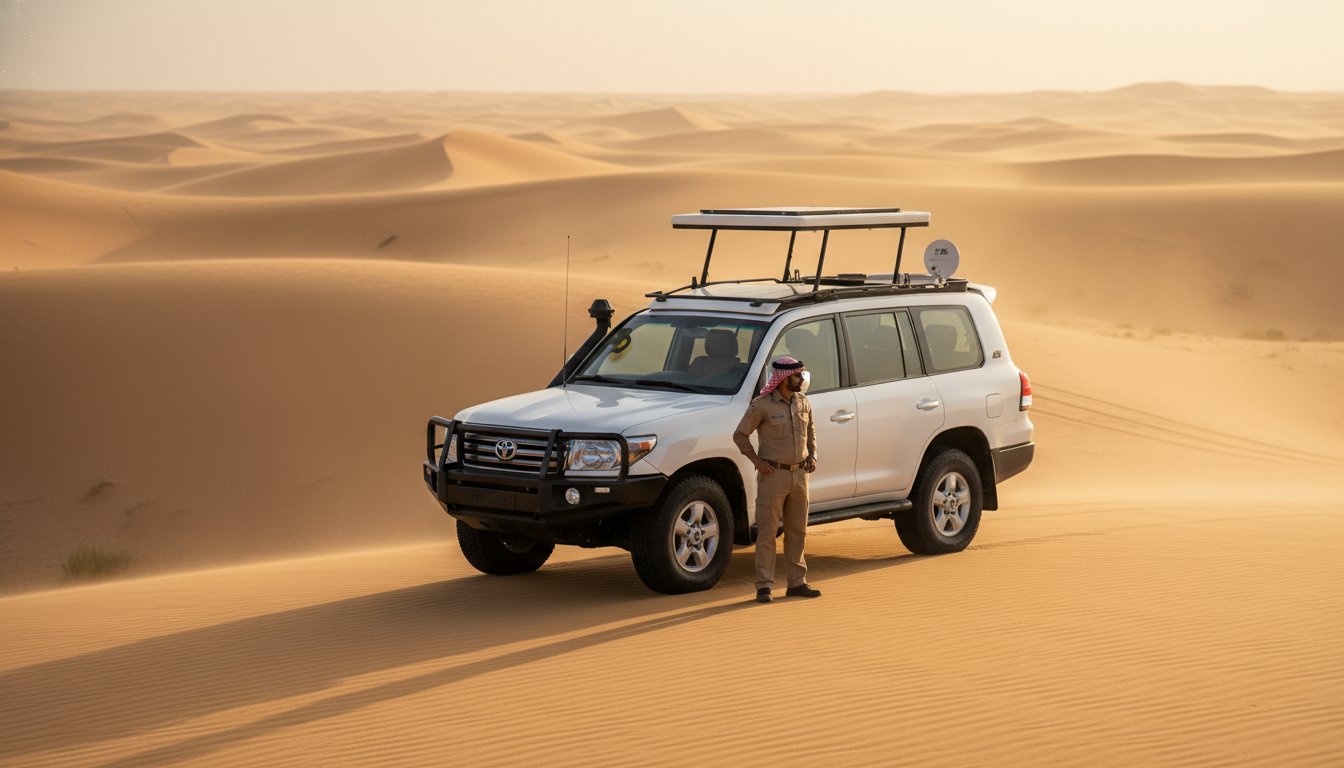
With mid-range safari costs in Tanzania reaching $800 per person per day in 2026, guests no longer accept rattling frames or sweltering cabins. You've likely felt the constant sting of high maintenance costs and the frustration of vehicle downtime caused by structural failures on rough terrain. Modernizing safari tour vehicles is no longer just about basic suspension upgrades; it's about merging tactical-grade durability with high-tech hospitality. If your fleet isn't evolving, you're losing ground to competitors who offer better comfort and reliability.
We understand that your fleet must withstand the most punishing desert and savannah environments while providing a premium experience. This guide will show you how to transform traditional expedition units into high-comfort, high-tech vehicles that meet 2026 expectations. You'll learn about reinforcing chassis for longevity, integrating Starlink for remote connectivity, and utilizing custom fabrication to lower your long-term operational costs. We will cover everything from pop-up roof conversions to heavy-duty bumper installations that protect your investment for years.
In This Guide:
- Discover the technical strategies for modernizing safari tour vehicles to eliminate structural failures and slash maintenance budgets.
- Learn why reinforcing Toyota Land Cruiser and Hilux chassis is essential for surviving the most punishing 2026 tour routes.
- Explore high-tech integrations like Starlink satellite systems and solar-powered roofs that keep your guests connected in remote bush locations.
- Identify ergonomic seating and acoustic insulation upgrades that transform noisy cabins into premium environments for high-end travelers.
- Understand how precision engineering and metal fabrication ensure your fleet's longevity and safety in the most extreme environments.
The Evolution of the Safari Experience: Why Modernization is Essential
The safari industry is undergoing a technical revolution. Guests paying premium rates for expeditions in Kenya or Tanzania expect their transport to match the luxury of their lodge. Modernizing safari tour vehicles is no longer a luxury; it's an operational requirement to stay competitive. If your game viewer vehicle lacks connectivity or climate control, you'll see poor reviews and lost revenue in 2026.
Beyond guest comfort, fleet operators face rising costs from aging equipment. Structural failures on rough terrain lead to expensive downtime. Advanced engineering allows us to build units that withstand extreme desert and savannah conditions for years. Reliability is the foundation of trust in this industry. It's the difference between a successful expedition and a costly rescue mission.
To better understand this concept, watch this helpful video:
By 2026, safety standards have moved beyond simple internal padded roll cages. Integrated protection systems now include GPS tracking and reinforced mounting points for specialized equipment. Stricter noise and emission standards in conservancies also favor vehicles with better aerodynamic profiles and sound dampening. Professional conversions ensure compliance with evolving park regulations across Africa and the Middle East while protecting your capital investment.
Meeting Post-2025 Guest Expectations
High-speed Wi-Fi via Starlink is now a baseline expectation in the bush. Guests need to upload high-resolution photography instantly. Modern interiors must feature multiple USB-C charging ports and ergonomic seating that provides maximum legroom. Viewing angles are equally critical. We use custom fabrication to ensure unobstructed lines of sight for photography enthusiasts. Hybrid cooling solutions are also replacing basic open-air designs to combat rising temperatures during peak season.
The ROI of Advanced Fabrication
Investing in precision engineering pays dividends through reduced maintenance. Laser-cut components fit perfectly. This eliminates the rattles that lead to structural fatigue over time. We use CNC machining to create standardized parts. This means if a component fails, the replacement fits without manual adjustment. Custom-built units from specialists like Auto Industries Factory outlast mass-market 4x4 modifications because they're engineered for specific payloads and terrains.
Mechanical Reinforcement: Upgrading Chassis and Suspension for the Desert
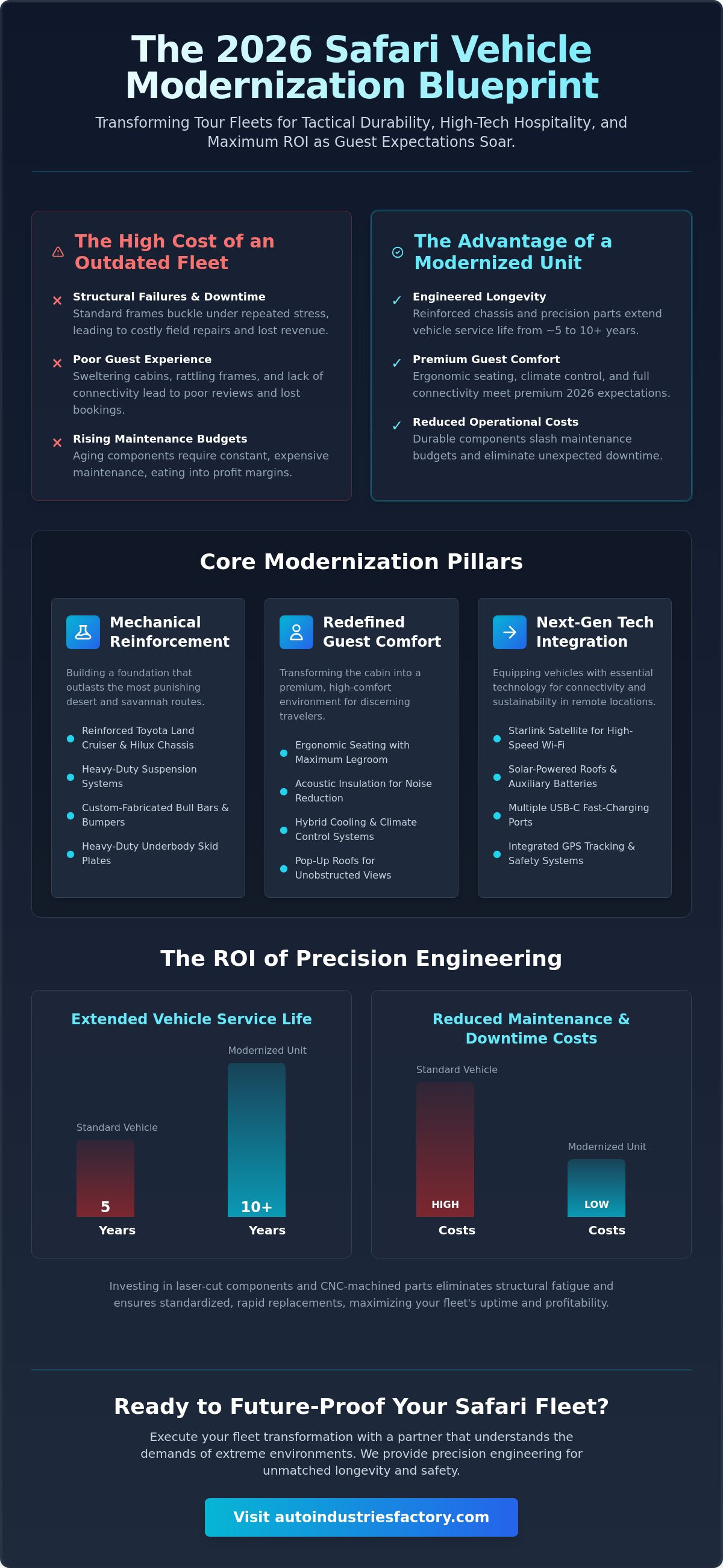
The desert is a relentless testing ground for any tour fleet. When you're modernizing safari tour vehicles, the mechanical foundation determines the lifespan of the entire unit. Standard factory frames aren't built for the repetitive stress of high-capacity tour loads over corrugated tracks or soft dunes. We focus on reinforcing the Toyota Land Cruiser and Hilux chassis, ensuring these workhorses can carry 12 passengers and heavy equipment without bowing or cracking under pressure. A reinforced chassis is the difference between a five-year service life and a ten-year one.
Chassis Strengthening and Body Protection
Maximum protection starts with the vehicle's exterior. Integrating custom bull bars and bumpers is a critical first step for any professional conversion. These components aren't just for aesthetics; they're engineered to provide maximum approach and departure angles in steep dunes and rocky wadis. To ensure total durability, we prioritize the following protection upgrades:
- Underbody Plating: Heavy-duty skid plates shield vital components like the transmission and fuel tank from rock strikes.
- Reinforced Mounting: Bull bars are anchored directly to the reinforced frame to handle high-impact forces.
- Sand Abrasion Shielding: Specialized coatings protect the metal from the constant "sandblasting" effect of high-speed desert driving.
Suspension and Drivetrain Upgrades
A standard suspension setup will fail quickly under the weight of a modernized cabin. Custom suspension tuning is required to balance guest comfort with heavy equipment payloads. When modifying your overlanding vehicle, selecting heavy-duty shock absorbers is paramount. We match the dampening rates to your specific terrain, whether it's the soft sand of the Rub' al Khali or the jagged rock of the Serengeti. This prevents the "bottoming out" that ruins guest comfort and damages the vehicle's structural integrity.
The drivetrain needs equal attention to handle the increased mass. Upgrading differentials and axles ensures the vehicle handles the added weight of armor and high-capacity interiors without snapping shafts. Snorkels and raised breathers are also mandatory. They keep the engine breathing clean air during intense dust storms and prevent water ingestion during river crossings.
Mechanical reliability also depends on air quality. High-performance filtration systems are essential when modernizing safari tour vehicles to combat the fine sand of the UAE and African dust. Standard filters clog within hours in these conditions, leading to rapid power loss. Finally, we install advanced braking systems. A fully loaded tour truck needs superior stopping power to handle steep descents safely. If you're ready to upgrade your fleet's capabilities, you can explore our full range of safari vehicle conversions to see how we engineer for extreme durability.
Redefining Guest Comfort: Interior and Ergonomic Modernization
A vehicle's mechanical strength ensures it reaches the destination, but the interior determines if the guest returns for another tour. When modernizing safari tour vehicles, the goal is to create a mobile sanctuary that balances high-tech utility with ergonomic luxury. Today's high-end travelers expect more than just a bench seat; they demand a refined environment where engine noise is minimized and climate control is consistent. We prioritize acoustic insulation to dampen the mechanical roar, which significantly improves the wildlife viewing experience by allowing natural soundscapes to take center stage.
In regions like the UAE, interior climate management is a technical challenge that requires precision engineering. We integrate high-capacity refrigeration units and custom storage solutions specifically designed for multi-day expeditions. Lighting systems are equally specialized. We install ambient red-light systems for night drives to preserve guest night vision, paired with high-intensity task lighting for safe equipment handling. This dual-purpose approach ensures the vehicle remains functional at all hours without disturbing the surrounding environment or the wildlife.
Step-by-Step Interior Conversion Process
The transformation begins by stripping the base vehicle to its bare metal shell. This allows our engineers to install structural seating reinforcements that exceed standard safety requirements. We utilize medical-grade, easy-clean materials that withstand the abrasive dust and high-frequency use typical of desert tours. Reliability extends to the power grid; we integrate robust 12V and 220V systems. These allow guests to charge professional camera gear and mobile devices simultaneously without straining the vehicle’s primary battery. This focus on utility is a hallmark of professional safari vehicle conversions.
Photographic and Viewing Features
For photography enthusiasts, the vehicle must act as a stable, vibration-free platform. We design pop-up roofs and 360-degree hatches equipped with specialized mounts to ensure sharp images even on uneven ground. The process of modernizing safari tour vehicles also involves installing swivel seating, allowing passengers to react instantly to wildlife sightings without repositioning the entire truck. While some operators are exploring solar-powered electric safari vehicles to further reduce noise, our current modernization focus remains on maximizing the ergonomic potential of the existing fleet. We also manufacture custom roof racks and metal canopies to manage heavy gear loads, ensuring the vehicle's center of gravity remains low for superior stability on steep dunes.
Next-Gen Safari Tech: Solar Power, Connectivity, and Sustainability
Modernizing safari tour vehicles requires a shift from purely mechanical upgrades to sophisticated electrical integration. By 2026, the demand for off-grid power has made solar-integrated roofs a standard requirement for premium fleets. These systems allow operators to power auxiliary equipment, such as refrigerators and high-capacity charging stations, without idling the engine. This reduces fuel consumption and minimizes the acoustic footprint of the tour, allowing for a more immersive wildlife experience. We utilize lightweight aluminum for our custom fabrications to offset the added weight of these tech systems, ensuring vehicle performance remains optimal on soft sand.
Satellite connectivity is the new frontier for remote expeditions. With Starlink operational in 23 African countries as of early 2026, tour operators can now offer reliable internet speeds between 45 and 106 Mbps in the deepest bush. This technology isn't just a guest amenity; it's a critical tool for smart fleet management. Real-time GPS and vehicle health monitoring allow dispatchers to track every unit and receive instant alerts if an engine parameter drifts out of spec. This proactive approach prevents stranded vehicles and ensures guest safety in extreme environments.
Off-Grid Power Solutions
Reliable power starts with a robust dual-battery system managed by smart isolators. This ensures the primary starter battery is never depleted by auxiliary loads. We specialize in flexible solar panel mounting on metal canopies and roof racks to maximize energy capture during the day. For campsite lighting and silent cooling, we integrate lithium-ion banks. These provide hours of silent power, eliminating the need for noisy generators that disrupt the serenity of the savannah or the desert night.
Communication and Safety Systems
Safety in the wilderness depends on redundant communication channels. We integrate multi-band radio systems for seamless fleet coordination and emergency SOS beacon technology for deep-wilderness tours. Our engineers apply ambulance-grade electrical standards to every tour vehicle we modify. This ensures that all wiring is flame-retardant, loom-protected, and capable of handling high-amperage draws without failure. When you are modernizing safari tour vehicles, these hidden technical details provide the reliability needed for mission-critical applications.
If you're ready to future-proof your fleet with these advanced systems, contact Auto Industries Factory to discuss our comprehensive conversion solutions.
Executing Your Fleet Transformation with Auto Industries Factory
The successful execution of modernizing safari tour vehicles requires more than just mechanical skill; it demands industrial-scale precision and engineering expertise. At Auto Industries Factory, we manage the entire modernization lifecycle within our specialized facility in Ajman, UAE. Our process begins with advanced in-house engineering where every modification is mapped through 3D rendering. This ensures that every structural reinforcement and electrical integration fits the vehicle's specific geometry before a single piece of metal is cut. We don't rely on guesswork; we rely on data and master craftsmanship.
Precision fabrication is the backbone of our operation. We utilize high-capacity laser cutting and CNC machining to produce components that are identical across your entire fleet. This level of consistency is impossible to achieve with manual fabrication methods. It ensures that every mounting bracket, canopy, and bull bar meets the same rigorous durability standards. Our quality control team subjects every completed unit to testing in extreme heat environments, simulating the 50°C+ temperatures common in GCC deserts and African savannahs. This guarantees that your fleet stays operational when others fail.
Our Comprehensive Conversion Services
We provide end-to-end solutions for operators looking to upgrade their capabilities. Our facility is optimized for high-volume safari vehicle conversions on industry-standard platforms like the Toyota Land Cruiser 70-Series and Nissan Patrol. Our services include:
- Platform-Specific Modifications: Complete structural overhauls for Toyota and Nissan frames to handle heavy-duty tour payloads.
- Custom Metalwork: Fabrication of specialized metal canopies, roof racks, and bumpers tailored to your specific tour routes.
- Electrical Integration: Professional installation of dual-battery systems, solar arrays, and Starlink connectivity modules.
- Fleet Branding: Professional painting and high-durability branding services to ensure a consistent corporate identity across your fleet.
Why Choose a UAE-Based Manufacturer?
The Ajman advantage is built on global logistics and technical compliance. Our centralized location in the UAE allows for efficient vehicle sourcing and streamlined international shipping to key markets across Africa and the Middle East. Unlike local workshops that lack standardized parts, we adhere to high-level GCC and GSO standards. This ensures that every vehicle we modify is compliant with regional safety and environmental regulations.
We invite you to visit our facility for a direct consultation with our engineering team. You'll see firsthand how we combine technical capability with rugged reliability to deliver mission-critical vehicle solutions. When you're modernizing safari tour vehicles for the 2026 market, partner with a manufacturer that understands the high stakes of the industry. We build vehicles that protect your guests, your investment, and your reputation.
Future-Proof Your Fleet for the Next Generation of Exploration
Success in the 2026 safari market depends on your ability to merge tactical durability with high-tech guest hospitality. We've explored how mechanical reinforcement and precision chassis strengthening form the backbone of a reliable operation. By integrating advanced connectivity and ergonomic interiors, you transform standard transport into a premium expedition unit that commands higher rates. Modernizing safari tour vehicles is a strategic investment that lowers long-term maintenance costs while protecting your brand's reputation in the field.
Auto Industries Factory brings the same engineering precision to your fleet that we apply to high-stakes ambulance and military vehicle modifications. From our ISO-certified fabrication facility in the UAE, we utilize a strategic location to export mission-critical solutions globally. Whether you need custom bull bars or complete interior overhauls, our master craftsmen deliver results that withstand the world's harshest environments. Don't let an aging fleet compromise your growth or guest safety.
Contact Auto Industries Factory for a Custom Safari Conversion Quote today. Let's build a fleet that sets the standard for reliability and comfort in the bush.
Frequently Asked Questions
What is the best base vehicle for a safari conversion in 2026?
The Toyota Land Cruiser 70-Series remains the industry standard for safari conversions in 2026 due to its unmatched durability and global parts availability. While the Nissan Patrol is a strong contender for guest comfort, the Land Cruiser’s reinforced chassis provides a more stable foundation for heavy technical modifications. Its mechanical simplicity allows for easier field repairs in remote locations where advanced diagnostic tools aren't available.
How long does a complete safari vehicle modernization take?
A complete transformation usually takes between four to eight weeks depending on the complexity of the custom fabrications required. This timeline includes the structural reinforcement of the frame, full interior conversion, and the integration of electrical systems like Starlink. We prioritize engineering precision over speed to ensure every unit meets our rigorous safety and durability standards before it leaves our Ajman facility.
Can you retrofit solar power onto existing safari trucks?
You can absolutely retrofit solar power systems onto your existing fleet to improve off-grid capability. When modernizing safari tour vehicles, we integrate flexible solar panels onto existing metal canopies or roof racks. This setup effectively powers auxiliary systems like refrigerators and charging ports without draining the primary starter battery. It’s a cost-effective way to improve sustainability without requiring a full vehicle overhaul.
How do you ensure guest comfort in 50-degree UAE summer heat?
We ensure guest comfort through a combination of high-capacity hybrid cooling systems and advanced thermal insulation. Standard factory air conditioning often fails in extreme 50-degree desert heat, so we install specialized auxiliary units designed for high-amperage output. Ceramic window tinting and heat-reflective roof coatings further reduce the cabin temperature, providing a safe, chilled environment even during the peak UAE summer months.
What are the legal requirements for modified tour vehicles in the GCC?
Modified tour vehicles in the GCC must comply with GSO safety standards and obtain specific permits from local traffic authorities. These regulations strictly cover roll cage integrity, seatbelt anchoring, and lighting configurations for off-road use. We ensure all our conversions meet these legal benchmarks to prevent registration issues or operational fines. It's vital to check local wildlife department licenses if you operate in specific conservancies.
Is it better to use steel or aluminum for safari roof racks and canopies?
Aluminum is generally superior for roof racks and canopies because it significantly reduces the vehicle's center of gravity and prevents rust. However, we use reinforced steel for custom bull bars and bumpers where maximum impact protection is mandatory. Aluminum components help offset the weight of added tech like lithium-ion batteries and satellite hardware, which improves overall fuel efficiency and handling on rough terrain.
How does vehicle weight affect off-road performance in sand dunes?
Excessive weight is the primary reason vehicles get bogged down in soft sand dunes. A heavy vehicle increases ground pressure, making it harder to stay on top of the sand's surface. By using lightweight materials for non-structural components like cabinets and canopies, we maintain the vehicle's agility. This balance is critical for ensuring your tour trucks can navigate deep dunes without constant recovery efforts.
Do you provide international shipping for converted safari vehicles?
We provide comprehensive international shipping for all converted safari vehicles from our centralized manufacturing facility in Ajman, UAE. Our logistics team manages the complex documentation and transport to major ports across Africa and the GCC. This strategic location allows us to serve global markets efficiently while maintaining the high manufacturing standards and engineering precision expected of a specialized UAE-based manufacturer.


