Why retire a battle-tested chassis when a strategic tactical overhaul can outperform a factory-standard replacement? With the cost of new police cruisers doubling to $120,000 over the last decade, many agencies face the reality of replacement cycles stretching toward 18 years. You've likely seen the mounting maintenance bills and felt the risks of outdated siren tech or structural wear. It's a frustrating position, but upgrading an old police fleet offers a high-performance path forward that respects your budget.
We understand that officer safety and mission capability aren't negotiable. This guide demonstrates how expert retrofitting and specialized fabrication can transform your aging patrol units into elite tactical assets. You'll learn how to integrate modern communication systems and durable metalwork to extend the service life of your equipment. We'll also cover the essential steps for ensuring your modified vehicles comply with the UAE’s Euro 6B emission requirements and critical FBI-level encryption mandates for 2026.
Key Takeaways
- Learn why 2026 is the strategic window to modernize existing assets and bypass the extended lead times of new vehicle manufacturing.
- Identify the critical tactical electronics and ruggedized communication mounts required to transform a basic chassis into a high-performance command unit.
- Analyze the financial and operational benefits of upgrading an old police fleet compared to the surging costs of new factory interceptors.
- Master a phased engineering process that starts with mission-specific requirements and ends with a complete structural and technical remediation.
- Discover how to meet strict UAE MOI standards and implement specialized cooling systems for reliable performance in extreme desert heat.
The Strategic Case for Upgrading an Old Police Fleet in 2026
Fleet modernization is a rigorous technical discipline. It involves retrofitting proven vehicle chassis with advanced tactical technology, reinforced safety systems, and precision structural upgrades. In 2026, the necessity for this approach has reached a critical tipping point. Procurement budgets are under intense pressure while the technological requirements for modern police vehicles continue to evolve. Upgrading an old police fleet allows agencies to bypass the massive capital expenditure of buying 100% new units while still deploying elite mission capabilities.
The year 2026 marks a decisive shift toward data-driven fleet management. With the cost of new cruisers doubling over the last decade, simply disposing of functional assets is no longer a viable strategy for many departments. Instead, engineering-led modernization focuses on the core strength of existing units. By identifying candidates with high chassis integrity, agencies can integrate 2026-spec communication hubs and siren systems into vehicles that officers already trust. Precision matters. It keeps officers alive and keeps the fleet operational during high-stakes deployments.
To better understand this concept, watch this helpful video:
Dilapidated fleets carry hidden burdens that go beyond simple repair bills. Frequent downtime reduces patrol frequency, and outdated ergonomics contribute to officer fatigue. Some industry reports suggest a replacement threshold as low as 90,000 miles, but this narrow view ignores the inherent longevity of high-quality platforms. Rugged vehicles like the Land Cruiser or GMC Yukon can often be refurbished for secondary roles or specialized tactical duties, provided the structural core remains sound. Upgrading an old police fleet isn't just about saving money; it's about maintaining operational superiority on every shift.
Assessing Fleet Readiness and Asset Longevity
Effective modernization starts with a deep technical audit. We look beyond the odometer to analyze engine idle hours and high-stress fatigue points in the frame and suspension. This data identifies which units are prime candidates for specialized Police & Military Vehicle Modifications. By pinpointing mission-critical gaps in your current patrol units, we ensure that every upgrade serves a specific tactical purpose rather than just filling a maintenance quota.
The ROI of Retrofitting vs. Disposal
Retrofitting offers a superior return on investment by extending the cost-per-mile value of a vehicle. It preserves the initial capital spent on the platform while adding years of reliable service life. This approach also aligns with sustainability goals by reducing the environmental impact associated with total fleet turnover. Modernization ensures that proven, high-performance platforms remain in the field, equipped with the latest safety and communication tech without the wait times of new factory deliveries.
Core Components of a Modern Tactical Police Retrofit
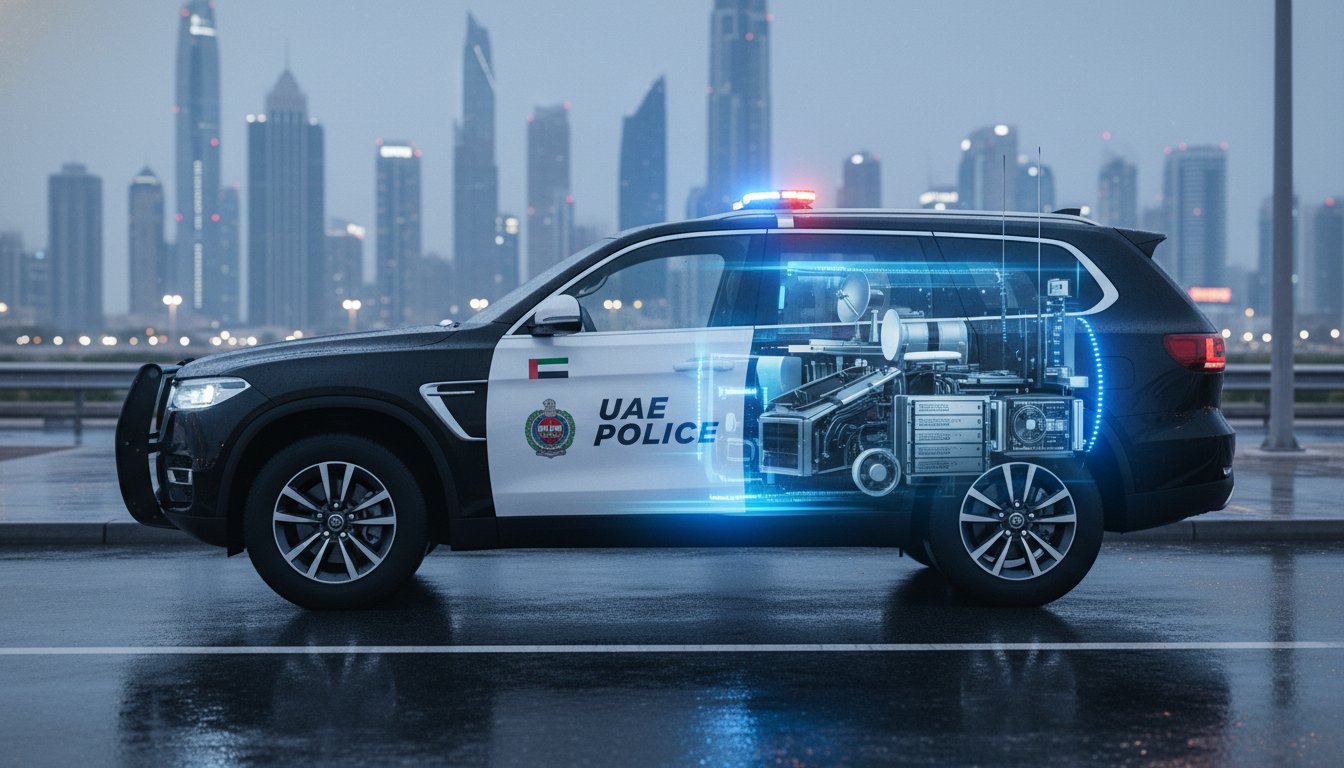
Modernization is more than a facelift. It’s a complete overhaul of the vehicle’s tactical nervous system. When upgrading an old police fleet, the transition from analog controls to integrated digital hubs is the first step toward operational superiority. We replace outdated, bulky siren boxes with streamlined, programmable interfaces that manage everything from high-intensity lighting to public address systems. This integration reduces cockpit clutter and allows officers to focus on the mission rather than fumbling with mismatched switches. Precision engineering ensures these electronics operate without interfering with the vehicle's core electrical architecture.
Communication is the backbone of any tactical response. We install ruggedized, multi-band radio mounts and secure docking stations for data terminals that can withstand extreme vibration and heat. Agencies are increasingly looking at advanced patrol vehicle upgrades to ensure their units remain visible and effective in high-speed environments. These systems provide real-time data access and encrypted voice channels, turning an older chassis into a modern command center. For agencies requiring mission-specific hardware, exploring specialized modification services ensures every component meets operational stress tests.
Advanced Lighting and Signal Integration
Visibility saves lives. We replace legacy halogen bulbs with high-efficiency LED lightbars that offer 360-degree coverage and programmable flash patterns. For specialized units, we integrate low-profile ghost lighting into grilles and window lines, providing covert capability without sacrificing emergency signaling power. Standardizing these control interfaces across your fleet ensures that any officer can step into any vehicle and operate it with total confidence. This consistency is vital during high-stress deployments where muscle memory takes over.
Custom Fabrication: Bull Bars and Protective Gear
Tactical durability requires specialized metalwork. We believe custom bull bars and bumpers are essential for pursuit maneuvers and protecting the vehicle’s cooling system during PIT maneuvers. Our fabrication process utilizes laser-cut precision to create rear storage dividers, weapon racks, and K9 transport inserts that fit perfectly within the existing interior. We don't just bolt on accessories; we reinforce the chassis points to handle the additional weight of tactical gear. This level of craftsmanship ensures the vehicle remains balanced and responsive, even when fully loaded with mission-critical equipment. Rugged protection is the standard, not an option.
Fleet Life Extension: Retrofitting vs. Complete Replacement
The argument that police vehicles must be retired every 3.5 years is a myth that ignores the engineering reality of high-quality chassis. While some agencies strictly follow mileage-based disposal, this approach often wastes durable GCC-spec platforms like the Toyota Land Cruiser or Nissan Patrol. These vehicles are built to withstand extreme environmental stress. By upgrading an old police fleet, you bypass the 12-month lead times currently plaguing new factory deliveries. You get a tactical asset back on the road in weeks, not years.
A "zero-hour" refurbishment provides a high-performance unit at a fraction of the price of a new interceptor. This isn't just a repair; it's a complete technical reset. We strip the vehicle to its structural core and rebuild it with modern components. Professional police vehicle modifications restore officer trust in the equipment. When a vehicle is engineered for reliability, it performs with the same precision as a fresh delivery, ensuring mission capability across every shift.
Modernization also offers unmatched mission flexibility. Older assets that may no longer be suitable for high-speed highway patrol can be tailored for specialized secondary roles. We can refit these units for prisoner transport, riot control, or K9 deployment. This strategic repurposing ensures that your initial investment in the chassis continues to deliver value, even as the vehicle's primary function evolves within the department.
When to Upgrade and When to Retire
We use the "Rule of 50" as a technical benchmark. If the cost of a comprehensive retrofit exceeds 50% of the asset's total tactical value, retirement might be the smarter move. We look for end-of-life indicators like severe frame oxidation or terminal transmission fatigue. If the core is compromised, we recommend repurposing the vehicle for community outreach or controlled training environments where mechanical stress is minimal. It's about making data-driven decisions that protect your budget and your personnel.
Performance Benchmarking for Converted Units
Every upgraded unit undergoes rigorous performance benchmarking. We test the suspension systems under full tactical loads to ensure stability during high-speed maneuvers. We also verify that the electrical system can handle the high-draw demands of 2026-spec electronics without overheating. If your mission requires ballistic protection, we ensure that any car armouring remains viable and meets the required standards. We don't guess; we measure. This engineering-first approach ensures that upgrading an old police fleet results in a vehicle that meets or exceeds factory safety specifications.
A Step-by-Step Approach to Fleet Modernization
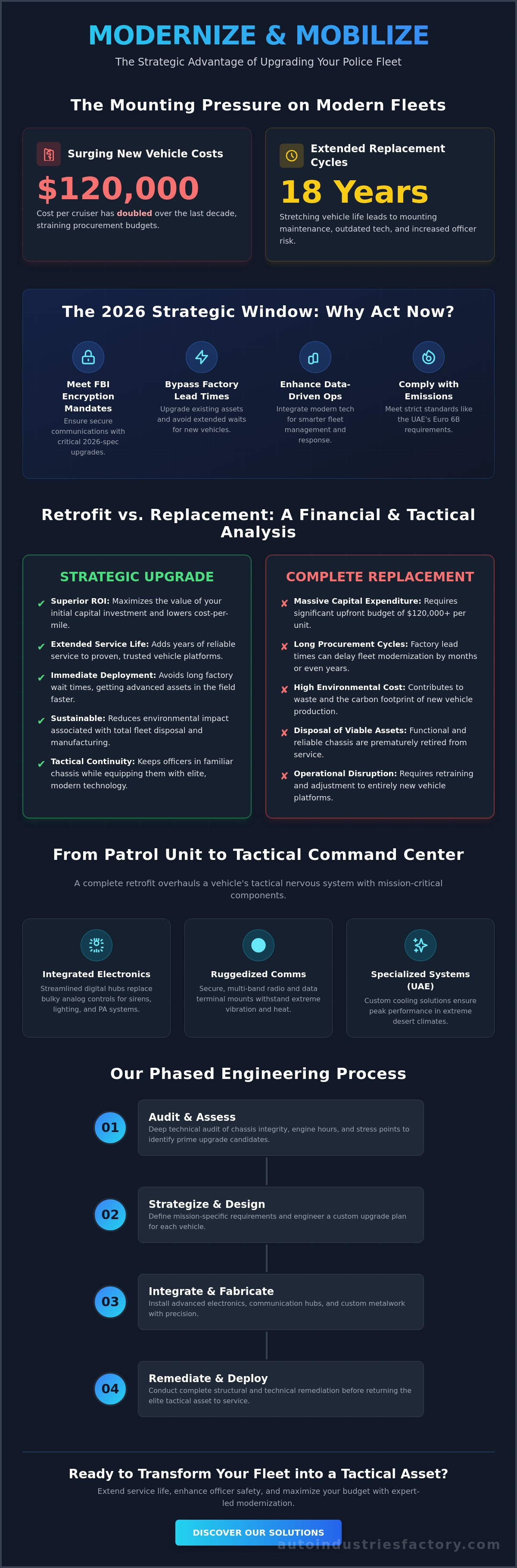
Upgrading an old police fleet isn't a simple parts-swap; it’s a structured engineering lifecycle. Each vehicle undergoes a rigorous five-phase transformation to ensure tactical superiority and long-term durability. We follow a disciplined roadmap that moves from conceptual design to field-readiness certification. This process ensures that every modified unit functions as a cohesive tactical tool rather than a collection of bolted-on accessories. We build for the long haul, not just the next shift.
Phase 1 starts with a deep Engineering Consultation. We define mission requirements and technical specs, determining whether the unit needs reinforced suspension for heavy gear or advanced cooling for desert patrol. Phase 2 involves Stripping and Remediation. We remove outdated tech and repair base structures to create a clean, reliable slate. Phase 3 moves into Fabrication and Installation, where custom components are integrated. Phase 4 focuses on Systems Integration, covering the complex wiring and programming of communication arrays. Finally, Phase 5 is Quality Assurance, where we conduct a final inspection and field-readiness certification.
Phase 1: Mission-Specific Design
Precision starts on the screen. We collaborate with Auto Industries Factory to create custom 3D blueprints that map every internal and external modification. This phase is where we select the right materials for the job. We often choose high-strength steel for structural bull bars but might opt for lightweight aluminum in internal storage to manage the vehicle's center of gravity. We also plan for future scalability, ensuring that the mounts and wiring harnesses we install in 2026 can accommodate the sensors and comms tech of 2030.
Phase 3: Heavy Duty Fabrication
This is where master craftsmanship meets industrial technology when upgrading an old police fleet. We utilize CNC machining and laser cutting to ensure perfect fitment within the existing chassis. Standard off-the-shelf parts often fail in the field because they don't account for the unique wear of an older vehicle. We weld reinforced mounting points for lightbars and sirens directly to the frame for maximum stability. To combat the extreme GCC environment, we apply industrial-grade coatings that protect against sand abrasion and high humidity. These coatings ensure the structural integrity of our custom metalwork remains uncompromised for years.
If you're ready to start the transformation process, contact us to discuss our specialized Police & Military Vehicle Modifications.
Specialized Law Enforcement Upfitting in the UAE
Operating in the United Arab Emirates presents environmental challenges that standard factory vehicles aren't equipped to handle over the long term. When upgrading an old police fleet in this region, compliance with the UAE Ministry of Interior (MOI) and local police standards is the baseline. Beyond regulatory paperwork, the real engineering challenge lies in the 'Heat Factor.' Desert operations demand heavy-duty cooling system upgrades to prevent thermal failure during high-speed pursuits or stationary idling in 50°C temperatures. Precision cooling ensures the mission continues when the environment turns hostile.
We specialize in the tactical modernization of regional staples like the Toyota Land Cruiser 70-series. These vehicles are the backbone of desert patrol, but their legacy systems often require a technical reset to meet 2026 operational demands. By partnering with local vehicle conversion specialists, agencies ensure a rapid fleet turnaround and access to components specifically engineered for the Arabian Peninsula. Local expertise means your fleet stays in the field, not in the workshop. We understand the high stakes of regional security and build every unit to exceed those expectations.
GCC Environmental Hardening
UAE summers are brutal on electronics and personnel. We upgrade AC units and install high-grade cabin insulation to maintain officer focus during extended shifts. For tactical units operating in the dunes of Abu Dhabi or the rugged terrain of Fujairah, we integrate advanced sand-filtration systems to protect engine intakes from premature wear. Every custom bumper or canopy we fabricate receives industrial-grade, UV-resistant coatings. This prevents the rapid degradation and paint fading common in high-exposure environments, ensuring the vehicle looks as professional as it performs.
Compliance and Certification in the Emirates
Navigating the RTA and police inspection process requires technical precision. We ensure every modification, from emergency lighting to structural reinforcements, meets strict regional requirements for road legality and operational safety. If the mission profile includes ballistic protection, our upgrades are engineered to meet international NIJ or VPAM standards. Finally, we apply the latest departmental livery and branding with high-durability materials. This ensures your modernized fleet matches the elite aesthetic of the UAE’s law enforcement agencies while providing the tactical edge required for 2026.
Deploying Future-Ready Tactical Assets Today
Modern law enforcement requires equipment that matches the speed and complexity of the mission. We've shown that upgrading an old police fleet is more than a cost-saving measure; it's a strategic engineering choice. By integrating advanced communication hubs and high-performance metalwork into your existing units, you deploy a fleet that meets the highest tactical standards without the delays of new vehicle procurement. Our process ensures every unit is hardened for the extreme GCC environment while remaining fully compliant with UAE Ministry of Interior regulations.
As specialists in UAE Police & Military Conversions, we utilize expert in-house CNC and Laser Cutting to deliver ruggedized designs that outperform standard factory models. Don't let aging assets compromise officer safety or response efficiency. Our engineering-led solutions provide the reliability and precision your department demands for 2026 and beyond. Take the first step toward a modernized, high-performance fleet by connecting with our technical team today.
Request a Technical Consultation for Your Fleet Modernization
Frequently Asked Questions
How long does it typically take to upgrade a single police vehicle?
The duration of a tactical upgrade varies based on the level of technical complexity. A standard upfitting of emergency lighting and sirens usually takes 3 to 5 business days. A comprehensive overhaul involving structural fabrication and systems integration may require 2 to 4 weeks per unit. We prioritize engineering precision to ensure every component withstands the rigors of 2026 deployment.
Is it cost-effective to upgrade a vehicle with over 150,000 kilometers?
Upgrading an old police fleet with high mileage is highly cost-effective if the chassis integrity remains intact. While some recommend replacement at 150,000 kilometers, rugged platforms like the Toyota Land Cruiser can often be refurbished for secondary roles. Professional retrofitting extends the service life of these proven assets at a fraction of the cost of a new 120,000 dollar cruiser.
Can you add armoring to an existing patrol vehicle during the upgrade?
We can integrate ballistic protection into existing patrol vehicles during the modernization process. This involves reinforcing doors, glass, and critical engine components to meet NIJ or VPAM standards. Our engineering team assesses the suspension capacity to ensure the vehicle handles the additional weight without compromising pursuit performance or stability. It's a common requirement for tactical desert units.
What are the most critical tech upgrades for a 2026 police fleet?
The most critical upgrades for 2026 include FBI-compliant radio encryption technology and integrated in-vehicle video systems. Compliance with Euro 6B emission standards is also mandatory for modified vehicles in the UAE. We also prioritize installing ruggedized data terminals and multi-band radio mounts to ensure seamless communication during high-stakes tactical operations. These systems turn an old chassis into a modern command center.
Do you provide upgrades for specialized units like K9 or SWAT?
Our facility specializes in custom fabrication for K9 transport, SWAT units, and prisoner transport modules. We utilize laser-cut precision to install climate-controlled K9 inserts and heavy-duty weapon racking systems. These modifications are engineered to fit perfectly within the existing vehicle interior while maximizing officer safety and operational efficiency. Every specialized unit is built to withstand extreme tactical use.
How do upgrades impact the resale value of retired police assets?
Tactical upgrades generally improve the resale value of retired assets in secondary markets like private security or rural law enforcement. A vehicle with modernized lighting, reinforced bumpers, and a well-maintained chassis is more desirable than a stripped-down unit. Professional retrofitting demonstrates that the asset has been maintained to high engineering standards. This makes the eventual decommissioning process more financially viable for the department.
Does upgrading an old fleet affect the manufacturer's warranty?
Modifications typically void the manufacturer's warranty on the specific systems that are altered. For vehicles already past their factory warranty period, this is rarely a concern for fleet managers. We recommend that agencies check their specific service agreements before beginning a comprehensive modernization program on newer units. Our work focuses on restoring reliability to assets that are often already out of warranty.
Can you integrate modern GPS and fleet management software into older models?
We can integrate advanced telematics and GPS software into older vehicle models to enable data-driven fleet management. This allows agencies to track vehicle utilization, monitor fuel consumption, and implement predictive maintenance schedules. Upgrading an old police fleet with these systems provides the same level of transparency and accountability as modern factory-standard units. It's an essential step for optimizing long-term operational costs.


