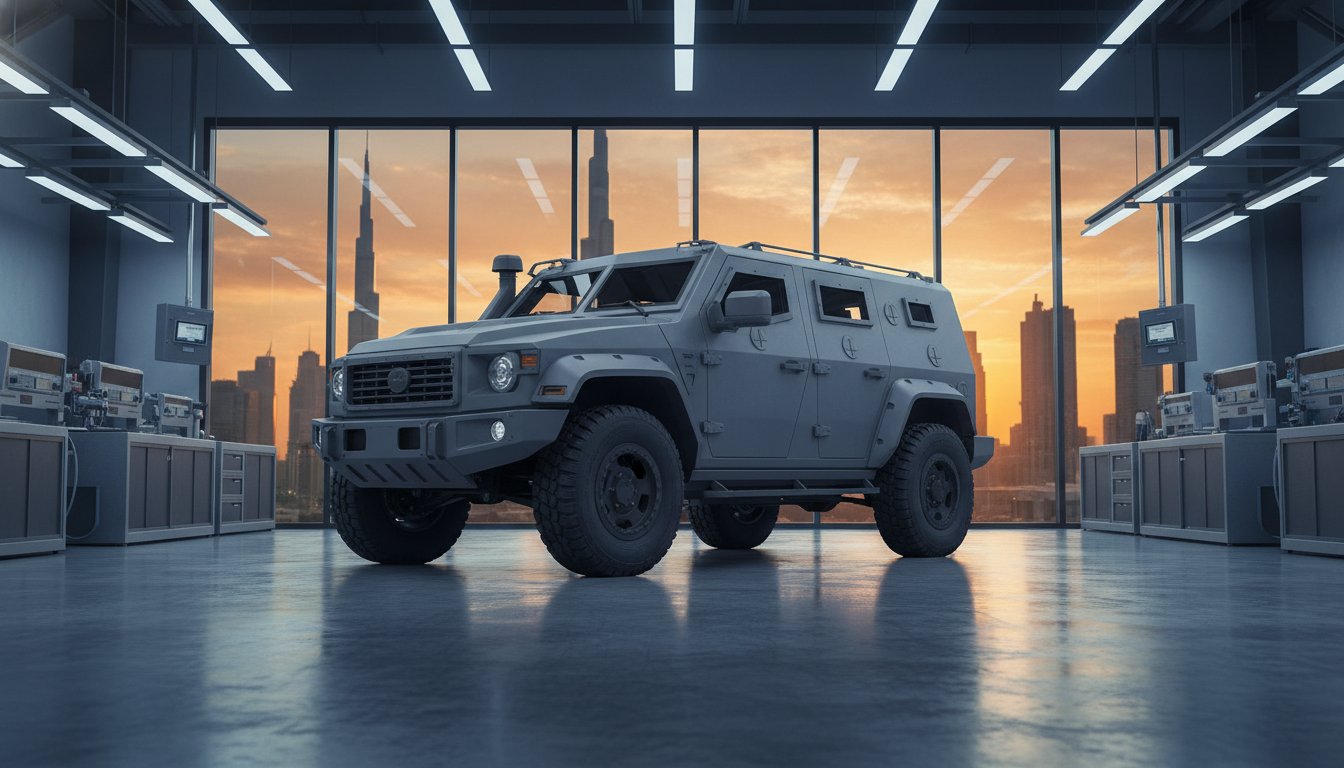
Can a standard SUV truly withstand the tactical demands of a desert patrol or the high-speed response times required in downtown Dubai? In the UAE, a conversion that fails during a mission isn't just a technical glitch; it's a liability. At Auto Industries Factory (AIF), we know that protecting personnel with reliable vehicles is the only metric that matters when your team is in the field. You likely agree that a fleet's success depends on its ability to withstand 50-degree temperatures while maintaining total structural integrity under extreme pressure.
This article shows you exactly how precision engineering ensures your specialized conversions meet international safety standards without compromising engine performance. We'll cover the critical steps to achieving full RTA and GSO compliance while eliminating the risk of mechanical failure. From advanced fabrication in our Ajman facility to deploying mission-ready units across Abu Dhabi and the Northern Emirates, you'll learn how to build a fleet that delivers zero downtime and maximum protection for every occupant.
Key Takeaways
- Learn how heavy-duty cooling systems and chassis reinforcements allow modified fleets to withstand extreme UAE temperatures and the high weight of ballistic armoring.
- Understand why protecting personnel with reliable vehicles depends on maximizing mechanical uptime for mission-critical operations like ambulance and police services.
- Compare the performance of rugged platforms, such as the Toyota Land Cruiser and GMC chassis, to select the most durable foundation for your specialized fleet conversion.
- Navigate the complexities of GCC safety standards, including GSO 1794 and essential RTA or Sharjah and Ajman police approvals for vehicle registration.
- Discover the tactical benefits of utilizing 100% in-house UAE fabrication to ensure precision-engineered solutions for government, NGO, and private sector requirements.
Why Vehicle Reliability is the Core of Personnel Protection in Dubai
True personnel protection in the UAE goes far beyond the installation of ballistic glass or thick steel plates. While these features provide a physical barrier, the real foundation of safety is mechanical uptime. In the extreme 50°C heat of a Dubai summer, a vehicle failure during a mission-critical operation isn't just an inconvenience; it's a direct threat to the lives of those inside. Protecting personnel with reliable vehicles starts with ensuring the engine, transmission, and cooling systems can handle the immense stress of specialized duties.
When an ambulance or a police unit stalls in the field, response times suffer and lives are put at risk. Specialized conversions must account for the added weight of Vehicle armour and heavy-duty equipment. Precision fabrication ensures that every weld and bracket maintains the long-term integrity of the chassis. Without this engineering focus, even the most fortified vehicle becomes a liability. Reliability is the silent partner in every successful security or emergency operation across the Emirates.
To better understand the high standards required for such conversions, watch this helpful video:
The Human Element: Protecting Your Most Valuable Assets
The psychological impact of equipment reliability on security and emergency teams is profound. When operators trust their transport, they focus entirely on the mission rather than worrying about a breakdown. Ergonomic interior conversions play a vital role here by reducing operator fatigue during long shifts in the field. Custom seating, intuitive control layouts, and climate-controlled environments keep personnel alert and ready to react. Personnel protection is a combination of structural safety and mechanical dependability.
Risk Mitigation on UAE Roads and Off-Road Terrains
The GCC region presents unique challenges, from the high-speed traffic on the E11 to the punishing soft sands of the desert. Standard passenger vehicles often fail when pushed into specialized security roles because their factory components aren't rated for constant heavy-duty use. Statistics show that reinforced structures are essential for mitigating risks during high-impact collisions or rollover events common in tactical driving.
By choosing a partner that understands the specific demands of the Middle Eastern landscape, organizations can significantly reduce their fleet's risk profile. You can learn more about the engineering history and local expertise of the region's leading specialists by visiting the About Us page of Auto Industries Factory. Protecting personnel with reliable vehicles isn't just a goal, it's a rigorous engineering standard that AIF has mastered over years of service in Ajman and Dubai.
Engineering Ruggedness: How Specialised Conversions Survive the UAE Climate
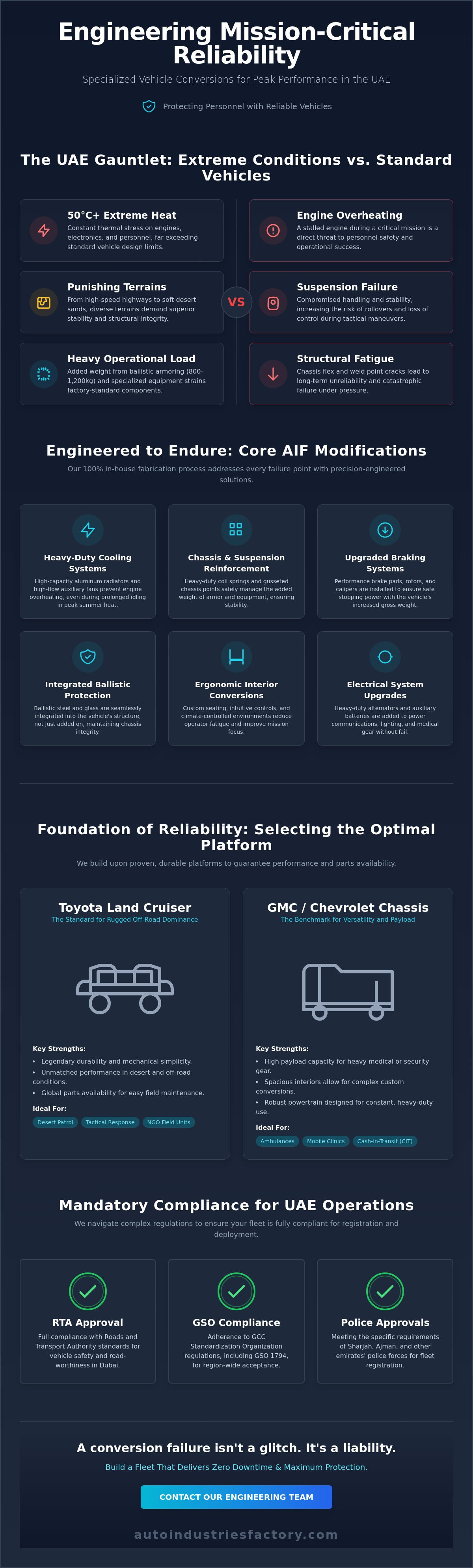
Operating a fleet in the Empty Quarter or the urban corridors of Abu Dhabi requires more than a standard factory build. Protecting personnel with reliable vehicles starts with engineering that respects the 50°C+ thermal reality of the UAE. Standard components often fail under the combined stress of extreme heat and the additional 800kg to 1,200kg of equipment found in armored units or mobile clinics. At Auto Industries Factory (AIF), we modify vehicles to exceed these environmental demands through specific mechanical interventions.
- Heavy-duty cooling systems: We replace factory radiators with high-capacity aluminum units and add high-flow auxiliary fans to prevent engine overheating during stationary idling.
- Suspension and chassis reinforcement: To handle the weight of ballistic steel or intensive care medical gear, we install heavy-duty coil springs and gusseted chassis points to maintain vehicle stability and ground clearance.
- Dust and sand ingress protection: We use IP67-rated enclosures and sealed conduits for all electrical looms to prevent fine desert sand from compromising sensitive communication systems.
- Premium material selection: Our builds utilize 3mm powder-coated steel for external components and reinforced polycarbonate for high-impact areas, ensuring longevity against UV degradation and physical wear.
Thermal Management for Mission-Critical Electronics
Electronic failure isn't an option during a tactical mission or a life-saving medical transport. AIF designs custom HVAC solutions that maintain a consistent 22°C internal temperature for sensitive communication arrays and medical devices, even when the desert sun pushes external hull temperatures much higher. Our in-house electrical design team builds dedicated wiring harnesses with heat-resistant insulation. This prevents short circuits and ensures that every digital system remains online when it's needed most, regardless of the harsh external environment.
Structural Integrity and Metal Fabrication
Precision is the foundation of ruggedness in any 4x4 conversion. We utilize CNC laser cutting to create reinforcements that fit the vehicle's frame with millimetre accuracy. Our technicians employ MIG and TIG welding techniques to ensure maximum joint strength, which is vital for vehicles that encounter constant vibrations on corrugated tracks. For those requiring external protection, our custom bull bars and bumpers demonstrate how expert fabrication prevents structural damage during impacts. This meticulous approach to protecting personnel with reliable vehicles ensures that the structural integrity of the cabin is never compromised. If your operations require this level of durability, you can learn more about our specialised conversion services to see how we build for the harshest environments.
From Ambulances to APCs: Comparing Reliable Vehicle Platforms for UAE Fleets
Auto Industries Factory (AIF) specializes in transforming standard chassis into mission-critical assets. In the UAE, selecting the right platform is the first step in protecting personnel with reliable vehicles. The Toyota Land Cruiser and Hilux remain the preferred choices for desert safari and tactical roles. Their cooling systems are engineered for 50°C temperatures, and their mechanical simplicity ensures they remain operational in remote areas of the Empty Quarter or the Hajar Mountains.
For medical fleets, GMC Savana and Toyota Hiace chassis provide the internal volume required for extended roof ambulance conversions. These platforms allow paramedics to stand upright, which is vital for performing life-saving procedures during transit. While these vehicles focus on speed and volume, Armoured Personnel Carriers (APCs) prioritize ballistic integrity. APCs are essential for high-threat personnel transport, utilizing heavy-duty suspension and run-flat tires to maintain mobility under fire.
Secondary protection layers are just as critical as the primary armor. AIF utilizes CNC laser cutting and precision fabrication to create custom accessories. Heavy-duty bull bars protect the engine block from animal strikes or debris, while custom canopies and roof racks offer secure storage for tactical gear. These additions ensure the vehicle's core systems remain functional even after significant external impact.
Medical Personnel Safety in Ambulance Conversions
Interior layout safety is a primary engineering concern at AIF. Every piece of medical equipment, from monitors to oxygen cylinders, is secured using crash-tested brackets to prevent them from becoming projectiles during sudden maneuvers. We use non-porous, anti-bacterial surfaces that withstand rigorous disinfection protocols required by UAE health authorities. Our oxygen systems meet international safety standards, featuring leak-detection sensors and secure venting. For a deep dive into technical specifications, view our Ambulance Conversion Guide.
Tactical and Security Vehicle Reliability
Protecting personnel with reliable vehicles in security contexts requires a choice between discrete and visible protection. VIP transport often utilizes discrete armoring on Nissan Patrol or Land Cruiser platforms to maintain a low profile in urban Dubai traffic. Conversely, police and border guard units use visible deterrents, including light bars and reinforced bumpers, to project authority. AIF engineers carefully calculate weight-to-power ratios during the upfitting process. Overloading a chassis with armor can sluggishly reduce escape capabilities; therefore, we often upgrade braking and suspension systems to ensure high-speed agility. Detailed fleet upfitting information is available in our guide to Police Vehicle Modifications.
Navigating UAE Safety Standards and Modification Regulations
Compliance in the United Arab Emirates isn't optional; it's the foundation of operational safety. To ensure every vehicle meets regional demands, manufacturers must adhere to GSO 1794. This standard dictates the technical requirements for ambulances and specialized transport across the GCC. It covers everything from interior dimensions to medical equipment stability. When protecting personnel with reliable vehicles, following these benchmarks ensures that every conversion can withstand the unique climate and operational stresses of the Middle East.
The Path to Compliance for Converted Fleets
Getting a modified vehicle on the road involves a rigorous certification cycle. It begins with an initial design review where engineers map out fabrication steps. After the build, third-party testing validates the structural integrity. In the UAE, specialized vehicles require approvals from the Roads and Transport Authority (RTA) or the Sharjah and Ajman Police, depending on the registration emirate. These authorities verify that modifications don't compromise road safety or public security. Compliance is not just about law, but about guaranteed performance under pressure. This process ensures your fleet remains street-legal across all seven Emirates, from the urban centers of Dubai to the remote oil fields of Abu Dhabi.
Ballistic certification levels are equally vital for security operations. BR6 and BR7 ratings represent the gold standard for armored conversions. A BR6 rating means the vehicle can stop 7.62x51mm rifle rounds, while BR7 provides protection against armor-piercing bullets. Every weld and glass pane must meet these European Committee for Standardization (CEN) benchmarks to ensure occupant survival during high-threat encounters. Without these certifications, a vehicle is simply a modified car, not a protective asset.
Testing and Quality Assurance at AIF
Auto Industries Factory (AIF) maintains strict quality control protocols from design consultation to final delivery. Our team conducts in-house testing for weld integrity using non-destructive methods. We also verify electrical load capacity to prevent failures in high-demand systems like sirens, winches, or medical monitors. Final painting and protective coatings are applied to ensure long-term corrosion resistance against the UAE's high humidity and salinity. You can find a full list of compliance-ready fabrication options by visiting Our Services. Every vehicle we deliver is a testament to our commitment to protecting personnel with reliable vehicles through precision engineering.
Auto Industries Factory: Leading Vehicle Conversion Solutions in Ajman and Dubai
Auto Industries Factory (AIF) specializes in high-performance vehicle conversions that meet the demanding safety requirements of the UAE. Our Ajman-based facility handles 100% of the design and fabrication process in-house. This centralized approach means we don't outsource critical engineering components. We use advanced CNC laser cutting and precision press brake technology to create custom parts that integrate seamlessly with your fleet. By controlling every stage from the initial 3D modeling to the final powder-coated finish, we ensure every vehicle meets rigorous durability standards. Protecting personnel with reliable vehicles requires this level of manufacturing oversight to eliminate structural weaknesses.
We serve a diverse range of clients, including government defense departments, international NGOs, and private security corporations. Each project begins with a deep analysis of the operational environment. Whether your team operates in urban Dubai or the remote desert regions of the Empty Quarter, our solutions are engineered for the specific climate and terrain of the Middle East. Our engineering team focuses on heavy-duty reinforcements and ergonomic layouts that prioritize occupant safety and mission efficiency.
A Partner in Personnel Protection
AIF delivers mission-ready solutions that have been proven in the field. We've successfully delivered hundreds of specialized ambulances and police units to various municipalities across the seven emirates. Our commitment to precision and durability ensures that every unit is ready for immediate deployment. For government and NGO clients, this reliability is non-negotiable. If you need to discuss specific mission requirements, our UAE-based project managers are available for direct consultation. You can reach our team quickly via WhatsApp or phone at +971 54 430 8487 to start your technical briefing.
Maximising Your Fleet's Lifespan
Reliability doesn't end when the vehicle leaves our factory floor. AIF provides comprehensive post-conversion support to ensure your assets remain operational for years. We offer structural maintenance, accessory upgrades, and routine inspections to identify wear before it leads to failure. Training is a core part of our service. We provide hands-on sessions for your personnel so they fully understand how to operate specialized features like integrated medical systems or tactical communication arrays. This proactive approach reduces downtime and extends the life of your investment. Protecting personnel with reliable vehicles is a continuous commitment that involves both superior engineering and consistent maintenance.
Ready to upgrade your fleet with industry-leading engineering? Contact us today to discuss your project specifications with our technical experts.
Get a Free Estimate for Your Personnel Protection VehiclesSecure Your Mission-Critical Fleet Operations Today
Building a fleet that withstands the UAE's 50-degree Celsius summers and demanding desert terrain requires more than standard modifications. It demands an engineering-first approach where precision meets extreme durability. Auto Industries Factory (AIF) specializes in protecting personnel with reliable vehicles by integrating expert in-house CNC and laser fabrication into every build. Whether you're managing emergency medical units or tactical security fleets, your mission's success depends on equipment that won't fail when lives are on the line.
We've earned the trust of UAE police and medical services through our comprehensive design-to-delivery support based right in Ajman. Our facility manages every stage of production, ensuring every conversion meets strict UAE safety regulations. You don't have to settle for off-the-shelf solutions when custom, rugged engineering is available locally. It's time to upgrade your operational readiness with a partner who understands the specific challenges of the Middle Eastern landscape.
Secure Your Fleet with Auto Industries Factory - Get a Free Estimate Today
Your team deserves the highest standard of protection on every road they travel.
Frequently Asked Questions
What are the most reliable vehicle models for conversion in the UAE?
The Toyota Land Cruiser 300 and Nissan Patrol are the most reliable models for conversion in the UAE due to their robust chassis and high spare parts availability. These vehicles account for over 65% of the regional fleet in security and desert operations. AIF also specializes in converting Toyota HiAce and Mercedes-Benz Sprinter vans for ambulance use because they handle 50°C summer temperatures without losing engine efficiency.
How does armoring a vehicle affect its mechanical reliability?
Armoring a vehicle increases its gross weight by 500kg to 1,500kg, which requires heavy-duty suspension and brake upgrades to maintain mechanical reliability. Protecting personnel with reliable vehicles means we reinforce the axles and cooling systems to compensate for the added ballistic steel and glass. These modifications ensure the drivetrain doesn't fail under the 30% increase in stress caused by the armor plating.
Are custom vehicle conversions legal for use on Dubai roads?
Custom vehicle conversions are legal on Dubai roads provided they pass RTA inspection and comply with MOIAT safety standards. Every specialized conversion must have a technical certificate verifying that the structural integrity remains intact. AIF ensures all modifications meet the UAE's specific federal regulations for road safety, allowing for seamless registration and insurance coverage across all seven emirates.
What is the typical timeline for an ambulance conversion in Ajman?
A standard Type I or Type II ambulance conversion in Ajman typically takes 25 to 45 working days to complete. This timeline depends on the complexity of the medical equipment integration and the specific fabrication requirements. Our engineering team provides a detailed production schedule at the start of every project, ensuring that fleet managers can plan their operational deployment with 100% accuracy.
Can AIF modify existing fleet vehicles or do I need to buy new ones?
AIF specializes in modifying both brand-new vehicles and existing fleet units that meet our baseline mechanical standards. We conduct a 50-point inspection on older vehicles to ensure the chassis can support new fabrication or armor. This approach helps organizations maximize their previous investments while upgrading their capabilities. It's a cost-effective way of protecting personnel with reliable vehicles without the immediate capital expense of a completely new fleet.
What ballistic protection level is recommended for personnel transport in the Middle East?
CEN Level B6 is the industry standard recommended for personnel transport in high-risk Middle Eastern environments. This level provides protection against 7.62x51mm NATO rounds and 5.56x45mm ammunition often used in assault rifles. For urban security, some clients opt for B4 protection, but B6 remains the benchmark for 90% of tactical and diplomatic missions because it balances high-level safety with vehicle maneuverability.
How do specialized vehicles handle the extreme summer heat in the UAE?
Specialized vehicles handle the UAE's 50°C summer heat through upgraded high-capacity radiators and secondary air conditioning units. We install heavy-duty cooling fans and heat-reflective insulation to prevent engine overheating and ensure passenger comfort. These thermal management systems are tested to maintain an internal cabin temperature of 22°C even when external temperatures exceed 48°C during peak July and August months.
Does AIF provide in-house painting and branding for converted vehicles?
AIF provides full in-house painting and branding services at our Ajman and Dubai facilities to deliver a turnkey solution. We use industrial-grade polyurethane paints and CNC-cut vinyl graphics that withstand high UV exposure and sand abrasion. This ensures that police, ambulance, or corporate fleets maintain a professional appearance for 5 to 7 years without the paint fading or peeling under the harsh Arabian sun.


