
A standard chassis is merely raw material, and in the harsh GCC environment, an amateur conversion is a liability your operation cannot afford. You already know that specialized vehicles like ambulances or tactical units must withstand 50°C desert heat while meeting strict RTA and ESMA safety standards. Cutting corners during modification doesn't just risk heavy fines; it leads to non-compliance, hidden costs, and catastrophic mechanical failure during mission-critical tasks.
Mastering the professional custom vehicle fabrication process UAE engineers follow ensures your fleet remains durable, reliable, and fully legal. This guide provides a technical breakdown of the multi-stage journey from initial metalwork and structural reinforcement to final registration updates. We'll explain how to navigate the engineering requirements for specialized builds, including bull bar installation and ambulance conversions. You'll learn the exact timeline for a professional build and how to secure the necessary RTA approvals to keep your vehicles on the road. By the end of this guide, you'll have a clear roadmap for transforming standard frames into rugged assets ready for the most demanding environments in the Middle East.
Key Takeaways
- Understand why CAD modeling and engineering blueprints are essential to prevent structural failures in mission-critical environments.
- Discover how high-precision laser cutting and CNC machining ensure every component meets the exact tolerances required for tactical and medical applications.
- Learn how the custom vehicle fabrication process UAE engineers follow integrates specialized electrical systems and cooling kits to survive extreme desert heat.
- Identify the specific road trials and load testing protocols used to verify that modified vehicles handle safely under full operational weight.
- Gain insights into meeting RTA and international standards to ensure your specialized fleet is fully compliant and ready for immediate deployment.
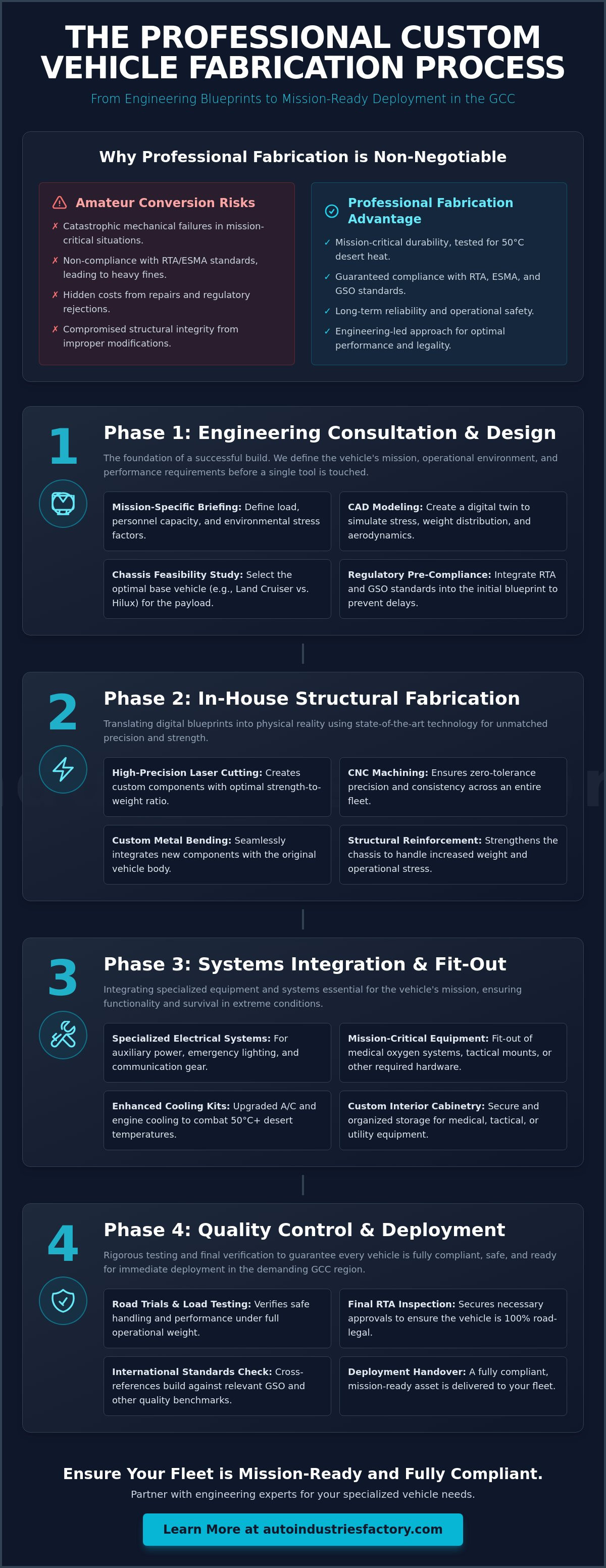
Phase 1: Engineering Consultation and Design Blueprints
A professional build doesn't start in the workshop; it starts on the drafting table. The custom vehicle fabrication process UAE experts rely on begins with a technical consultation that defines the vehicle's operational reality. We don't just ask what you want to build; we ask what mission the vehicle must survive. This involves a critical assessment of chassis platforms. For instance, while a Toyota Hilux is an excellent choice for a safari vehicle conversion, a GMC or Toyota Land Cruiser might be necessary for an extended roof ambulance that requires more interior volume and higher payload capacity.
To better understand the level of precision required for high-end builds in the region, watch this helpful video:
Precision is non-negotiable when lives or high-value assets are at stake. We utilize CAD (Computer-Aided Design) modeling to create a digital twin of the vehicle before any metal is cut. This phase applies fundamental Automotive Engineering Principles to simulate how modifications affect structural integrity, weight distribution, and aerodynamics. By identifying potential stress points in the software, we eliminate the risk of chassis cracking or suspension failure later in the vehicle's lifecycle.
Mission-Specific Requirements and Briefing
During the briefing, we define the specific load requirements, personnel capacity, and environmental stress factors the vehicle will face. A mission-critical mindset differentiates professional fabrication from standard bodywork by prioritizing functional survivability over aesthetic appeal. For example, we conduct detailed feasibility studies for specialized units like ambulance conversions. This ensures the base vehicle can support the combined weight of medical oxygen systems, auxiliary power units, and climate control systems without compromising safety.
Regulatory Pre-Compliance Checks
Compliance is integrated into the initial blueprint to avoid the nightmare of a vehicle being rejected by authorities after the build is complete. Our engineers review GSO 1794 standards for ambulances and specific emergency vehicle lighting regulations during the design phase. We ensure every modification to the vehicle's original dimensions remains RTA-compliant. This proactive approach saves time and money, ensuring your fleet moves from the workshop to deployment without regulatory delays.
Phase 2: In-House Structural Fabrication and Metalwork
Once the digital blueprints are finalized, the build moves from the screen to the factory floor. This is where engineering precision becomes physical reality. We utilize high-precision laser cutting to create custom components from heavy-duty steel and aluminum. We don't rely on generic, off-the-shelf parts that might fail under stress. Instead, our in-house metal bending and shaping capabilities allow for seamless integration with the vehicle's original body lines, ensuring that every modification looks and performs like a factory-fitted feature. This level of technical control is a defining characteristic of the professional custom vehicle fabrication process UAE fleet operators trust for mission-critical reliability.
Advanced Metalwork Technologies
CNC (Computer Numerical Control) technology serves as the backbone of our manufacturing consistency. If your operation requires a fleet of ten identical tactical mounts or internal medical cabinets, CNC machining ensures zero-tolerance precision across every single unit. Laser cutting does more than just speed up production; it significantly improves the strength-to-weight ratio of custom accessories. By removing unnecessary material without compromising structural integrity, we keep your vehicles agile and efficient. If you need precision-engineered components for your fleet, exploring our range of specialized vehicle services is the logical next step in your procurement journey.
Structural Reinforcement for Heavy-Duty Use
Specialized equipment, such as medical oxygen systems or armored plating, adds significant weight to a standard chassis. To counter this, we implement certified MIG and TIG welding processes for all structural reinforcements. This isn't just about adding metal; it's about strategic strengthening of the chassis and suspension systems. We fabricate custom bull bars and bumpers that provide essential front-end protection against desert obstacles or urban collisions. For safari vehicle conversions, our team fabricates internal roll cages and protective structures that meet rigorous safety standards.
Every structural modification we perform is designed to align with UAE Vehicle Regulations. This ensures that your modified vehicles meet the strict conformity requirements mandated by ESMA and MoIAT. By maintaining all fabrication in-house, we eliminate the quality gaps often found in multi-vendor builds. We control every weld and every bend to guarantee that your mission-ready vehicles are robust enough to handle the most demanding environments in the GCC without structural fatigue or failure.
Phase 3: Systems Integration and Mission-Critical Fit-Out
Structural integrity provides the foundation, but the integration of specialized systems defines the vehicle's operational capability. This phase is the most technically demanding part of the custom vehicle fabrication process UAE specialists manage. We transform a reinforced metal shell into a sophisticated mobile unit by installing auxiliary batteries and high-output alternators. These upgrades are essential to support the high-draw electrical loads of medical oxygen systems, tactical communication arrays, and heavy-duty desert cooling kits. Without these engineering enhancements, standard vehicle electronics would fail under the strain of mission-critical hardware.
Electrical and Communication System Management
Modern specialized vehicles rely on complex digital backbones. Our engineers design and install custom wiring looms that are separate from the factory harness to prevent interference. This is particularly critical during police vehicle modifications where sirens, lightbars, and radio systems must function flawlessly. We prioritize electromagnetic compatibility to ensure that high-frequency tactical gear doesn't disrupt the vehicle's engine control unit or safety systems. Every connection is sealed against dust and moisture, ensuring long-term reliability in the field.
Interior Ergonomics and GCC Climate Adaptation
Operating in the Middle East requires a specific focus on thermal management. We utilize advanced insulation materials that specifically prevent heat soak in stationary emergency vehicles, keeping interior temperatures manageable even when the mercury hits 50°C. For specialized transport, we design custom seating configurations that prioritize guest comfort and safety in rugged safari environments. All interior surfaces are fabricated using durable, easy-to-clean materials that resist UV degradation and frequent sanitization. This focus on "desert-proofing" ensures your fleet remains operational when others are sidelined by heat-related failures.
The final step in this phase is the application of protective finishes. We utilize climate-controlled paint booths to apply industrial-grade coatings that provide superior corrosion resistance against sand abrasion and coastal humidity. This meticulous attention to detail ensures your investment is protected for years of service. If you're ready to upgrade your fleet with these advanced features, view our comprehensive vehicle conversion solutions to see how we can support your mission.
Phase 4: Quality Control, Testing, and GCC Deployment
The final stage of the custom vehicle fabrication process UAE engineers oversee is the most critical for long-term operational safety. Fabrication isn't finished when the last bolt is tightened; it's finished when the vehicle is pushed to its physical limits under controlled conditions. We conduct rigorous load testing to verify that structural reinforcements and mission-specific gear don't compromise the vehicle's center of gravity or braking performance. Road trials are performed at full mission weight, simulating high-speed emergency response and punishing off-road tactical maneuvers to ensure the suspension and cooling systems perform as designed.
Every specialized unit undergoes a final inspection to confirm it meets international engineering standards. For medical fleets, we verify compliance with EN 1789, ensuring that the patient compartment is secure and all equipment mounts are crash-tested for maximum occupant safety. We also perform a comprehensive pre-delivery validation of all electrical and mechanical systems. This process guarantees zero-fail performance from the moment the vehicle enters service, whether it's a single ambulance or a large-scale tactical fleet. We don't just deliver a vehicle; we deploy a mission-ready solution.
Validation and Compliance Testing
Navigating the RTA technical inspection criteria requires a methodical approach to documentation and engineering. Our validation checklist includes a full verification of vehicle dimensions, weight distribution, and the integrity of all specialized lighting and siren systems. We ensure that every modification remains within the legal parameters for road use in the Emirates. Obtaining Type Approval serves as the legal guarantee that a specialized vehicle fleet meets all safety and environmental regulations required for official registration and operation in the GCC. This proactive compliance testing eliminates the risk of registration delays or operational fines.
Logistics and Regional Fleet Support
Coordination of logistics is the final bridge between the factory and the field. Auto Industries Factory LLC manages the complex requirements of regional deployment across Dubai, Abu Dhabi, Muscat, and the Saudi Arabian market. We handle cross-border delivery protocols to ensure that fleets reach Oman and Saudi Arabia without customs or regulatory friction. Our commitment to the mission doesn't end at delivery. We provide structured post-delivery support and maintenance frameworks for all specialized conversions, ensuring that your rugged assets remain in peak condition. This lifecycle support is essential for maintaining the reliability of mission-critical vehicles in the harsh desert environments of the Middle East.
Deploying Rugged Solutions for the GCC
Professional vehicle modification is an engineering discipline that demands absolute precision at every stage. From the initial CAD blueprints to the final road trials at full mission weight, every step of the custom vehicle fabrication process UAE master craftsmen follow is designed to eliminate operational risk. You've seen how structural reinforcement, advanced systems integration, and rigorous compliance testing transform a standard chassis into a mission-ready asset. Settling for anything less than a certified build risks non-compliance and mechanical failure in the 50°C desert heat.
Our team brings over 30 years of regional engineering expertise and a dedicated in-house CNC and laser cutting facility to every project. We maintain certified compliance with GSO and EN 1789 standards, ensuring your fleet is safe, legal, and durable. It's time to transition from a standard vehicle to a specialized solution engineered for the toughest environments in the Middle East. Request a technical consultation for your specialized fleet conversion today and build a fleet that won't let you down.
Frequently Asked Questions
How long does the custom vehicle fabrication process typically take in the UAE?
The timeline for the custom vehicle fabrication process UAE fleets undergo depends entirely on the build's complexity. Simple additions like custom bull bars or roof racks might be completed within 3 to 7 working days. However, mission-critical projects such as ambulance conversions or tactical vehicle upfitting typically require 4 to 8 weeks. This period accounts for the engineering design phase, structural metalwork, and the rigorous testing required to ensure GCC compliance.
Do custom vehicle modifications affect the manufacturer's warranty?
Structural or electrical modifications generally void the manufacturer's warranty on the specific components that have been altered. To protect your investment, professional fabricators utilize engineering protocols that align with original equipment manufacturer (OEM) standards. It's vital to consult with your vehicle dealer before beginning a conversion. We focus on precise, non-destructive integration methods to maintain the vehicle's core mechanical integrity while adding specialized mission capabilities.
What are the essential RTA regulations for vehicle conversions in Dubai?
All vehicle modifications in Dubai must receive prior approval from the RTA to ensure they meet national safety standards. Essential regulations mandate that changes to a vehicle's structure, dimensions, or engine performance undergo technical inspection at an approved center. For example, changing a vehicle's color requires a CID permit before the work starts. Additionally, exhaust noise levels must stay below 95 decibels, and all modifications must be updated in the vehicle's registration (Mulkiya).
Can you convert an existing used vehicle into an ambulance or safari truck?
Converting a pre-owned vehicle is a viable option if the chassis is structurally sound and meets the required payload capacity. We conduct a technical feasibility study on used platforms like the Toyota Land Cruiser or GMC Savana to ensure they can handle the additional weight of medical systems or safari roll cages. If the vehicle passes this engineering audit, it proceeds through the same rigorous fabrication and reinforcement stages as a new chassis.
What international standards do UAE-fabricated ambulances need to meet?
Ambulances fabricated in the UAE must comply with GSO 1794 regional standards and frequently meet international EN 1789 requirements. These standards govern the structural integrity of the patient compartment and the crash-test safety of medical equipment mounts. Adhering to these benchmarks ensures that the vehicle remains a safe, sterile, and functional environment for emergency care. Our engineering team integrates these compliance checks into the initial CAD designs to guarantee every unit is ready for immediate deployment.


