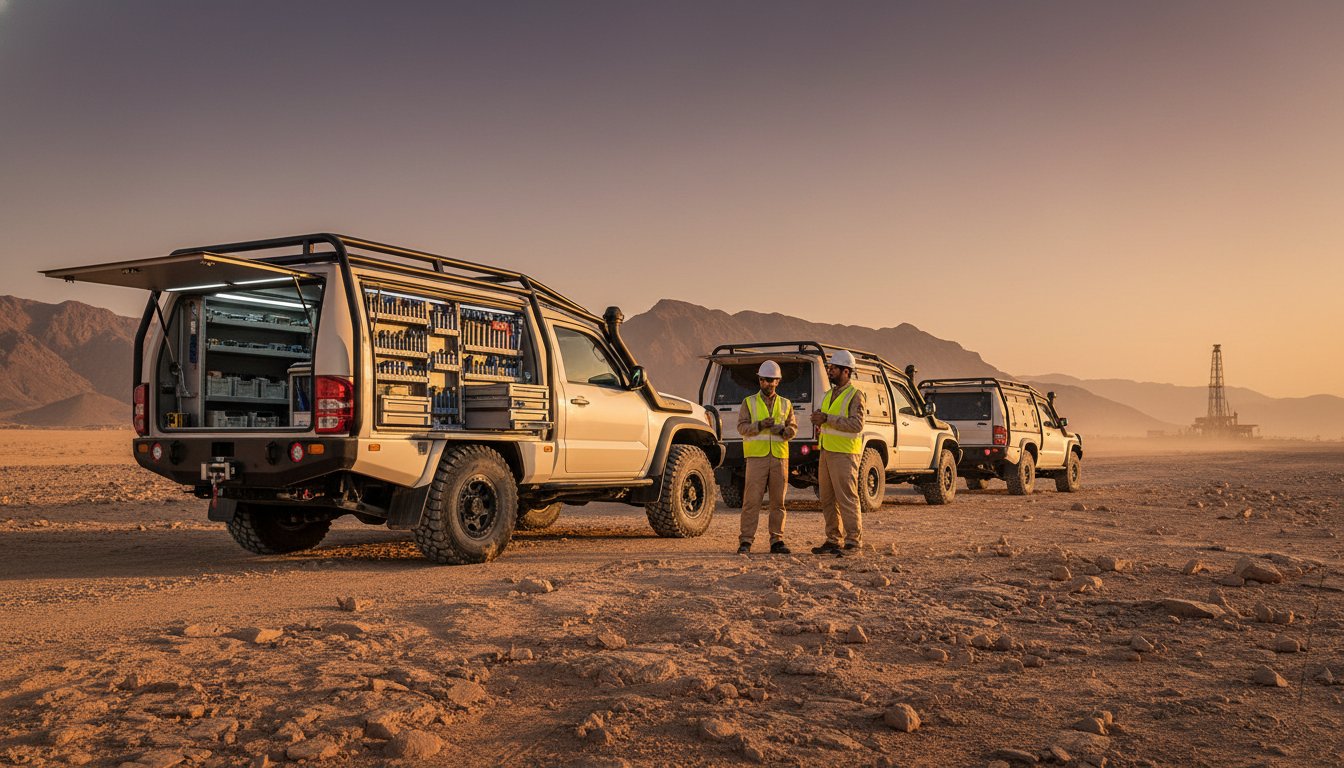
A standard factory vehicle is often the weakest link in a multi-billion dollar energy project. When desert temperatures soar in the Omani interior and abrasive dust penetrates every seal, standard equipment doesn't just degrade; it fails. You've likely seen the cost of downtime when a fleet lacks specialized vehicle conversion for the oil and gas sector, failing to meet Oman’s strict HSE site regulations or international safety standards. It's a logistical headache to source fabrication from one vendor and equipment integration from another, especially when mission-readiness is non-negotiable for remote operations.
Engineering mission-ready fleets is the only way to ensure your assets survive the rigors of the field while staying fully compliant with regional safety protocols. By focusing on structural integrity and rugged fabrication, you can secure a fleet that meets all Omani safety standards and operates reliably in high-heat environments. This article explores how custom metal work and technical precision create durable mobile workshops and crew carriers. We'll examine the specific modifications needed to maximize vehicle lifespan and ensure your operations remain productive in the harshest terrains on earth.
Key Takeaways
- Understand why structural integrity and mission-specific upfitting are more critical than simple fuel modifications for rugged oilfield environments.
- Identify the essential safety components, such as ROPS and spark arrestors, required to maintain compliance with strict international HSE regulations.
- Discover how specialized vehicle conversion for the oil and gas sector creates high-performance mobile workshops and crew carriers from proven off-road platforms.
- Learn the technical methods used to protect your fleet against extreme desert heat and high-salinity corrosion through advanced engineering and material selection.
- Recognize the value of localized fabrication in the UAE to ensure every modification meets rigorous GCC safety and durability standards.
The Role of Specialized Vehicle Conversions in Oil and Gas Operations
In the energy industry, a vehicle is a mobile tool rather than just a means of transport. While many discussions in the region focus on fuel efficiency, a true vehicle conversion for oil and gas sector operations involves intense structural reinforcement and mission-specific upfitting. It's the difference between a truck that fails in three months and one that operates for years. We focus on transforming standard platforms into rugged assets capable of navigating soft sand, rocky outcrops, and high-saline environments without compromise.
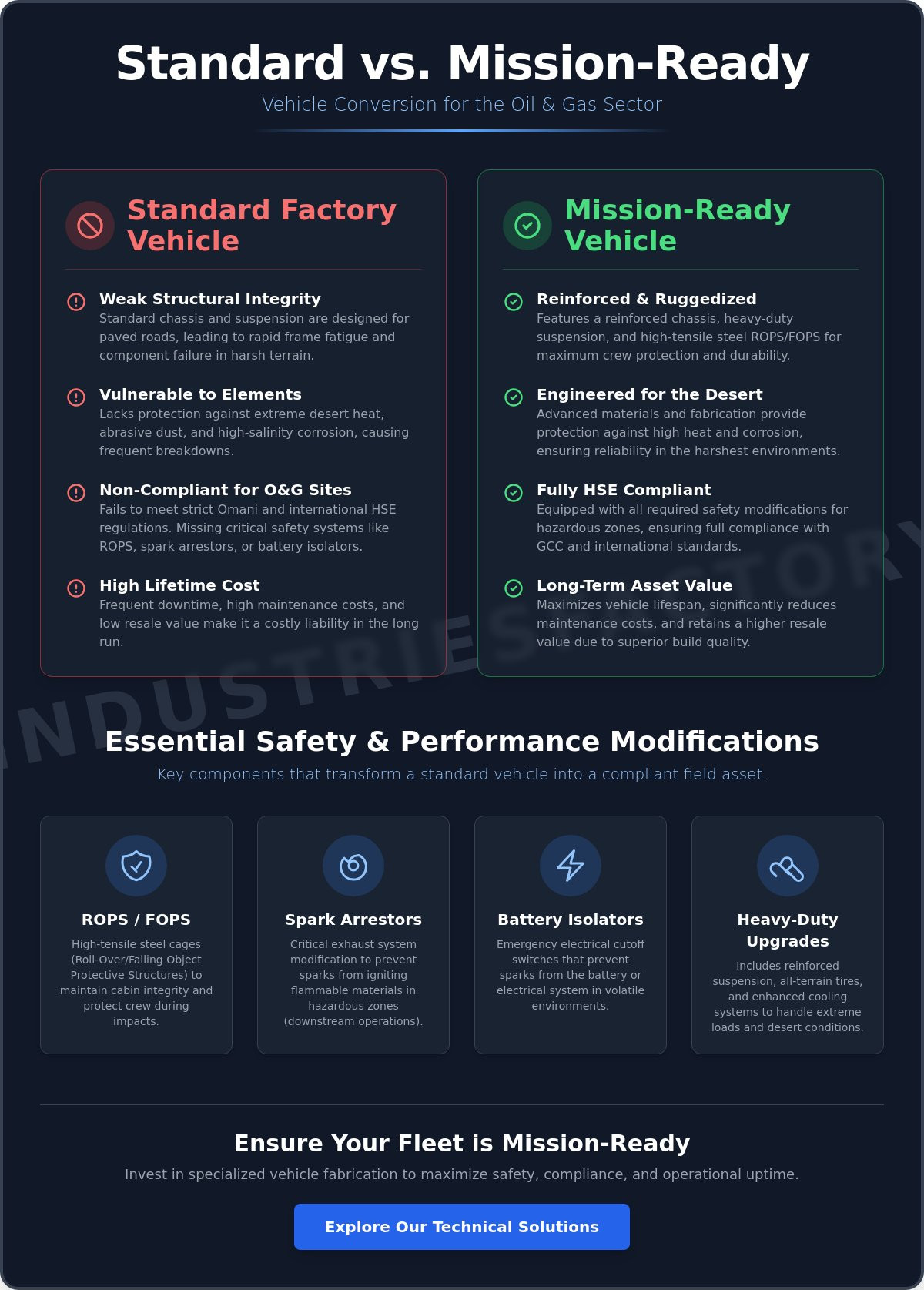
Reliable vehicle conversion for oil and gas sector projects must account for more than just basic transport. Unlike standard fuel conversions that focus on NGV or LPG for cost reduction, operational fabrication ensures the vehicle remains functional and safe in extreme terrain. Standard OEM vehicles are designed for paved roads and moderate climates. They lack the heavy-duty suspension and reinforced chassis required for upstream and downstream sites. Mission-ready engineering is essential to prevent the catastrophic fleet downtime that halts production and drives up operational costs.
To better understand the technical differences in specialized modifications, watch this helpful video:
Upstream vs. Downstream: Different Conversion Needs
Requirements shift based on where the vehicle operates. Upstream environments demand desert-proofing, heavy-duty suspension, and Roll-Over Protective Structures (ROPS) to protect crews in remote areas. Conversely, downstream operations prioritize safety in explosive atmospheres. This involves installing spark arrestors, battery isolators, and fire suppression systems. Modular design allows for rapid fleet adaptation, ensuring every unit complies with international vehicle regulations and site-specific safety protocols.
The Economic Impact of Proper Fleet Upfitting
Investing in professional fabrication pays off through asset longevity. Structural reinforcement significantly reduces long-term maintenance costs by preventing frame fatigue and premature component failure. Well-maintained, upfitted vehicles also retain higher resale value because the core structural integrity remains intact despite harsh conditions. Explore our full range of technical solutions on Our Services page to see how we build for durability and performance.
Essential Safety Modifications for Hazardous O&G Environments
Safety in the oilfield isn't a suggestion; it's a technical requirement. When executing a vehicle conversion for oil and gas sector fleets, the priority is protecting lives in high-risk zones. Standard vehicles lack the structural and electrical safeguards required to operate near volatile materials. Professional Essential Safety Modifications for Hazardous O&G Environments provide a critical layer of defense against mechanical failure and environmental hazards.
ROPS and FOPS: Structural Integrity Under Pressure
Roll-Over Protective Structures (ROPS) and Falling Object Protective Structures (FOPS) are the backbone of crew safety. We engineer internal and external cages using high-tensile steel to maintain the cabin's survival space during a rollover or impact. The choice between an internal or external cage depends on the vehicle's specific mission and site requirements. For those operating in even more extreme conditions, our Mine Resistant Vehicle Guide offers deeper insights into advanced ballistic and blast protection standards.
Hazardous Zone Compliance: Electrical and Exhaust Systems
Standard exhaust systems are a liability in gas-rich environments. We integrate spark arrestors to prevent incandescent carbon particles from escaping the tailpipe and causing an ignition event. Additionally, diesel engines require Chalwyn valves. These emergency air intake shut-off valves prevent engine runaway if gas is sucked into the intake. Every electrical modification we perform meets strict IP ratings to ensure dust and moisture don't compromise the system's integrity.
- Battery Isolators: Essential for cutting power during emergencies or maintenance.
- Automatic Fire Suppression: Systems that detect heat and deploy suppressant without operator intervention.
- High-Visibility Marking: Reflective tape and LED beacons ensure the vehicle is seen in low-light desert conditions.
Reliable fabrication ensures your fleet meets every site-specific safety protocol. If you need robust protection for your operations, consider exploring our specialized vehicle modification solutions to secure your mission-critical assets.
Mission-Specific Fabrication: From Crew Carriers to Mobile Workshops
Operational efficiency in the field depends on how well a vehicle serves its specific purpose. While structural safety provides the foundation, functional fabrication determines how effectively your team performs. A high-quality vehicle conversion for oil and gas sector requirements transforms a standard Toyota Land Cruiser or Hilux into a specialized asset. We focus on creating layouts that maximize storage and utility without compromising the vehicle's center of gravity or off-road capability. Whether you're transporting a technical crew or a full mobile repair suite, the engineering must be precise.
Mobile workshops are the lifeblood of remote site maintenance. We design these units with integrated power inverters, heavy-duty workbenches, and secure tool storage that stays silent even on corrugated desert tracks. For crew carriers, the challenge is balancing passenger capacity with occupant safety and climate control. In regions where temperatures exceed 50°C, cooling efficiency and ergonomic seating aren't luxuries; they're operational necessities that prevent heat fatigue and maintain productivity.
Custom Metal Canopies and Tool Management
Precision is key when building for the oilfield. Our laser-cut steel and aluminum canopies provide a weather-proof environment for sensitive equipment and expensive tools. We engineer ergonomic shelving and drawer systems that allow for rapid deployment in the field, ensuring every piece of gear has a reinforced, vibration-dampened home. You can learn more about our commitment to engineering excellence on our About Auto Industries Factory LLC page.
Ambulance and Emergency Response Units for Remote Sites
Remote extraction sites require immediate medical capabilities. We specialize in converting 4x4 chassis into rugged, site-ready clinics and rescue vehicles that can navigate terrain where standard ambulances would fail. These units feature specialized insulation and high-capacity HVAC systems to ensure medical equipment remains operational in extreme heat. For a detailed look at our medical upfitting, read our Ambulance Conversion Guide. This level of vehicle conversion for oil and gas sector applications ensures your HSE requirements are met with the highest standard of care.
- Integrated Inverters: Reliable power for heavy-duty diagnostic tools.
- Reinforced Roof Racks: Custom-fabricated systems for carrying oversized site equipment.
- Heavy-Duty Bumpers: Custom bull bars designed to protect the engine and cooling systems from impacts.
Engineering for the Desert: Durability and Material Standards
The desert environment destroys standard vehicles from the outside in. High-salinity air near Omani coastal extraction sites in Duqm or Salalah causes rapid corrosion on untreated metal, while abrasive sand strips paint and clogs moving parts. A professional vehicle conversion for oil and gas sector operations must prioritize physical longevity through industrial-grade coatings and epoxy-based painting. Precision is non-negotiable. We utilize CNC machining and laser cutting to ensure every bracket and reinforcement fits with absolute accuracy, preventing the vibration-induced fatigue that plagues inferior builds on undulating Omani terrain.
Suspension tuning is equally critical for mission-readiness. Standard factory setups aren't designed for the constant heavy payloads of mobile workshops or the punishing impact of off-road site access in the Omani interior. We engineer heavy-duty suspension systems that maintain vehicle stability and ground clearance, even when fully loaded with tools and safety equipment. This structural focus ensures that your fleet remains an asset rather than a maintenance liability.
Material Choice: Steel vs. Aluminum in O&G Fabrication
Material selection is a balance of raw strength and weight management. We use heavy-duty steel for structural components like internal rollover cages and external protection where maximum impact resistance is required. For components like canopies and internal shelving, aluminum provides significant weight savings, improving fuel efficiency and the vehicle's center of gravity. Read our Custom Bull Bars and Bumpers guide for a technical breakdown of how we select materials for extreme protection. Every weld is executed through professional, CNC-controlled processes to guarantee integrity under stress.
Desert-Proofing: Filtration and Cooling Upgrades
Heat and dust are the primary causes of engine failure in the field. Standard cooling systems often struggle during 50°C+ heat cycles in Oman, especially when vehicles are idling for long periods on-site. We install upgraded radiators with reinforced mounts and heavy-duty silicone hoses to manage increased thermal pressure. To protect the engine from fine silica, dual-stage air filtration systems are mandatory. Additionally, sensitive fleet electronics are housed in custom-fabricated, cooled enclosures to prevent thermal shutdown during peak daylight hours.
If you need a fleet built to withstand the most aggressive environments in Oman, contact Auto Industries Factory LLC for expert vehicle conversion for oil and gas sector fleets tailored to your specific operational requirements. Explore our specialized fabrication services to see how we harden vehicles for the field.
Partnering with a UAE Fabrication Specialist for Fleet Compliance
Choosing a local partner in the UAE isn't just about proximity; it's about absolute control over the engineering process. Managing a vehicle conversion for oil and gas sector project requires a single source of accountability to meet the industry's aggressive production schedules. By centralizing design, fabrication, and finishing in our Ajman facility, we eliminate the logistical delays and quality gaps associated with multi-vendor outsourcing. This integrated approach ensures that every weld and structural reinforcement aligns with the mission-critical standards your operations demand.
Efficiency in the energy sector is measured by uptime. We manage the entire lifecycle of the conversion, from initial 3D design to final industrial painting. This end-to-end oversight allows us to meet urgent timelines for large-scale fleet deployments without compromising on technical precision. When your vehicles leave our facility, they're ready for immediate deployment into the most demanding environments in the region.
In-House Capability: From Laser Cutting to Final Paint
Our facility utilizes advanced CNC machining and laser cutting to produce repeatable, high-quality components for large fleet orders. This technical precision ensures that every bull bar, canopy, and internal shelving unit fits perfectly, reducing assembly time and preventing mechanical rattles in the field. We handle all custom painting in-house using specialized coatings that provide the protective longevity needed to survive high-salinity coastal sites. This integrated service significantly reduces lead times compared to workshops that rely on third-party fabricators.
Regulatory Compliance and Certification in the UAE
Navigating the legalities of modified vehicles is complex. We ensure all conversions comply with local modification laws, ensuring they remain fully road-legal for transport between sites. Our ROPS and FOPS certifications are engineered to meet the specific requirements of major regional operators, providing the documentation needed to clear site-specific safety audits. We don't just build for durability; we build for compliance.
- Repeatable Quality: CNC-controlled processes ensure every vehicle in your fleet is identical in strength and layout.
- Certified Safety: Engineering standards that meet or exceed international O&G operator requirements.
- Rapid Deployment: Streamlined production cycles in Ajman to meet tight project deadlines.
Secure the reliability of your mission-critical assets today. Consult with our engineering team for your O&G fleet needs and discover how specialized fabrication ensures your fleet remains compliant and operational.
Secure Your Fleet for the Future of Energy
Building a fleet that survives the oilfield requires more than off-the-shelf upgrades. It demands engineering precision that prioritizes structural safety and mission-ready utility. From integrating ROPS and FOPS certified structures to deploying mobile workshops with CNC-machined components, the right vehicle conversion for oil and gas sector operations minimizes downtime and protects your most valuable assets. By choosing a UAE-based specialist, you ensure your vehicles are built to withstand 50°C temperatures while remaining fully compliant with regional HSE standards.
Auto Industries Factory brings master-level craftsmanship to every project. We utilize in-house laser cutting and CNC machining to deliver repeatable, high-performance results for operators across Abu Dhabi, Dubai, and the Northern Emirates. We are specialists in ROPS and FOPS fabrication, ensuring your crew carriers and service units meet the highest protection standards in the industry. Whether you need specialized metal canopies or rugged emergency response units, our team is ready to engineer your solution.
Get a Professional Quote for Your Oil and Gas Vehicle Conversion
Your mission-critical operations deserve vehicles that are as resilient as the teams driving them. Let's build a fleet that performs without compromise in the world's most demanding environments.
Frequently Asked Questions
What are the most common vehicle modifications for the oil and gas sector?
Common modifications include Roll-Over Protective Structures, spark arrestors for hazardous zones, and heavy-duty suspension upgrades. We also fabricate custom metal canopies and tool management systems to transform trucks into functional mobile workshops. Professional upfitting often includes battery isolators and automatic fire suppression systems for hazardous zones. These modifications ensure that a vehicle conversion for oil and gas sector operations meets the specific mechanical and safety requirements of desert sites.
Do O&G vehicle conversions need to be road-legal in the UAE?
Yes, all conversions must comply with UAE vehicle modification laws and ESMA standards to remain road-legal. While site-specific safety is the priority, vehicles often need to travel between remote extraction zones and urban centers. We ensure that structural reinforcements and lighting upgrades meet local regulatory standards to avoid fines and registration issues during annual inspections. Our engineering team navigates these technical requirements to ensure every unit is ready for both the field and the highway.
Why is ROPS (Roll-Over Protective Structure) mandatory for oilfield vehicles?
ROPS is mandatory because it provides a survival space for occupants during a rollover event, which is a high risk in soft sand and uneven oilfield terrain. Major operators require these structures to mitigate the danger of roof crush and serious injury. We engineer these cages using high-tensile steel to maintain cabin integrity under extreme vertical and lateral loads. It's a critical safety component that ensures the vehicle protects its most valuable cargo: the crew.
How long does a typical specialized vehicle conversion take?
The timeline for a vehicle conversion for oil and gas sector projects varies based on the complexity of the required upfitting. A basic safety package might be completed quickly, while a full mobile workshop conversion involving custom metal cutting and electrical integration requires more time. We focus on efficient production cycles in our Ajman facility to meet the urgent schedules of energy sector clients. Our integrated fabrication process helps minimize lead times for large fleet orders.
Can you convert existing fleet vehicles, or do you only work on new ones?
We work on both brand-new chassis and existing fleet vehicles that require safety or functional upgrades. Converting an existing fleet can extend the operational life of your assets by adding necessary structural reinforcements and modern safety equipment. However, the vehicle's current mechanical condition must be assessed to ensure it can support the additional weight of specialized fabrication. This approach allows companies to modernize their safety standards without purchasing an entirely new fleet.
What is the difference between internal and external rollover cages?
Internal rollover cages are installed inside the cabin and offer a more streamlined appearance while protecting the occupant survival space. External cages are mounted over the vehicle body and provide the added benefit of protecting the roof and pillars from physical damage during a roll. The choice depends on the specific site safety protocols and the level of body protection your operations require. External cages are often preferred in environments where falling objects or extreme rollovers are likely.
How do you ensure vehicle electronics survive extreme desert heat?
We protect sensitive electronics by housing them in custom-fabricated, cooled enclosures and using heat-reflective internal insulation. High-capacity HVAC systems and upgraded engine cooling also play a role in maintaining a stable operating temperature for on-board computers and diagnostic tools. These measures prevent thermal shutdown and component failure when ambient temperatures exceed 50°C in the desert sun. Reliable heat management is essential for maintaining connectivity and data integrity in remote areas.
Are custom bull bars and bumpers necessary for O&G site vehicles?
Custom bull bars and bumpers are essential for protecting the radiator and engine components from frontal impacts and wildlife in remote areas. A single impact on an unprotected front end can lead to catastrophic coolant loss and engine failure in the deep desert. Our heavy-duty bumpers are designed to withstand these forces while providing mounting points for recovery winches and high-visibility lighting. They're a practical investment that prevents expensive mechanical damage and operational downtime.


