Could an uncertified weld or an overlooked safety plate cost your business AED 50,000 in fines? In the high-stakes environment of desert tourism, a professional safari vehicle conversion UAE is a mission-critical engineering task where failure is not an option. You know that standard 4x4s aren't built for the relentless thermal stress and structural impact of commercial off-roading. Poorly fabricated vehicles lead to high downtime and RTA compliance headaches that eat into your profit margins. We promise to provide the technical roadmap you need to build a durable, high-performance fleet that meets the 2026 Euro 6b standards and mandatory safety mandates. This guide analyzes the essential fabrication processes, high-tensile steel roll cage requirements, and specialized cooling solutions required to eliminate mechanical failure. You'll learn how to achieve full regulatory compliance and reduce long-term maintenance costs while delivering the 360-degree views your guests expect. From structural integrity to heat management, we cover the engineering precision required for desert excellence.
Key Takeaways
- Identify the critical engineering failures of factory SUVs and how to prevent them through structural reimagining.
- Explore the technical fabrication steps, including laser-cut chassis reinforcement, that define a high-performance safari vehicle conversion UAE.
- Evaluate the operational benefits of open-sided versus enclosed builds to optimize passenger experience and comfort.
- Navigate the 2026 RTA and ESMA compliance requirements to secure road-legal status for modified commercial fleets.
- Implement custom fabrication solutions that reduce fleet downtime and simplify long-term part replacement.
Defining the Safari Vehicle Conversion: Why UAE Standards Demand Professional Engineering
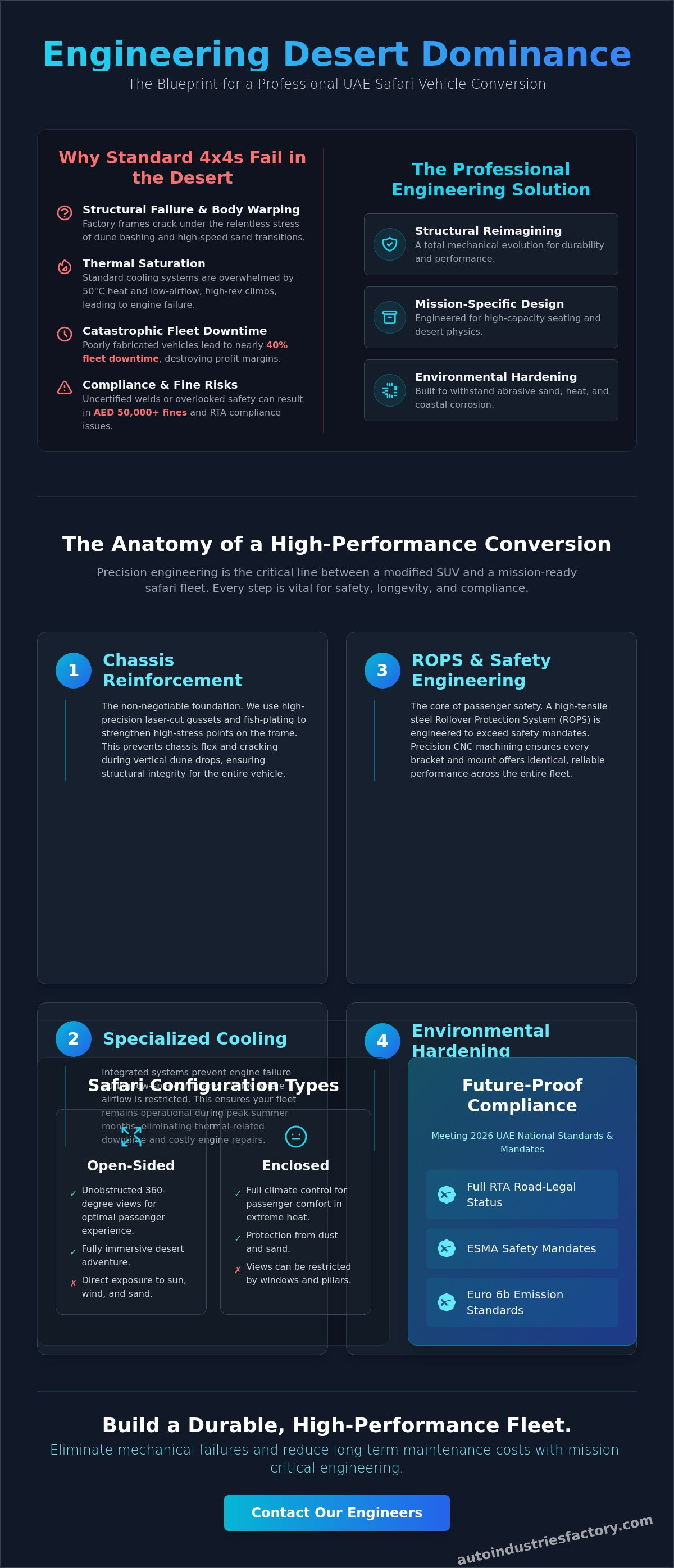
A professional safari vehicle conversion UAE represents a total mechanical evolution of the standard 4x4 chassis. It's not a simple accessory upgrade; it's a structural reimagining designed to handle the specific physics of desert tourism. Standard factory SUVs aren't built for the relentless torque required for dune bashing or the extreme structural flex caused by high-speed sand transitions. Industry data reveals that poor fabrication leads to nearly 40% fleet downtime, which is a catastrophic margin for tour operators. Engineering excellence starts with the understanding that a commercial off-road vehicle must maintain its integrity under loads that would snap a standard frame.
To better understand this engineering transformation, watch this detailed fabrication process:
Factory SUVs often fail when subjected to 50°C heat and the high-torque demands of deep sand. At Auto Industries Factory LLC, we focus on "Rugged Reliability" as the core of every build. This isn't a vague promise; it's a technical standard achieved through reinforced subframes and specialized cooling solutions. Without this level of precision, standard vehicles suffer from thermal saturation and body warping. We build mission-specific vehicles for the UAE tourism sector that prioritize passenger safety and structural longevity over all else.
The Difference Between Commercial and Private Safari Specs
Commercial tour trucks require significantly different engineering than private expedition vehicles. High-capacity seating configurations drastically alter a vehicle's balance and center of gravity. We engineer these conversions to ensure stability during steep descents and sharp dune crests. Specialized cooling systems are integrated to prevent engine failure during low-speed, high-rev climbs where airflow is naturally restricted. This ensures your fleet remains operational during the peak summer months when lesser builds are forced into the workshop.
Environmental Challenges for UAE Safari Fleets
The UAE's desert environment presents unique mechanical challenges. Fine sand acts as a permanent abrasive, wearing down seals and clogging intakes if the conversion doesn't include advanced filtration. For coastal operations, salt-laden air and high humidity create a high-corrosion environment that destroys untreated metal. We use industrial-grade treatments to protect every weld and panel from these elements. You can find more details on these specialized builds in our Ultimate Guide to Safari Vehicle Conversions. Our engineering approach ensures your investment survives the harshest conditions on the planet.
The Technical Fabrication Process: From Chassis Reinforcement to ROPS
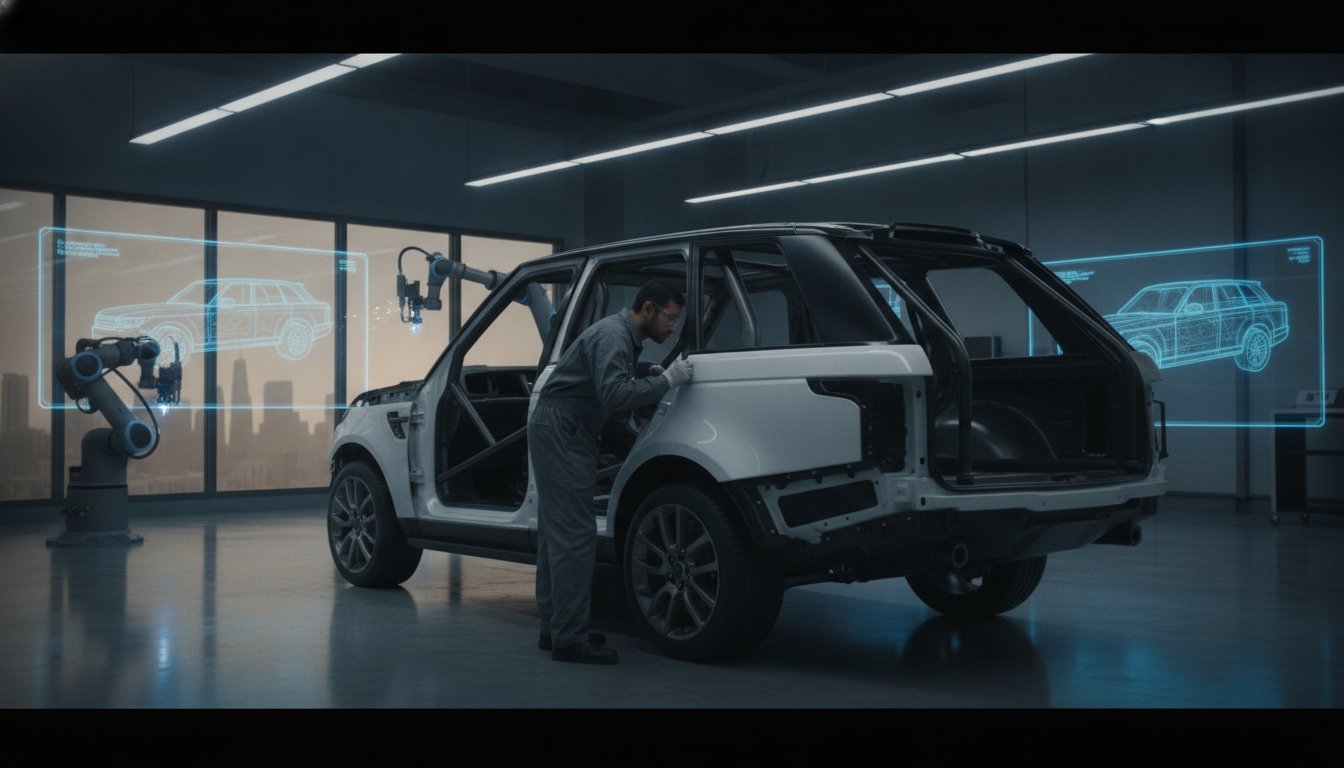
Technical capability is the dividing line between a modified SUV and a mission-ready safari fleet. Every safari vehicle conversion UAE we execute begins with high-precision in-house laser cutting and CNC machining. This ensures that every bracket, mount, and reinforcement plate is identical, eliminating the guesswork associated with manual fabrication. In an industry where a millimeter's deviation can lead to mechanical failure, our reliance on automated precision ensures that every vehicle in your fleet performs with the same level of reliability.
Chassis reinforcement is the non-negotiable first step in a professional build. Before adding passenger capacity or aesthetic features, we address the foundation. We utilize laser-cut gussets and fish-plating to strengthen high-stress points where the frame typically flexes during vertical dune drops. By reinforcing these critical junctions, we prevent the frame cracking and body-mount failure that plague standard vehicles after just one season of heavy use. This structural integrity allows the suspension to do its job without the chassis absorbing the impact.
Safety engineering centers on the Rollover Protection System (ROPS). We design these internal cages to meet or exceed international ROPS safety standards, using high-tensile steel tubing. These structures are integrated directly into the reinforced chassis, creating a survival cell that protects passengers without compromising the vehicle’s center of gravity. Custom-fabricated metal canopies and body panels then replace standard components to reduce weight while increasing rigidity. We often use CNC-bent aluminum for roofs to keep top-heavy mass to a minimum, which improves vehicle stability on steep side-slopes.
Advanced Metalwork and Welding Standards
We utilize a strategic mix of high-grade carbon steel for structural integrity and lightweight aluminum for non-load-bearing panels. Our master welders employ specialized TIG and MIG techniques specifically calibrated for off-road stress. This prevents the structural fractures common in mass-produced aftermarket parts that can't handle the constant vibration of corrugated desert tracks. This same level of precision is applied to our Custom Bull Bars and Bumpers, ensuring front-end protection that absorbs impact rather than transferring it to the engine block.
In-House Design and Prototyping
Our engineering team uses CAD software to model every modification, allowing us to calculate precise weight distribution before a single spark is struck. By keeping the entire fabrication process under one roof, we maintain total quality control over every weld and cut. CNC machining ensures 100% part interchangeability, which allows fleet operators to replace damaged components with zero-tolerance fitment. If you're looking to upgrade your fleet, you can explore our full range of specialized conversion services to see these engineering standards in action.
Evaluating Safari Configuration Types: Open-Sided vs. Enclosed Conversions
Specialized configurations also extend to private and military applications, such as hunting conversions. These builds prioritize sightlines and weapon stability, often featuring elevated seating and custom storage solutions for equipment. We engineer these mission-specific vehicles with reinforced flooring and specialized mounting points that don't compromise the chassis's flex. Choosing the right setup requires a deep analysis of your guest expectations and the specific dunes you intend to traverse. A heavy, enclosed vehicle might offer comfort, but it requires more power to crest steep dunes compared to a stripped-back, open-sided variant.
The Open-Sided Advantage for UAE Tourism
When we remove side panels to create a panoramic view, we compensate for the lost structural rigidity by integrating a heavy-duty internal roll cage. This cage isn't just a safety feature; it's a structural member that prevents chassis twist during high-torque climbs. These frames are engineered to double as aesthetic elements, often finished with industrial coatings to withstand sand abrasion. To handle sudden weather shifts or dust storms, we integrate roll-down canvas or clear PVC panels. These solutions provide immediate protection without permanently sacrificing the open-air experience that defines a premium desert safari.
Platform Selection: Land Cruiser vs. Hilux
The choice between the Toyota Land Cruiser and the Hilux defines the long-term profitability of your fleet. The Land Cruiser, specifically the LC70 series, remains the gold standard for rugged desert builds. It offers a level of prestige and comfort that high-capacity tour trucks need, coupled with a chassis that handles heavy modifications without protest. The Hilux serves as the utility champion. It's an excellent choice for large-scale fleet conversions where durability and lower operational costs are the primary drivers. While the Land Cruiser excels in passenger comfort, the Hilux provides superior payload flexibility for support vehicles and expedition-style setups. Both platforms offer significant modification potential, but your choice should align with your brand's market positioning and the technical demands of your specific desert routes. If you are looking to acquire these vehicles, Carwa - UAE Online Car Auctions & Marketplace is an ideal platform for finding high-quality units ready for conversion.
Compliance and Safety: Meeting UAE National Standards for Modified Vehicles
Engineering a high-performance safari vehicle conversion UAE is only half the battle; ensuring it's road-legal is the final, critical hurdle. In 2026, the UAE has implemented stricter enforcement through AI-powered cameras and automated noise radars. Major unapproved modifications now carry fines of up to AED 50,000. To protect your investment and avoid vehicle impoundment, you must follow a rigorous 5-step compliance process. This starts with choosing an ESMA-certified and RTA-approved workshop, followed by submitting a pre-approval request before any metal is cut. Once the technical fabrication is complete, the vehicle must undergo a technical inspection to verify structural integrity before finally updating the registration, or Mulkiya, to reflect the changes.
Professional certification and detailed engineering reports are the backbone of this process. Without a factory that understands national vehicle modification guidelines, your fleet risks failing the mandatory annual inspections for off-road commercial use. These reports must document chassis reinforcement, roll cage specifications, and weight distribution changes. Furthermore, all new models imported as of January 1, 2026, must comply with Euro 6b emission standards, making professional engine calibration essential. Working with an expert manufacturer ensures these technicalities are handled during the design phase, not as an afterthought.
Navigating the RTA Approval Process
The RTA approval process requires meticulous documentation of every structural change. Professional fabrication shops handle this by providing CAD drawings and material strength certificates for chassis inspections. This transparency speeds up the approval timeline and reduces the risk of costly re-work. In modified vehicles, all seating and seatbelt anchor points must meet high-tensile strength specifications and pass RTA-mandated stability tests to guarantee passenger protection during high-torque off-road operations. We ensure every bolt and bracket meets these rigorous national standards before the vehicle ever leaves our floor.
Safety Systems Integration
UAE law mandates specific safety equipment for all off-road tour operators, including a certified first-aid kit, a fire extinguisher, and a GPS tracking device. We go beyond these basics by integrating advanced fire suppression systems and clearly marked emergency exits into our modified safari trucks. High-visibility lighting and communication arrays are also essential for maintaining fleet contact in remote desert zones. This level of safety engineering shares many parallels with our Police Vehicle Modifications, where mission-critical reliability is the only standard. If you're ready to build a compliant, high-safety fleet, contact our engineering team to start your safari vehicle conversion UAE today.
Maximising Fleet Longevity through Custom Fabrication Solutions
Securing a high-performance safari vehicle conversion UAE is an investment that should pay dividends over years, not just months. Custom fabrication is the primary tool for reducing long-term maintenance costs. When you move away from generic aftermarket parts and utilize bespoke components engineered for specific torque loads, you eliminate the frequent part failures that ground fleets. We design our structural components to handle the unique vibration frequencies of desert corrugated tracks, ensuring that the vehicle remains rigid throughout its service life. This focus on durability means your operational budget is spent on expansion rather than constant mechanical repairs.
Modular interior designs further enhance fleet efficiency by allowing for rapid component replacement and easy cleaning. By utilizing precision-cut mounts and panels, we ensure that damaged interior elements can be swapped out in the field without specialized tools. This modularity is paired with industrial-grade protective coatings and professional painting. These chemical-resistant finishes are specifically formulated to withstand the intense UV exposure and abrasive sandstorms common in the UAE. By protecting the base metal at a molecular level, we prevent the structural rust and sun damage that typically leads to the premature retirement of tour vehicles.
Custom Accessory Integration
Every accessory we manufacture, from heavy-duty roof racks to custom rear bumpers and side steps, is built to integrate seamlessly with the vehicle's reinforced frame. Unlike universal-fit accessories, our bespoke fabrications don't require additional drilling that can weaken the chassis or create points for corrosion. These integrated solutions improve vehicle utility while maintaining the aerodynamic profile and center of gravity established during the initial build. Our expertise in high-stakes metalwork is also evident in our Ambulance Conversions, where we apply the same rigorous engineering standards to life-saving medical transport.
The Auto Industries Factory LLC Advantage
Auto Industries Factory LLC operates as a full-scale engineering partner, offering in-house design, laser cutting, CNC machining, and professional painting under one roof. This centralized control ensures that every safari vehicle conversion UAE we deliver meets our strict internal quality benchmarks. We invite you to visit our facility for a technical consultation to see our master craftsmen and advanced machinery in action. You can explore our complete range of specialized modifications on our services page to determine the best configuration for your fleet lifecycle management goals.
Building Your Mission-Ready Safari Fleet
Mastering the desert requires a shift from standard SUV modifications to precision engineering. You've seen that a successful safari vehicle conversion UAE demands a focus on chassis reinforcement, thermal management, and strict RTA compliance. By utilizing our in-house CNC and Laser Cutting technology, we eliminate the structural weaknesses that lead to costly fleet downtime. We are specialists in the Toyota Land Cruiser and Hilux platforms, ensuring your vehicles are built on the most reliable foundations available in the region. This engineering-first approach protects your passengers and your profit margins.
Our team provides complete RTA compliance support, navigating the 2026 regulatory landscape so your business stays operational and avoids heavy fines. From high-tensile internal roll cages to modular, easy-to-maintain interiors, every component is designed for maximum longevity. Don't leave your mission-critical operations to chance with uncertified workshops. Consult our engineers for your custom safari vehicle conversion and secure the future of your desert expeditions. Your fleet's peak performance starts on our factory floor.
Frequently Asked Questions
Is an open-sided safari vehicle legal for road use in the UAE?
An open-sided safari vehicle is legal for road use in the UAE provided it is equipped with an RTA-mandated, high-tensile steel internal roll cage. This modification must pass a technical inspection to ensure the vehicle remains stable and structurally sound after the side panels are removed. Commercial operators must also ensure these vehicles pass a specific annual inspection designed for off-road tour use.
Which vehicle is best for a safari conversion: Toyota Land Cruiser or Nissan Patrol?
The Toyota Land Cruiser, especially the 70 series, is the preferred platform for a safari vehicle conversion UAE due to its heavy-duty chassis and mechanical reliability under extreme heat. While the Nissan Patrol is a capable off-roader, the Land Cruiser’s structural simplicity and the vast availability of specialized reinforcement components make it the industry standard for high-capacity commercial fleets.
How long does a professional safari vehicle conversion take?
A professional conversion typically takes between four to eight weeks, depending on the specific configuration and the extent of the custom fabrication required. This timeline includes the engineering design phase, chassis reinforcement, and the installation of safety systems. We prioritize precision over speed to ensure every weld meets national safety standards before the vehicle enters the registration process.
What is a Rollover Protection System (ROPS) and why is it mandatory?
A Rollover Protection System is an internal cage made of high-tensile steel designed to prevent the vehicle’s roof from collapsing during an overturn. The RTA mandates ROPS for all commercial safari vehicles to protect passengers during high-torque dune bashing. These systems are engineered to create a survival cell that maintains its structural integrity even under the weight of a fully loaded vehicle.
Can you convert an existing 4x4, or do I need to buy a new one?
We can convert both existing 4x4s and brand-new vehicles, provided the chassis of the used vehicle is structurally sound and free from fatigue. Every existing vehicle undergoes a rigorous frame inspection before we begin the conversion process. While new vehicles offer the longest operational lifecycle, a well-maintained existing vehicle can be a cost-effective base for a professional safari build.
What maintenance is required for a modified safari vehicle in desert conditions?
Modified vehicles require frequent air filter cleaning and cooling system flushes to manage the abrasive sand and 50°C temperatures of the UAE desert. You should also conduct regular inspections of the suspension mounts and chassis reinforcement points to identify any signs of stress fatigue. Lubricating custom-fabricated components like door hinges and canopy latches is essential to prevent wear from sand ingress.
Does a safari conversion affect the vehicle’s original manufacturer warranty?
A safari conversion will typically void the manufacturer’s warranty on the chassis, suspension, and any modified mechanical systems. It’s important to discuss these changes with your dealer and notify your insurance provider to ensure your coverage remains valid. Most fleet operators rely on our specialized engineering support to manage the maintenance and reliability of their converted assets.
Are custom bull bars and bumpers required for RTA compliance?
Custom bull bars and bumpers aren't mandatory for RTA compliance, but they are essential for protecting the vehicle’s cooling system during off-road expeditions. If installed, these components must be ESMA-certified and designed without sharp edges to meet safety regulations. These fabrications serve as a critical first line of defense against impact while maintaining the vehicle’s approach and departure angles.


