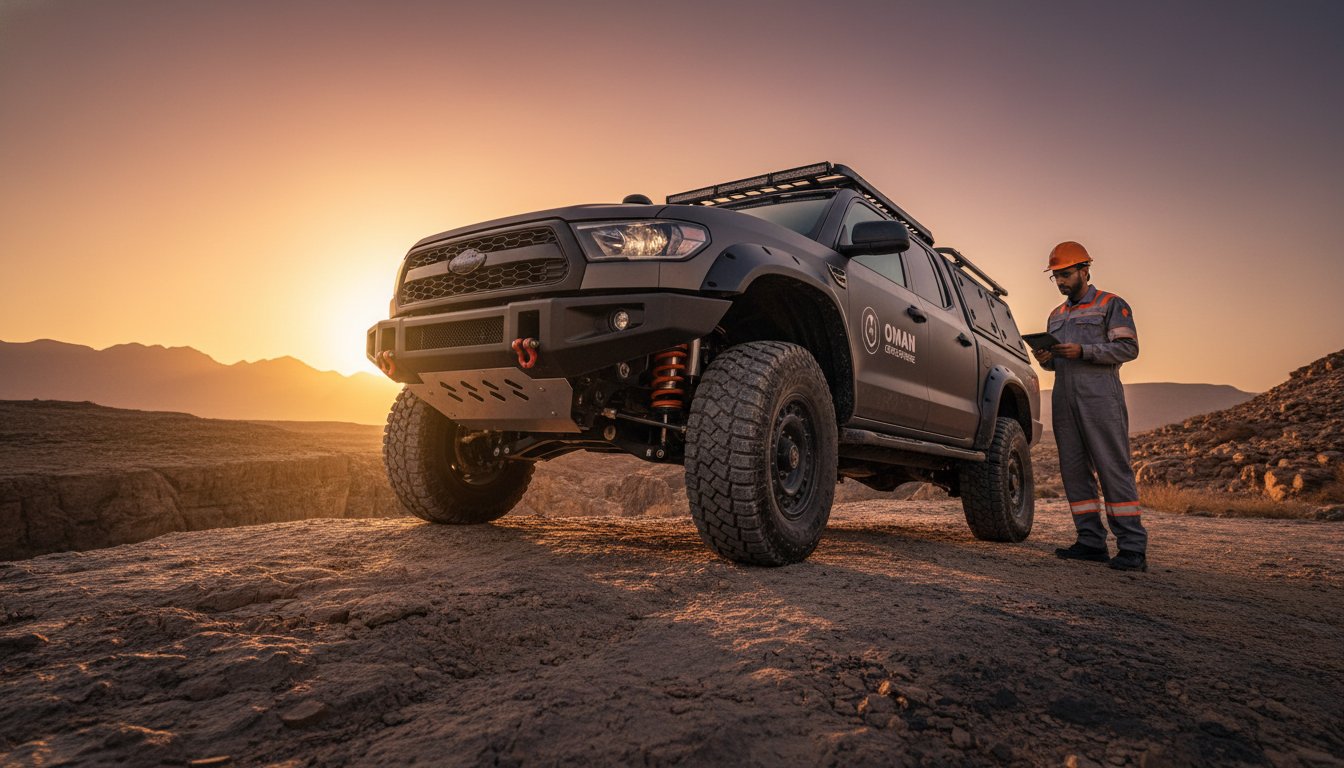
A standard truck chassis is a structural liability when it's tasked with carrying life-saving medical gear or tactical equipment through a desert wash. You've likely seen the warning signs: the rear end sags under the weight of a box type ambulance conversion, or the steering feels loose and unpredictable on punishing off-road terrain. When your mission depends on precision, relying on factory parts is a risk that compromises both safety and vehicle longevity. Professional heavy duty suspension upgrades for trucks are the only way to ensure your fleet remains stable, safe, and durable in the harshest environments on earth.
In this 2026 engineering guide, you'll discover how specialized suspension engineering transforms standard vehicles into high-performance, mission-ready assets for the most demanding industries. We'll provide a technical breakdown of the latest standards for load-carrying capacity and enhanced vehicle stability. We will also preview the specific components, from reinforced leaf springs to advanced air systems, that keep your specialized conversions operational long after stock suspension has failed. This is about building a foundation that doesn't just survive the job, but masters it through superior craftsmanship.
Key Takeaways
- Learn why professional heavy duty suspension upgrades for trucks are required to eliminate vehicle sagging and ensure lateral stability in high-roof ambulance conversions.
- Understand the technical advantages of mono-tube and remote reservoir shocks over standard twin-tube systems for continuous, mission-critical operations.
- Identify application-specific modifications for Toyota and GMC platforms, balancing ground clearance for safari use with high-load capacity for tactical vehicles.
- Discover how custom-fabricated brackets and CNC-machined mounts provide a superior fit that generic, off-the-shelf kits cannot match.
- Gain insights into matching spring rates to specific vehicle weights to prevent premature wear and ensure long-term durability in harsh environments.
What are Heavy Duty Suspension Upgrades for Trucks?
Heavy duty suspension upgrades for trucks aren't just about adding height; they're about structural integrity and mission reliability. While standard vehicle suspension systems focus on comfort for daily commuters, a heavy-duty system is a reinforced solution engineered for constant high-load applications. It's the critical link between vehicle load and terrain stability. Unlike standard aftermarket lift kits that often prioritize aesthetics or occasional off-roading, these engineered systems utilize high-capacity leaf springs, reinforced shocks, and heavy-duty bushings to handle the brutal demands of specialized industries.
To better understand how these systems support extreme weight and improve performance, watch this technical overview:
Why Stock Suspensions Fail Under Mission Loads
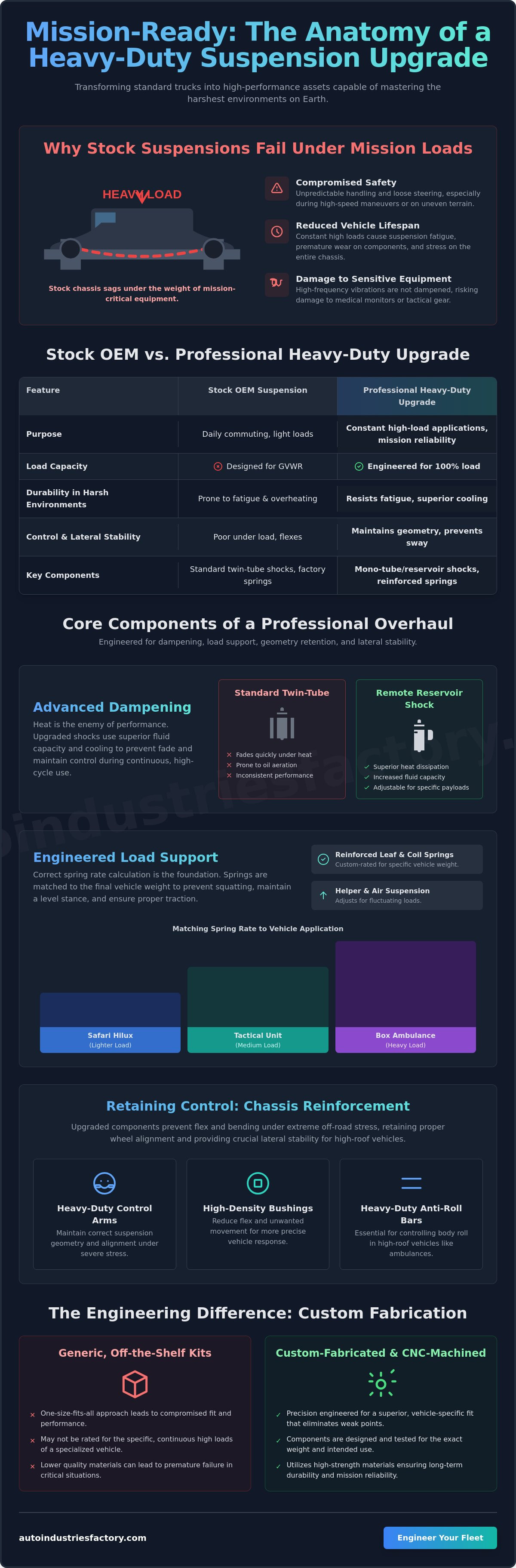
OEM components are designed for a specific Gross Vehicle Weight Rating (GVWR) that assumes a mostly empty bed. When you add armored plating or a full medical suite to a Toyota or GMC chassis, you're operating at the limit 100% of the time. This leads to suspension fatigue. Over time, leaf springs lose their tension and shocks overheat. Once the metal fatigues, the vehicle's handling becomes unpredictable. This doesn't just affect comfort; it shortens the lifespan of the entire chassis and compromises safety during high-speed maneuvers.
The Role of Vibration Dampening in Specialized Units
Precision is paramount in a professional ambulance conversion. Standard shocks fail to filter out the high-frequency vibrations that can damage sensitive medical monitors or disrupt a paramedic's work. Upgraded suspension systems use advanced valving to ensure a smooth ride quality. This protection extends to tactical personnel. They need to arrive at a scene ready for action, not fatigued by a punishing ride through rough terrain. By controlling every bounce and sway, professional engineering protects both the equipment and the people inside.
Core Components of a Professional Suspension Overhaul
Engineering a vehicle for industrial service requires moving beyond aesthetic lift kits to a complete mechanical overhaul. Professional heavy duty suspension upgrades for trucks focus on four primary pillars: dampening, load support, geometry retention, and lateral stability. While standard trucks use twin-tube shocks, mission-ready conversions utilize mono-tube or remote reservoir systems to prevent oil aeration during high-cycle usage. These components ensure the vehicle remains controllable even when fully loaded on unpaved roads.
Shocks and Dampers for Extreme Environments
Heat is the primary enemy of suspension performance in desert or safari conditions. Standard shocks fade quickly under constant articulation, losing their ability to dampen movement. Remote reservoir shocks solve this by increasing fluid capacity and surface area for cooling. For fleets operating in varied conditions, adjustable valving allows engineers to fine-tune the dampening force based on the specific payload of the unit.
Reinforcing the Chassis for Heavy Payloads
Correct spring rate calculation is the first step in successful specialized vehicle conversions. A Toyota Hilux configured for safari requires a vastly different coil rate than a GMC Sierra box-type ambulance. We utilize reinforced leaf and coil springs that are specifically matched to the final curb weight of the modified vehicle. In cases where loads fluctuate, helper springs or air suspension systems provide the necessary adjustability to maintain a level stance and prevent squatting that can compromise front-wheel traction.
Retaining proper wheel alignment under extreme off-road stress requires upgraded control arms and high-density bushings. Factory components often flex or bend when subjected to the lateral forces of a heavy tactical unit. Additionally, heavy-duty anti-roll bars are essential for high-roofed vehicles. By increasing the diameter of these sway bars, we significantly reduce body roll, which is vital for the safety of patients and personnel during emergency maneuvers. These principles are fundamental to modern heavy truck suspension design.
If you're managing a fleet that requires extreme reliability, you can view our full range of modification solutions to see how we integrate these components into mission-ready builds.
Application-Specific Upgrades: From Safari to Tactical
Heavy duty suspension upgrades for trucks must be tailored to the specific mission profile of the vehicle. A generic "one size fits all" approach leads to mechanical failure in the field. For instance, a safari vehicle conversion requires vastly different geometry and articulation than a tactical unit designed for high-threat urban security. While safari builds on Toyota Land Cruiser and Hilux platforms focus on ground clearance and axle travel to navigate deep ruts, tactical vehicles prioritize the management of extreme static weight.
Handling the Weight of Ballistic Protection
Integrating car armouring fundamentally alters a vehicle's center of gravity and overall mass. Adding ballistic steel and thick glass can increase the curb weight by over 1,000kg, which places immense strain on the factory chassis. For Armoured Personnel Carriers (APCs) and police units, we implement heavy-duty coil-overs and reinforced mounting points. Modern research into Semi-Active Axle Suspension demonstrates how advanced dampening can compensate for these massive loads. By using high-pressure nitrogen shocks and custom-valved dampers, we ensure the vehicle remains maneuverable despite the added protection.
Stability for High-Profile Fleet Vehicles
High-profile fleet vehicles, such as extended-roof GMC and Toyota ambulances, face unique handling challenges. The extra height creates a "sail effect" in crosswinds and increases body roll during cornering. We address this by installing oversized heavy-duty sway bars and reinforced leaf packs that prevent "squatting" when medical equipment is loaded. This is mission-critical for preventing rollovers during emergency maneuvers. Stiffening the lateral response provides the stability necessary for paramedics to operate safely while the vehicle is in transit. We focus on ensuring the vehicle remains level and predictable, regardless of the terrain or the urgency of the call.
Does your fleet need to handle extreme conditions? Request a technical consultation for your custom vehicle modification today.
The Engineering Process: Why Custom Fabrication Matters
Off-the-shelf kits often fail when subjected to the rigorous standards of national fleet regulations. These generic products aren't built for the specific weight distributions of a box type ambulance or an armored patrol vehicle. True heavy duty suspension upgrades for trucks require custom-fabricated brackets and mounts that can withstand constant stress without cracking. We utilize high-precision laser cutting and CNC machining to produce components that fit the chassis perfectly. This level of precision eliminates the weak points typically found in universal bolt-on parts.
Precision Manufacturing at Auto Industries Factory
Our reputation as a regional leader is built on our about us expertise in advanced welding and metal fabrication. We operate as a one-stop-shop where design, fabrication, and painting happen under one roof. This integrated approach ensures that every weld meets our strict safety protocols. By controlling the entire manufacturing cycle, we guarantee that the suspension geometry remains true to the original engineering specifications even after significant structural modifications.
Integrating Custom Accessories with Suspension
A professional build is a balancing act. Adding custom bull bars and bumpers adds significant front-end weight that factory springs simply can't support. Similarly, metal canopies and heavy-duty roof racks shift the vehicle's center of gravity. We don't just bolt these items on; we re-engineer the suspension to compensate for the specific load of each accessory. This ensures the truck doesn't dive during braking or lean excessively during sharp turns.
Every modification undergoes rigorous in-house testing to meet 2026 industry standards for mission-critical durability. Our quality control team verifies that each system can handle the maximum payload while maintaining optimal handling and safety. To start a consultation for a fully engineered suspension solution, contact our engineering department directly. We provide the technical expertise needed to ensure your fleet is truly mission-ready and built to last in the most punishing environments.
Engineering Mission-Ready Stability for 2026
Your vehicle's suspension is the foundation of every successful mission. Throughout this guide, we've established that stock components simply can't withstand the constant high-load demands of specialized industries. From preventing lateral sway in high-roof ambulances to managing the immense ballistic weight of armored units, professional heavy duty suspension upgrades for trucks are essential for operational safety. Relying on generic bolt-on parts invites mechanical failure; true reliability comes from the precision of in-house CNC and laser cutting technology that matches your specific payload requirements.
As a dedicated specialist in ambulance and military conversions, we provide the engineering expertise required to transform standard chassis into high-performance, durable assets. Our national coverage for fleet modifications ensures that your vehicles remain mission-ready regardless of where they operate. Using advanced fabrication techniques, we eliminate the weak points that cause downtime and compromise safety in the field. Don't leave your crew's protection to chance with unverified components.
Consult with our engineers for your custom truck suspension solution today. We're ready to help you build a more robust and dependable fleet that's prepared for any challenge.
Frequently Asked Questions
Do heavy duty suspension upgrades make the truck ride harder?
Not necessarily; ride quality depends on the precision of the dampening and spring rate calibration. While heavy-duty springs are stiffer to support constant loads, pairing them with high-performance mono-tube or remote reservoir shocks actually improves vibration dampening. This setup provides a more controlled and stable ride than stock components, which often feel bouncy or unpredictable when fully loaded with tactical or medical equipment.
How much weight can a heavy-duty suspension upgrade actually add to payload capacity?
An upgrade improves the vehicle's ability to manage weight safely, though it doesn't legally change the manufacturer's original Gross Vehicle Weight Rating (GVWR). Professional heavy duty suspension upgrades for trucks prevent the chassis from sagging or bottoming out under the weight of ballistic steel or medical suites. This ensures the vehicle operates at its maximum rated capacity without the risk of premature mechanical fatigue or structural failure.
Is it necessary to upgrade the suspension for an ambulance conversion?
Yes, it's a mission-critical requirement for safety and stability. Box type ambulances and extended roof Toyota or GMC models have a high center of gravity that creates significant body roll. Upgrading the suspension with reinforced leaf packs and heavy-duty sway bars is essential to prevent rollovers during emergency maneuvers. These modifications ensure the vehicle remains level and predictable, providing a stable environment for paramedics to work while in transit.
What is the difference between a lift kit and a heavy-duty suspension upgrade?
A lift kit primarily focuses on aesthetics and ground clearance, whereas a heavy-duty upgrade focuses on load-carrying capacity and structural integrity. Many off-the-shelf lift kits use spacers that don't improve weight handling. In contrast, engineered heavy duty suspension upgrades for trucks utilize reinforced springs and custom-valved dampers specifically designed to handle the constant, punishing loads of industrial, safari, or military service.
Can I upgrade the suspension on my Toyota Land Cruiser for safari tours?
Yes, we specialize in safari vehicle conversions for the Toyota Land Cruiser and Hilux platforms. These upgrades prioritize increased ground clearance and maximum axle articulation to navigate deep ruts and rocky terrain. We utilize reinforced components that are engineered to balance the weight of custom metal canopies and heavy-duty roof racks, ensuring the vehicle remains durable and stable throughout long-distance expeditions in harsh environments.


