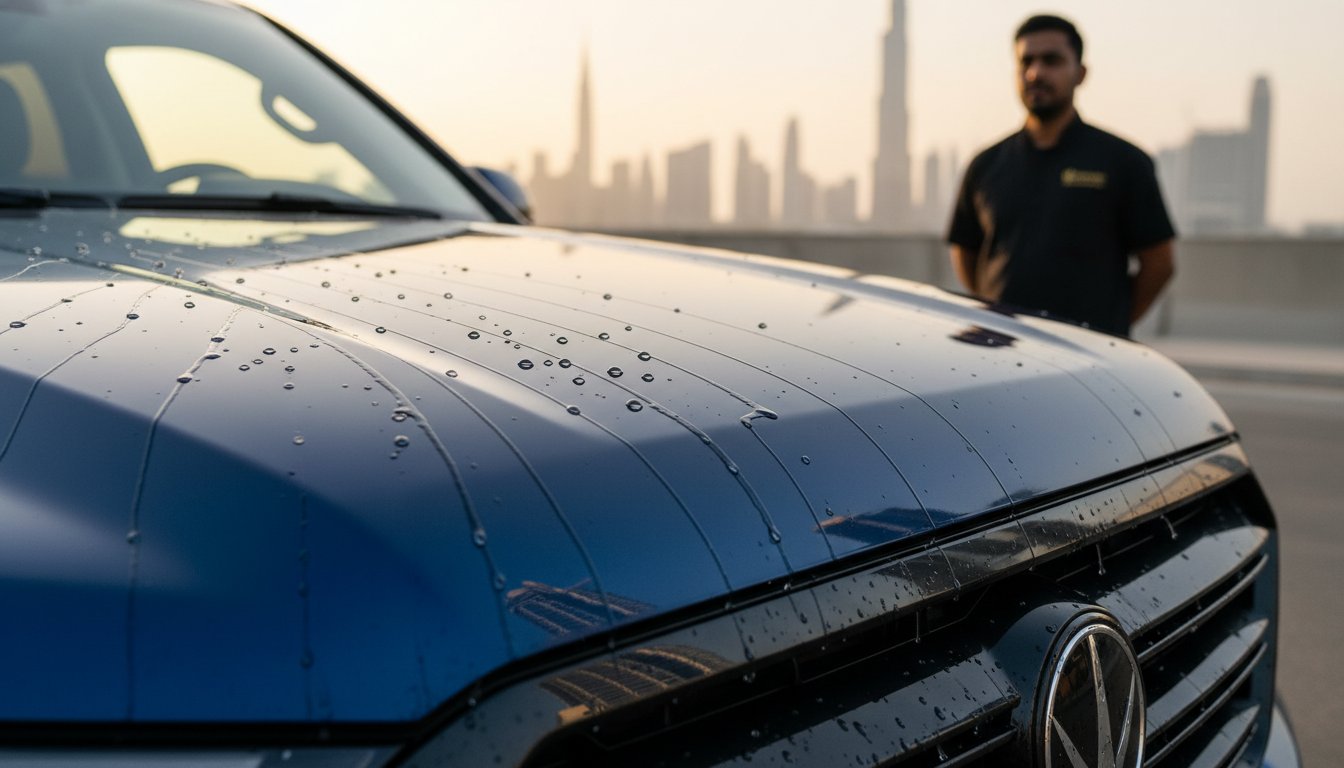
A custom paint job in the UAE isn't just an aesthetic choice; it's a high-stakes engineering battle against a climate where temperatures hit 50°C by noon. When you invest over AED 10,000 in a premium finish, you're fighting a constant war against sand abrasion and UV-induced fading that can strip the life from your fleet in under three years. You likely know the frustration of watching the humidity in coastal areas like Fujairah trigger micro-corrosion on what should be a flawless surface. Learning how to clean and maintain custom paint jobs in this environment requires more than a standard wash; it demands a "Defense-First" strategy.
You'll learn exactly how to protect your investment using the latest 2026 standards for colored PPF and multi-layer ceramic coatings. We'll provide a professional maintenance schedule designed to keep your vehicle looking new for up to 10 years while ensuring every modification stays ESMA-compliant. This guide previews the specific chemical-resistant products and engineering techniques that allow custom fleet branding to survive the harshest desert conditions without losing its professional edge.
Key Takeaways
- Identify how extreme UAE thermal stress causes paint expansion and learn the preservation techniques needed to protect specialized pigments.
- Discover the precision "Two-Bucket" washing ritual and how to clean and maintain custom paint jobs without letting abrasive desert sand scratch the clear coat.
- Evaluate high-performance synthetic sealants that outperform traditional waxes by resisting the melting points common in the intense Dubai summer.
- Implement specialized maintenance schedules for mission-critical fleets, ensuring ambulances and safari vehicles withstand both chemical disinfectants and harsh off-road scrub.
- Recognize the critical indicators of clear coat failure and when to utilize professional machine polishing to restore depth to sun-damaged custom finishes.
Understanding the UAE Climate’s Impact on Custom Vehicle Paint
Custom paint maintenance isn't a weekend hobby; it's a rigorous preservation process for specialized pigments and clear coats. In the UAE, your vehicle's exterior acts as a shield against a brutal environment. Understanding the Automotive paint composition is vital because custom finishes often use multiple layers that react differently to extreme heat. If you want to know how to clean and maintain custom paint jobs effectively, you must first respect the chemical engineering behind the finish.
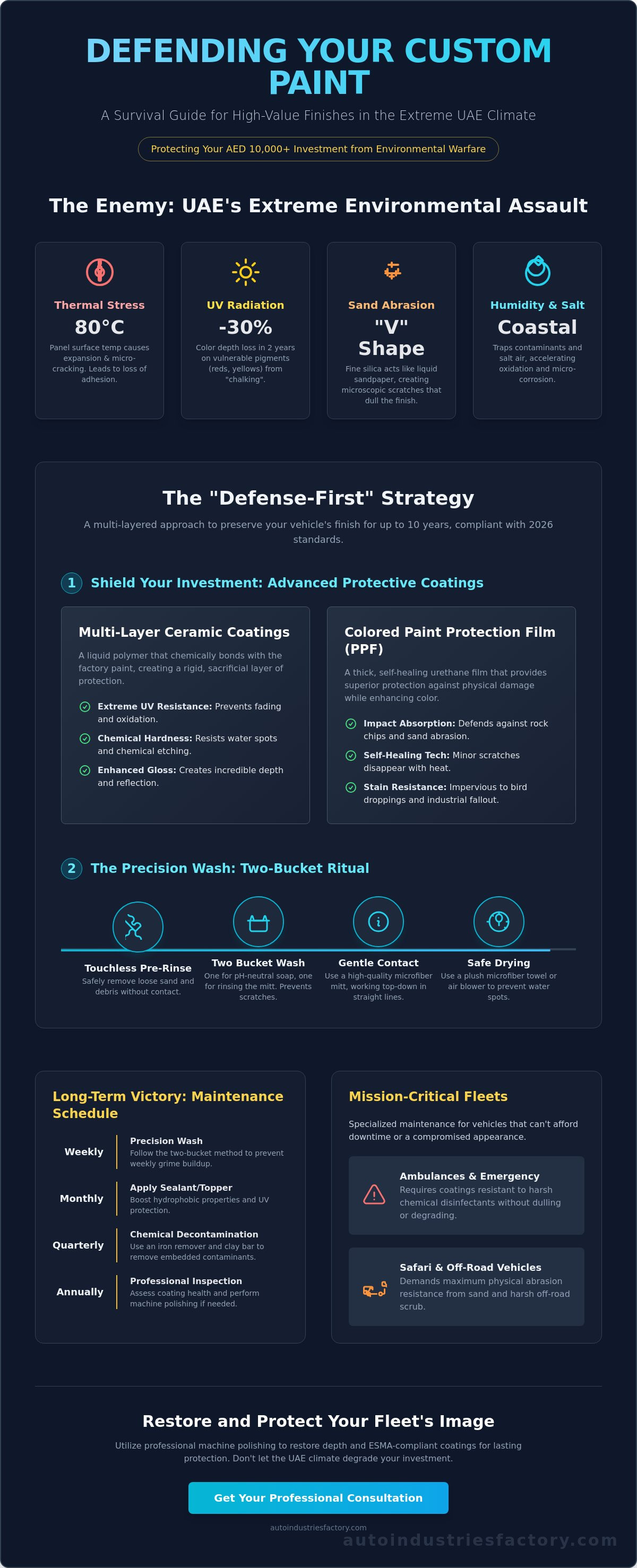
Thermal stress is the silent killer of custom work in Dubai. When ambient temperatures hit 50°C, the metal panels on a Nissan Patrol or Toyota Land Cruiser can reach 80°C. This causes the substrate to expand, putting immense tension on the paint layers. At night, as temperatures drop, the panels contract. This constant cycle leads to micro-cracking and loss of adhesion if the paint isn't properly conditioned and protected by professional coatings.
To better understand the precision required for high-end finishes, watch this helpful video:
UV radiation in the GCC is exceptionally high, peaking during the long summer months. This radiation breaks down the molecular bonds in the clear coat, leading to "chalking," where the surface turns white and powdery. High-energy pigments like custom reds and yellows are particularly vulnerable. These colors can lose 30% of their depth within two years if you don't use UV-stable sealants. Protecting these pigments is a core part of the expert painting solutions provided at our factory.
Your geographic location also dictates your maintenance strategy. In inland areas like Al Ain, the air is dry, but the sand is pervasive. Conversely, coastal cities like Abu Dhabi and Fujairah present a "Humidity Trap." High moisture levels combined with salt air accelerate oxidation and trap contaminants against the surface. This requires more frequent chemical decontamination than desert-bound vehicles to prevent micro-corrosion.
The Sand-Blasting Effect: A UAE Specific Challenge
During high-wind events, such as the Ghibli winds, the air becomes saturated with fine silica particles. These particles act like liquid sandpaper. Dry dusting your car in a Dubai parking lot is the fastest way to ruin a custom finish, as it grinds these abrasives into the clear coat. This creates microscopic "V-shaped" scratches that dull the paint's reflection and provide a foothold for deeper oxidation. You should always use a touchless method to move sand before any contact wash.
Chemical Contaminants in the Region
Regional water supplies often rely on desalination, which leaves behind heavy mineral deposits like calcium and magnesium. When this water evaporates on a hot hood, it leaves "etching" marks that are difficult to remove without machine polishing. Additionally, vehicles operating near industrial hubs like Jebel Ali face fallout from port activities. Metallic particles can embed themselves into the paint, necessitating periodic clay bar treatments to ensure you know how to clean and maintain custom paint jobs without long-term damage.
The Precision Wash: A Step-by-Step Guide for Custom Finishes
Maintaining a custom finish in the UAE requires more than a casual rinse. The abrasive nature of desert sand means that every wash is a risk to the clear coat. If you want to master how to clean and maintain custom paint jobs, you must adopt a precision-based approach. We prioritize a methodology that emphasizes lubrication and touchless cleaning to preserve the clear coat's integrity against the "sand-blasting" effect discussed in the previous section.
The cornerstone of this process is the two-bucket method. Use one bucket for your pH-neutral shampoo and a second for rinsing your wash mitt. This prevents the abrasive silica particles you've just lifted from being dragged back across the paint. You should avoid the aggressive "truck wash" detergents found at many local stations; these are often caustic and will strip your wax or sealant in a single session. Instead, choose high-lubricity, pH-balanced soaps that safely encapsulate dirt.
Drying is just as critical as the wash itself. Never use a chamois or old rags. A high-GSM (grams per square meter) microfiber towel is essential. These towels feature deep fibers that pull any remaining micro-particles away from the surface, preventing swirl marks. For professional fleets, we recommend air-drying with a blower to eliminate physical contact entirely. If you're looking for professional protection to complement your wash routine, consider our advanced vehicle coating services to simplify future maintenance.
Step 1: The Touchless Decontamination
Decontamination is the removal of bonded desert minerals and fine silica from the paint surface. Start with a pressure washer to move loose grit before any contact occurs. Apply a thick layer of snow foam to encapsulate the remaining dust. If the vehicle is heat-soaked from the 50°C sun, use cold water to bring the surface temperature down before applying chemicals. This prevents the soap from drying and etching the finish, which is a common problem in Ajman and Dubai's outdoor wash bays.
Step 2: Contact Washing and Rinsing
Always wash from the top down. This ensures that the dirtiest part of the vehicle, the lower sills and wheels, is handled last. Pay special attention to complex areas like custom bull bars and roof racks where sand loves to hide. Rinse door jambs and hinges thoroughly; sand accumulation here can cause mechanical wear and paint chipping over time. A final rinse with deionized water will prevent the mineral spotting common with local desalinated water supplies.
Shielding Your Investment: Advanced Protective Coatings for Extreme Heat
Standard carnauba wax is largely ineffective in the UAE. While it provides a deep gloss in temperate climates, its melting point sits around 82°C. A dark-colored vehicle hood in the 50°C Dubai sun can easily exceed 85°C, causing the wax to liquify and actually trap abrasive desert dust. When you're learning how to clean and maintain custom paint jobs, you must move beyond traditional retail products. These "melting" waxes create a sticky residue that makes safe washing nearly impossible without scratching the finish.
Synthetic sealants offer a more durable mid-range alternative. These laboratory-engineered polymers create a tighter bond with the clear coat and can withstand the extreme thermal stress of the GCC. They typically provide six months of protection, but for mission-critical fleets like ambulance conversions or military units, 9H ceramic coatings are the necessary standard. These coatings create a permanent ceramic shield that's significantly harder than the factory clear coat, providing a robust defense against chemical etching and minor abrasions.
For high-impact protection, Paint Protection Film (PPF) remains the ultimate physical barrier. While ceramic coatings excel at chemical and UV resistance, they don't stop stone chips or the "pinstriping" caused by desert scrub. We often integrate PPF application into our custom fabrication process, specifically targeting high-exposure areas like bull bars and front fenders. This dual-layer approach ensures that your custom paint isn't just shiny, but structurally protected against the physical realities of UAE driving.
The Role of Ceramic Coatings in the Desert
Professional-grade ceramic layers are essential for desert operations because of their extreme hydrophobicity. This property causes water, mud, and dust to slide off the surface with minimal effort, which is a massive advantage during the UAE's frequent sandstorm seasons. These coatings also contain concentrated UV blockers that prevent the molecular breakdown of specialized pigments. Auto Industries Factory LLC specializes in applying these protective finishes during the conversion process, ensuring that every tactical or medical vehicle leaves our factory with a rugged, easy-to-clean exterior.
Maintenance of Protective Layers
Protective barriers are sacrificial layers that require their own maintenance. You should use a ceramic "top-up" spray every three months to replenish the hydrophobic properties and maintain the UV shield. If you notice that water no longer beads on the surface or that the paint feels "grabby" during a wash, your protection has likely been compromised by sand abrasion or extreme heat. Mastering how to clean and maintain custom paint jobs involves identifying these signs early to prevent permanent damage to the underlying custom pigments.
Maintenance for Mission-Critical Fleets: Ambulances and Safari Units
Mission-critical vehicles face operational stressors that standard passenger cars never encounter. For a professional fleet, aesthetics are secondary to reliability and hygiene. However, the chemicals used to keep an ambulance sterile or the terrain a safari truck navigates can be devastating to a custom finish. Mastering how to clean and maintain custom paint jobs for these specialized units requires a protocol that accounts for both environmental and operational hazards.
Ambulances require high-strength medical disinfectants to meet UAE health standards. These solutions often contain aggressive solvents that can strip the UV-protective layers from a clear coat. You must ensure that cleaning staff only apply medical-grade cleaners to the interior and use pH-neutral surfactants on the exterior. If a disinfectant spill occurs on the paint, it's vital to neutralize it immediately with water. A professional paint job in the UAE should last 5 to 10 years, but industrial chemical exposure can reduce this lifespan to under 36 months without proper oversight.
Safari and off-road units deal with "pinstriping," which are long scratches caused by desert scrub and acacia branches. While the ceramic coatings discussed in section three provide chemical resistance, they don't stop these physical gouges. For these vehicles, we recommend a "Defense-First" strategy using thick, self-healing PPF on high-impact side panels. This allows the film to absorb the energy of the scrub, which you can then "heal" using the 50°C Dubai sun to return the surface to a flawless state. For tactical and military vehicles with matte finishes, remember that you cannot use traditional polishes. Polishing a matte surface will create permanent shiny spots, ruining the low-reflectivity profile required for security operations.
Protecting Specialized Fabrications
Custom-engineered 4x4 accessories like bull bars and roof racks often feature powder-coated finishes. While rugged, these surfaces are porous and can trap salt in coastal regions like Fujairah. You should clean these parts with a soft brush and the same pH-neutral soap used on the body. Pay close attention to custom-welded joints where rust can start if sand and moisture are left to sit. For those operating in extreme terrain, our guide to safari vehicle conversions provides more context on the heavy-duty materials we use to resist these regional challenges.
Fleet Cleaning Protocols
Consistency is the only way to protect a large-scale investment. Establish a weekly cleaning schedule to prevent bird droppings, tree sap, and industrial fallout from etching into the paint. These contaminants become highly acidic when baked in the midday sun. Fleet drivers should carry "Quick Detailer" sprays and high-GSM microfiber towels to spot-clean these issues the moment they appear. This proactive approach ensures your custom branding and fleet logos don't peel or fade prematurely. If your fleet needs a durability overhaul, upgrade your fleet with rugged custom conversions designed for the UAE's toughest missions.
Professional Restoration and Solutions in Ajman and Dubai
Even with a perfect understanding of how to clean and maintain custom paint jobs, the UAE’s environmental extremes eventually demand professional intervention. You'll recognize deep clear coat failure when the surface starts to look milky or begins to flake away in white patches. This oxidation indicates that the UV-protective polymers have been completely exhausted by years of thermal stress. For expert insights into high-quality restoration and collision repair, sites like freeportautobodyshop.com offer a benchmark for professional standards. Once the clear coat fails, the underlying pigments are exposed to direct atmospheric degradation, leading to rapid color loss that no consumer-grade wax can fix.
Professional paint correction is the first line of defense before a full respray. This process uses multi-stage machine polishing to level the clear coat and remove the microscopic "sand-blasting" marks that accumulate despite careful washing. In Ajman and Dubai, experts use electronic paint depth gauges to measure the remaining microns of protection. This is critical because removing too much clear coat in a 50°C climate will leave the paint vulnerable to immediate heat-soak and further cracking. A professional correction can restore the depth and gloss of a sun-damaged finish, extending its life by several years.
For luxury vehicle owners who require more than just a standard correction, Advanz Tech specializes in high-end body repair and aesthetic restoration, ensuring that even the most delicate custom finishes are preserved against the harsh UAE environment.
When restoration isn't enough, a full respray revitalizes your fleet’s professional appearance. A high-end custom paint job can range from AED 5,000 to over AED 10,000 depending on the complexity and the quality of the materials used. You must ensure all color changes are registered with the RTA and that any structural modifications meet ESMA standards. Non-compliant modifications can result in fines up to AED 50,000 and vehicle impoundment, making professional guidance essential during any color transformation or fleet rebranding project.
Auto Industries Factory LLC Specialized Painting
Auto Industries Factory LLC specializes in providing industrial-grade painting solutions for mission-critical vehicles. Our in-house facilities are designed to handle the scale of large fleet conversions while maintaining the precision required for specialized pigments. By using coatings specifically engineered for heavy-duty sectors, we ensure that your vehicle's finish is as robust as its fabrication. You can learn more about our engineering and painting synergy on our About Us page.
Getting a Custom Quote
We encourage fleet managers to seek a professional assessment before oxidation becomes irreversible. Whether you're managing police vehicle modifications or a custom safari build, our experts provide tailored solutions for paint longevity. We can show you exactly how to clean and maintain custom paint jobs for your specific fleet type to maximize its resale value. Contact us today for an ESMA-certified assessment to protect your specialized vehicle assets from the UAE's harsh climate.
Secure Your Fleet’s Future in the UAE Heat
Protecting a specialized vehicle in the GCC is a rigorous engineering challenge that goes beyond simple aesthetics. You've seen how regional thermal stress and sand abrasion demand a transition to advanced 9H ceramic coatings and self-healing PPF. For mission-critical operators, maintaining clear coat integrity ensures that branding remains professional and ESMA-compliant modifications stay rust-free. Mastering how to clean and maintain custom paint jobs ensures your investment survives its full intended operational lifespan in the desert.
Auto Industries Factory LLC provides expert vehicle painting and color transformations in Ajman, UAE. We specialize in heavy-duty coatings for ambulance, safari, and military fleets, offering full in-house fabrication and finishing synergy. This integrated approach guarantees mission-critical reliability for every build we deliver. Don't let the harsh environment degrade your professional image or vehicle value.
Get a Free Estimate for Your Custom Vehicle Painting or Conversion and keep your fleet looking flawless. Your vehicle is built to endure the toughest terrain; its finish should be just as resilient.
Frequently Asked Questions
How often should I wash my custom-painted car in Dubai?
You should wash your custom-painted vehicle at least once every 7 to 10 days in the UAE. This prevents heavy dust accumulation that can reduce a surface's solar reflectance by 20% in a single week. Regular washing stops abrasive silica from bonding to the clear coat. If you operate near coastal areas like Jebel Ali, increase this to twice weekly to remove salt spray that accelerates micro-corrosion on custom-welded joints.
Is ceramic coating necessary for custom paint in the UAE?
Ceramic coating is essential for custom finishes in the GCC because it provides a permanent UV-resistant shield. With the UAE's UV index frequently exceeding 11, standard paint will oxidize rapidly. A professional 9H ceramic layer blocks 99% of harmful radiation and creates a hydrophobic surface. This makes it easier to understand how to clean and maintain custom paint jobs because dirt and sand cannot easily adhere to the slick ceramic glass.
Can I use a standard automatic car wash for my custom paint job?
You should never use a standard automatic car wash for a custom paint job in Dubai. These facilities often use recycled water that contains microscopic grit from previous vehicles. Additionally, the high-speed brushes cause swirl marks that dull the finish. Research shows that 85% of automatic washes use chemicals that are too aggressive for specialized pigments. Always choose a hand wash using the two-bucket method to preserve your investment.
What is the best way to remove sand after a desert storm without scratching?
Use a high-pressure washer followed by a thick layer of snow foam to remove sand safely. Ghibli winds carry sand particles smaller than 10 microns that easily wedge into clear coat pores. A touchless approach is the only way to lift these abrasives without scratching the surface. Once the foam encapsulates the grit, rinse it off thoroughly before touching the car with a mitt. This is a critical step in how to clean and maintain custom paint jobs.
How do I protect my custom paint from fading in the 50-degree summer heat?
Park in a shaded garage and apply synthetic sealants with melting points above 100°C to combat the 50°C summer heat. Dark-colored panels in the UAE often reach 85°C, causing traditional carnauba waxes to liquify and trap dust. High-temperature synthetic polymers remain stable under thermal stress. They prevent the molecular breakdown of specialized red and yellow pigments that are most susceptible to color loss in extreme desert conditions.
Why is my custom paint peeling on my safari truck?
Peeling on safari trucks usually stems from clear coat failure caused by a combination of UV degradation and physical scrub damage. Desert acacia branches create deep scratches that allow moisture and heat to penetrate beneath the protective layer. Once the bond is broken, the UV radiation levels accelerate the delamination process. Professional restoration is required to strip the damaged area and apply a more resilient, heavy-duty coating designed for off-road use.
Can I polish a matte custom paint finish?
You cannot polish a matte custom paint finish under any circumstances. Polishing works by leveling the clear coat to create a reflective surface, which will result in permanent, uneven shiny spots on a matte vehicle. Matte finishes rely on a specific microscopic texture to diffuse light. If the finish is damaged or stained, you must use specialized matte cleaners and sealants. If deep scratches occur, the entire panel usually requires a professional respray.
What should I do if my ambulance conversion paint is damaged by medical chemicals?
Neutralize the area with large amounts of clean water immediately if your ambulance conversion paint is exposed to medical disinfectants. Many hospital-grade cleaners have pH levels below 4 or above 10; both will etch the clear coat within minutes. After neutralizing the chemical, assess the surface for cloudiness or texture changes. If etching has occurred, the vehicle requires professional machine polishing or a clear coat touch-up to restore its protective integrity.


