In the 50°C heat of a Dubai summer, a low-cost vehicle conversion isn't a bargain; it is a financial liability that eventually costs your organization thousands in avoidable repairs. You already know that when a mission-critical ambulance or tactical unit fails due to a shorted wire or a rusted weld, the price isn't just measured in AED. It's measured in lost operational readiness and excessive downtime. Achieving a sustainable ROI depends on reducing fleet maintenance costs with quality builds that are specifically engineered to withstand the Middle East's relentless humidity and desert dust.
You'll discover how precision-engineered vehicle conversions and high-quality fabrication significantly lower long-term fleet operating expenses in the UAE's demanding environment. We've seen how rugged, heavy-duty components prevent the structural rattling and electrical failures that plague inferior builds. This article breaks down the specific engineering standards required to eliminate unscheduled maintenance, ensure mission reliability for emergency operations, and extend the total lifecycle of your specialized fleet. From advanced cooling solutions to reinforced metalwork, we'll show you why superior craftsmanship is the most effective way to protect your bottom line.
Key Takeaways
- Learn how the UAE’s extreme heat and sand accelerate wear on low-quality conversions, leading to thousands of AED in avoidable repair expenses.
- Discover how reducing fleet maintenance costs with quality builds relies on industrial-grade CNC fabrication to eliminate mechanical friction and vibration.
- Identify why 70% of specialized vehicle failures are caused by improper electrical integration and how to secure your fleet with professional system wiring.
- Master a 5-point procurement checklist to verify medical-grade materials and military-spec fit-and-finish standards for your next vehicle conversion.
- Explore the "Built to Protect" engineering philosophy used by Auto Industries Factory to achieve zero-failure performance in demanding UAE environments.
The True Cost of 'Cheap' Vehicle Conversions in the UAE
In the competitive logistics and emergency service sectors of Dubai and Abu Dhabi, fleet managers often face pressure to minimize initial capital expenditure. This focus on the lowest quote creates a significant Build Quality Gap between standardized factory output and specialized vehicle conversions. Choosing a low-cost provider might save 20,000 AED upfront, but these savings quickly vanish when the vehicle enters service in the harsh Arabian Peninsula. High-quality engineering is the only sustainable strategy for reducing fleet maintenance costs with quality builds over a multi-year operational cycle.
Smart procurement requires looking beyond the initial invoice to understand the Total Cost of Ownership (TCO). In the UAE, inferior builds typically see maintenance expenses triple within the first 24 months of operation. Components that aren't specifically rated for local conditions fail early, leading to a cycle of reactive repairs that drain operational budgets. Auto Industries Factory (AIF) specializes in engineering solutions that withstand these environmental pressures from the first day of deployment.
To better understand the fundamentals of managing these expenses, watch this helpful video on fleet management tools:
The Impact of Heat and Vibration on Fleet Longevity
The UAE environment is a laboratory for material failure. When ambient temperatures exceed 50°C, standard industrial adhesives used in budget conversions often liquefy or lose up to 70% of their bonding strength. This results in rattling interiors, loose cabinetry, and compromised electrical insulation. Desert terrain also exposes poorly welded frames to extreme structural fatigue. While a standard conversion might last only 36 months before requiring a major overhaul, a heavy-duty build engineered with reinforced mounting points and heat-stabilized polymers consistently reaches a 10-year lifespan. Investing in ruggedized materials is essential for reducing fleet maintenance costs with quality builds.
Calculating the Cost of Unscheduled Downtime
For mission-critical units like ambulances or security patrols, the financial impact extends far beyond the mechanic's bill. If an emergency vehicle is sidelined in Dubai for a recurring electrical fault, the opportunity cost includes lost service hours and disrupted response grids. Frequent minor repairs on low-quality builds force fleet managers to maintain 15% more reserve vehicles than necessary, tying up millions of AED in idle assets. Mission Reliability is the primary metric for specialized fleets, representing the mathematical probability that a vehicle will complete its assigned task without mechanical failure.
Precision Engineering: How Fabrication Quality Reduces Mechanical Failure
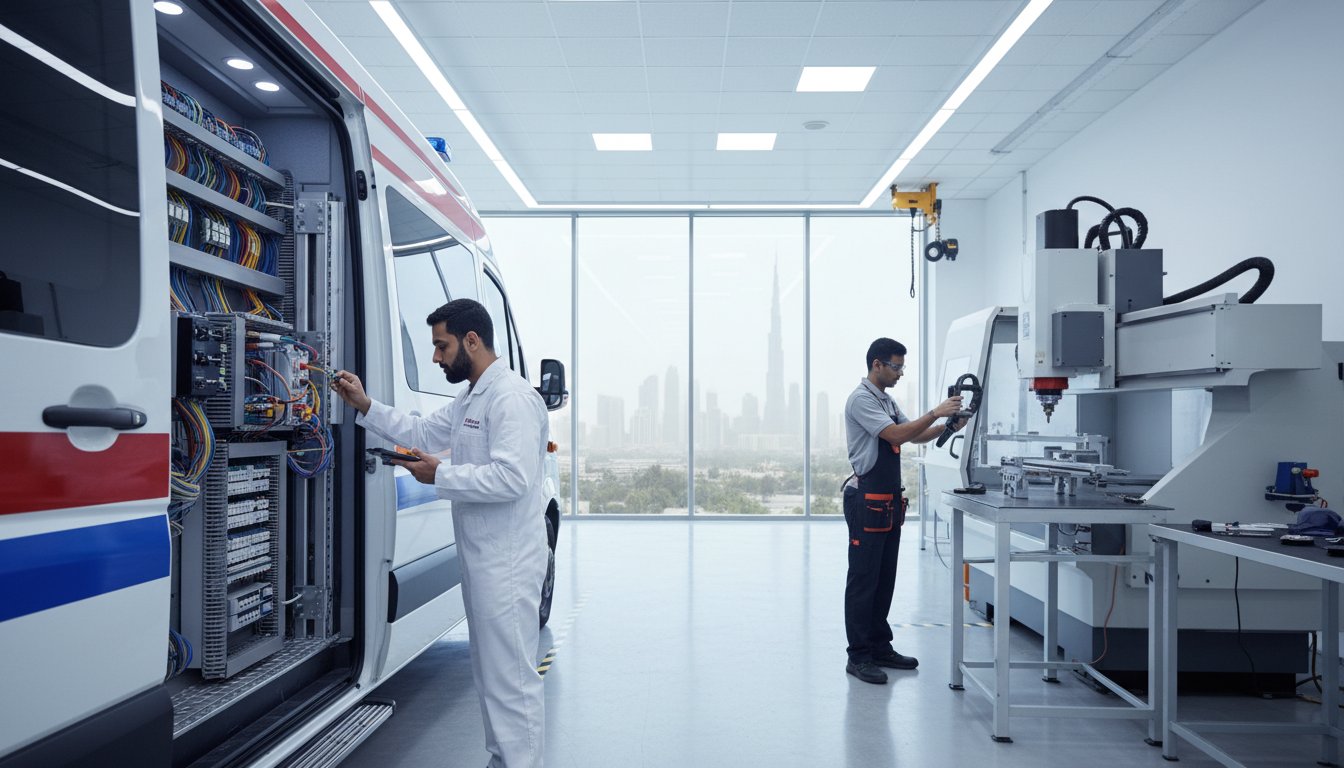
Modern fleet management in the UAE has moved past basic manual workshops. Industrial-grade fabrication using CNC and laser cutting technology now defines the standard for high-performance vehicles. Precision engineering isn't just about aesthetics; it's a direct strategy for reducing fleet maintenance costs with quality builds. When components fit with micron-level accuracy, friction and parasitic vibration are virtually eliminated. This prevents the progressive loosening of fasteners and the microscopic stress fractures that eventually lead to catastrophic mechanical failure.
Auto Industries Factory (AIF) specializes in this level of detail. We ensure every bracket and frame is designed in-house using advanced CAD software. Outsourcing parts often results in "forced fits" where technicians must drill extra holes or use shims. These shortcuts compromise the vehicle's structural integrity. For specialized ambulance conversions, structural reinforcement is mandatory. It supports life-saving equipment and heavy medical oxygen systems without warping the chassis over time. A flawless fit means the vehicle stays on the road longer and spends less time in the repair bay.
CNC Machining and Laser Cutting for Structural Integrity
Laser-cut brackets are essential for long-term stability. They prevent the constant rattling that leads to fastener failure in approximately 15% of commercial fleet repair cases. CNC bending allows for seamless, high-strength internal frames that lack the weak points found in multi-part welded assemblies. This precision engineering protects sensitive medical monitors or tactical communications gear from kinetic shock during high-speed response. By absorbing energy correctly, the build prevents damage to expensive internal components, further reducing fleet maintenance costs with quality builds.
Welding and Painting Standards for Corrosion Resistance
Professional welding prevents frame cracks during intense off-road use in the UAE desert. Poorly executed welds often fail under the 50-degree Celsius heat and heavy load cycles typical of regional operations. Powder-coated finishes are non-negotiable for vehicles operating in coastal areas like Sharjah or Fujairah. Salt-heavy air can corrode untreated metal in under 12 months, leading to structural rot. High-quality custom bull bars and bumpers serve as the first line of defense. These components utilize specialized coating standards to prevent rust from spreading to the main chassis.
You can ensure your fleet meets these rigorous standards by reviewing our specialized fabrication services for custom vehicle projects.
Electrical Systems: The #1 Source of Fleet Maintenance Issues
Industry data from specialized fleet managers confirms that 70% of mission-critical vehicle failures originate from poor electrical integration. When a vehicle is stripped and rebuilt for specialized roles, the factory wiring often can't handle the additional load. This leads to blown fuses, fried ECUs, and expensive downtime. Reducing fleet maintenance costs with quality builds starts with moving away from "aftermarket" patch-up jobs toward professional system integration. While a cheap conversion might work on day one, it won't survive the operational rigors of a professional fleet.
In Dubai and the Northern Emirates, summer ground temperatures often exceed 50°C. Standard automotive wiring isn't rated for these extremes when combined with high-amperage equipment. Professional builds utilize heat-resistant, marine-grade wiring that maintains its integrity under extreme thermal stress. This prevents insulation cracking and subsequent short circuits that plague low-quality conversions. It's the difference between a vehicle that stays in the shop and one that stays on the road.
Preventing Short Circuits and Battery Drain
Auto Industries Factory focuses on protecting the vehicle's primary ECU by using high-quality relays and dedicated fuse blocks. We don't just tap into existing wires; every modification uses professional looms with clearly labeled wiring. This reduces diagnostic time for fleet mechanics by as much as 40% because they don't have to hunt for mystery connections. For vehicles carrying advanced medical electronics or heavy-duty police gear, we integrate high-output alternators. These ensure the electrical system stays charged even during prolonged idling in the desert heat.
Smart Power Management for Tactical Vehicles
Tactical operations require 100% uptime for communication and surveillance gear. We implement dual-battery systems and intelligent split chargers, which are core components in police vehicle modifications. These systems isolate the starter battery. This ensures the engine always turns over even if the tactical equipment has been running for hours while stationary.
Proper grounding and electromagnetic shielding are also vital to prevent interference in sensitive communication systems. Electrical reliability is the backbone of mission success. By investing in these high-spec integrations, fleet operators avoid the recurring battery drains and "phantom" electrical issues that lead to thousands of Dirhams in lost productivity. Reducing fleet maintenance costs with quality builds isn't just about the parts; it's about the engineering logic behind every connection.
- Marine-grade wiring prevents corrosion in high-humidity coastal areas.
- Dedicated power management protects expensive ALS medical equipment.
- Labeled looms turn complex repairs into simple component swaps.
- High-output alternators prevent system brownouts during peak summer loads.

5 Indicators of a Quality Build: A Procurement Checklist
Procurement teams across the UAE often prioritize the initial acquisition price, but the real financial victory lies in reducing fleet maintenance costs with quality builds. A vehicle that fails during a mission in the Empty Quarter or stalls in heavy Dubai traffic incurs costs far beyond a simple repair bill. To ensure your fleet remains operational, use this checklist to verify the engineering integrity of your next conversion.
- Material Verification: Demand 5000 or 6000 series aluminum for structures and medical-grade stainless steel for interiors. Military-spec components aren't just for defense; they provide the vibration resistance needed for rugged UAE terrains.
- Fit and Finish: Inspect for uniform 3mm panel gaps and seamless integration points. Gaps are entry points for dust and sand, which grind down internal components.
- Weight Distribution: A precision-balanced build ensures the center of gravity remains low. This prevents uneven tire wear and reduces the load on the braking system.
- Compliance Standards: Every build must meet GSO (Gulf Standardization Organization) requirements or EN 1789 for ambulance certifications to ensure road legality and safety.
- Manufacturer Support: Local UAE-based warranties are vital. A factory in Ajman or Dubai can provide spare parts in 24 hours, whereas overseas manufacturers might leave your vehicle grounded for weeks.
Inspecting the Fabrication Process
Auto Industries Factory (AIF) specializes in high-precision manufacturing, and a factory visit is the best way to verify a supplier's claims. Look for advanced CNC laser cutting equipment and dedicated clean rooms for medical vehicle assembly. Ask the engineers about their 'design-to-build' workflow. Quality fabricators use CAD software to simulate stress on structural components before production begins. Don't focus solely on the paint; inspect the hidden structural frames and the routing of wiring looms. Poorly secured electrical systems are the primary cause of downtime in modified commercial fleets.
Weight Management and Fleet ROI
Over-building with heavy, low-grade steel is a common mistake that inflates fuel consumption and accelerates suspension fatigue. Using lightweight, high-strength alloys in safari vehicle conversions allows for maximum durability without the weight penalty. Reducing a vehicle's curb weight by just 5% can lead to a measurable 2% to 3% improvement in fuel efficiency across its lifecycle. Precision engineering ensures that every bracket and panel serves a structural purpose. This philosophy is the foundation of reducing fleet maintenance costs with quality builds, as it minimizes the mechanical strain on the engine and drivetrain during high-temperature UAE summers.
Ready to upgrade your fleet with precision-engineered solutions? Explore our specialized vehicle conversion services to see how we maximize uptime for our clients.
Auto Industries Factory (AIF): Precision Solutions for UAE Fleets
Auto Industries Factory (AIF) specializes in end-to-end vehicle engineering from our advanced facilities in Dubai and Ajman. We don't just assemble components; we manufacture comprehensive solutions. Our in-house fabrication capabilities include high-precision CNC laser cutting and press brake forming. This total control over the manufacturing process is the foundation for reducing fleet maintenance costs with quality builds. When every bracket, frame, and weld meets industrial standards, the risk of structural failure during operations drops to near zero.
Our "Built to Protect" philosophy drives every project we undertake. We engineer specifically for zero-failure missions where reliability is non-negotiable. In the UAE, a vehicle failure is more than just an operational expense; it's a safety risk. AIF's specialized vehicle conversions undergo rigorous testing to withstand the 50°C summer heat and abrasive desert sand. We use heavy-duty materials and premium powder-coated finishes that resist corrosion and wear far better than standard aftermarket modifications found in smaller workshops.
Our Commitment to Fleet Uptime
Maximizing uptime requires a robust support ecosystem. AIF utilizes professional painting services and high-grade metalwork to ensure every conversion maintains its integrity over years of service. We support fleet managers across Abu Dhabi and Dubai with rapid access to spare parts and direct local technical assistance. Major government entities and private corporations trust AIF because our builds stay on the road longer. Choosing an expert manufacturer over a standard workshop can reduce the total cost of ownership by approximately 15% to 20% over a five-year lifecycle by minimizing unscheduled repairs and maintaining higher resale value.
Get a Custom Fleet Consultation
Every fleet has unique operational requirements. Whether you manage a high-speed ambulance service, a tactical police unit, or a rugged desert safari fleet, we provide tailored engineering solutions. We invite you to visit the AIF factory for a live demonstration of our precision machinery and quality control protocols. You can see firsthand how we prioritize durability and safety in every conversion we produce.
Don't settle for generic builds that drain your budget through constant maintenance and parts replacement. Contact Auto Industries Factory today for a free fleet estimate and let our engineers help you optimize your fleet's performance and longevity.
Maximize Your Fleet Uptime Through Precision Engineering
High maintenance expenses often stem from poor initial fabrication. In the UAE, electrical failures account for the majority of vehicle downtime. You don't have to settle for the "cheap conversion trap" that leads to repeated repairs and lost revenue. By prioritizing EN 1789 and GSO compliant builds, operators ensure their vehicles meet strict safety and durability standards. Auto Industries Factory (AIF) utilizes advanced in-house CNC and Laser Cutting technology at our Ajman and Dubai facilities to ensure every component meets exact tolerances. This level of precision is essential for reducing fleet maintenance costs with quality builds. Investing in heavy-duty, rugged fabrication today means your vehicles stay on the road instead of sitting in the shop. Our specialists provide regional UAE support to keep your mission-critical assets operational under the harshest desert conditions. It's time to shift from reactive repairs to long-term reliability with a partner that understands the demands of the local market. High-quality engineering is the only way to protect your bottom line and your team.
Contact Auto Industries Factory for a Professional Fleet Consultation
Frequently Asked Questions
How much can a high-quality build really save on fleet maintenance?
High-quality builds reduce long-term maintenance costs by up to 25% over a five-year lifecycle. This savings comes from using heavy-duty materials and precision engineering that prevent premature wear. By investing in premium components upfront, fleet managers in Dubai avoid frequent repairs caused by vibration and intensive use. It's a strategic move that pays for itself through increased uptime and fewer component replacements.
Why is the UAE climate so damaging to converted vehicles?
The UAE climate subjects vehicles to temperatures exceeding 50°C and humidity levels above 90%, which accelerates the degradation of inferior materials. Intense UV radiation causes standard plastics and adhesives to crack or fail within 12 to 18 months. Quality builds utilize heat-resistant composite materials and specialized insulation to protect internal systems from thermal stress. This engineering approach ensures the vehicle survives the harshest desert conditions.
What are the most common points of failure in an ambulance conversion?
Electrical system overloads and cabinet mounting failures are the most frequent issues in low-quality ambulance conversions. In the UAE, poorly installed wiring often melts under the high power demands of medical equipment and air conditioning. AIF uses CNC laser-cut brackets and heavy-duty wiring harnesses to ensure these critical components remain functional. We focus on rugged fabrication to prevent interior components from rattling loose during emergency operations.
Does a higher-quality build improve the resale value of a fleet vehicle?
A premium vehicle conversion can retain up to 15% more of its value compared to standard builds after 3 years of service. Buyers in the secondary market prioritize vehicles with documented durability and certified safety standards. Reducing fleet maintenance costs with quality builds ensures the chassis and internal components remain in peak condition. This makes the asset more attractive to future owners and secures a better return on investment.
How do I know if my conversion meets UAE safety and GSO standards?
You can verify compliance by checking for GSO certification and RTA approval documents provided by the manufacturer. All AIF conversions undergo rigorous testing to meet UAE Federal Law requirements for specialized vehicles. We provide full technical documentation and certification for every ambulance or tactical vehicle. This ensures your fleet is fully compliant with local regulations and ready for immediate deployment on UAE roads.
Can a custom build be weight-optimized to save on fuel costs?
Custom builds using lightweight materials like aluminum and high-strength composites can reduce overall vehicle weight by 100kg to 250kg. This optimization directly lowers fuel consumption and reduces the strain on braking and suspension systems. By focusing on reducing fleet maintenance costs with quality builds, AIF engineers ensure that every kilogram added serves a functional purpose. You get a stronger vehicle that costs less to operate daily.
What is the average lifespan of a professional vehicle conversion compared to a standard one?
A professional vehicle conversion typically lasts 8 to 10 years, whereas standard builds often require major overhauls after just 4 years. This extended lifespan is achieved through rugged fabrication techniques and powder-coated finishes that resist corrosion in coastal areas like Dubai. Investing in a durable build doubles the operational life of the specialized equipment. It's the difference between a temporary fix and a long-term fleet solution.
How does AIF ensure the quality of its electrical systems?
AIF uses marine-grade wiring and IP67-rated connectors to prevent short circuits and moisture ingress in the humid UAE climate. Every system undergoes a 4-point diagnostic check including load testing and thermal imaging to identify potential hotspots before delivery. Our engineers design dedicated electrical looms that are independent of the vehicle's original wiring. This ensures maximum reliability for mission-critical equipment and prevents interference with the vehicle's onboard computer.


