
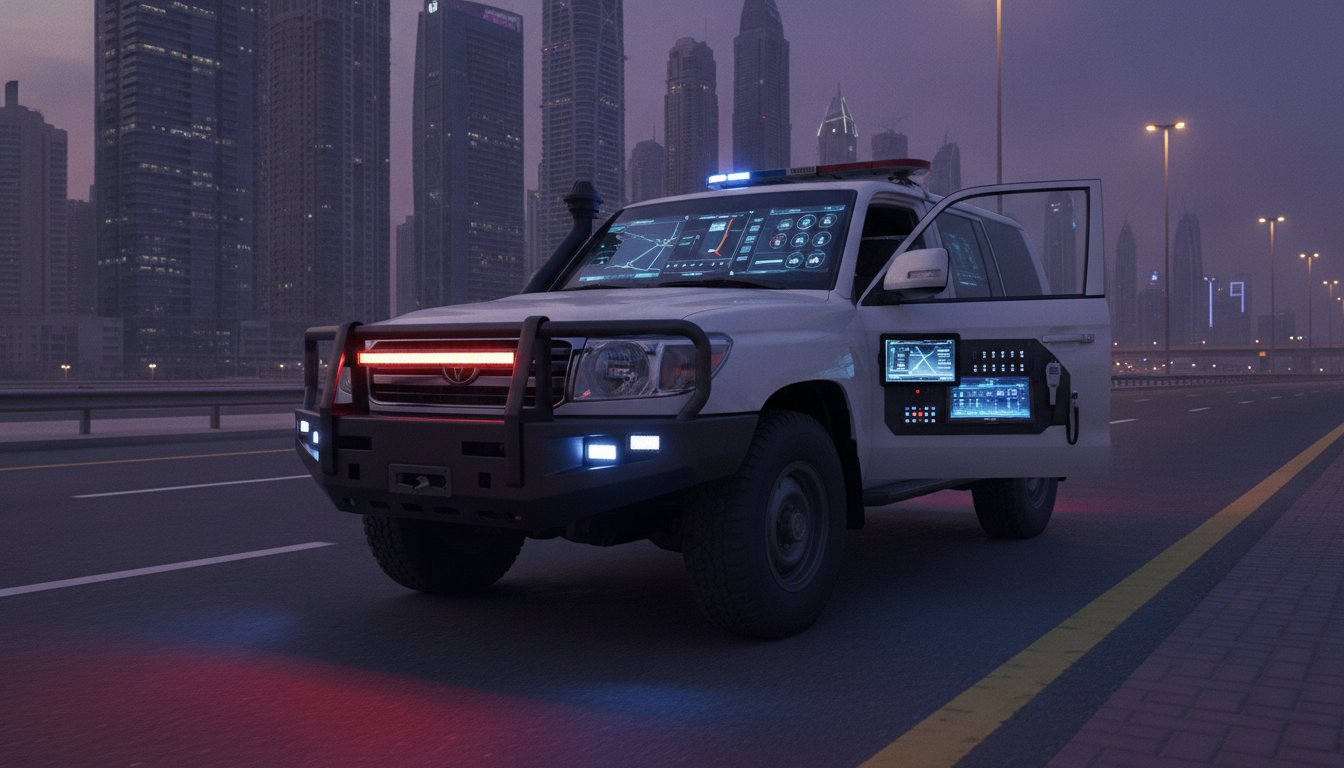
Did you know the cost of a single mission-ready patrol vehicle has doubled in the last decade, with some specialized units now reaching a price tag of $120,000? You realize that a modern patrol unit is much more than a standard car with a light bar; it's a high-stakes mobile office that must perform under extreme stress. When electrical integrations fail or standard components melt in high-heat environments, the result is costly downtime and compromised safety. A professional traffic police car setup demands a level of engineering precision that goes far beyond the surface.
We understand that reliability is non-negotiable for high-mileage fleets. This article will help you discover the technical specifications and structural engineering required to transform standard vehicles into elite traffic enforcement units. We'll examine the critical upgrades in electrical architecture, high-performance cooling, and custom metal fabrication that ensure long-term durability. From reinforced bumpers to modular interior consoles, you'll see how expert engineering creates a vehicle that is both a protective shield and a precision tool for the modern officer.
Key Takeaways
- Identify the core components of an integrated mission ecosystem that combines visual warning systems with advanced structural reinforcements.
- Explore how tactical cabin layouts and ergonomic mounting solutions improve officer efficiency and data access during critical incidents.
- Discover the structural engineering required for custom bull bars and reinforced bumpers to withstand the rigors of high-speed enforcement.
- Learn how a specialized traffic police car setup utilizes high-output dual-battery systems and thermal management to protect mission-critical electronics.
- Understand the benefits of a factory-grade approach using high-performance platforms like the Toyota Land Cruiser for long-term fleet durability.
Defining the Traffic Police Car Setup: An Integrated Mission Ecosystem
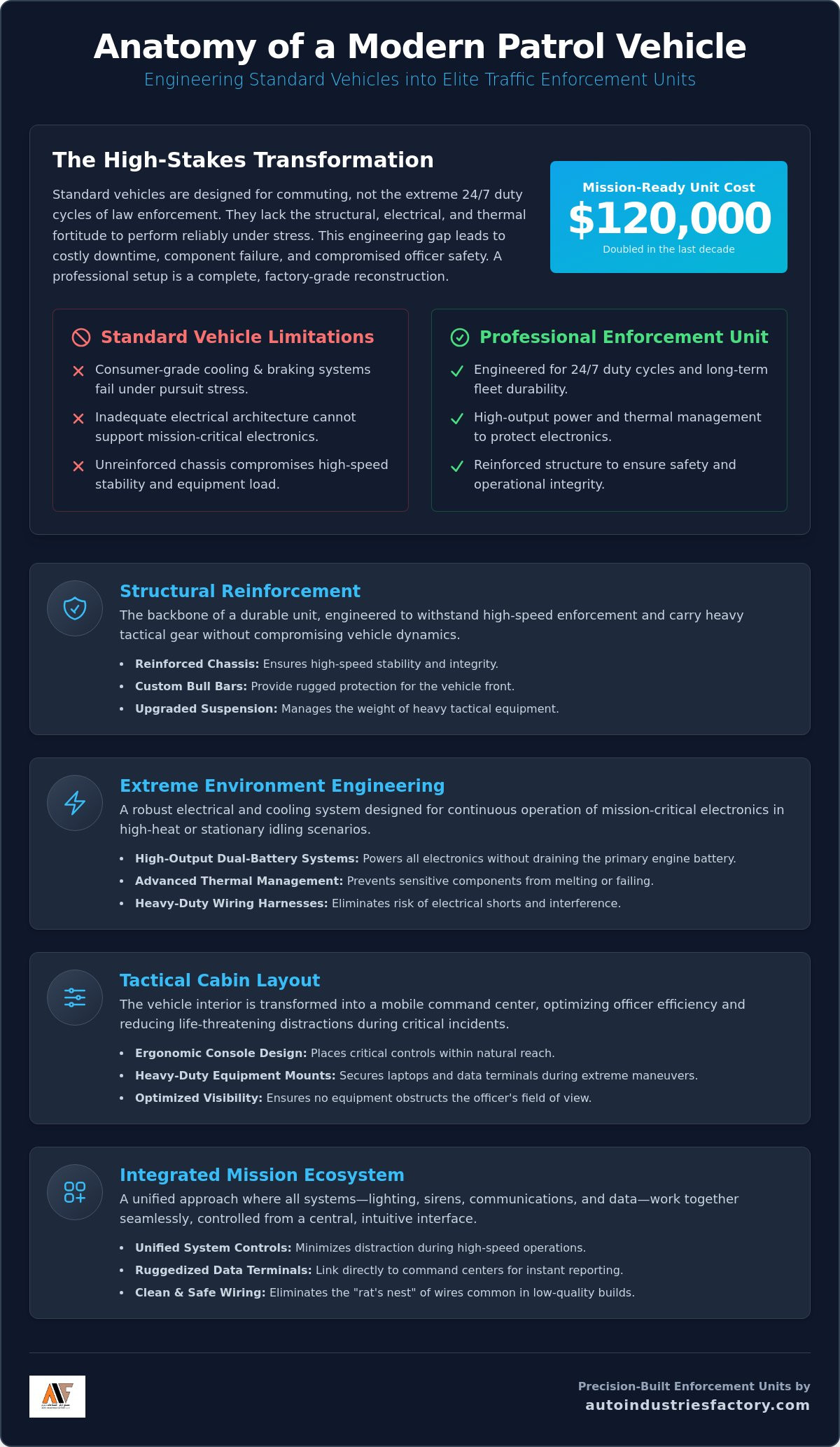
A professional traffic police car setup represents a total engineering transformation where a standard production vehicle is rebuilt into a high-performance enforcement asset. Standard factory vehicles are designed for daily commuting, not the brutal 24/7 duty cycles of highway patrol. They lack the reinforced chassis and high-output electrical systems required to support a modern police car in high-heat or high-speed environments. With the cost of a mission-ready vehicle reaching as high as $120,000 in 2026, the demand for precision engineering has never been higher. Standard vehicles fail because their cooling and braking systems aren't rated for the continuous stress of pursuit or stationary idling with full electronics active.
To better understand the tactical requirements of these vehicles in real-world scenarios, watch this helpful video:
The Role of Specialized Vehicle Conversions
Structural reinforcement is the backbone of every successful unit. We focus on chassis rigidity to ensure high-speed stability and the ability to carry heavy tactical gear without compromising the vehicle's center of gravity. You can't just bolt equipment onto a frame and expect it to last for 150,000 miles. Our approach to Specialized Vehicle Conversions prioritizes durability through custom fabrication and advanced metalwork. This process ensures that advanced electrical systems are integrated without compromising the base vehicle’s structural integrity or safety ratings. It's about protecting the vehicle's core while adding layers of tactical capability.
Mobile Command Center Philosophy
The transition from a simple patrol car to a data-driven enforcement hub is the core of our philosophy. Officers don't just drive; they manage real-time intelligence. This requires a unified interface where lighting, sirens, and speed detection systems work together seamlessly. This unified approach eliminates the "rat's nest" of wiring often found in low-quality builds.
- Mission-specific console ergonomics for rapid response and reduced officer fatigue.
- Unified system controls to minimize distraction during high-speed maneuvers.
- Ruggedized data terminals that link directly to command centers for instant reporting.
Generic equipment installation often leads to cluttered cabins and dangerous electrical interference. A mission-ready traffic police car setup ensures that every switch and screen is exactly where it needs to be when seconds count. By prioritizing a "mobile command center" design, we ensure that the vehicle remains an effective tool for the duration of its service life, even in the most demanding environments. If you are also looking to secure your physical facilities with advanced technology, you can visit First Emirates Computers for specialized CCTV surveillance and biometric access control.
Interior Ergonomics: Optimizing the Tactical Cabin Layout
The interior of a patrol unit is a high-pressure workspace where every second counts. Designing a professional traffic police car setup involves more than just bolting in equipment; it requires a deep understanding of human factors and tactical response. Officers spend up to twelve hours a day in these vehicles. Poorly placed controls or unstable equipment mounts don't just cause fatigue; they create life-threatening distractions during high-speed pursuits. We prioritize a layout where sirens, public address systems, and lighting controls are positioned within the officer's natural reach, ensuring rapid access without taking eyes off the road.
Engineering a stable mobile office requires heavy-duty laptop mounts and integrated data terminals that remain secure during extreme maneuvers. These mounts must be adjustable to prevent musculoskeletal strain while ensuring the screen does not obstruct the driver's field of vision. According to guidelines for Practical Vehicle Equipment, the design of these systems must balance accessibility with crash safety. A loose terminal can become a lethal projectile in a collision. Our fabrication process ensures that every mount is anchored to the vehicle's structural frame, providing a vibration-free interface for real-time reporting and dispatch communication.
Communication and Data Integration
Modern enforcement relies on a constant stream of data. We integrate multi-band radios and GPS mapping technology into a unified console that minimizes cabin clutter. Automatic Number Plate Recognition (ANPR) interfaces are positioned to provide instant alerts within the driver's peripheral vision. This integration requires meticulous cable management. We use high-grade shielding and dedicated routing paths to prevent electromagnetic interference between the vehicle's engine management systems and sensitive communication arrays. This ensures that your mission-critical data remains clear and uninterrupted during 24/7 operations.
Seating and Prisoner Transport Partitions
Safety extends to the rear of the vehicle through specialized prisoner transport partitions. These barriers are custom-fabricated from high-impact materials to protect the officer from potential assault while maintaining clear rear-view visibility. We install durable, easy-clean rear seating designed specifically for detainee transport, featuring recessed areas to accommodate handcuffed individuals safely. These modifications must meet rigorous safety standards to ensure the structural integrity of the cabin remains intact during an impact. If you are looking to upgrade your fleet with these precision-engineered interiors, consider our specialized police vehicle modifications for a robust, mission-ready solution.
Secure weapon storage is the final piece of the ergonomic puzzle. We engineer locking systems that provide maximum security against unauthorized access while allowing for rapid deployment when an officer exits the vehicle. These racks are typically mounted between the front seats or overhead, depending on the specific vehicle platform. By balancing rapid access with structural security, we ensure the traffic police car setup serves as a reliable partner in the field.
Rugged Protection: Structural Reinforcement for High-Speed Enforcement
High-speed pursuits put immense physical strain on a vehicle's frame. A standard factory bumper is designed to crumple on impact to protect pedestrians, but in an enforcement scenario, this can disable the radiator and end a chase prematurely. A professional traffic police car setup requires custom-fabricated armor that withstands the violence of a Pursuit Intervention Technique (PIT). We utilize CNC machining and laser cutting to produce precision-fit metal components that integrate directly with the vehicle's chassis. This engineering ensures that the force of an impact is distributed across the frame rather than crushing the engine bay.
Occupant safety in high-speed collisions is further enhanced through internal roll cages and structural bracing. These reinforcements prevent cabin intrusion during a rollover or high-energy side impact. When discussing police pursuit management technology, the focus is often on electronics, but physical durability remains the first line of defense. Our fabrication process involves high-tensile steel that balances weight with maximum impact absorption, ensuring the vehicle remains agile enough for pursuit while acting as a protective shield for the officer.
Custom Bull Bars and Bumpers
Generic bolt-on accessories often fail at the mounting points during a heavy impact. We focus on custom bull bars and bumpers that are engineered as an extension of the vehicle's frame. These units are designed to accommodate winches and high-intensity LED lightbars without vibrating loose under stress. By using precision laser cutting, we ensure that every bumper fits the specific contours of high-performance platforms like the Toyota Hilux or Land Cruiser. This custom approach provides a level of durability that generic aftermarket options simply can't match.
External Lighting and Audible Warning Systems
Visual and audible warnings are critical for clearing traffic safely during a response. We mount low-profile aerodynamic lightbars to minimize wind noise and drag, which can be a major distraction during long shifts. Strategic siren speaker placement is also vital; we position them to ensure maximum sound projection in dense urban environments. For nighttime accident investigations, our setups include 360-degree scene lighting. This illuminates the entire perimeter, providing a safe working environment for officers and ensuring the traffic police car setup is visible to oncoming motorists from every angle.
Reinforced rear bumpers are another essential component. These are designed for impact resistance from the rear and provide stable mounting points for auxiliary equipment like hitch-mounted racks or additional warning lights. Every piece of metal we add is part of a unified protection strategy. This comprehensive approach to structural reinforcement ensures that the vehicle stays in service longer and provides the highest level of protection for those behind the wheel.
Extreme Environment Engineering: Power and Cooling Solutions
Electronic failure is the primary cause of modern fleet downtime. A professional traffic police car setup must operate in ambient temperatures that would melt consumer-grade electronics. Standard alternators and single-battery configurations cannot handle the constant load of lightbars, sirens, and high-speed data arrays. We engineer high-output dual-battery systems that ensure mission-critical hardware remains online even when the engine is off. This prevents battery drain during stationary surveillance and ensures the vehicle is always ready to deploy at a moment's notice.
Heat is the enemy of precision. In high-heat regions, trunk-mounted hardware can reach temperatures exceeding 70 degrees Celsius. Without advanced thermal management, sensitive communication and video recording hardware will throttle or fail entirely. We integrate auxiliary cooling systems directly into the mobile command center rack. This involves dedicated ventilation paths and high-flow fans that maintain a stable operating environment for the vehicle's digital brain. This engineering prevents the "ghost" failures and system reboots that compromise officer efficiency.
Mission-Critical Power Management
Reliability starts with intelligent split-charge systems. These units prioritize engine starting power, ensuring the officer is never stranded with a dead battery. We install heavy-duty inverters to provide stable AC power for specialized forensic or medical equipment. Proper circuit protection is vital to prevent fire hazards and equipment damage. We use professional-grade fuse blocks and breakers to isolate systems and prevent total electrical failure. For a deeper look at these standards, see our guide on police vehicle modifications.
Custom electrical harnesses are the final safeguard against failure. Standard wiring degrades under constant vibration and extreme engine bay heat. We fabricate harnesses using high-temperature looming and cross-linked polyethylene wire. This prevents short circuits and ensures long-term durability for high-mileage fleets. Beyond electrical systems, specialized metal and engine protection from Motorbull helps ensure the mechanical heart of the vehicle withstands these same harsh conditions. Superior grounding techniques are also employed to eliminate electronic interference that can disrupt multi-band radio signals or GPS accuracy.Thermal Protection for Electronics
We use custom-fabricated heat shields and ventilated equipment racks to isolate trunk-mounted hardware from exhaust and road heat. Components are selected based on high operating temperature ratings to meet national climate demands. This precision engineering reduces maintenance costs and extends the life of expensive digital assets. If your fleet requires a robust traffic police car setup that thrives in extreme conditions, request a technical consultation for our modification services today. Our solution-oriented approach ensures your vehicles remain mission-ready regardless of the environment.
The Auto Industries Factory Approach: Precision-Built Enforcement Units
We don't just assemble components; we engineer complete tactical solutions. Our facility manages the entire lifecycle of a traffic police car setup from initial CAD design to final deployment. By maintaining complete control over the fabrication process, we guarantee that every weld, electrical harness, and equipment mount meets our rigorous standards for mission-critical reliability. We utilize high-performance platforms like the Toyota Land Cruiser and Hilux because they provide the robust foundation necessary for extreme modifications. These vehicles are selected for their proven durability in harsh environments, ensuring that our conversions can handle the weight of tactical gear without compromising performance.
Our engineering team views the vehicle as a unified system rather than a collection of parts. This master craftsman approach ensures that every modification strengthens the vehicle's overall capability. Whether we are reinforcing a chassis for high-speed stability or integrating a complex mobile command center, our goal is absolute dependability. You can't afford a system failure when an officer is in pursuit or managing a major accident scene. We build vehicles that act as a protective shield and a precision tool for the modern enforcement professional.
In-House Fabrication Excellence
Precision is the hallmark of our workshop. We leverage advanced laser cutting and CNC machining to ensure perfect fitment for every internal rack and external bull bar. This eliminates the rattles and structural weaknesses common in generic, bolt-on builds. A perfect fit is essential for maintaining the vehicle's structural integrity during high-energy impacts. Our specialized vehicle painting and marking services ensure that each unit meets high-visibility standards for traffic enforcement. We use industrial-grade coatings that withstand extreme UV exposure and abrasive road conditions. Before any vehicle leaves our floor, it undergoes rigorous testing protocols to verify electrical stability under full load and structural rigidity during simulated stress tests.
Comprehensive Fleet Solutions
Our capacity scales with your operational needs. Whether you require a single specialized unit or a large-scale national fleet conversion, our engineering team provides direct technical consultation for bespoke challenges. We understand that different agencies have unique regional requirements. Beyond traffic enforcement, our expertise extends to military modifications and ambulance conversion projects. This cross-industry knowledge allows us to solve complex technical challenges, such as advanced electromagnetic shielding or high-capacity thermal management, that standard upfitters often overlook.
Our commitment to safety and long-term durability means your fleet stays on the road longer with minimal downtime. We provide ongoing support for government and security agencies, ensuring that every traffic police car setup remains an asset rather than a liability. You can trust our master craftsmen to deliver vehicles that protect your officers and the communities they serve. When the stakes are high, professional engineering is the only choice for elite enforcement units.
Engineering the Future of Law Enforcement Mobility
A mission-ready traffic police car setup is the result of uncompromising engineering and tactical foresight. We've explored how structural reinforcement, advanced thermal management, and ergonomic cabin layouts transform standard vehicles into elite enforcement assets. These units don't just transport officers; they serve as mobile command centers that must perform under extreme physical and environmental stress. Reliability in the field is won through precision at the fabrication stage.
Our facility provides national coverage for specialized vehicle conversions, utilizing in-house laser cutting and CNC machining to ensure every component fits with surgical accuracy. We specialize in high-performance platforms like the Toyota Land Cruiser, delivering a level of durability that generic upfitters can't match. Whether you're managing a local squad or a national fleet, your equipment shouldn't be the weak link in your operation. It's time to equip your team with the precision they deserve. Request a technical consultation for your specialized fleet solutions and let's build a vehicle that is truly mission-ready.
Frequently Asked Questions
What is the most important equipment in a traffic police car?
The most critical equipment is the integrated mission ecosystem, specifically the communication array and visual warning systems. These tools allow for real-time data exchange with dispatch and provide the necessary visibility to protect officers on active highways. Without a unified interface for sirens and speed detection, the vehicle remains a standard car rather than a specialized enforcement asset.
How long does a professional police car conversion take?
A professional conversion timeline typically ranges from two to four weeks depending on the complexity of the specific traffic police car setup. This period includes the time required for custom metal fabrication, electrical harness routing, and rigorous systems testing. High-performance builds involving structural roll cages or extensive mobile command racks often require additional time to ensure every component meets precision-fit standards.
Can any vehicle be converted into a traffic enforcement unit?
While many vehicles can technically be modified, only high-performance platforms like the Toyota Land Cruiser or Hilux are recommended for the rigors of 24/7 enforcement. Standard passenger cars often lack the chassis rigidity and cooling capacity to support heavy tactical gear and high-speed maneuvers. We prioritize vehicles with proven durability to ensure the conversion remains a long-term asset rather than a maintenance liability.
What is the difference between standard upfitting and professional vehicle conversion?
The difference lies in the level of structural and electrical integration. Standard upfitting involves bolting aftermarket accessories onto a factory vehicle, whereas professional conversion is a complete re-engineering process. This includes custom-fabricated brackets, reinforced frames, and dedicated electrical architectures. A professional approach ensures that all systems work in a unified interface, preventing the common failure points associated with generic equipment installations.
How are police car electronics powered without draining the battery?
We utilize high-output dual-battery systems paired with intelligent split-charge controllers to manage power distribution. This setup ensures that the primary battery is always reserved for engine starting while a secondary deep-cycle battery powers the electronics. These systems allow officers to run sirens, radios, and data terminals while the engine is off without risking a dead battery during stationary surveillance operations.
Why are custom bull bars necessary for traffic police vehicles?
Custom bull bars are essential for protecting the vehicle's cooling system and engine bay during high-stakes maneuvers like the Pursuit Intervention Technique (PIT). Factory bumpers are designed to crumple, which can disable a vehicle instantly during an impact. Our reinforced, laser-cut bars are anchored directly to the chassis, providing a stable platform for mounting high-intensity lightbars and ensuring the vehicle remains functional after a collision.
Do police vehicle modifications affect the manufacturer warranty?
Professional modifications generally don't void the entire manufacturer warranty, but they do shift the responsibility for the modified components to the specialist fabricator. Most major manufacturers have specific programs that accommodate these changes for law enforcement use. It's always advisable to verify with the specific manufacturer or local regulations, as certain structural or electrical changes may require specialized certification to maintain compliance with fleet standards.
What standards govern the installation of emergency lighting and sirens?
Installation is governed by a combination of regional vehicle codes and international safety standards such as those from the Society of Automotive Engineers (SAE). For example, specific regulations often dictate the visibility distance for steady-burning lamps or the decibel levels for sirens to ensure public safety. Our engineering team ensures every traffic police car setup complies with these local legal requirements to maintain operational legality and officer safety.


