
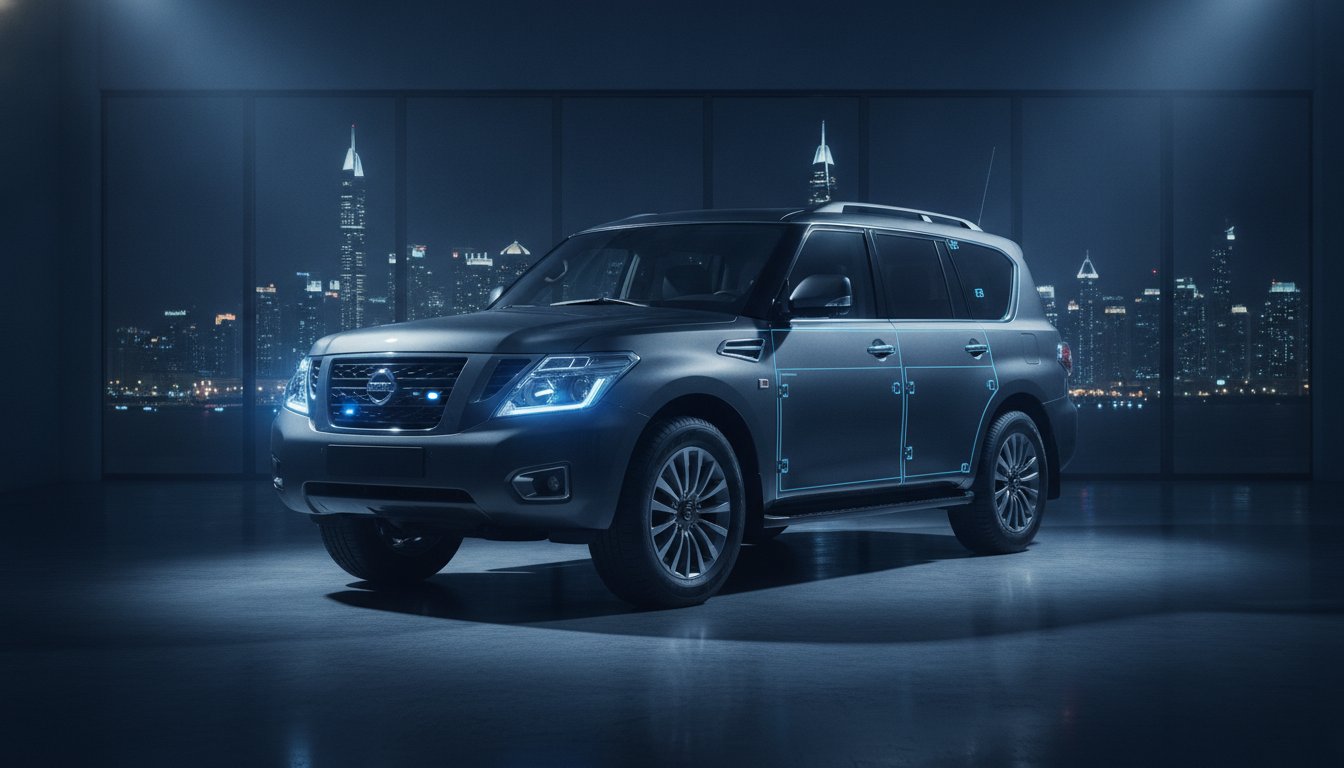
True undercover performance is achieved through technical invisibility, where every mission-critical system is engineered to be functionally superior yet visually non-existent. For law enforcement professionals, the stakes of a compromise are too high to ignore. You likely know the frustration of a build that looks civilian but fails on the job. Whether it's light bleed revealing your identity at night or an electrical system that crashes under the load of modern surveillance tech, poor upfitting is a tactical liability. These undercover police vehicle modifications must be seamless to ensure both officer safety and mission success.
We understand that a standard SUV isn't built to handle the weight of specialized equipment or the demands of high-speed pursuits. This guide delivers the technical expertise required to transform civilian platforms into high-performance units without sacrificing their discrete profile. You'll discover how to integrate advanced communication systems and solve common issues like suspension sag from heavy gear. We also examine current trends, such as the increased demand for ballistic protection following the Bulletproof Law Enforcement Vehicles Act introduced in May 2026. This is your professional roadmap to achieving total tactical invisibility and high-speed stability on the road.
Key Takeaways
- Master the technical engineering behind undercover police vehicle modifications to ensure a 100% civilian aesthetic without compromising Tier-1 tactical capabilities.
- Learn how to eliminate "back-flash" and visual detection using ultra-low-profile LED integration and custom-engineered light shrouds.
- Discover structural solutions like heavy-duty suspension and enhanced braking systems designed to handle the increased weight of covert mission gear.
- Identify strategies for installing multi-agency radio systems and "phantom" antennas that mimic standard civilian GPS fins for total signal discretion.
- Leverage precision CNC machining and custom metal fabrication to integrate mission-critical components seamlessly into any high-performance vehicle platform.
What Are Undercover Police Vehicle Modifications?
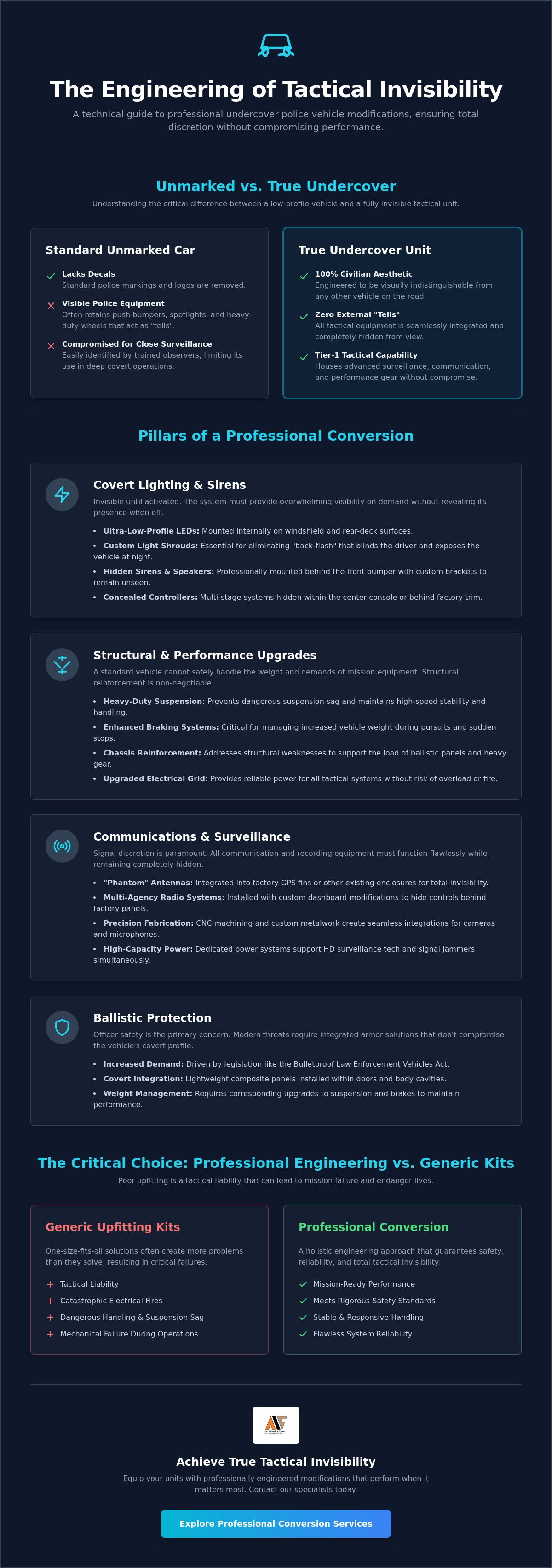
Many people confuse unmarked police cars with true undercover units. While an unmarked car lacks decals, it usually retains visible police-spec equipment like push bumpers, spotlight mounts, or heavy-duty steel wheels. A true undercover unit is different. Professional undercover police vehicle modifications focus on maintaining a 100% civilian aesthetic. The goal is to house Tier-1 tactical equipment without a single external "tell" that reveals the vehicle's identity to a suspect during close-range surveillance.
Standard civilian vehicles aren't designed for the rigors of law enforcement duty. They lack the electrical capacity to power multi-agency radios, signal jammers, and high-definition surveillance tech simultaneously. Without structural overhauls, the weight of ballistic panels and specialized gear leads to suspension sag and dangerous handling. Mission-specific builds address these failures by reinforcing the chassis and upgrading the power grid before any tactical gear is installed. Generic upfitting kits often fail because they don't account for the unique weight distribution of covert equipment. Professional engineering ensures the vehicle remains stable and responsive under pressure.
To better understand the visual differences in these units, watch this helpful video:
Tactical Invisibility vs. High Visibility
Visual discretion is an officer's most effective armor. Blending in requires understanding the local environment. A shiny new SUV stands out in a low-income industrial area, while a beat-up sedan looks suspicious in a corporate park. Master craftsmen use precision fabrication to hide mission-critical tech. We focus on:
- "Phantom" antennas integrated into existing civilian GPS fins.
- Hidden sirens and speakers mounted behind the front bumper with custom brackets.
- Interior light shrouds that eliminate tell-tale "back-flash" during night operations.
- Custom dashboard modifications that hide radio controls behind factory panels.
The Legal and Operational Necessity of Professional Conversion
Professional conversion is a legal necessity. In a high-speed pursuit, a poorly upfitted vehicle is a liability. Professional builders ensure that every modification, from brake upgrades to electrical routing, meets rigorous safety standards. Using specialized modification services protects both the officer and the sensitive surveillance assets inside. Non-specialized work often leads to catastrophic electrical fires or mechanical failure during critical operations. High-quality undercover police vehicle modifications ensure the unit performs as expected when lives are on the line.
Covert Lighting and Siren Integration Strategies
Engineering a lighting system that remains invisible until the moment of activation requires more than just small bulbs. Traditional upfitting often leaves visible LED strips or wiring that compromises a vehicle's covert profile. Professional undercover police vehicle modifications focus on ultra-low-profile LED technology mounted to the interior windshield and rear-deck surfaces. These modules are recessed into custom-fabricated light shrouds. These shrouds are essential; they eliminate "back-flash," which is the internal light reflection that blinds the driver and reveals the vehicle's position to others during night operations.
Effective Emergency Vehicle Visibility for undercover units is about sudden, overwhelming presence, not constant conspicuousness. We integrate multi-stage controllers that stay hidden from external view, often tucked inside center consoles or behind factory trim pieces. These systems allow officers to cycle through different lighting patterns without looking down or fumbling with obvious switches. Key features of these integrated control systems include:
- Tactile-feedback buttons for eyes-on-the-road operation.
- Custom wiring harnesses that eliminate the need for visible dash-mounted boxes.
- Integration with existing steering wheel controls for discrete activation.
Advanced "kill switches" are also mandatory for tactical success. These allow an officer to instantly disable all interior illumination, including dashboard screens, dome lights, and even door-ajar indicators, ensuring total darkness during sensitive surveillance operations.
Discrete LED Mounting Techniques
Visor-mounted lightbars are the gold standard for front-facing covert lighting. These units sit flush against the headliner and disappear completely when switched off. For side and rear coverage, "hide-away" strobe systems are integrated directly into factory headlight and taillight housings. This method preserves the civilian appearance of the vehicle's exterior by utilizing existing lenses. We often pair these modules with specialized window tints that feature specific VLT (Visible Light Transmission) ratings. This creates a visual barrier that masks the internal light modules from casual observers while allowing the high-intensity LEDs to punch through with full intensity when activated.
Siren and Audio Concealment
Hiding a high-decibel siren is a balancing act between audio throw and engine health. Standard sirens are bulky and block airflow if mounted poorly. We utilize compact, high-output electronic sirens tucked behind the front bumper or within wheel wells. This placement ensures maximum sound projection during pursuits without restricting the radiator's cooling capacity. It's critical that these components don't interfere with factory safety sensors, such as adaptive cruise control or parking radars. For agencies requiring the highest level of discretion, our specialized vehicle conversion services include custom bracket fabrication to mount audio hardware in non-traditional voids within the chassis, ensuring the siren remains unheard until it's needed.
Structural and Performance Upgrades for Covert Units
Performance in a covert unit isn't just about zero to sixty times. It's about maintaining stability when the vehicle is loaded with hundreds of pounds of hidden surveillance tech and ballistic shielding. Standard passenger cars aren't built for these sustained loads. Adding mission-critical undercover police vehicle modifications requires a complete overhaul of the vehicle's structural integrity. Without these upgrades, the unit becomes slow, unstable, and dangerous during high speed maneuvers. We engineer these platforms to handle the extra weight while keeping the exterior looking like any other car on the road.
We focus on reinforced chassis points to handle the extreme stress of PIT maneuvers and sudden directional changes. Additionally, surveillance missions often require the engine to idle for hours to power internal electronics and communication arrays. We install high capacity radiators and auxiliary cooling fans to prevent heat soak. This ensures the vehicle is ready to engage instantly from a stationary position without the risk of engine failure. Reliability is a tactical requirement, not an option.
Heavy-Duty Suspension and Braking
Visual discretion depends on a level stance. If the rear end sags due to heavy equipment, the vehicle's identity is immediately compromised. We utilize progressive-rate springs that maintain a factory ride height under heavy load while providing the stiffness needed for aggressive driving. To manage the increased kinetic energy of a fully loaded unit, we install high performance rotors and pads. These components eliminate brake fade, ensuring consistent stopping power during pursuit operations. It's about keeping the vehicle predictable when the situation is anything but.
Internal Ballistic Protection
Protection shouldn't come at the cost of performance. Modern police vehicle modifications now incorporate lightweight composite armoring. These materials provide protection against ballistic threats while minimizing the impact on vehicle acceleration and fuel efficiency. We focus on integrating these solutions without altering the interior's appearance. Key features of our ballistic integration include:
- Discrete ballistic panels integrated into door cards and pillars to protect occupants.
- Utilization of materials that align with NIJ Standard-0101.07 for ballistic resistance.
- Ballistic glass inserts that maintain full window functionality for surveillance and ventilation.
- Reinforced flooring and bulkheads to protect against under-vehicle threats or secondary impacts.
By using precision engineering, we ensure that the vehicle maintains its factory handling characteristics. This allows officers to focus on the mission rather than struggling with a heavy, unresponsive vehicle. Every structural modification is designed to be a silent partner in the field.
Covert Communication and Surveillance Systems
The effectiveness of a covert unit relies on its ability to stay connected without revealing its purpose. Professional undercover police vehicle modifications focus on integrating multi-agency radio systems that disappear into the factory interior. We hide controls inside center consoles or behind modified dashboard trim. Microphones are recessed into headliners or A-pillars, ensuring clear communication without visible hardware. This level of integration prevents suspects from identifying the vehicle during close-range interactions.
Running high-drain surveillance gear and multi-band radios requires a specialized power grid. We install secondary battery systems equipped with smart isolators. This setup ensures that tactical equipment runs independently, preventing the gear from draining the primary starter battery during long stationary surveillance missions. It's a mission-critical solution for reliability. You don't want a dead battery when it's time to move. Our engineering team ensures all wiring is automotive-grade and routed through factory channels to prevent interference and maintain a clean, civilian look, while technology services from IT PRO ensure that the integrated digital systems are optimized for secure, high-performance operation.
Discrete Antenna Systems
Antennas are the most common "tell" on an unmarked car. We solve this by using "phantom" antennas that mimic civilian radio fins or GPS mounts. We also convert factory AM/FM antennas into multi-band communication hubs using internal signal splitters. For high-frequency data and GPS tracking, we utilize internal glass-mount antennas. These are positioned specifically to minimize signal interference within the metal-enclosed vehicle. Precision engineering ensures that signal strength remains high while the exterior profile stays 100% civilian.
Secure Tactical Storage
Safety in the field requires secure, rapid access to equipment. We design custom-fabricated metal lockers for rifles and specialized gear. These are often integrated into the rear cargo floor or hidden behind false panels. For front-end protection that doesn't scream "law enforcement," we utilize custom bull bars and bumpers. These provide structural reinforcement for the chassis without the aggressive look of a standard push bar. We also build rapid-access hidden compartments for handguns and sensitive documents. These use electronic locks tied to the vehicle's ignition or hidden tactile switches. If you need a custom build that balances security with total discretion, explore our specialized conversion solutions to see how we handle sensitive vehicle upfitting.
Professional Conversion by Auto Industries Factory
Total tactical invisibility is only as reliable as the engineering behind it. At Auto Industries Factory, we treat undercover police vehicle modifications as a high-precision manufacturing discipline rather than a simple accessory installation. Our process begins with in-house design and fabrication, which ensures that every sensitive detail of a covert build remains confidential. By managing the entire lifecycle of the modification within our own facilities, we eliminate the operational security risks associated with third-party vendors. This single-source approach guarantees that your fleet's capabilities remain a secret until the moment they're deployed.
We utilize advanced CNC machining and laser cutting technologies to integrate covert components with surgical precision. This allows our team to modify chassis components, create hidden storage, and route complex electrical systems without compromising the structural integrity or the civilian appearance of the vehicle. Every unit undergoes comprehensive testing. We verify that electrical loads are balanced and that structural reinforcements can withstand the kinetic energy of high-speed pursuits. This rigorous approach ensures fleet-wide reliability for law enforcement and military agencies operating in mission-critical environments. Our engineers simulate extreme operational stress to ensure that every modification performs flawlessly when the stakes are highest.
The In-House Advantage
Our unified fabrication process is designed to prevent information leaks. When a vehicle moves between different shops for radio work, armor, and paint, its true purpose becomes public knowledge. We handle everything from the initial CAD design to final ballistic testing and painting under one roof. This provides a closed-loop environment for sensitive projects. To see how we apply these high standards to more visible units, learn more about our police vehicle modifications for standard patrol fleets.
Custom Solutions for Specialized Fleets
No two missions are identical. We tailor our conversions to specific vehicle platforms that are common in your theater of operation, such as the Toyota Land Cruiser or the Hilux. This ensures the unit blends into the local traffic pattern perfectly. Beyond discrete units, we provide comprehensive armoured personnel carrier solutions for high-threat environments where maximum protection is the priority. Our team provides national support and maintenance to keep your specialized fleet operational and mission-ready. We understand that downtime isn't an option for security services. Contact us at Auto Industries Factory for a technical consultation on your covert fleet needs.
Secure Your Tactical Advantage with Precision Engineering
Achieving total tactical invisibility requires a departure from standard upfitting. It demands a sophisticated blend of master craftsmanship and advanced engineering. We've analyzed how discrete lighting, phantom antennas, and structural upgrades create a unit that performs under pressure while remaining undetected. These undercover police vehicle modifications aren't just about hiding gear; they're about ensuring officer safety through mission-specific reliability. Maintaining a professional exterior is also essential for total discretion, and D3 Auto Care LLC provides the high-standard detailing needed to keep undercover assets looking like pristine civilian vehicles. When your operation depends on blending in, there's no room for technical compromise or visual "tells" that could compromise a mission.
Auto Industries Factory stands as a specialist in ballistic and structural reinforcement. Our in-house CNC and laser fabrication capabilities allow us to maintain total operational security for every sensitive build. As a trusted partner for national security and law enforcement fleets, we deliver solutions that meet the highest technical standards. We're ready to help you transform standard platforms into high-performance covert units that don't fail when the stakes are highest. Contact our engineering team for a custom covert fleet consultation to discuss your specific operational requirements. Your mission deserves the precision of expert engineering.
Frequently Asked Questions
What is the difference between an unmarked and an undercover police car?
An unmarked vehicle lacks department decals but usually retains tell-tale signs like spotlights or heavy-duty wheels. In contrast, true undercover police vehicle modifications focus on absolute visual discretion. Every piece of tactical equipment is hidden behind factory trim or within existing vehicle components. This ensures the unit is indistinguishable from a standard civilian vehicle even during close-range observation or surveillance missions.
Can any civilian vehicle be modified for undercover police work?
Most modern platforms can be converted, though high-performance SUVs and trucks are the most common choices. Vehicles like the Toyota Land Cruiser or GMC Yukon are ideal because they offer the structural space needed for internal armoring and secondary power systems. We select vehicles based on their ability to blend into the local environment. A successful build starts with a platform that doesn't look out of place.
How do you hide police lights so they are not visible when turned off?
We utilize ultra-low-profile LED technology and visor-mounted lightbars that sit flush against the headliner. These modules disappear when powered down. Hide-away strobes are integrated directly into factory headlight and taillight housings to preserve the exterior profile. Custom-fabricated light shrouds are also used to prevent light bleed. This ensures that the vehicle's identity is only revealed when the officer chooses to activate the emergency systems.
Do undercover modifications affect the vehicle’s fuel efficiency or speed?
Adding tactical gear and ballistic panels increases the vehicle's weight, which can impact fuel economy and acceleration. We mitigate these effects by using lightweight composite armoring and upgrading the suspension and braking systems. These performance enhancements ensure the vehicle maintains high-speed stability and pursuit capabilities. Professional engineering focuses on balancing the added mission load with the mechanical limits of the factory chassis to prevent premature wear.
How is the power managed for all the extra radios and surveillance equipment?
Power is managed through dedicated secondary battery systems equipped with smart isolators. This allows surveillance tech and multi-agency radios to run for hours without draining the primary starter battery. We use automotive-grade wiring harnesses and high-output alternators when necessary. This engineering ensures that the vehicle is always ready to start and move instantly, even after a prolonged stationary surveillance mission in a remote location.
Is ballistic protection included in standard undercover vehicle modifications?
Ballistic protection is a specialized upgrade rather than a default feature for every build. Agencies increasingly request discrete armoring in response to the 2026 Bulletproof Law Enforcement Vehicles Act. We integrate composite panels into door cards and pillars to provide protection without altering the vehicle's appearance. This provides a critical layer of safety for officers operating in high-threat environments where sudden ambushes are a tactical risk.
How are antennas hidden on covert police vehicles?
Antennas are hidden using "phantom" designs that mimic standard civilian GPS fins or satellite radio mounts. We also utilize internal glass-mount antennas for high-frequency data transmission and GPS tracking. Another effective strategy involves converting the factory AM/FM antenna into a multi-band hub using internal splitters. These undercover police vehicle modifications ensure mission-critical communication remains strong while removing the most common visual "tell" of a law enforcement unit.
Why is professional fabrication better than using aftermarket upfitting kits?
Professional fabrication provides a level of integration and operational security that generic kits cannot match. We use CNC machining and laser cutting to create custom brackets and storage solutions that fit perfectly within the specific vehicle's voids. This prevents rattles, ensures structural integrity, and keeps the build details confidential. Kits often require visible modifications or universal mounts that compromise the vehicle's covert profile and tactical effectiveness.


