
A standard off-the-shelf roof rack isn't just an accessory in the UAE desert; it's often a liability that fails at the exact moment your mission depends on it most. You've likely dealt with the frustration of hearing a modular rack rattle across the dunes or seeing a generic bracket snap under the weight of heavy ladders and emergency lighting. For specialized fleets, equipment failure isn't just an inconvenience; it's a threat to operational safety and vehicle longevity.
We understand that mission-critical operations require gear that matches the ruggedness of the terrain. This guide explores how precision-engineered custom vehicle roof rack fabrication provides the structural integrity and equipment integration your fleet demands. You'll discover the engineering standards required for maximum weight capacity, the importance of seamless tool integration, and how specialized fabrication techniques ensure your racks last the entire lifespan of your vehicles. We'll break down the technical requirements for everything from safari conversions to emergency response units, ensuring your fleet remains reliable in the harshest regional conditions.
Key Takeaways
- Understand why modular, bolt-together systems often fail under the intense vibrations of UAE desert terrain and how custom engineering solves these structural weaknesses.
- Compare the technical advantages of aluminum versus high-grade steel to ensure your fleet achieves the ideal strength-to-weight ratio for its specific mission profile.
- Learn how precision custom vehicle roof rack fabrication utilizes 3D scanning and laser cutting to achieve sub-millimeter accuracy for a perfect vehicle fit.
- Discover how to integrate specialized tools like medical lightbars, oxygen systems, or safari observation decks directly into the rack's structural design.
- Identify the manufacturing standards required to produce a roof rack that outlasts the vehicle's lifespan while maintaining maximum safety and load capacity.
Why Off-the-Shelf Roof Racks Fail Specialized Missions
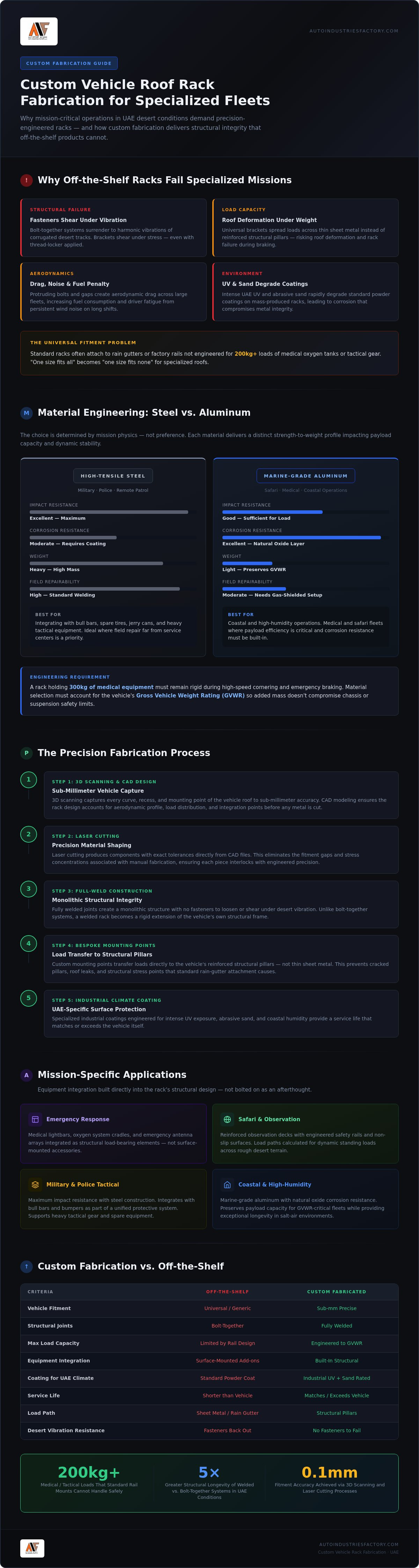
Standard modular racks are built for the average consumer, not the high-stakes environment of a specialized fleet. When your vehicle operates 24/7 in roles like emergency response or desert patrol, a bolt-together system becomes a liability. These systems rely on friction and small fasteners that eventually surrender to the constant harmonic vibrations of corrugated tracks and high-speed highway transit. Fasteners fail. Brackets shear. In mission-critical scenarios, these aren't just mechanical issues; they're operational risks.
Generic designs often suffer from severe weight capacity constraints. Universal mounting brackets distribute loads across thin sheet metal rather than the vehicle’s reinforced structural pillars. This leads to roof deformation and potential rack failure during heavy braking or sudden off-road maneuvers. Protruding bolts and gaps in generic racks also create significant aerodynamic drag. For a large fleet, this translates into increased fuel consumption and persistent wind noise that contributes to driver fatigue over long shifts.
The Problem with Universal Fitment
The "one size fits all" approach frequently results in "one size fits none" for specialized vehicle roofs. Standard racks often attach to rain gutters or factory rails that weren't engineered for the 200kg+ loads of medical oxygen tanks or tactical gear. Custom vehicle roof rack fabrication allows for the creation of bespoke mounting points that transfer the load directly to the vehicle's structural frame. By utilizing reinforced mounting solutions, you eliminate the need for damaging modifications while ensuring the rack remains a rigid extension of the vehicle's own structure. This precision fitment prevents the structural stress points that lead to cracked pillars and roof leaks.
Durability in Extreme National Conditions
The UAE environment is a punishing testing ground for any metalwork. Intense UV exposure and abrasive sand quickly degrade standard powder coatings found on mass-produced racks, leading to rapid corrosion that compromises the metal's integrity. In safari operations, the relentless vibration causes bolts in modular systems to back out, even when high-strength thread-locker is applied. Long-term reliability requires fully welded joints. A monolithic, welded structure doesn't have fasteners that can loosen or shear under stress. When combined with specialized industrial coatings designed for the regional climate, a custom-fabricated rack provides a service life that matches or exceeds the vehicle itself. It's a one-time investment in fleet safety.
Material Engineering: Aluminum vs. Steel in Custom Fabrication
Material selection is the foundation of structural engineering in custom vehicle roof rack fabrication. For specialized fleets in the UAE, the choice between high-tensile steel and marine-grade aluminum isn't about preference; it's about the physics of the mission. Each alloy presents a different strength-to-weight ratio that impacts the vehicle's payload capacity and dynamic stability. While steel provides the ultimate defense against mechanical impact, aluminum offers the corrosion resistance necessary for coastal operations and high-humidity environments.
The technical advantages of aluminum extend beyond vehicle racks to various structural applications; for example, you can learn more about TOP TRUSS and their specialized aluminum systems for the event industry.
Engineering a rack for mission-critical gear requires calculating static versus dynamic loads. A rack holding 300kg of medical equipment must remain rigid during high-speed cornering and emergency braking. Selecting the optimal material depends entirely on the vehicle's Gross Vehicle Weight Rating (GVWR), ensuring that the added mass of the rack and its specialized tools doesn't compromise the chassis or suspension safety limits.
When to Choose Heavy-Duty Steel
Military and police operations often demand maximum impact resistance. Heavy-duty steel is the preferred choice when the rack must integrate with other protective components, such as custom bull bars and bumpers. Steel’s primary advantage lies in its fatigue life and ease of maintenance. In remote safari or border patrol environments, a steel rack can be repaired with standard welding equipment, whereas aluminum requires specialized gas-shielded setups. This makes steel the pragmatic choice for fleets operating far from urban service centers where structural reliability is non-negotiable. It handles the constant stress of heavy spare tires and jerry cans without developing the stress fractures that can plague lighter materials under extreme vibration.
The Advantages of Lightweight Aluminum
For high-roof ambulances and logistics fleets, weight management is a safety priority. High-roof conversions already have a raised center of gravity. Using lightweight aluminum for the roof rack helps keep the vehicle stable during rapid maneuvers. Beyond stability, aluminum offers significant fuel efficiency gains for large-scale fleets covering thousands of kilometers across the Emirates. Modern fabrication techniques utilize custom aluminum extrusions with integrated T-slot channels. These channels allow technicians to mount lightbars, sirens, and specialized tactical equipment with millimeter precision without drilling new holes that could invite corrosion. If your fleet operates frequently in coastal regions, aluminum’s natural oxide layer provides a permanent barrier against salt-air degradation. You can view our technical approach to these specialized fabrication solutions to determine which material fits your specific operational load.
The Precision Fabrication Process: From CAD to Coating
Excellence in custom vehicle roof rack fabrication begins long before a single piece of metal is cut. We start with high-resolution 3D scanning of the specific vehicle roofline. This digital twin allows our engineers to account for every curve, contour, and factory mounting point with absolute accuracy. Using CAD modeling, we simulate load distributions and identify potential stress points. This digital-first approach ensures the final product isn't just a bolted-on accessory but a structurally sound extension of the vehicle's chassis.
Once the design is finalized, our in-house laser cutting technology takes over. We achieve sub-millimeter precision, ensuring every component fits perfectly without the need for forced alignment or shims. CNC bending then creates seamless rail profiles from high-strength alloys. These one-piece rails are inherently stronger than multi-piece alternatives because they lack the weak joints that typically fail under the heavy, shifting loads of mission-critical equipment.
In-House Engineering Capabilities
Having comprehensive vehicle fabrication capabilities under one roof is critical for maintaining strict quality control. It allows us to integrate internal structural reinforcements that standard shops might overlook. We don't just build to a shape; we build to a specific load rating. Each design undergoes rigorous stress testing to ensure it meets the demands of specialized applications, whether it's for an ambulance or a military transport unit. Our TIG and MIG welding processes are performed by master technicians who prioritize deep penetration and clean beads for maximum structural integrity under constant vibration.
Industrial Finishing and Protection
The UAE’s salt air and extreme heat require more than a simple spray job. We utilize a multi-stage industrial finishing process to protect the metal. This includes chemical pre-treatment followed by high-grade powder coating or specialized industrial painting. These layers provide a durable shield against intense UV radiation and physical abrasion from sand. Every piece of mission-critical hardware receives anti-corrosion treatments to ensure the rack remains functional for years. Before final vehicle integration, our quality assurance team conducts a comprehensive check to verify that every weld and fastener meets our exacting engineering standards.
Mission-Specific Design: Integrating Specialized Equipment
Custom vehicle roof rack fabrication isn't just about creating a platform; it's about building a functional command center on top of your vehicle. For an ambulance conversion, every second counts. Racks must be engineered to securely house high-output lightbars and sirens while providing internal channels for complex wiring. We also accommodate roof-mounted medical oxygen systems. These heavy tanks require vibration-dampening mounts that prevent structural fatigue during high-speed transit. By integrating these systems into the initial design, we ensure the vehicle's electrical and structural integrity remains intact.
Mobile workshops and command units often require sustainable power for remote operations. We integrate customized mounting points for solar panels that sit flush with the rack profile to minimize drag. These panels provide critical power for onboard diagnostics and communication tools without idling the engine. Our engineering team calculates the exact placement to avoid shading from other equipment, maximizing energy yield in the intense UAE sun. This level of technical integration turns a simple transport vehicle into a self-sustaining mobile unit.
Safari and Off-Road Tour Optimization
Building for the ultimate safari vehicle conversion requires a balance between utility and safety. We design racks featuring integrated spare tire mounts and jerry can holders that keep the center of gravity as low as possible. A critical feature for UAE tourism is the observation deck. These platforms must support the weight of multiple passengers while maintaining the vehicle's structural stability. We use reinforced cross-members and non-slip surfaces to ensure safe passenger access and panoramic views. Our designs also include dedicated mounts for sand tracks and recovery gear, ensuring these bulky items are accessible but won't shift during aggressive dune bashing.
Emergency and Tactical Fleet Readiness
High-speed police vehicle modifications require low-profile designs that minimize wind resistance and maximize stability. Tactical racks integrate communication arrays and heavy-duty ladders that deploy in seconds. We prioritize cable management, using internal routing within the rack's frame to protect electronics from UV damage and physical impact. For military applications, we provide structural supports for heavy recovery equipment. This ensures that winches and tow points are backed by the rack's full structural strength. If your fleet requires this level of engineering precision, contact our fabrication specialists to discuss your mission requirements.
The Auto Industries Factory LLC Advantage in Custom Fabrication
Auto Industries Factory LLC positions itself as a regional specialist in mission-critical vehicle modifications. We provide a complete conversion solution, ensuring that custom vehicle roof rack fabrication is engineered in tandem with other essential components like bull bars and internal equipment mounts. Our extensive track record includes delivering high-performance solutions to national government agencies and private safari fleets across the Emirates. For those managing educational institutions, you can also discover Edutainment Solutions for specialized school media and yearbook production services. This institutional knowledge allows us to anticipate the structural demands of the UAE’s terrain and the rigorous duty cycles of professional fleets.
Our engineering expertise is specifically tailored to the region’s most dependable platforms, including the Toyota Land Cruiser, Hilux, and GMC series. By focusing on these high-performance vehicles, we guarantee that every mounting point aligns with the original manufacturer’s structural load paths. This technical precision ensures that the added equipment does not compromise the vehicle's safety systems or chassis longevity. We deliver a fully integrated engineered solution rather than a collection of disparate accessories.
Bespoke Solutions for Every Fleet
We utilize a consultative design approach to meet the unique operational requirements of every client. Whether you operate a single specialized safari vehicle or a massive fleet of emergency response units, our fabrication process is fully scalable. We provide long-term support for all our builds, ensuring that as your mission requirements evolve, your rack systems can be adapted to accommodate new equipment. This commitment to flexibility ensures that your fleet remains a high-value asset throughout its entire service life.
Get Started with Your Custom Build
The path to a professional fleet upgrade begins with a detailed technical consultation at our facility. Our engineers will review your vehicle’s Gross Vehicle Weight Rating (GVWR) and your specific equipment payload to determine the optimal material and mounting strategy. To receive an accurate fabrication quote, please provide your vehicle specifications and a comprehensive list of the tools you need to integrate. Contact the engineering team at Auto Industries Factory LLC today to initiate your custom build and secure your fleet’s operational readiness.
Secure Your Fleet with Engineered Structural Solutions
Selecting a high-performance structural foundation for your fleet is a decision that dictates operational safety and vehicle longevity. Standard modular systems often fail under the extreme mechanical stresses of the UAE's desert terrain; they simply aren't built for the mission. By opting for custom vehicle roof rack fabrication, you secure a platform engineered specifically for your vehicle's chassis and payload requirements. This approach moves your fleet beyond generic accessories and into the realm of fully integrated, mission-critical solutions.
Our ISO-certified facility leverages in-house laser cutting and CNC machining to provide the most reliable structural upgrades in the region. From high-speed emergency response to heavy-duty safari operations, we deliver the master craftsmanship necessary for national service. Your vehicles represent a major investment; ensure their equipment mounts are as robust as the engines that power them.
Request a custom fabrication quote from Auto Industries Factory LLC today to initiate your technical consultation. We're prepared to provide the structural integrity your operations demand.
Frequently Asked Questions
How long does the custom roof rack fabrication process take?
Lead times for a bespoke build typically range from 10 to 15 working days following the approval of the CAD design. This duration allows for precision laser cutting, TIG/MIG welding, and industrial powder coating. For larger fleet orders, we establish a phased manufacturing schedule to ensure consistent quality across every unit. Our engineering team prioritizes structural integrity over speed to ensure every rack survives the lifespan of the vehicle.
Can a custom roof rack be installed on any vehicle type?
We can engineer a custom solution for almost any vehicle platform currently in operation. While we have extensive experience with the Toyota Land Cruiser, Hilux, and GMC models, our 3D scanning technology allows us to map the roofline of any specialized chassis. This ensures the rack aligns perfectly with the vehicle's structural pillars, providing a secure fit that generic, off-the-shelf modular systems simply cannot match.
What is the maximum weight capacity of a custom-fabricated rack?
The maximum capacity depends on the vehicle's Gross Vehicle Weight Rating (GVWR) and the specific material used. Our custom vehicle roof rack fabrication process allows for static loads exceeding 300kg when properly anchored to reinforced pillars. We conduct rigorous dynamic load calculations to ensure the vehicle remains stable during emergency braking or sharp cornering. This focus on engineering prevents roof deformation and ensures the safety of your personnel during high-stakes missions.
Do custom roof racks require drilling into the vehicle roof?
We prioritize using factory-installed mounting points and rain gutters to avoid unnecessary modifications to the vehicle's sheet metal. In cases where mission-critical equipment exceeds standard weight limits, we may design reinforced internal brackets. This ensures the load is distributed directly to the vehicle's frame rather than the roof skin. Our engineers always aim to provide maximum structural strength while minimizing any permanent alterations to the vehicle's original bodywork.
Is aluminum or steel better for a safari vehicle roof rack?
High-tensile steel is the preferred choice for safari operations due to its superior impact resistance and durability under constant vibration. While aluminum offers weight savings, steel is more resilient against the stress of corrugated desert tracks and is easier to repair in remote locations. It provides the rugged foundation needed for heavy spare tires and recovery gear, making it the standard for high-stakes off-road and military fleet applications in the region.
How do custom racks affect the vehicle warranty?
Professional fabrication that utilizes existing mounting points generally doesn't impact the core vehicle warranty. We follow manufacturer-approved structural guidelines to ensure our modifications remain within safe operational limits. However, it's always advisable to consult with your fleet manager or the vehicle manufacturer regarding specific warranty terms. Our engineering-led approach focuses on enhancing vehicle utility without compromising the mechanical reliability or safety systems of the original chassis.
Can you integrate solar panels and lightbars into the design?
Seamless integration of mission-specific tools is a primary benefit of a bespoke build. We design dedicated mounting points and internal wiring channels for lightbars, sirens, and solar panels. This protects your electronics from the UAE’s intense UV radiation and abrasive sand. By flush-mounting these components, we also reduce aerodynamic drag, which helps maintain fuel efficiency and reduces wind noise during high-speed highway transit or emergency response situations.
Are custom-fabricated racks compatible with standard accessories?
Our designs can incorporate universal mounting patterns or T-slot channels to ensure compatibility with a wide range of standard accessories. This means you can still use off-the-shelf awnings, recovery boards, or tool mounts on a bespoke structural frame. Our custom vehicle roof rack fabrication provides the perfect balance between a high-strength, mission-specific foundation and the modular flexibility needed to swap out gear as your operational requirements change over time.


