
A single millimetre of deviation in a steel cut can be the difference between a life-saving ambulance conversion and a catastrophic structural failure during a high-speed emergency response. You already know that in the demanding environments of the UAE, where vehicles face extreme heat and rugged terrain, your fleet's reliability hinges on the absolute quality of its build. This is where precision metal cutting for vehicle fabrication becomes the most critical, yet often overlooked, component of specialized engineering. Poorly executed cuts lead to inconsistent fitment of custom bull bars and premature corrosion at weld sites, compromising both safety and longevity.
In this article, you'll discover how advanced precision cutting technologies define the structural integrity, safety, and performance of mission-critical vehicle conversions. We'll examine the technical advantages of in-house laser and CNC machining, and show you how these processes ensure every component meets international safety standards. From perfectly fitted custom canopies to robust military modifications for platforms like the Toyota Land Cruiser, you'll see how superior engineering reduces long-term maintenance costs and keeps your specialized assets on the road. We are moving beyond simple assembly to a standard of master craftsmanship that guarantees performance when it matters most.
Key Takeaways
- Understand how the shift from manual cutting to automated CNC and laser technology creates a foundation of structural reliability for specialized vehicles.
- Learn why precision metal cutting for vehicle fabrication is the secret to achieving consistent fitment and performance across high-volume police and military fleet orders.
- Discover the role of exact metalwork in securing mission-critical equipment and maintaining ballistic integrity in armored and emergency response units.
- Identify how specialized cutting methods protect the strength and corrosion resistance of high-tensile alloys used in rugged UAE environments.
- Explore the operational benefits of in-house fabrication, including reduced project lead times and tighter quality control for custom vehicle conversions.
Why Precision Metal Cutting is the Foundation of Vehicle Fabrication
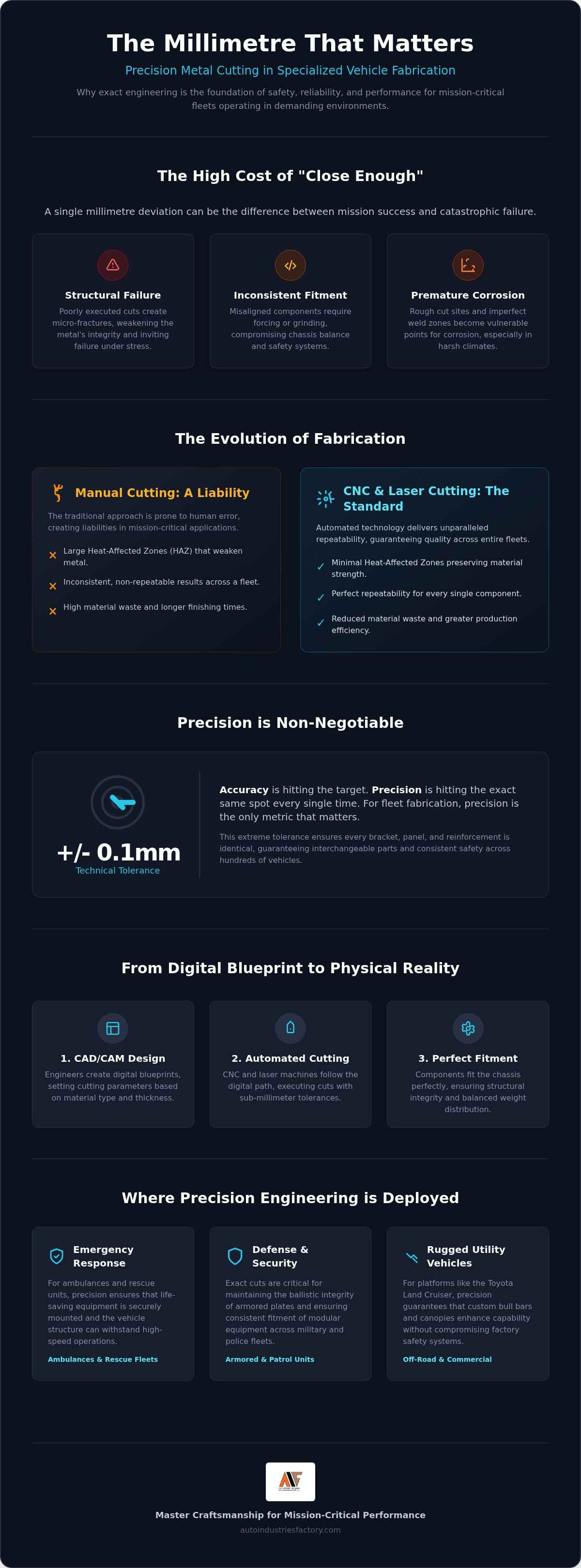
Precision metal cutting for vehicle fabrication is the technical process of removing material with extreme accuracy, often within tolerances of +/- 0.1mm. In the context of heavy-duty modifications, this isn't just about aesthetics; it's about structural survival. For years, the industry relied on manual cutting and hand-finishing. Today, that approach is a liability. Automated CNC and laser technologies have replaced the hand-torch because specialized fleet engineering demands a level of repeatability that human hands can't sustain. When a vehicle is operating in high-stress environments, "close enough" is an invitation for structural failure.
Structural longevity begins at the cut site. Rough, manual cuts create micro-fractures and heat-affected zones that weaken the metal's integrity. Precision laser cutting minimizes these risks by concentrating heat in a tiny area, preserving the metallurgical properties of the surrounding material. This ensures that every weld is cleaner and every joint is stronger, preventing the premature fatigue that often plagues low-quality conversions.
The Role of Precision in Modern Automotive Engineering
Modern engineering turns complex digital blueprints into physical components with zero margin for error. This precision directly impacts vehicle balance and weight distribution. If a heavy roof rack or internal medical cabinet is misaligned by even a few millimeters, it creates uneven stress on the chassis. This is especially true for custom components. Consider these critical factors:
- Alignment: Components fit the chassis without forcing, grinding, or unnecessary drilling.
- Balance: Weight is distributed according to the original engineering specifications to maintain handling.
- Safety: Critical accessories like custom bull bars require exact fitment to ensure they integrate with factory crumple zones.
A precise cut ensures the accessory protects the vehicle on platforms like the Toyota Land Cruiser or Hilux rather than compromising the frame's integrity during an impact.
From Design to Reality: The Fabrication Workflow
The workflow starts with Computer-Aided Design (CAD) and Computer-Aided Manufacturing (CAM). These systems are the backbone of precision metal cutting for vehicle fabrication, allowing engineers to set specific cutting parameters based on the material. Whether we're working with lightweight aluminum or high-tensile ballistic steel, the laser follows a path calculated to the sub-millimeter. This digital-first approach eliminates the guesswork common in traditional workshops. It also significantly reduces material waste, making the process more efficient. In the high-volume production environments of the UAE, this efficiency translates to faster turnaround times for fleet managers without sacrificing the ruggedness required for mission-critical operations.
This digital-first approach to physical engineering is mirrored in the IT sector by companies like Tech Sphere, which specializes in designing the robust data center infrastructure and advanced networking solutions that modern fleets rely on for communication.
The Science of Precision: Accuracy vs. Precision in CNC and Laser Cutting
Accuracy means hitting the target once. Precision means hitting that same spot every single time with zero deviation. In the world of specialized fleet engineering, accuracy alone isn't enough. When you're commissioning 50 ambulances or a dozen military patrol units, every bracket and panel must be identical to ensure interchangeable parts and consistent safety. This level of repeatability is why precision metal cutting for vehicle fabrication is the only viable path for large-scale conversions. If the first unit's bull bar fits perfectly but the tenth requires grinding and forcing, your fabrication process has failed.
Technical tolerances in mission-critical fabrication often sit at +/- 0.1mm. If a cut deviates beyond this, the component won't just look wrong; it will fail under stress. A major factor here is the Heat Affected Zone (HAZ). Traditional methods like plasma cutting create large areas where the metal's molecular structure is altered by intense heat, making it brittle and prone to cracking. High-performance fiber lasers focus energy so tightly that the HAZ is almost non-existent. This preserves the original strength of the alloy, which is vital for vehicles operating in the high-heat, high-stress conditions of the UAE.
Laser Cutting vs. Traditional Mechanical Cutting
Fiber laser cutting has revolutionized how we handle vehicle body panels. Unlike mechanical shears or saws that can warp thin materials or leave burrs, lasers use light to vaporize metal instantly. This results in a superior edge quality that requires no secondary grinding or finishing. For high-strength steel, this is a game-changer. It prevents the structural weakening often caused by mechanical stress. If you're looking for components that maintain their integrity from the factory floor to the field, you can explore our technical cutting services to see how we maintain these standards.
CNC Machining for Specialized Components
While lasers handle the flat panels, CNC machining takes over for complex three-dimensional parts. Multi-axis machining allows for the creation of intricate internal brackets and medical equipment mounts that must withstand heavy vibration during high-speed transit. This precision is non-negotiable for armoured personnel carrier reinforcements. In an APC, every reinforcement plate must align perfectly with the vehicle's chassis to ensure there are no gaps in ballistic protection. CNC technology ensures that every bolt hole and mounting point is exactly where the engineer intended, providing a level of reliability that manual fabrication simply cannot match.
Mission-Critical Applications: From Ambulance Interiors to Armored Reinforcements
Precision metal cutting for vehicle fabrication is the invisible force behind the reliability of specialized fleets across the UAE. It transforms raw alloys into life-saving equipment that must perform under extreme conditions. When an ambulance maneuvers at high speeds through demanding regional traffic conditions, the forces exerted on internal components are immense. Every medical cabinet, stretcher track, and oxygen tank mount must remain anchored. If a mounting bracket is even slightly misaligned, road vibration can lead to mechanical fatigue, eventually causing equipment to break loose during transit. By utilizing precision metal cutting for vehicle fabrication, we eliminate these risks at the engineering stage.
Precision in Ambulance Conversion and Medical Integration
A professional ambulance conversion demands millimetre-perfect interior framing to maximize limited space without compromising safety. We use laser cutting to ensure that oxygen tank mounts and stretcher tracks are perfectly flush with the vehicle’s floor and walls. This precision isn't just for fitment; it’s for the seamless integration of advanced electrical systems. Precision-cut panels allow for clean routing of wiring harnesses, which reduces the risk of electrical shorts caused by friction against sharp, poorly cut metal edges. In a medical environment, these small engineering details prevent equipment failure when it matters most.
Reinforced Chassis and Armored Protection
In the defense sector, the stakes are even higher. Integrating ballistic steel requires a deep understanding of metallurgical limits. Precision cutting ensures that armored plates fit the chassis with zero gaps, effectively eliminating ballistic windows where a projectile could penetrate. The engineering behind a mine resistant vehicle often features a V-shaped hull designed to deflect blast energy. These hulls rely on exact angles and perfect edge preparation to ensure that welds are deep and uniform. If the cut edge isn't perfectly square, the weld pool won't penetrate correctly, creating a structural weak point that could fail under pressure.
Beyond defense, this same technical rigor applies to safari vehicle conversions. A safari canopy must be completely dust-proof to protect gear in the desert. This requires door seals and window frames that maintain their integrity under extreme pressure and vibration. Precise metalwork ensures that every seal sits perfectly, preventing fine desert sand from entering the cabin. By focusing on these mission-critical applications, Auto Industries Factory LLC ensures that every vehicle is built to endure the harshest environments in the region.
Material Integrity and Engineering Standards in High-Stress Fabrication
The choice of material dictates the operational limits of a specialized vehicle. In our workshop, we select metals based on the specific rigors of the mission. Aluminum is favored for weight reduction in safari builds, while stainless steel provides the necessary corrosion resistance for ambulance interiors. For defense applications, we work with high-tensile ballistic alloys that require specialized handling. Precision metal cutting for vehicle fabrication is the only way to ensure these materials retain their engineered strength. A cut that is too hot or too slow can compromise the metal's molecular structure, turning a high-performance alloy into a structural liability.
Adhering to international safety standards requires more than just good design; it demands rigorous quality control throughout the cutting process. We treat every component as a critical safety feature. Our inspection protocols verify that every edge is clean and every dimension is within the required +/- 0.1mm tolerance. This technical discipline ensures that when a vehicle is deployed, it meets the highest benchmarks for passenger safety and structural durability. If you are looking for engineering that never compromises on these standards, you can request a technical consultation for your fleet.
Managing the Heat Affected Zone (HAZ)
Excessive heat during the cutting process is a silent killer of vehicle frames. When metal is subjected to prolonged high temperatures, it develops a Heat Affected Zone (HAZ) where the material becomes brittle. In high-stress structural joints, this brittleness leads to stress fractures over time. We minimize HAZ by precisely calibrating cut speed and auxiliary gas pressure for every material thickness. This balance keeps the heat concentrated only where the cut occurs, preserving the metallurgical health of the surrounding frame. It's the difference between a modification that lasts a year and one that lasts the life of the vehicle.
Durability in Harsh Environments
The UAE’s environment is notoriously unforgiving. Coastal humidity and extreme desert heat create the perfect conditions for rapid corrosion. Precision edges are your first line of defense against oxidation. Ragged, poorly cut edges create microscopic pockets where moisture and salts accumulate, leading to "edge rot" that can spread through a component. This is a vital consideration for safari vehicle conversions. Custom roof racks, bumpers, and side steps must withstand constant off-road vibration and sand blasting. A precise, laser-cut edge allows for superior paint and powder coat adhesion, ensuring your custom fabrication remains rust-free and structurally sound even after years of desert expeditions.
Custom Fabrication Solutions: Why In-House Precision Cutting Matters
Choosing a single-source provider for design, cutting, and assembly isn't just a matter of convenience; it's a strategic engineering decision. When every stage of the build happens under one roof, the master craftsman maintains total control over the project's DNA. In-house precision metal cutting for vehicle fabrication allows for a seamless transition from a digital concept to a physical component. This integrated approach eliminates the communication gaps that occur when parts are outsourced to third-party machine shops. For fleet managers in the UAE, this means that the final product arrives exactly as specified, with every bracket and panel reflecting the original engineering intent.
In-house capabilities significantly reduce lead times for large fleet orders. Whether you're commissioning a dozen police units or a specialized ambulance fleet, waiting for external suppliers can derail critical timelines. By controlling the cutting process internally, we can move from design approval to production in hours rather than weeks. This agility also facilitates rapid prototyping. If a mission requires a specialized equipment mount for a Toyota Hilux that hasn't been built before, our engineers can cut, test, and refine the prototype in a single afternoon. This iterative speed ensures that your specialized vehicle is field-ready without unnecessary delays.
Streamlining the Conversion Process
The efficiency of an in-house workflow directly impacts the project's bottom line. By integrating design feedback directly into the CNC and laser cutting loop, we minimize material waste and eliminate the need for manual rework. Precision cutting ensures that components fit perfectly the first time, removing the need for grinding or "forcing" parts into place during assembly. This level of technical discipline also makes the finishing stage more effective. A laser-cut edge provides a superior surface for paint and powder coating adhesion, ensuring a professional finish that resists the harsh UAE climate. To see our full range of technical capabilities, you can visit our Auto Industries Factory LLC services page.
The Expert Engineer Advantage
Long-term fleet reliability depends on the synergy between the cut and the weld. As a vehicle conversion specialist, we understand that a precision cut is only the beginning. The value of professional welding and assembly following a precise cut cannot be overstated. When edges are perfectly prepared, welds are deeper, cleaner, and structurally superior. This technical rigor ensures that your vehicle can withstand years of high-stress operation, from desert patrols to emergency medical responses. Don't settle for "close enough" when lives and missions are on the line. Consult with our engineering team today to discuss the specifications for your next specialized project.
Securing Fleet Reliability Through Engineering Excellence
Specialized vehicle conversions in the UAE demand a level of technical rigor that manual processes simply cannot provide. We've explored how precision metal cutting for vehicle fabrication acts as the invisible safety feature, ensuring structural integrity under the most extreme high-stress environments. From preserving the metallurgical properties of ballistic alloys to achieving the millimetre-perfect fitment required for medical oxygen mounts, every cut determines the long-term reliability of your assets.
As national fabrication experts, we specialize in high-performance platforms like the Toyota Land Cruiser and Hilux. We utilize our in-house laser and CNC capabilities to deliver solutions that meet international safety standards without compromise. It's time to elevate your fleet's performance with engineering that's built to endure. Your mission requires equipment that doesn't fail when the stakes are at their highest.
Request a Technical Consultation for Your Fleet Fabrication
Frequently Asked Questions
What is the difference between laser cutting and waterjet cutting for vehicle fabrication?
Fiber laser cutting uses a concentrated light beam to vaporize metal, while waterjet cutting relies on high-pressure water mixed with abrasives. Laser is the preferred choice for vehicle fabrication because it's faster and delivers cleaner edges on high-strength steel. It also avoids the moisture issues associated with waterjet systems, which is vital for components that require immediate welding or painting in a controlled factory environment.
Can precision metal cutting be used for aluminum safari vehicle bodies?
Fiber laser technology is ideal for the aluminum alloys used in safari vehicle conversions. It provides clean, burr-free edges that prevent the warping often seen with traditional mechanical cutting. This precision ensures that lightweight canopies and roof racks fit the chassis perfectly. It maintains the structural rigidity needed for desert expeditions while keeping the vehicle's overall weight within engineered limits for off-road performance.
How does precision cutting improve the safety of an ambulance conversion?
It ensures that every medical equipment mount is flush and structurally sound. Using precision metal cutting for vehicle fabrication allows engineers to create exact mounting points for stretcher tracks and heavy oxygen cylinders. This technical accuracy prevents equipment from breaking loose during high-speed emergency responses, directly protecting both the paramedics and the patients inside the cabin from secondary impact injuries.
Why is CNC machining better than manual fabrication for custom bull bars?
CNC machining ensures every bull bar is identical and aligns perfectly with the vehicle's factory mounting points. Manual fabrication often leads to slight misalignments that can interfere with a vehicle's crumple zones or airbag sensors. By using automated precision, we guarantee that the bull bar provides maximum protection without compromising the original safety systems of platforms like the Toyota Land Cruiser or Hilux.
What tolerances should I expect from a professional vehicle fabrication service?
Professional fabrication services in the UAE should provide tolerances of +/- 0.1mm. These tight specifications are non-negotiable for specialized vehicle conversions, as they ensure that every custom component integrates perfectly with the factory chassis. High-precision cutting eliminates the need for manual adjustments during assembly, which preserves the manufacturer’s original engineering standards and maintains the vehicle's long-term structural integrity.
How does precision metalwork affect the resale value of a specialized fleet?
High-quality precision metalwork significantly boosts resale value by preventing premature rust and structural fatigue. Fleet buyers in the UAE look for builds that follow strict engineering standards, as these vehicles require less maintenance over time. A vehicle with laser-cut components and professional finishes shows a level of master craftsmanship that inspires confidence in the secondary market, ensuring a better return on your initial investment.
Is precision cutting necessary for armored vehicle ballistic protection?
Ballistic protection relies on the absolute absence of gaps between armored plates. Using precision metal cutting for vehicle fabrication ensures that every piece of ballistic steel fits the vehicle's internal geometry with total accuracy. This level of precision is the only way to guarantee there are no "ballistic windows" or weak points where a projectile could bypass the armor and compromise the safety of the occupants.


